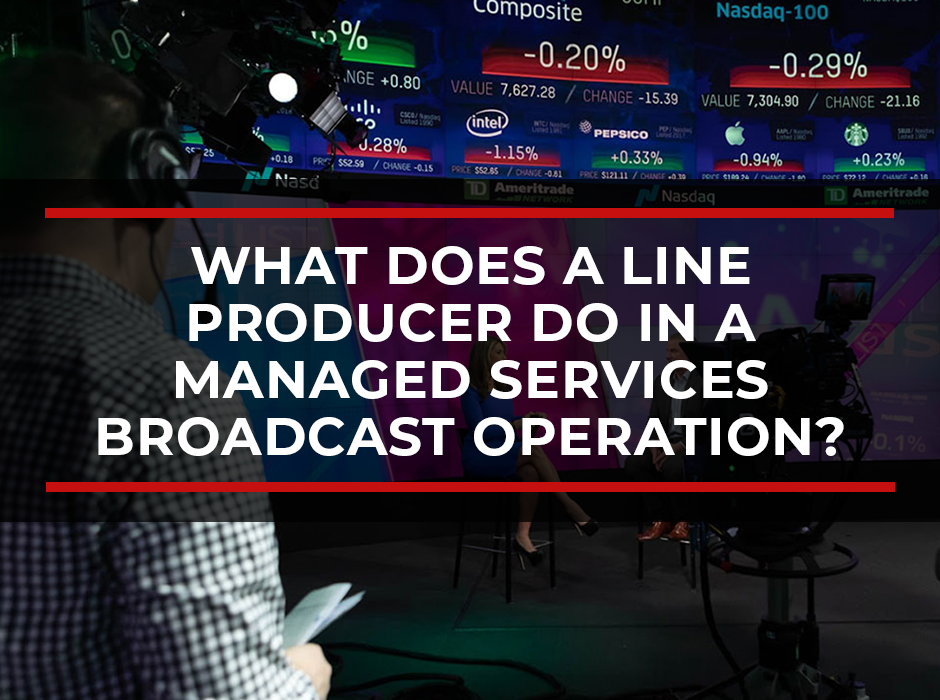
In live broadcasts and sports production, the motion graphics operator is responsible for triggering on-screen visuals in real time. This includes scoreboards, animations, and tickers.
As part of a creative production service for broadcast, the motion graphics operator bridges the gap between design and live execution.
When that operator works on the Ross XPression platform, the role is commonly referred to as an XPression Operator. While ‘motion graphics operator’ is the broader industry title, ‘XPression Operator’ refers specifically to those skilled in one of the leading real-time graphics systems used in broadcast today.
But what does that role actually look like in live broadcasting?
To explore that question, we talked with BMG’s resident XPression Operator, Jacob Varga, to break down a day in the life of a live broadcast motion graphics operator and what the role involves, the skills it demands, and how graphics help bring live productions to life in real time.
Do motion graphics operators only work with XPression?
No. “Motion graphics operator” is a platform-agnostic title that operators may work with Ross XPression, Vizrt, ChyronHego, or other real-time graphics systems.
XPression Operators are motion graphics operators who specialize in the Ross XPression platform, which is one of the most widely used graphics systems in live broadcast and sports production today.
What does an Xpression Operator (motion graphics operator) do during a live production?
An Xpression Operator plays a critical role in bringing a live broadcast to life visually.
This position is the connection between the creative vision of the production team and the graphics technology that delivers that vision to viewers.
Precision, timing, and technical expertise make sure that every graphic and visual element appears exactly when and where it is needed during a live broadcast.
The Producer and Director work closely with this role and are responsible for managing and displaying on-screen graphics and other assets throughout the production.
An Xpression Operator may also prompt video clips, animations, transitions, and other dynamic visual elements that enhance the viewer’s experience.
What are a motion graphics operator’s key responsibilities before, during, and after a show?
The most important responsibility of a motion graphics operator, specifically as an Xpression Operator, is understanding the contents of their project.
This is a highly dynamic role, so an operator may be expected to perform a variety of tasks depending on production needs.
This position requires being skilled in everything within the system and the broadcast the Xpression Operator is working on. Understanding what is on the machine and how those elements may be used during a broadcast is essential to being effective in the role.
How do graphics contribute to the overall viewer experience?
Graphics have a major influence over how viewers experience and understand a broadcast.
The graphics included in broadcasts contribute information and content that help audiences understand what they are watching in real time.
In many ways, graphics act as a bridge between the broadcast and the viewer, delivering context and clarity throughout the show.
What skills are most important for someone in your role?
On the technical side, the most important skill is the ability to provide accurate and relevant information.
While the goal is always 100% accuracy, mistakes can happen as humans. Even so, limiting errors is critical.
Spreading incorrect information can have negative effects, especially in live production.
From a production standpoint, even small mistakes, such as an incorrect pitch count or a rounding error, can stand out immediately. It can signal a lack of preparedness or respect for the event’s coverage, particularly in a live environment where everything is on display in real time.
The second key skill is the ability to “sell” or effectively communicate within the production.
This is especially important during live broadcasts and events, where the operator needs to clearly communicate ideas and intentions to the production team.
Ultimately, this skill ties back to ownership of the role during a production. When an operator understands their content at a high level, they are better able to communicate clearly and contribute meaningfully to the overall show.
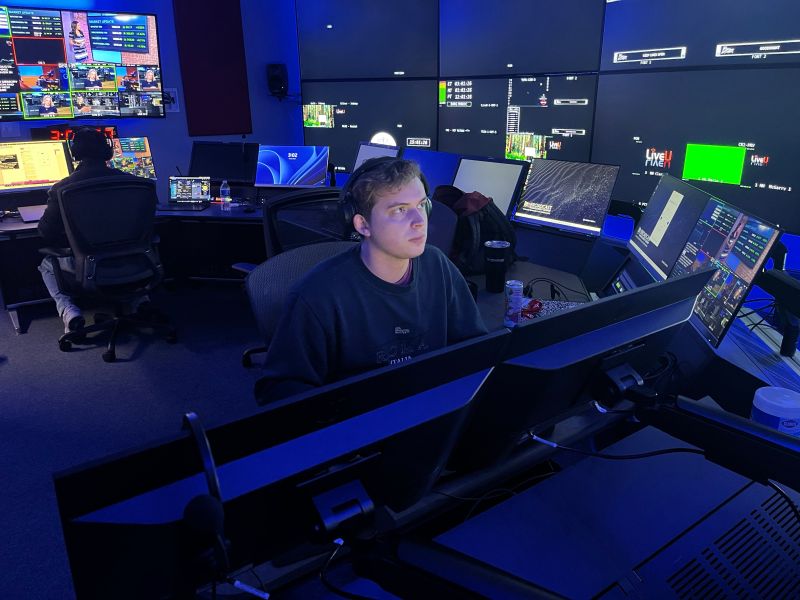
What tools does a motion graphics operator use in live production?
The primary tool and technology used in this motion graphics role is Ross XPression, which is the core graphics system for live production.
It is one of the leading modern graphics platforms used in the industry and is recognized for its flexibility and capability in broadcast environments.
XPression is extremely versatile, allowing operators to create and control a wide range of graphic elements.
Although it is commonly used for standard broadcast graphics, it can also support complex, highly detailed visual systems, depending on how a project is structured.
Even with years of experience in the platform, there is still a wide range of functionality to explore. Many operators would agree that continued use of XPression reveals new layers of depth, making it a powerful and evolving tool in live production environments.
What is the hardest part of being a live broadcast motion graphics operator?
The most challenging aspect of operating graphics during a live production is mastering the flow of the broadcast.
Live television is unique because everything happens in real time, with no second chances or do-overs. Once something goes on air, it is immediately seen by the audience, making every decision and action count.
Part of what makes live production so compelling is the energy it brings.
The moment the show goes live, there is an intensity and adrenaline that professionals in the industry thrive on.
At the same time, that pressure can make the role incredibly demanding.
As graphics operators gain an understanding of how the team will operate for a broadcast, it becomes easy to see how the control room will function and how the show will unfold moment by moment.
This awareness allows them to align their work with the production team’s goals and contribute more effectively to the broadcast.
When that coordination happens, it can elevate production quality and help create exceptional television.
The challenge lies in sustaining that level of awareness, intention, and attention to detail over extended periods. Maintaining focus for hours or multiple days of production can be mentally taxing, making consistency one of the most difficult yet important aspects of the job.
What do you enjoy most about working in live production?
What I enjoy most about live production is the opportunity to witness an event or story unfold from beginning to end.
While you may not be capturing every aspect of a larger story, you are there to tell the story of that specific moment as it happens.
Being part of that process from start to finish is something that makes live production rewarding.
I’m always chasing the next great moment or when everything clicks in a production space, and the production team is operating in sync.
There are moments when communication becomes almost unspoken, and everyone understands what needs to happen next. Those are the moments that can elevate a broadcast and make it truly special.
A director at Florida State once told me that if I wanted to get better, I needed to learn how to read his mind.
At the time, it seemed like an impossible and unreasonable expectation. But the more experience I gained, the more I understood what he meant. By learning how he thought and how he approached a show, I became better at anticipating what was needed. Eventually, that understanding started to create a level of trust and collaboration that made the entire production stronger.
Overall, one of the most rewarding parts of live production is being part of a team so in tune with one another that everyone works toward the same goal, often without needing to say a word.
Conclusion
Live production often feels a lot like working in a high-pressure kitchen where it is loud, fast-paced, and constantly moving.
The best shows come together when every member of the team understands their role, communication is clear, and everyone is motivated to perform at their highest level.
Stepping into graphics brings an entirely new set of challenges and learning experiences, but it also deepens an understanding of how each part of a production connects.
For an Xpression Operator, when all the elements come together effectively, it elevates the overall broadcast experience, creating a smoother, more engaging, and higher-quality production for the audience.

Paige DeLoretta is a marketing professional with experience in social media and digital marketing, creating engaging content that helps brands grow and connect with audiences. She has supported marketing initiatives across a variety of industries. Paige is a graduate of George Mason University with a degree in marketing. Originally from Reading, Pennsylvania, she enjoys traveling, spending time outdoors, and exploring Washington, D.C. with friends and family.
About Paige DeLoretta