

The way live television is produced is changing faster today than at any point since the transition from analog to digital broadcasting.
For decades, the industry relied on a familiar production model: large on-site crews, fleets of mobile production units deployed to every event, and broadcast infrastructure that lived entirely inside individual trucks. These mobile units contained full control rooms, capture systems, and small data centers designed to support large production teams working on location.
On major productions, it was common to see five or more semi-trailers supporting a single broadcast. If programming needed to be produced for multiple networks or audiences, additional trucks were often required.
Even the largest global sporting events have begun transitioning away from this model. Recent Olympic Games have relied heavily on REMI-style workflows and centralized broadcast infrastructure, allowing production teams to operate from remote hubs rather than deploying thousands of personnel and equipment to a single host city.
While this traditional model helped build the modern television industry, it also introduced operational inefficiencies, logistical challenges, and significant infrastructure costs.
Today, the industry is evolving toward a new model built on centralized infrastructure, REMI production workflows, cloud-connected production environments, and distributed production teams.
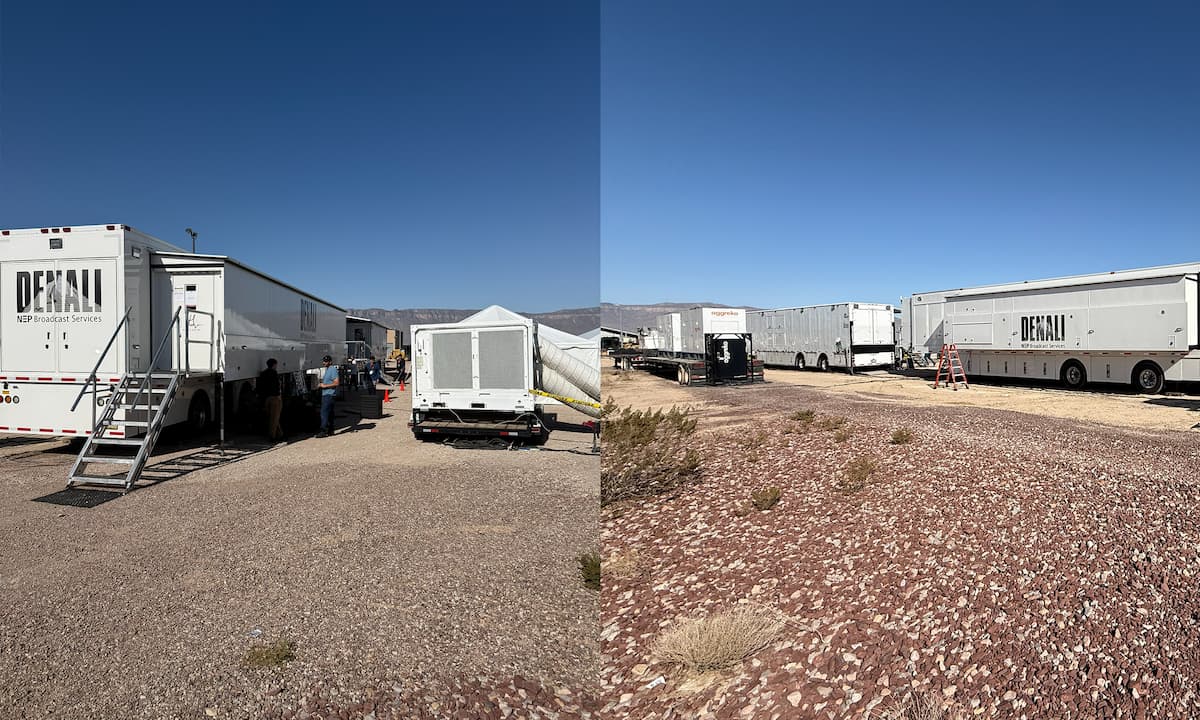
Pictured here: Multiple Mobile Units making up the video village at Blue Origin’s NS-31 Mission
Recognizing the Industry Shift
At Broadcast Management Group (BMG), we recognized this shift early and made the strategic decision to invest in infrastructure purpose-built for the next generation of media production.
Unlike many legacy production providers, BMG wasn’t burdened by decades of capital invested in traditional infrastructure. As a result, we were able to design our technology platform specifically for centralized production, REMI workflows, and cloud-connected operations rather than retrofitting new systems on top of legacy environments.
Over the past several years, BMG has partnered with many of the broadcast industry’s leading hardware and software technology providers to deploy systems capable of supporting next-generation production workflows. These investments have focused on technologies that now define the future of broadcast operations, including:
- REMI remote production workflows
- Centralized Network Operations Center infrastructure
- Private cloud production through BMG Cloud Control Center™
- Secure cloud-connected production environments
- Channel playout and transmission services
- Media asset management platforms
- Integrated studio and production facilities
- REMI-enabled mobile production units
Together, these systems create a fully integrated production ecosystem supporting origination, production, post-production, channel playout, and global distribution.
Because of this early commitment, BMG has been able to help lead the industry’s transition toward centralized broadcast infrastructure rather than simply reacting to it.
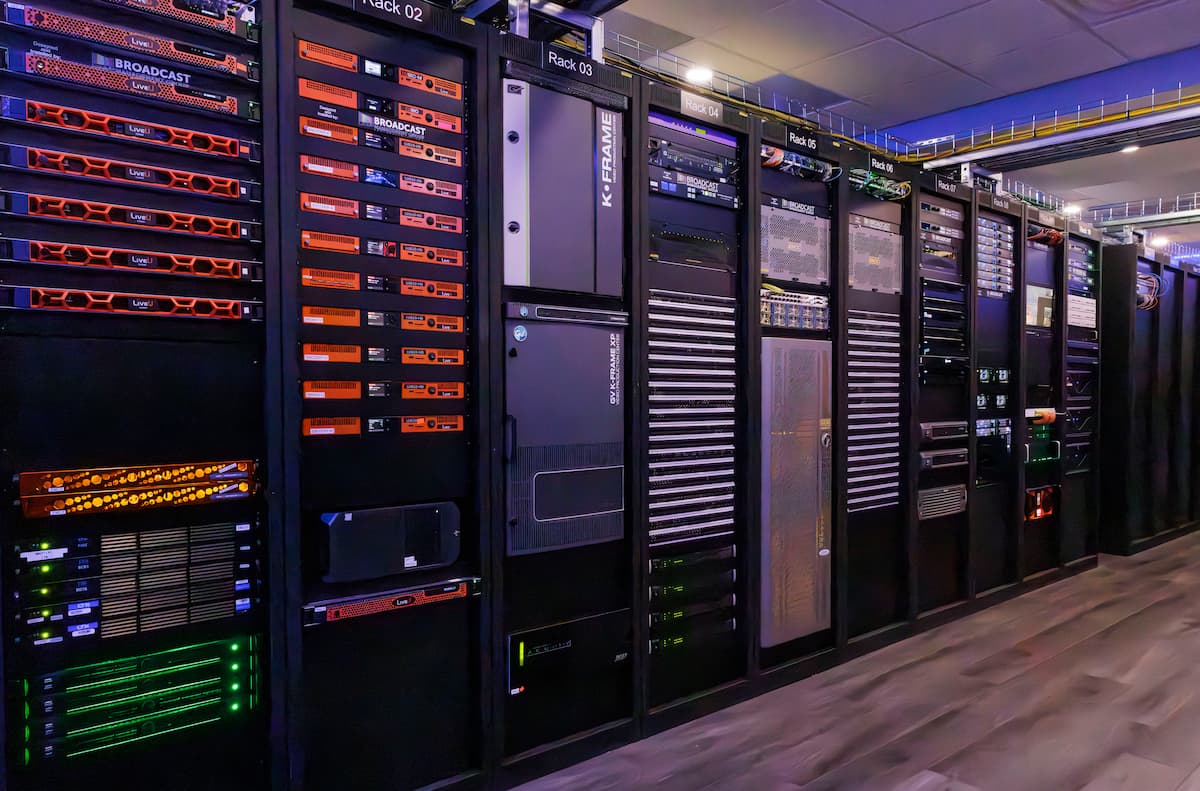
A Modern Broadcast Hub in Washington, DC
At the center of BMG’s infrastructure platform is a state-of-the-art Network Operations Center and private cloud production hub located in Washington, DC.
This facility houses both BMG’s Network Operations Center (NOC) and the BMG Cloud Control Center™, creating a centralized environment where production, playout, media management, and transmission operate within a single integrated ecosystem.
The facility was designed from the ground up to support mission-critical broadcast and enterprise media operations, with infrastructure that includes:
- Fully redundant power systems
- Redundant HVAC systems
- Multiple high-capacity connectivity providers
- Secure network architecture
- 24/7 monitoring and operational support
This level of redundancy ensures that BMG’s infrastructure can support continuous broadcast operations for major networks and enterprise media organizations.
Equally important, the platform is built on a highly secure network architecture that protects production workflows, media assets, and transmission infrastructure.
As a result, many of the largest media organizations and enterprise video clients in North America trust BMG’s platform to support critical broadcast operations.
A Multi-Tenant Broadcast Ecosystem
One of the most powerful aspects of BMG’s infrastructure model is its multi-tenant broadcast ecosystem.
Through this platform, clients gain access to top-tier broadcast technology, engineering expertise, and operational support without needing to build and maintain every component independently.
This allows media organizations to operate with higher-tier production infrastructure and engineering resources than would often be economically feasible within a standalone facility.
A National Infrastructure Platform
BMG’s Washington facility serves as the central hub of a growing broadcast infrastructure network.
This hub is supported by spoke production facilities in New York City and Las Vegas, along with offices in Chicago and Los Angeles, enabling BMG to support production operations across the country’s largest media markets.
In addition, BMG provides managed services and operational support for several enterprise video facilities located in Virginia, Memphis, Dallas, Chicago, and New York City.
These client facilities connect directly to BMG’s Network Operations Center and BMG Cloud Control Center™, creating a distributed production ecosystem capable of supporting large-scale broadcast operations across multiple locations.
The Direction of the Industry Is Clear
Broadcasting is rapidly moving toward a model built on centralized infrastructure, REMI production workflows, cloud-connected environments, and distributed production teams.
Organizations that embrace this transition will be able to operate more efficiently, scale production more easily, and gain greater access to creative and technical talent pools.
As our EVP of Live Production, Andrew Ryback explains:
“REMI production removes geographic limitations. The best operators for a show don’t have to be in the same city as the event — they can work from anywhere while still operating within the same production environment.”
The shift toward centralized infrastructure and network operations centers is more than a technology evolution. It represents a fundamental change in how media organizations will produce and distribute content in the years ahead.
At Broadcast Management Group, we recognized this transformation early and have spent the last several years investing in the infrastructure required to support it.
By combining secure centralized technology platforms with decentralized production teams, BMG is helping define the next generation of broadcast and media operations.


Leave a Reply