

Broadcast OTA sub-channels, Cable channels, OTT, and Free Ad-Supported TV (FAST) are all major distribution segments that represent greater opportunities to scale your audience.
For content owners and creators, the opportunity is real. The obstacle is often the agility (or lack thereof) of your legacy infrastructure.
How do you get a new channel to air quickly, manage it cost-efficiently, and scale distribution without inheriting the cost structure of traditional broadcast?
The answer, increasingly, is cloud-based channel playout services paired with managed Network Operations Center (NOC) capacity.
Together, they allow content operators to move at the speed the market demands:
- Launch new channel concepts in days, not months
- Manage dozens of simultaneous feeds without proportional staffing increases
- Deliver with the reliability levels that platform partners require
The scalability problem with traditional hardware
Legacy broadcast infrastructure was built for a different time, prioritizing stability and long equipment lifecycles for a small number of linear channels. The past operational value of “don’t touch it if it isn’t broken,” worked well when innovation was stagnant, costs were steep and change was slow.
Expanding markets and Cloud-based environments have upended the math entirely.
Traditional on-prem hardware-based channel playout requires capital expenditure before any signal moves. Equipment-based workflows must be designed, procured, installed, integrated, tested, and commissioned, a process that historically took months from decision to air.
For a major network investing in permanent infrastructure, that timeline was acceptable. For a content owner evaluating whether a niche FAST channel will find an audience, the risk is one that many cannot absorb.
The Capital expenditure model also creates a structural mismatch:
- The investment is front-loaded, but the revenue (ad-supported or subscription) arrives slowly as the audience builds
- Launching three experimental channels to see which gains traction requires three full hardware deployments
- The economics don’t support experimentation at that cost structure
Cloud playout eliminates that barrier. Provisioning a new channel in a cloud playout environment is a software configuration, not a facilities project. A content owner with a playlist and platform carriage in place can be on-air in days, limited far more by the time to assemble programming than by any technical playout obstacle.
The infrastructure is already built. Access to it is allocated on demand.
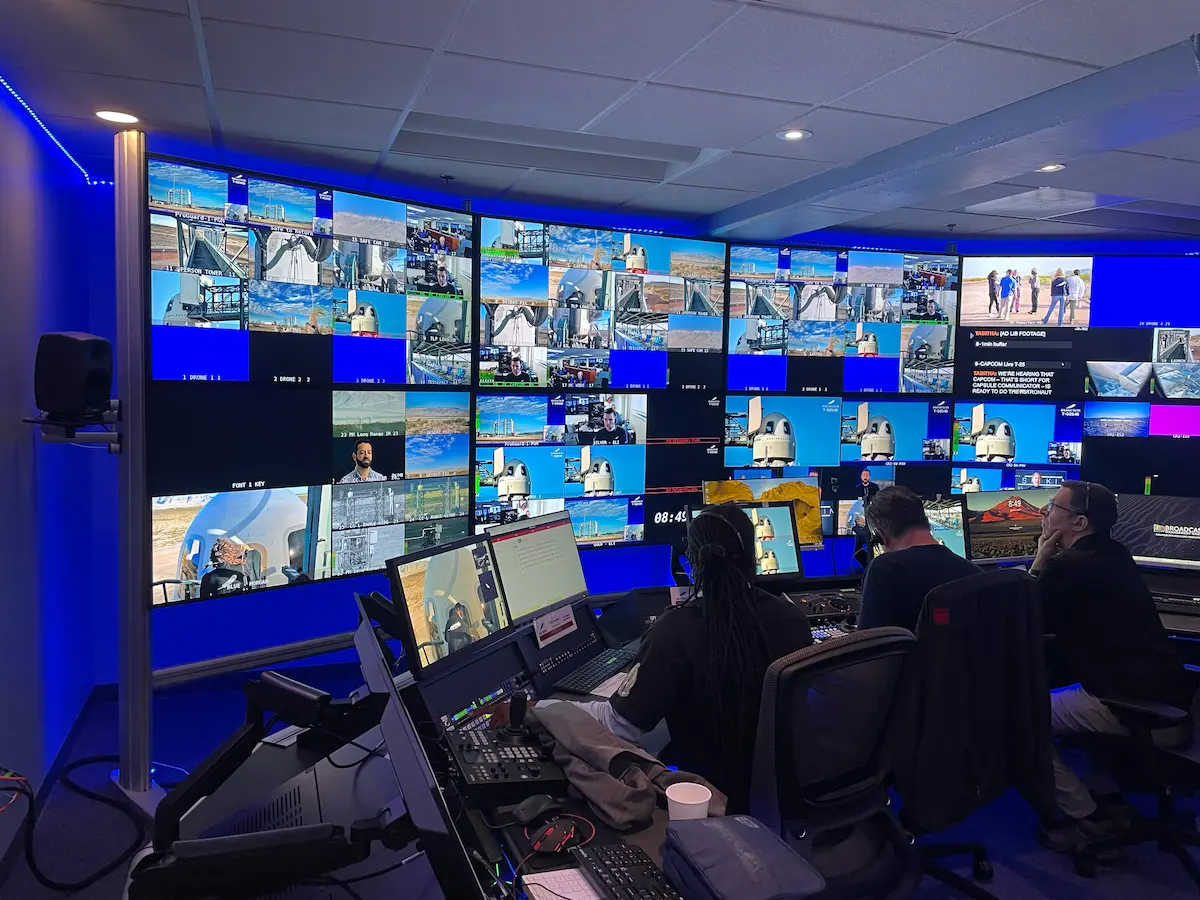
Cloud playout: spin up, spin down, scale out
The cloud’s core operational advantage isn’t just speed of launch. It’s the ability to right-size infrastructure to actual demand rather than projected peak demand.
Test channel concepts without betting the balance sheet
Agility at scale, short timelines, and low costs enable experimentation, removing the blockers and ceilings of the legacy platforms.
For content owners, that means the ability to test:
- Genre-specific offshoots
- Event-driven programming
- International variants
- Daypart-specific channels
All without the commitment that on-prem hardware CapEx once required.
A channel that fails to find an audience within 60–90 days can be stood down cleanly. A channel that outperforms can receive additional resources immediately. That ability to fail fast and scale fast is structurally unavailable in an on-prem hardware-first model.
From CapEx to OpEx: pay for what you use
The financial model of cloud playout is fundamentally different from hardware ownership: you use what you need, when you need it, and scale the spend with the revenue.
This is especially relevant for event-driven strategies. Launching multiple channels to cover an event like March Madness—regional feeds, sport-specific coverage, shoulder programming—used to require purchasing equipment that would be fully utilized for three weeks and sit idle for the rest of the year.
Under a cloud model, those channels spin up for the duration and stand down when the event concludes. Infrastructure costs track operational needs directly, rather than being amortized over a year of underutilization.
Pop-up channels as a standard operating mode
What was once a heroic logistical effort to launch a temporary channel for a specific event or content moment has become an ordinary capability in cloud architecture.
A content owner can:
- Maintain a permanent primary channel
- Spin up a complementary feed for a conference, playoff run, or seasonal block
- Close the temporary channel when the event ends
- Continue the primary channel unaffected
In a cloud model, this isn’t a workaround. It’s standard operating procedure.

The NOC: managing complexity across a fragmented distribution landscape
Launching any channel is a challenge. Operating multiple channels simultaneously across a fragmented distribution landscape is a different one.
A fully distributed channel strategy may involve simultaneous delivery to multiple platform partners, each with its own technical requirements and configurations.
A content owner managing 5 channels across 8 platforms is managing 40 simultaneous signal paths.
At that volume, “eyes on glass” monitoring with a human operator watching each feed in real time is not cost effective. The staffing math doesn’t work, attention requirements are unsustainable, and the cost would reduce the profitability that additional distribution is designed to generate.
Monitoring by exception: the NOC model at scale
Modern NOC operations address this through software-assisted monitoring that inverts the attention model.
Rather than requiring operators to actively watch every feed, exception-based monitoring continuously analyzes all feeds against defined signal parameters:
- Frame freeze
- Black frame
- Silence
- Signal loss
- Bitrate deviation
- Loss of captioning
- Missing SCTEs
Alerts fire only when a feed falls outside acceptable thresholds. The operator’s attention is directed to active problems not distributed across the full signal map.
When an issue occurs anywhere, the operator receives an immediate notification identifying:
- What the problem is
- Which feed is affected
- Where in the air-chain path it occurred
The diagnosis arrives with the alert. The operator responds to a specific, defined condition rather than discovering it through continuous scanning.
The practical result: a NOC team monitoring 100 channels using exception-based alerting can operate with the same staffing efficiency as one monitoring 5 channels through direct observation and often with greater reliability, because software doesn’t experience the attention fatigue that makes extended “eyes on glass” monitoring progressively less effective over a shift.

Reliability and redundancy: the cloud is not “less than”
The most common objection to cloud-based Channel Playout is the reliability question:
If signal delivery depends on the internet, what happens when the internet fails?
Fair question. But it’s not how enterprise-grade cloud broadcast architecture works today.
Geo-redundancy and automated failover
Well-architected cloud-based broadcast systems operate with geographic redundancy built into the delivery path:
- A fully connected cloud environment is capable of delivery using any protocol—from satellite uplink to Public IP
- Primary and backup signal paths are maintained simultaneously, routing through separate facilities in different regions
- If the on-air path is disrupted, automated failover activates, transfers delivery to the backup path, and notifies the Operator
The “internet goes down, channel goes down” scenario assumes a single point of failure. Production-grade cloud broadcast architecture is specifically designed to eliminate single points of failure at every layer of the signal chain.
For organizations that cannot build true N+1 redundancy in-house, a well-designed cloud architecture is often more reliable than the alternative.
Agility is the currency of the market
Today’s landscape rewards operators who can move quickly:
- Launch new channel concepts before the window closes
- Scale distribution as platform partners request additional feeds
- Manage a growing portfolio without proportional increases in infrastructure or headcount
Traditional hardware-based Master Control was built for a different market—one defined by permanence and long capital cycles.
The essential architecture for successful channel playout today is provided by Cloud-based platforms complemented by NOC operations featuring exception-based monitoring and geo-redundant delivery.
The speed is real. The cost model works. The reliability, when properly architected, is not a compromise.
Talk to BMG
If you’re evaluating your current playout infrastructure against the demands of the market or planning your first channel launch, we’ll help you map the architecture, staffing model, and monitoring approach that fits your channel strategy.
Leave a Reply