The new normal in broadcast isn’t a single production model. It’s choosing the right model for each show.
Today’s teams can produce events using traditional trucks, cloud-based control rooms, REMI workflows, or studios. That flexibility is powerful, but it often leads to decision paralysis. Teams either default to what they’ve always used or chase newer models without matching them to real production requirements.
The goal isn’t finding the “best” model. It’s aligning the production architecture to the outcome.
At BMG, we’re platform-agnostic. We don’t sell a truck because we own a truck. We recommend what works.
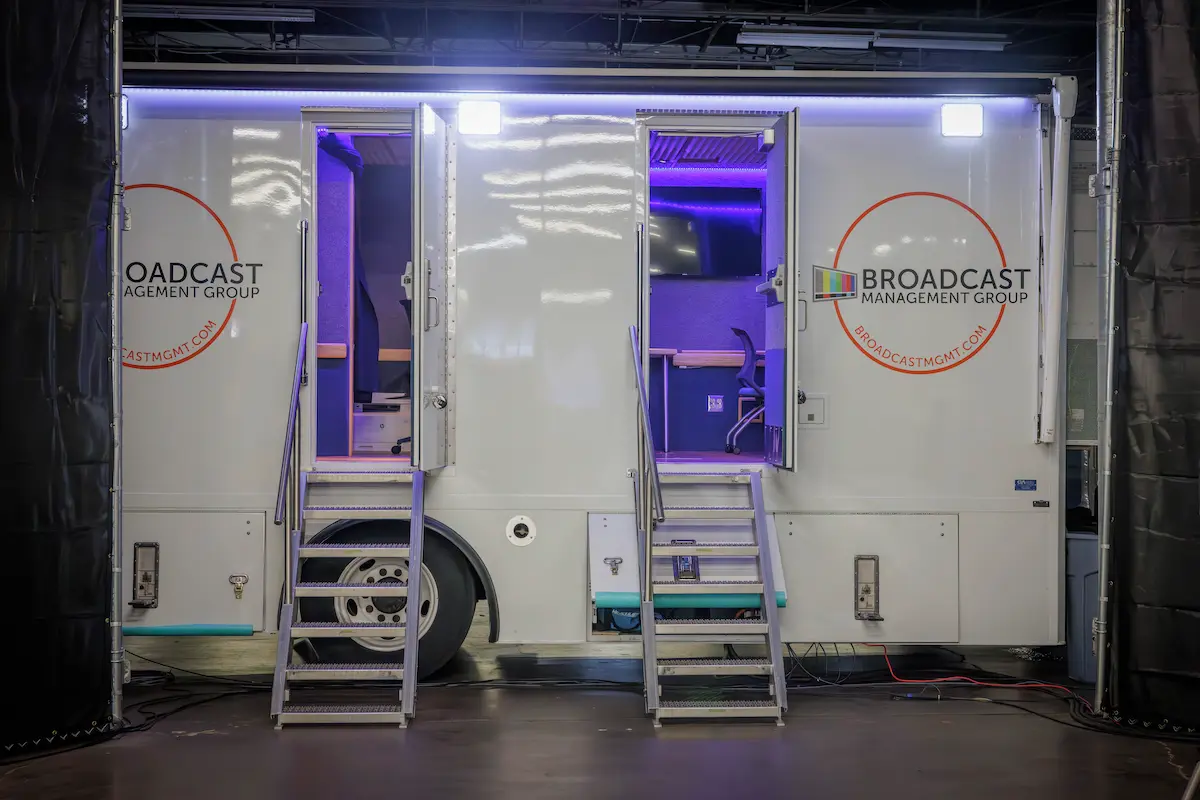
1. The On-Prem “Fortress” (Traditional Studio/Truck)
Best for
High-stakes, complex multi-camera productions where latency cannot exist. Sports, dense entertainment, and executive-facing events.
Pros
- Zero latency for IMAG and in-room screens
- Full physical control of systems and signal paths
- Proven reliability in constrained connectivity environments
Cons
- High capital and logistics cost
- Rigid footprint
- Travel-heavy staffing
Reality Check
- If a venue lacks reliable internet or fiber, a satellite-capable truck may be the only safe option
- Mobile units require space, power, security, and access
- Some executive teams simply want to see the control room on site, and that matters
2. The Cloud Control Room (Virtual Production)
Best for
Pop-up events, distributed talent, and fast-turn virtual programming.
Pros
- Rapid scalability
- Minimal on-site logistics
- Usage-based cost model
Cons
- Internet dependency
- Latency impacts natural conversation
- Increased pre-production coordination
Reality Check
Cloud production shifts cost from hardware to preparation. Every remote participant must be tested. Clear technical guidance is essential, and expectations must be managed. Without discipline, engineering hours grow quickly.
3. The Hybrid / REMI Model (The Sweet Spot?)
Definition
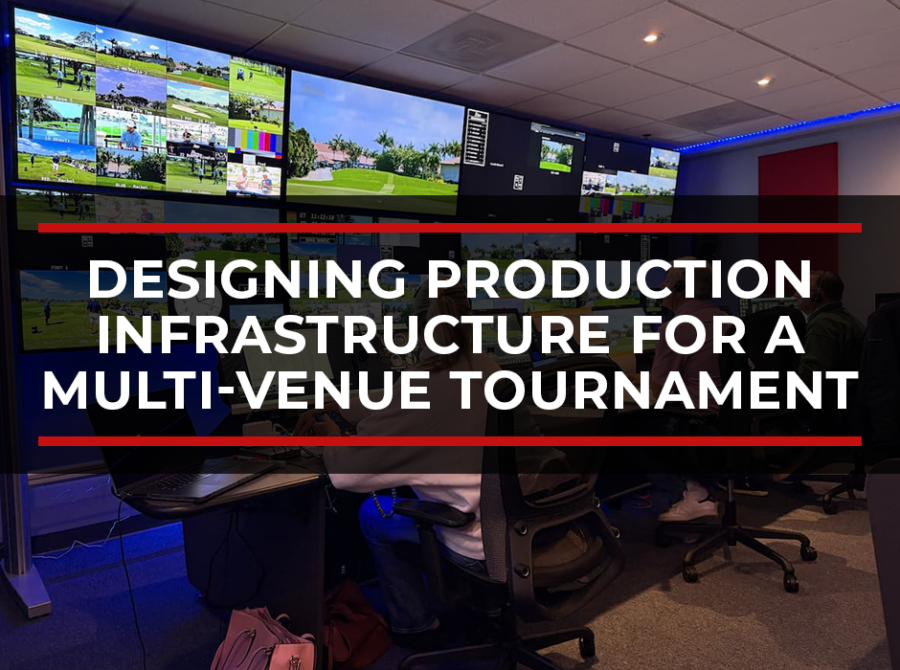
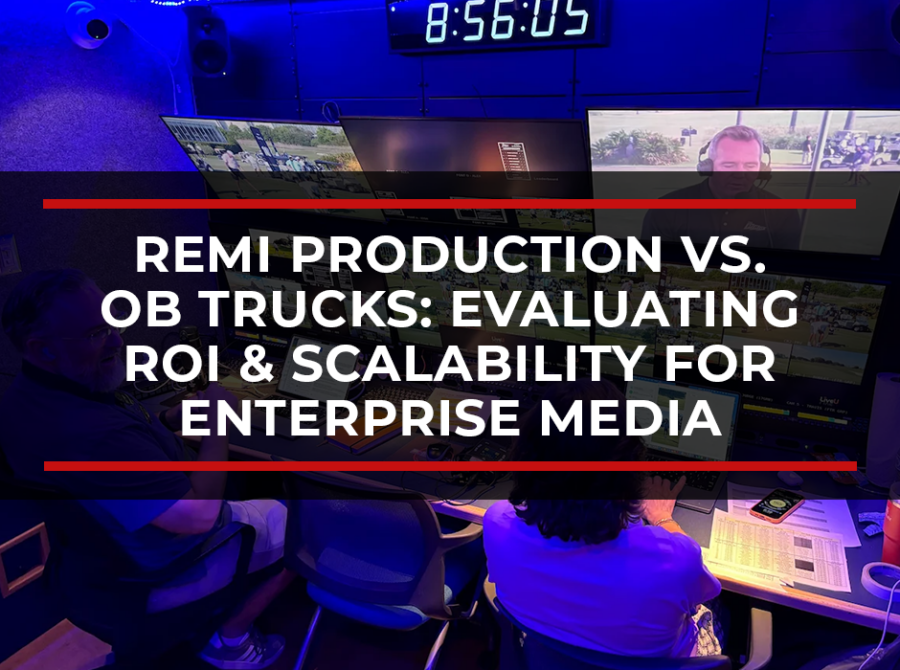
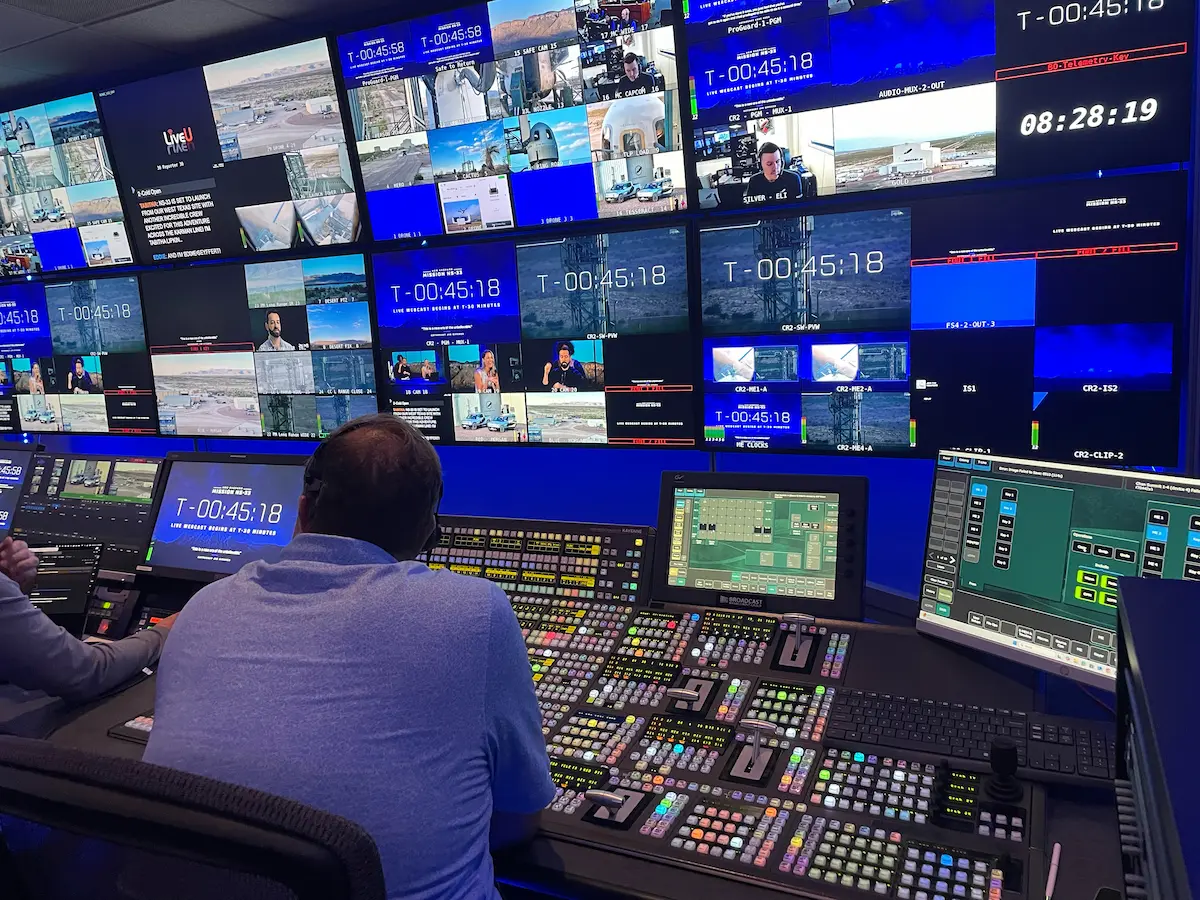
Cameras and audio are captured on site. Switching, graphics, replay, and monitoring run from a centralized control room.
Best for
Recurring corporate events, sports leagues, and productions that need consistency without heavy travel.
Why it works
Hybrid production delivers on-prem visual quality with centralized staffing efficiency.
Key advantages
- Reduced travel and shipping
- Access to national talent pools
- Pre-built graphics and show elements inside a permanent NOC
- Faster setup and repeatable workflows
4. Staffing Considerations: Who runs the show?
The production model dictates the crew.
- On-Prem requires travel, per diems, and on-site engineering
- Hybrid allows operators to work from a centralized facility, improving retention and consistency
- Familiarity matters. Crews who work in the same REMI environment reduce friction and errors
Freelancer availability still fluctuates, and onboarding into any workflow takes time. The difference is whether that learning happens once or on every show.
5. Cost Analysis: CapEx vs. OpEx vs. Utilization
- On-Prem: High fixed cost, low variability
- Cloud: Low fixed cost, high variability
- Hybrid: Balanced
The tipping point
Pure cloud rarely wins on cost alone for complex productions. Pre-show testing, coordination, and troubleshooting often increase labor hours enough to erase savings. Hybrid models frequently deliver the best balance.
6. Scalability Test: The “Tuesday Webinar” vs. “The Super Bowl”
You shouldn’t use a sledgehammer to crack a nut, but you can’t build a skyscraper with a stapler. Enterprises need a partner who can scale the model up and down, not just the crew.
- Truck Scaling: Adding cameras to a truck means adding physical gear and cost.
- REMI Scaling: Scaling a REMI show essentially means “opening the spigot.” The transmission infrastructure is often already laid; you just add paths. Scaling is faster and avoids the freight/shipping lag.
Conclusion: Don’t Buy a Model, Buy a Result
There is no “Right” model, only the right model for this show.
Don’t just default to what you used last year. BMG is uniquely positioned to deliver On-Prem, Cloud, AND Hybrid. We help you choose the right tool for the job.
Unsure which model fits your next event? Contact BMG for a Live Event Production Assessment today.

Andrew Ryback is the Executive Vice President of Production. He brings over 17 years of experience in production management across live events, entertainment, and on-location shoots. He has managed production logistics for high-profile events, including The Emmys, The Oscars, TIFF, SXSW, Comic-Con, New York Fashion Week, Sundance, and both national political conventions. At BMG, he oversees complex productions from crew and equipment coordination to budgeting, permitting, and on-site execution.
About Andrew Ryback