

In live production, the broadcast control room is not just a technical space. It is the broadcast’s operational center.
When you are live, there are no resets. No second takes. No room for hesitation.
High-stakes productions require a broadcast control room engineered for reliability, speed, and clarity under pressure. A true Tier 1 control room is not defined by a single piece of equipment. It is defined by how its components work together as a fully integrated system.
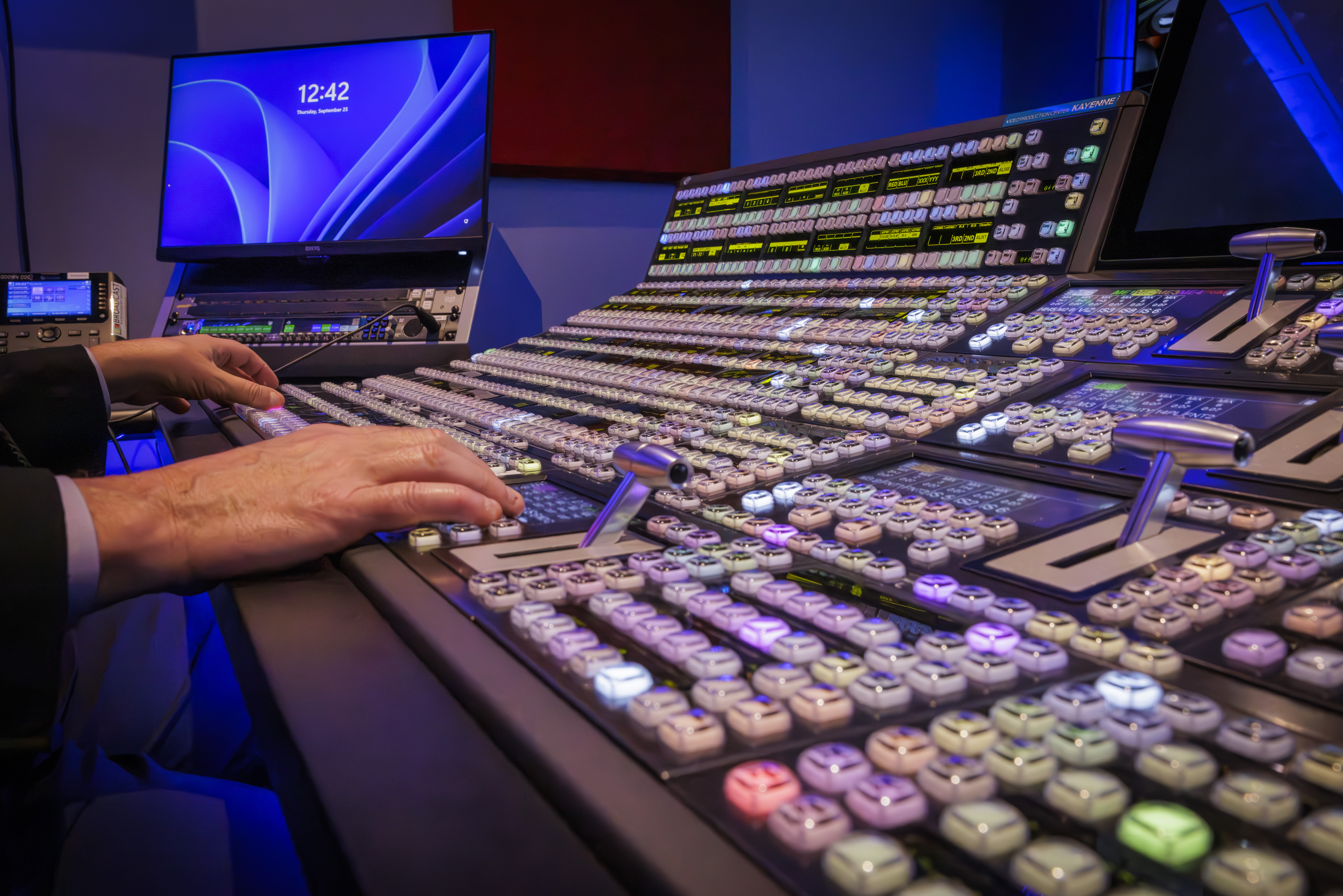
Broadcast Switcher: The Core of Live Execution
At the center of every control room is the broadcast switcher. Its capability directly impacts how complex and dynamic a production can be.
A high-performance switcher must support:
- Multiple M/Es for layered productions
- Sufficient inputs and outputs for complex signal flow
- Advanced keying and effects
- Immediate response under pressure
In fast-moving environments, operators need equipment that reacts instantly and performs consistently.
BMG’s broadcast control rooms are equipped with Grass Valley K-Frame switchers, selected for their flexibility, scalability, and reliability. The platform supports multi-layered productions while maintaining consistent performance across sports, news, entertainment, and enterprise broadcasts.
The result is confidence in execution when timing matters most.
Signal & Power Redundancy: Eliminating Single Points of Failure
Redundancy is not optional in a mission-critical control room.
A Tier 1 environment requires:
- Redundant video paths
- Redundant audio paths
- Redundant network infrastructure
- Dual power systems
These safeguards ensure that if a primary path fails, a backup is immediately available without interrupting the broadcast.
BMG engineers every control room with layered redundancy and real-time monitoring support from our Washington, DC, Network Operations Center (NOC). This design removes single points of failure and allows operators to focus on the show instead of worrying about infrastructure stability.
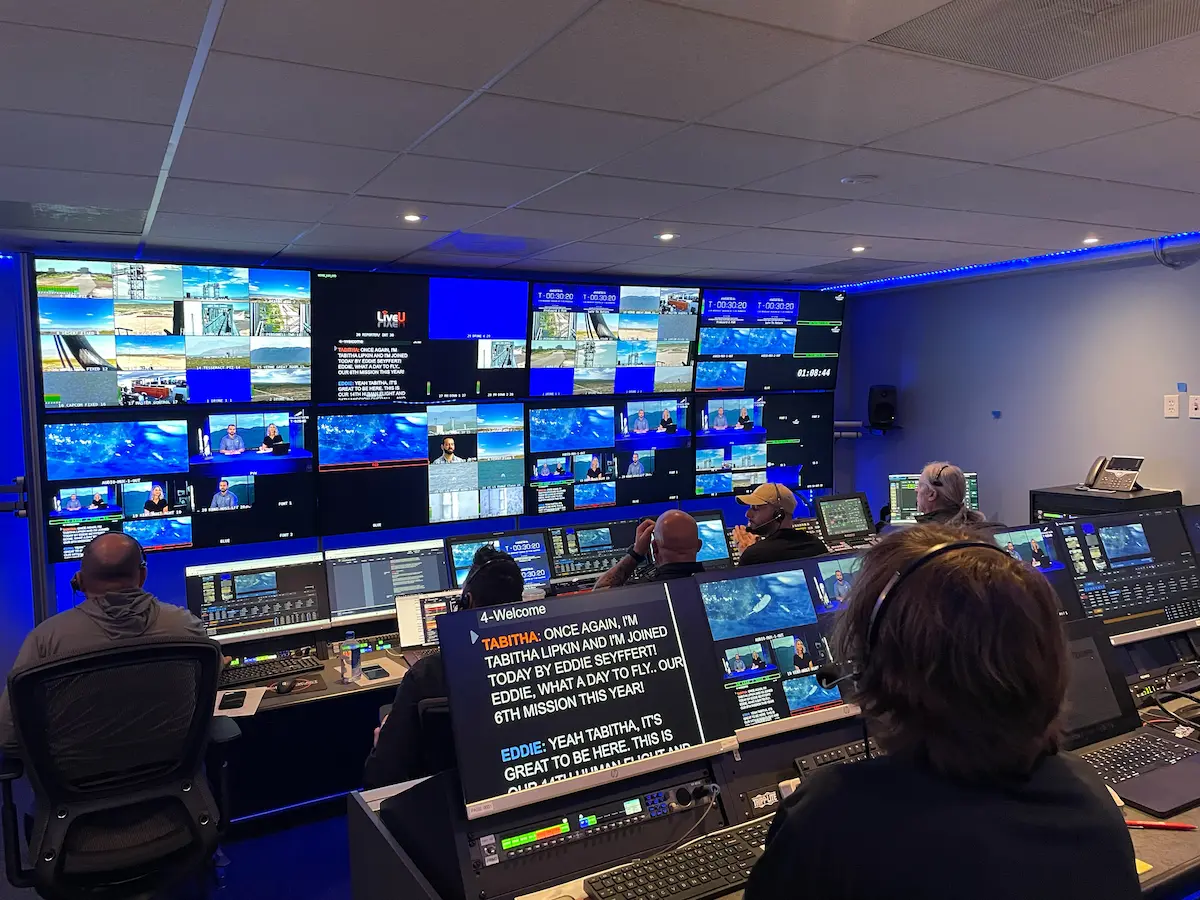
Audio & Video Routing: Managing Complexity at Scale
As productions grow in size and complexity, routing becomes critical.
A Tier 1 control room must be able to manage dozens — sometimes hundreds — of audio and video signals across on-site, REMI, and hybrid workflows. Routing systems must allow operators to reassign signals instantly and maintain clean, protected paths throughout the production.
BMG’s control rooms are connected to our centralized Network Operations Center and Cloud Control Center™, where signals are monitored and managed 24/7.
By integrating routing into a broader infrastructure ecosystem, we ensure operational consistency across all production environments.
Scalability: Built for Growth
Production demands change.
A control room that works today must still support larger, more complex broadcasts in the future.
Tier 1 control rooms are built with scalable architectures, often IP-based or hybrid systems, allowing expansion without requiring full rebuilds. As production volume increases, the infrastructure must grow without disrupting ongoing operations.
With more than 20 years of experience designing and building broadcast control rooms for networks, sports leagues, studios, and enterprise clients, BMG engineers design environments for long-term performance and flexibility.
Engineering Control Rooms That Perform Under Pressure
There is no single checklist that defines a Tier 1 control room.
It is the combination of:
- Reliable switching
- Built-in redundancy
- Intelligent routing
- Centralized monitoring
- Scalable architecture
Together, these elements create an environment where operators can focus on execution — not technical risk.
If your organization is planning to upgrade or build a live production facility, the control room must be engineered to perform when the margin for error disappears.
BMG designs and integrates broadcast environments built for speed, stability, and sustained performance. Learn more about our System Integration services and see how we can elevate your control room to Tier 1.


Leave a Reply