As streaming strategies evolve, broadcasters and organizations are finding themselves serving two very different types of clients.
On one side are subscription-based premium channels and enterprise customers that require ad-free distribution for exclusive content, internal communications, financial programming, or branded experiences.
On the other hand, some media companies are launching OTT (Over-The-Top) and FAST (Free Ad-Supported Streaming Television) channels to generate revenue by selling ad space.
These channels may appear similar, as they are both linear streams delivered over an IP address and may even go to the same platform; however, they require different technical architectures.
The challenge isn’t turning advertising on or off, but designing an environment that supports two incompatible workflows without sacrificing reliability, security, or scalability.
As FAST channel adoption increases, with the industry projected to reach global FAST revenues of $12 billion by 2027, the ability to support both models has become a competitive advantage for broadcasters and managed service providers.
Two Clients. Two Completely Different Requirements.
Profile A: The Premium Enterprise OTT Channel
Corporate broadcasters, financial institutions, government organizations, and regulated industries often operate channels where advertising isn’t part of their strategy.
These environments prioritize:
- Secure delivery
- Compliance and auditability
- Authentication and access control
- Consistent low-latency viewing
- Brand integrity
- Predictable operations
Every component is designed around security, consistency, and compliance.
Profile B: The FAST Channel
FAST channels represent a different operational model, in which advertising revenue is the primary business model.
Every live event, program, or scheduled piece of content must include signaling that enables advertising systems to insert commercials without disrupting the viewing experience.
FAST channels enable media companies to deliver highly targeted advertising to specific audiences.
These channels require:
- SCTE-35 cue messages
- Server-Side Ad Insertion (SSAI)
- As-Run reporting
- Confidence recording for Ad run verification
- Ad decision server integrations
- Impression tracking
- Continuous 24/7 availability
With more than 1,500 FAST channels already available in the U.S. and viewers increasingly turning to them, operators are expected to support advertising workflows at broadcast quality while maintaining the uninterrupted experience viewers expect from traditional television.
Operational Monitoring Requires Different Priorities
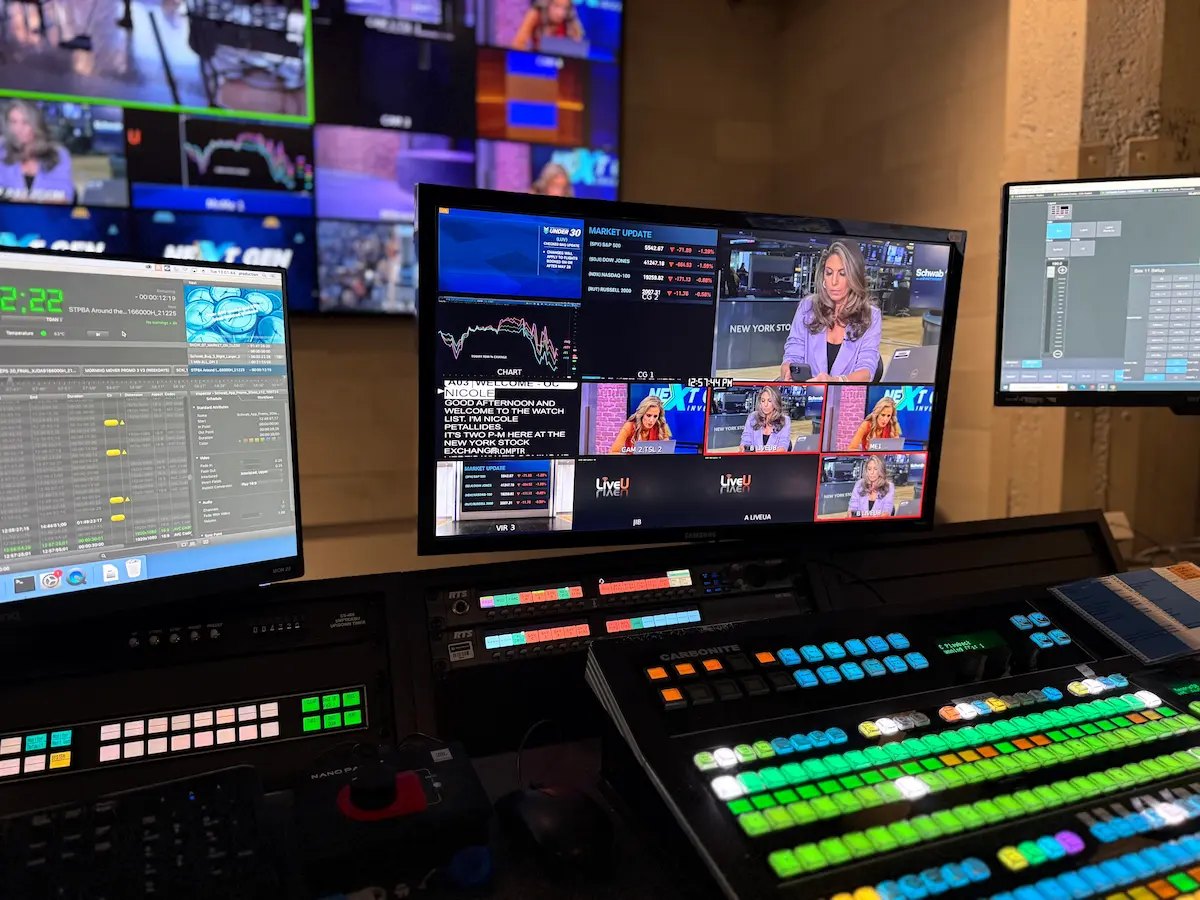
While premium, OTT and FAST channels may share portions of the same production infrastructure, they demand different operational oversight once content is on air.
For enterprise OTT channels, operations teams focus on:
- Stream health
- Security
- Viewer authentication
- Latency
- Uninterrupted delivery
Success is measured by reliability, compliance, and the ability of authorized audiences to access content without interruption.
Launching OTT and FAST channels introduce an additional layer of operational complexity.
Beyond maintaining stream quality, operators must continuously monitor:
- Advertising workflows
- Verify SCTE-35 cue accuracy
- Validate Server-Side Ad Insertion (SSAI)
- Confirm ad decision server communication
- Ensure impressions are delivered and reported correctly
A technically healthy stream can still result in lost revenue if advertising systems fail.
This is why many broadcasters rely on dedicated Network Operations Centers (NOCs) with monitoring dashboards tailored to each workflow.
While both environments require 24/7 oversight, the operational KPIs, alerting thresholds, and response procedures differ fundamentally.
One Infrastructure Doesn’t Mean One Workflow
Many organizations make the mistake of believing these environments differ only in configuration.
In reality, they require architectural separation.
Certain systems can be shared:
- Live encoding infrastructure
- Media Asset Management (MAM)
- Production control rooms
- Playlist generation
- Graphics and branding creation
- Master Control Playout
- Monitoring and Network Operations Centers (NOCs)
- Core transport infrastructure
Other components should remain separate:
- CDN configurations
- Authentication services
- Analytics platforms
- Advertising decision pipelines
- Viewer data collection
This segmented architecture allows organizations to support multiple business models without compromising operational integrity or introducing unnecessary complexity.
Designing for Business Agility
Perhaps the biggest advantage of a segmented broadcast architecture is flexibility.
Many organizations begin with a secure, ad-free OTT platform to support executive communications, internal programming, or subscription-based content.
As their content strategy evolves, they may decide to launch a FAST channel, program to new platforms, or introduce advertising-supported distribution.
When infrastructure has been designed with segmentation in mind, these new business models can be introduced without rebuilding the entire technology stack.
Existing production workflows, media asset management systems, and playout operations remain in place while advertising, analytics, and audience management capabilities are added where needed.
This approach allows organizations to respond to changing audience behaviors, create new revenue opportunities, and adopt emerging distribution models without disrupting existing services.
Rather than building for today’s requirements alone, broadcasters are investing in infrastructure that can adapt as their business evolves.
Security, Compliance, and Brand Protection
Supporting both ad-supported and premium OTT environments requires technical expertise and operational discipline.
Enterprise environments often incorporate:
- Signed URLs
- Token-based authentication
- Secure CDN delivery
- Viewer authorization
- Detailed audit logging
- Segregated analytics environments
OTT and FAST environments introduce additional operational layers, including advertising data exchanges, viewer measurement, attribution reporting, and programmatic integrations.
Maintaining separate runbooks, change management processes, and operational playbooks helps ensure updates in one environment never impact the other. Segmentation becomes a component of long-term reliability, compliance, and brand protection.
How BMG Supports Both Models
At Broadcast Management Group (BMG), we recognize that today’s media organizations do not fit into a single operational category.
The Schwab Network is the first direct-to-consumer 24/7 OTT financial network launched by a major financial institution, illustrating this evolution, combining secure, compliance-driven financial programming with scalable digital distribution across broadcast and OTT platforms.
Some clients require secure, ad-free OTT channels for executive communications, financial programming, or enterprise broadcasting. Others are launching revenue-generating OTT and FAST channels designed to maximize content monetization through advertising technologies.
Rather than building separate infrastructures for each use case, BMG designs segmented managed environments that share production resources while isolating advertising, security, and compliance workflows.
This approach allows organizations to operate efficiently, support evolving business models, and deliver broadcast-quality coverage.
Build an Infrastructure That Supports What’s Next
The future of streaming is building an operational architecture capable of supporting both ad-free and ad-supported delivery.
Whether you’re launching a secure corporate OTT channel, expanding into FAST distribution, or modernizing your existing streaming infrastructure, the underlying architecture determines your long-term flexibility.
Looking to future-proof your broadcast operations? Contact Broadcast Management Group to discuss how a segmented managed infrastructure can support workflow for premium, OTT, and FAST channels.

Karen Landry is Director of Master Control, Playout & Transmission at BMG. She brings over 20 years of experience across post-production, broadcast engineering, and client services, having supported major entertainment productions, live sports, and premier events, including the Super Bowl, the Olympics, and Amazon’s Thursday Night Football. In her current role, Karen partners with clients to develop and deliver cloud-based channel playout and transmission solutions that drive operational excellence.
About Karen Landry