The enterprise FAST channel launch is reshaping how large organizations think about media ownership.
Charles Schwab now operates the Charles Schwab Network, a 24/7 live programming channel competing with established financial media outlets.
The network was built and produced in partnership with Broadcast Management Group, which developed the turnkey live production infrastructure, including studio operations, broadcast workflows, and distribution systems, that allowed Charles Schwab to evolve from a brokerage platform into the first 24/7 OTT financial network.
Red Bull, through Red Bull Media House, has built a multi-billion-dollar media ecosystem spanning sports, documentaries, streaming, and live events. An energy drink brand operating as a global content network.
These examples reflect a broader structural transition where enterprises are becoming media networks.
By 2026, this shift will no longer be experimental or limited to large-scale global brands. The launch of FAST channels and OTT networks has become a standardized model for enterprises with content strategies and appropriate infrastructure partners.
This post outlines the structural changes driving this shift, the misconceptions that limit adoption, and the requirements for launching an enterprise-owned channel.
THE SHIFT: Why 2026 Is the Tipping Point
Three forces are working together to shape the broadcasting landscape for the future.
1. CTV Fragmentation Has Created Massive Inventory Demand
By 2027, Connected TV will reach more than 121 million U.S. households, and FAST platforms are beginning to fill programming gaps. Services like YouTube TV, Pluto TV, Tubi, Roku Channel, Samsung TV Plus, and Amazon Freevee are always looking for new channels to integrate into their ecosystems.
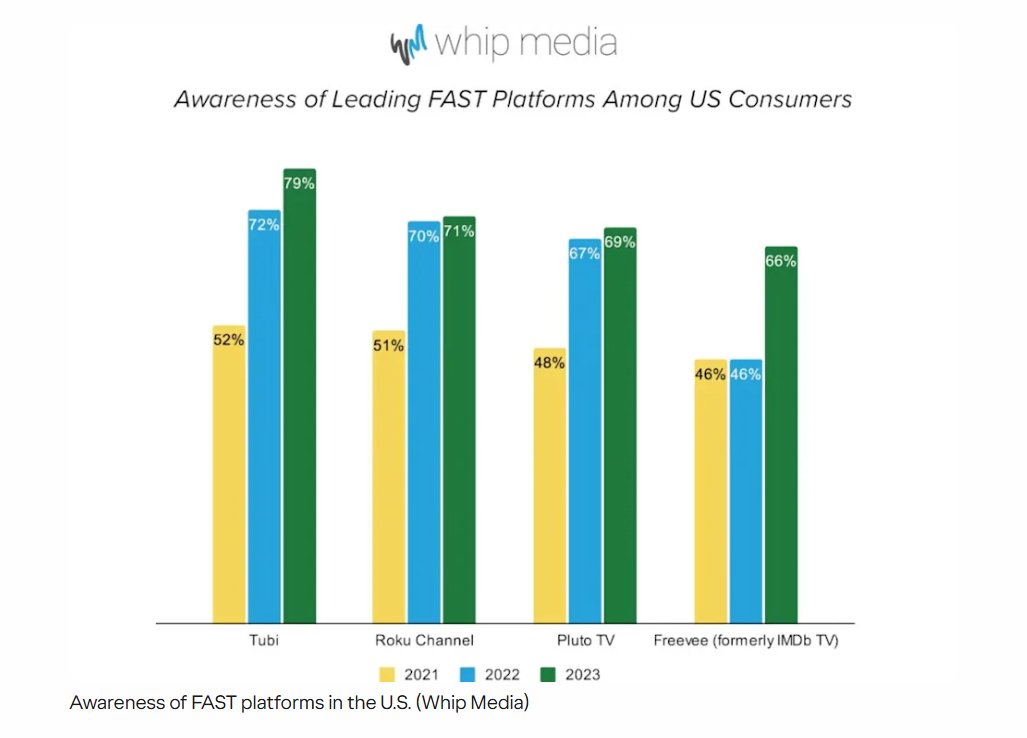
**This chart shows the growing popularity of FAST Channel platforms, including Tubi, Roku Channel, and Pluto TV. Ref 1
As the number of FAST and OTT platforms continues to grow, the demand for programming has increased.
Streaming services are under pressure to fill channel lineups with content that keeps audiences watching.
As a result, the distribution path has become more accessible, replacing traditional carriage negotiations with content partnerships and cloud-based channel operations.
The television supply chain has been rewritten.
2. The Death of the Cookie Has Made Owned Audiences Essential
The decline of third-party tracking has reshaped digital strategy. As audience targeting becomes more challenging, enterprises are emphasizing channels that provide direct access to viewers and first-party audience data.
A FAST or OTT channel changes that entirely.
They create a direct-to-audience environment where every view, session, and content preference is captured within the brand’s own ecosystem.
For marketing and communications leaders, it is a way to increase content and become a very effective data strategy.
In contrast, organizations that rely on paid distribution remain dependent on platforms they do not control, limiting their ability to build relationships with their audiences.
3. AI Has Collapsed the Cost of Production
What once required a full broadcast operations team can now be executed with a cloud-first workflow.
AI-driven tools now automate:
- Captioning and translation
- Content clipping and repackaging
- Graphics and metadata generation
- Scheduling optimization
- Content discovery and tagging
Combined with cloud playout and remote production, the cost of running a 24/7 channel has dropped compared to just a few years ago.
For years, the challenge was the execution, as it was costly and complex. Both have now been reduced, reshaping what organizations can build and launch.
THE MYTH: What You Think You Need (But Don’t)
Even with a clear industry shift, many organizations still hesitate by defaulting to traditional broadcast thinking.
That model is no longer needed in today’s streaming-first environment.
Myth 1: “We need a broadcast control room and a studio.”
Reality: Modern production is distributed.
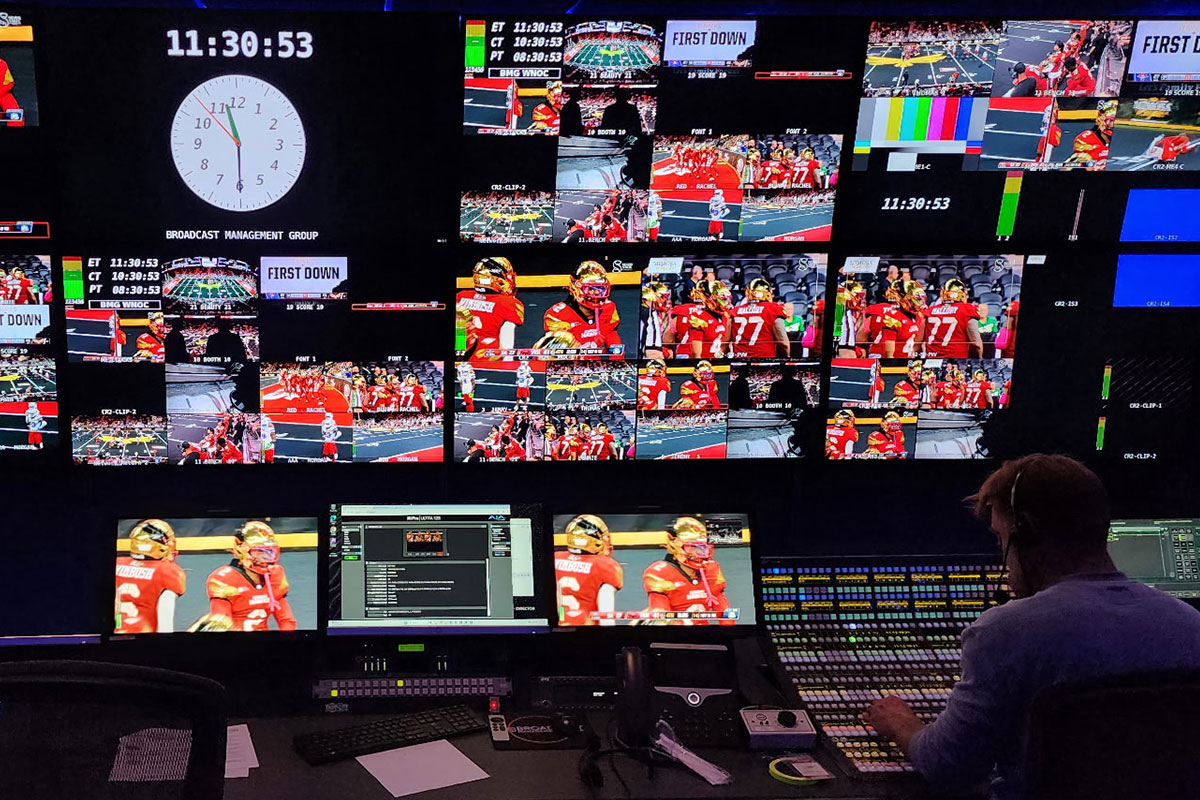
With REMI (Remote Integration Model) and hybrid IP workflows, production no longer requires a physical on-site control room. Instead, the entire live show can be produced from a centralized Network Operations Center (NOC), such as those operated by Broadcast Management Group, while content is captured from anywhere in the world.
A conference room, event venue, or field location simply becomes a live capture point using IP contribution tools. Cameras and audio feed directly into the NOC, where the switching, graphics, audio, and directing all happen in real time.
The result: the control room is no longer a truck or studio on location; it’s centralized, scalable, and effectively cloud-enabled.
Myth 2: “We need a broadcast license.”
Reality: FAST and OTT channels operate under streaming distribution agreements, not FCC broadcast licensing.
There is no regulatory barrier preventing enterprises from launching a streaming channel in the United States.
Myth 3: “We don’t have enough content.”
Reality: Most enterprises already have an inactive content library.
Assets like webinars, keynote presentations, product launches, interviews, training sessions, and event recordings often span years and remain underutilized.
A 24/7 channel does not require 24/7 original production. Instead, it is an intentional programming strategy built on top of existing content libraries.
THE REALITY: What It Actually Takes in 2026
Launching an enterprise FAST channel or OTT network today is about structure.
There are four core components.
1. Content Strategy
Everything starts with editorial identity.
What is the channel about? Who is it for? Why would someone return daily or weekly?
A successful enterprise channel defines:
- A programming thesis (education, innovation, industry insight, entertainment, etc.)
- A target audience with repeat viewing behavior
- A content taxonomy that organizes all assets into a structured grid
Existing content must be mapped into three layers:
- Live programming (events, announcements, panels)
- Scheduled programming (series, segments, recurring shows)
- Evergreen content (reusable, always-on value)
The difference between a playlist and a network is strategy.
These same standards also extend beyond external distribution into internal communications. Many global enterprises, including a global hospitality brand with which BMG is partnered, use a centralized video strategy to streamline messaging, improve employee communications, and scale content creation across regions.
The result is not just a media presence, but a unified content system that delivers:
- Greater audience reach across internal and external channels
- Cost savings through production workflows
- Repeatable content generation across teams and markets
- Improved speed of communications across the organization
2. Distribution Partnerships
No channel exists without distribution.
Most enterprise networks adopt a hybrid model:
- FAST platforms for scale
- Owned OTT (web or app) for control
Platform selection matters:
- Pluto TV and Tubi skew toward broad consumer audiences
- Roku Channel and Samsung TV Plus dominate connected TV households
- Amazon Freevee integrates deeply with Prime Video ecosystems
- Social channels, including YouTube (over 2.5 billion monthly users) and TikTok, Instagram, and LinkedIn, that reach audiences through short-form clips and highlights.
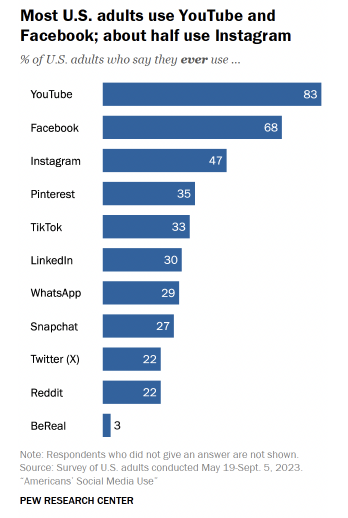
**This 2024 chart shows that most U.S. adults use YouTube and Facebook for social media consumption.
A multi-platform approach ensures reach without sacrificing ownership.
3. The Technology Stack
A modern channel is software-defined, not hardware-bound.
Core components include:
- Playout automation (e.g., Amagi, Harmonic, Wurl)
- Media Asset Management (MAM) systems for content organization
- Cloud-based production infrastructure for live and remote workflows
- Analytics layers for real-time audience and performance insights
This replaces traditional broadcast infrastructure entirely. No satellite trucks. No fixed master control room. No hardware dependency.
4. Remote / REMI / Hybrid Production
Live programming is what turns content into a network.
It is also the most operationally complex layer.
With REMI and hybrid production workflows, enterprises can deliver live events, executive communications, product launches, and industry panels without needing a fixed studio infrastructure.
A centralized production partner can handle:
- Multi-location contribution feeds
- Live switching and graphics
- Audio engineering
- Real-time distribution to FAST and OTT endpoints
This is what makes 24/7 broadcasting accessible to non-media organizations.
5. Production Staffing
Staffing is becoming centralized rather than expanded.
With cloud-connected studios and hybrid IP workflows, enterprises no longer need large on-site crews to execute live production.
Instead of staffing a full production team at every location, resources are consolidated into production environments that can support multiple shows.
This shifts production from a field-based staffing model to a production model in which operators, directors, and technical teams manage live broadcasts remotely via IP-enabled systems.
The result is:
- Reduced the need for large on-site production crews
- Centralized teams supporting multiple productions
- More efficient use of specialized broadcast talent
- Consistent quality control across all outputs
For example, UBS reduced on-site production staffing by 40% after implementing hybrid production systems while increasing daily content output. This shift was enabled through workflow design and execution support from Broadcast Management Group.
In this model, enterprises scale content production through infrastructure—not headcount.
THE PATH: How BMG Builds It for You
Broadcast Management Group (BMG) functions as a managed production partner.
BMG designs, builds, and operates the entire channel infrastructure so enterprises don’t have to assemble it themselves.
That includes:
- End-to-end production architecture (cloud, REMI, or hybrid)
- Live production teams for events and recurring programming
- 24/7 Network Operations Center (NOC) monitoring and playout stability
- Media asset management (MAM) and content pipeline integration
- Distribution coordination across FAST and OTT platforms
Instead of stitching together vendors, the enterprise gets a fully operational media system.
The same infrastructure used for sports leagues, global brands, and live broadcast operations is now applied to enterprise-owned channels.
Conclusion
The opportunity to become a media network is open and still early in its evolution.
In 2026, the brands that move first in their industry will gain attention, which is the most valuable screen real estate.
The barriers that once made this impossible, including studio infrastructure, broadcast licensing, and production scale, have now been eliminated.
The only remaining barrier is execution.
Ready to see what your channel could look like?
Connect with BMGs channel strategy team for your free consultation on launching OTT, Linear, and FAST channels, to start building your custom launch roadmap.

Karen Landry is Director of Master Control, Playout & Transmission at BMG. She brings over 20 years of experience across post-production, broadcast engineering, and client services, having supported major entertainment productions, live sports, and premier events, including the Super Bowl, the Olympics, and Amazon’s Thursday Night Football. In her current role, Karen partners with clients to develop and deliver cloud-based channel playout and transmission solutions that drive operational excellence.
About Karen Landry