


Blue Origin NS-32 Mission
Revolutionizing Spaceflight Broadcasting Through Cloud-Based REMI Production
90%Carbon Footprint Reduction
31Live Camera Feeds
6Day Deployment Timeline
In This Case Study:
After producing Blue Origin’s NS-31 mission with a full on-site production model, BMG helped Blue Origin reimagine the broadcast workflow for NS-32.
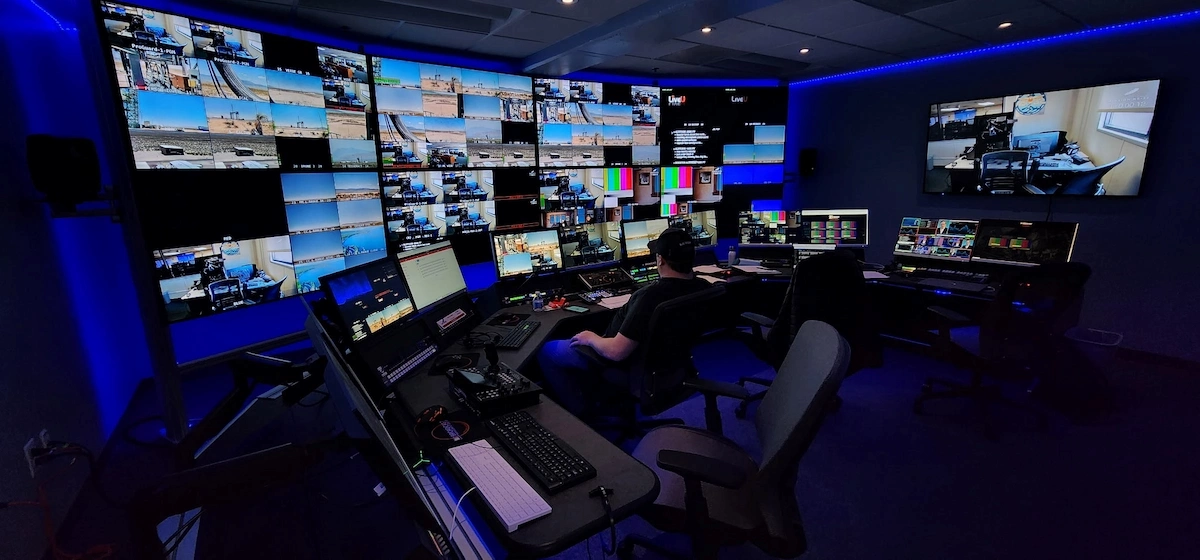
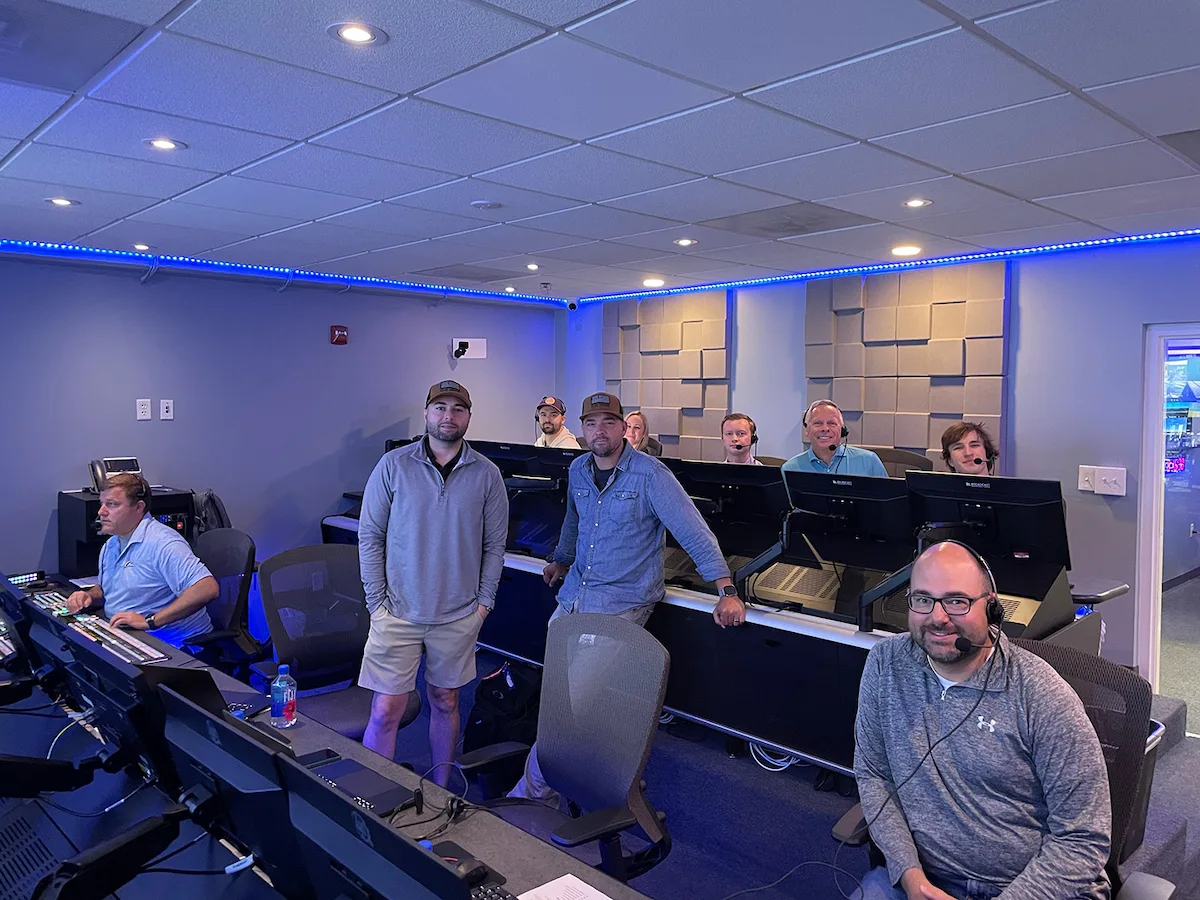
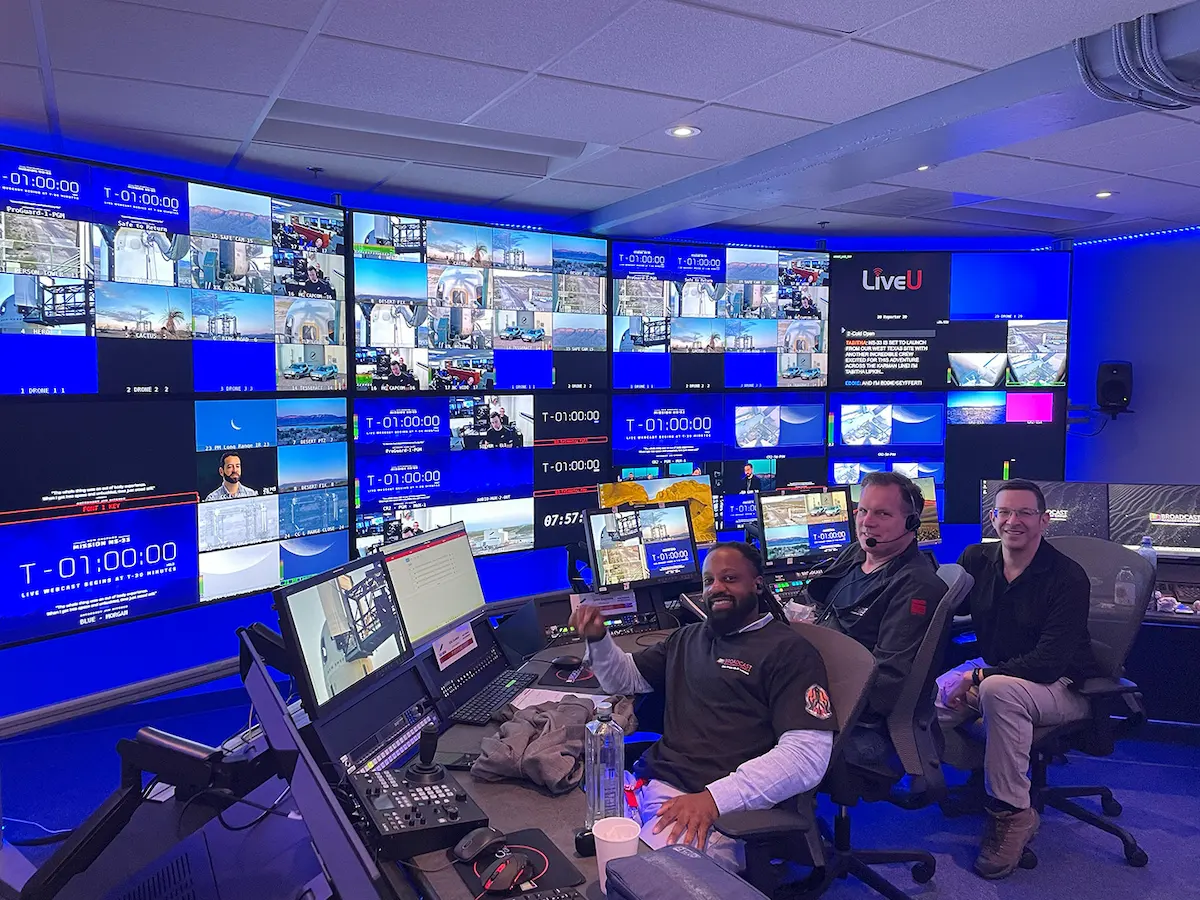
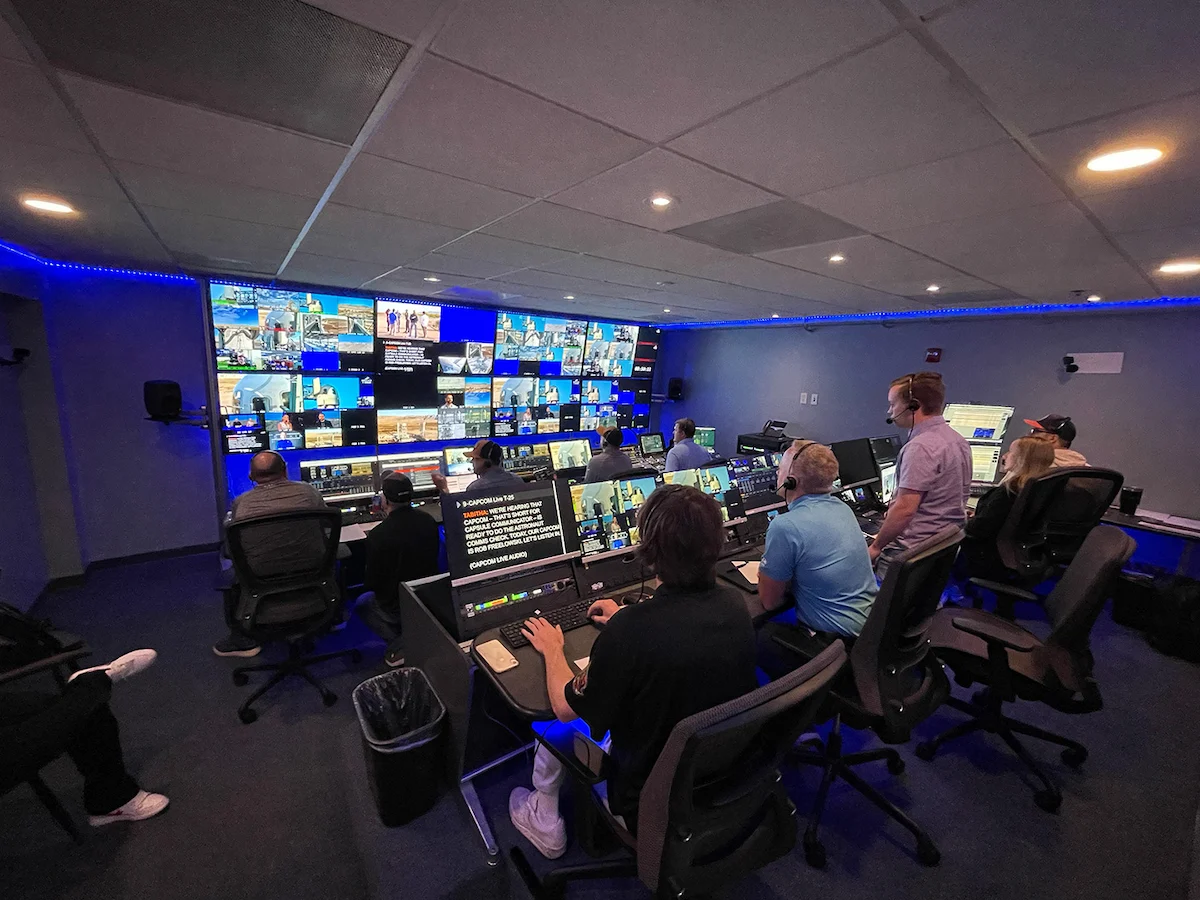
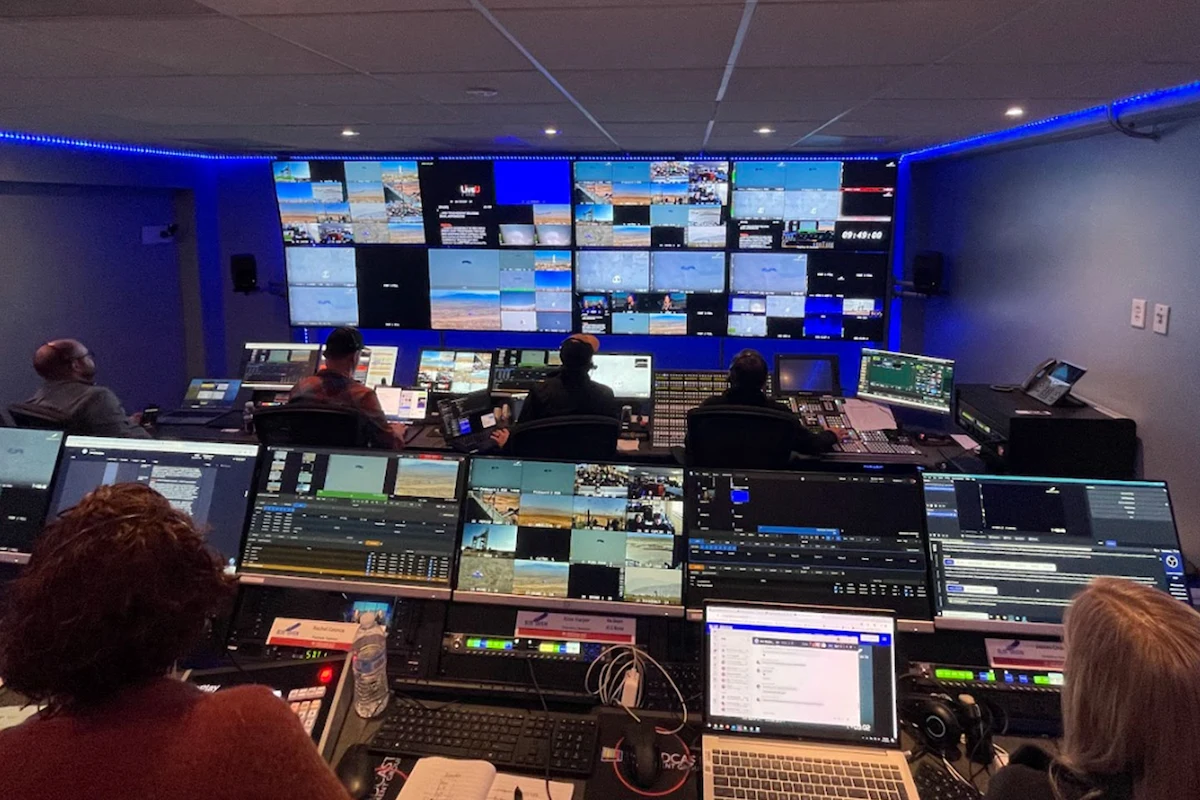
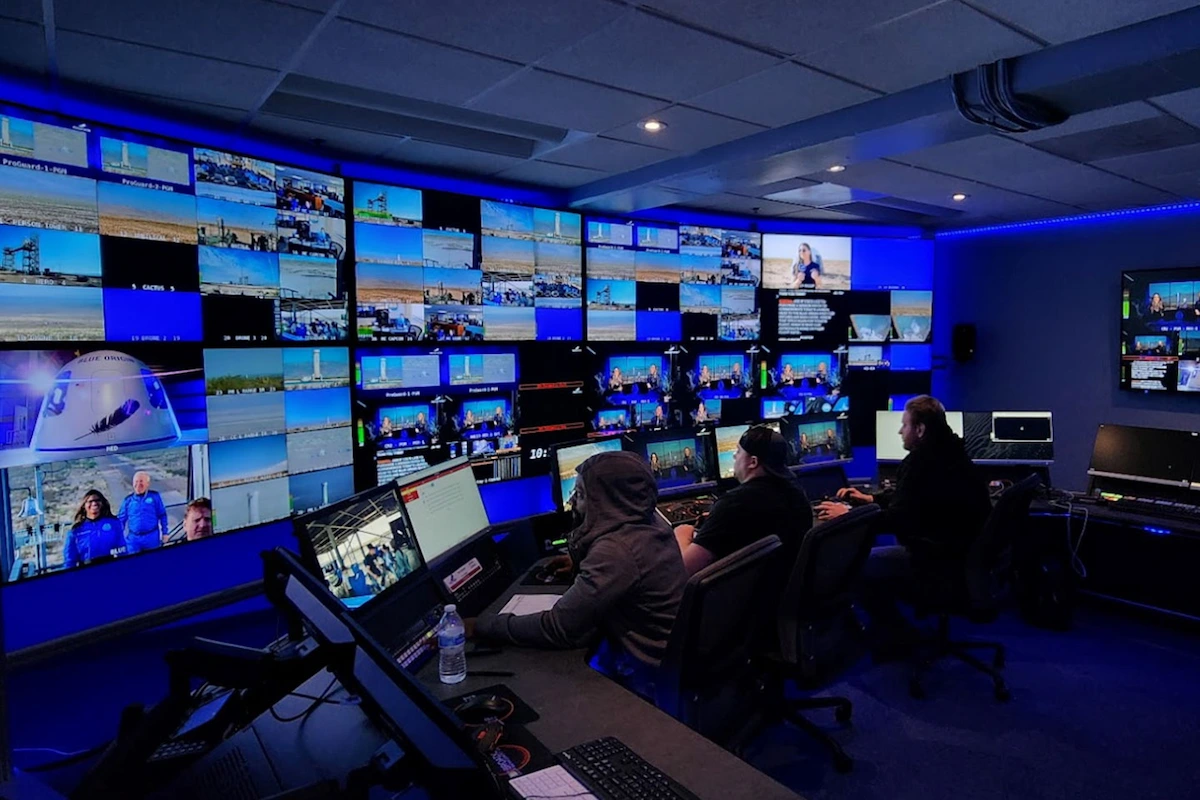
Instead of rebuilding a large production footprint at Launch Site One, BMG centralized the core broadcast operation through its proprietary REMI workflow and Network Operations Center in Washington, DC.
The result was the same high-quality mission coverage Blue Origin expected, with more centralized control, stronger redundancy, a dramatically smaller on-site crew, and a production model built to be repeated for future launches.
BMG Main Services
The Challenge: Matching a Full On-Site Broadcast Without the Full On-Site Footprint
Maintaining Mission Broadcast Quality
Blue Origin’s mission broadcasts require polished, reliable coverage that reflects the scale and importance of the launch.
BMG needed to preserve the visual complexity, timing, communications, and production quality of the NS-31 broadcast while moving the core operation away from the launch site.
Reducing the On-Site Footprint
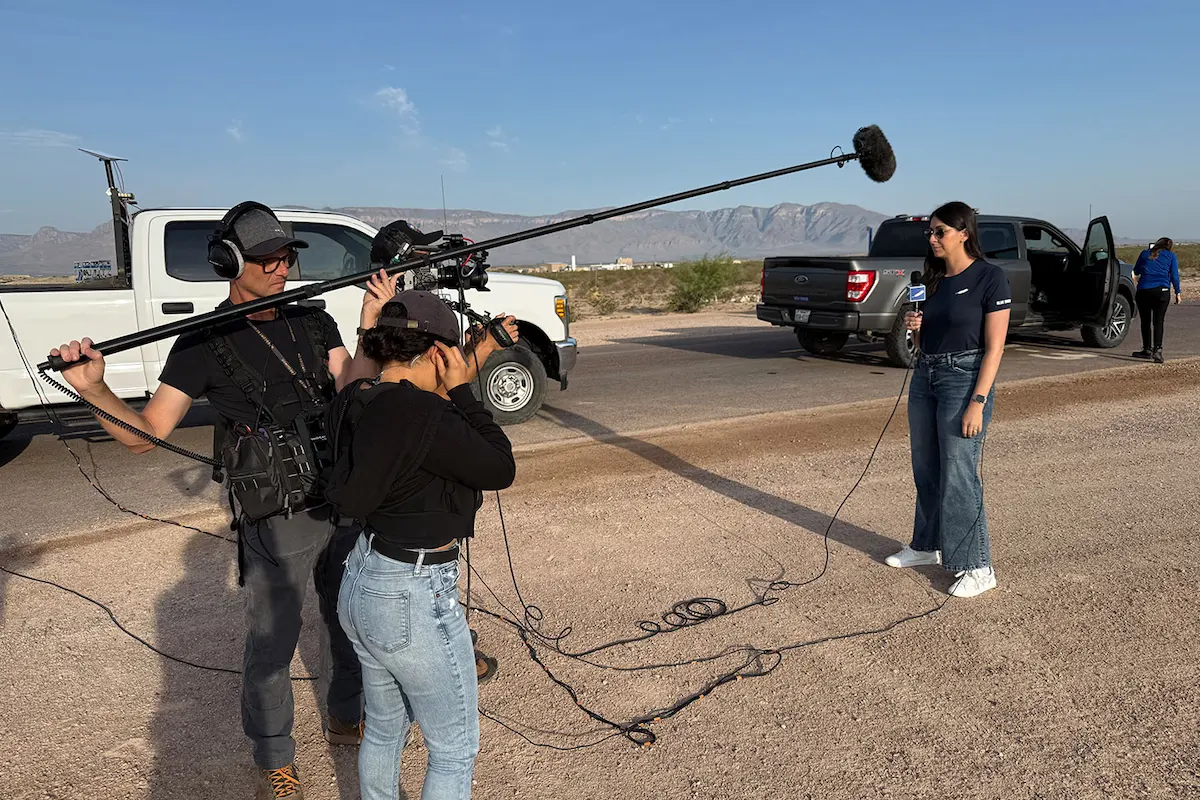
Rather than deploying another large field crew and mobile production compound, BMG needed a model that could keep essential technical support at Launch Site One while centralizing production operations in Washington, DC.
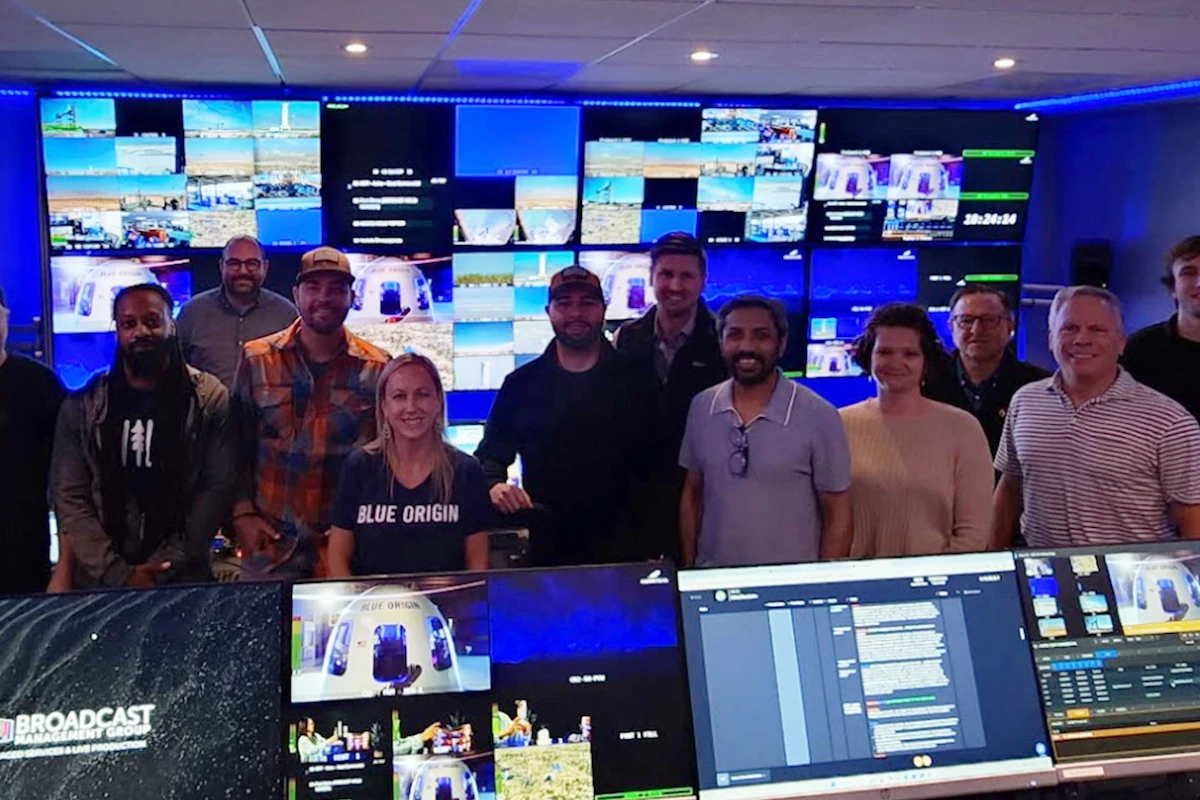
That meant reducing the on-site BMG presence from more than 60 people to one engineer without losing control of the broadcast.
Connecting Multiple Locations
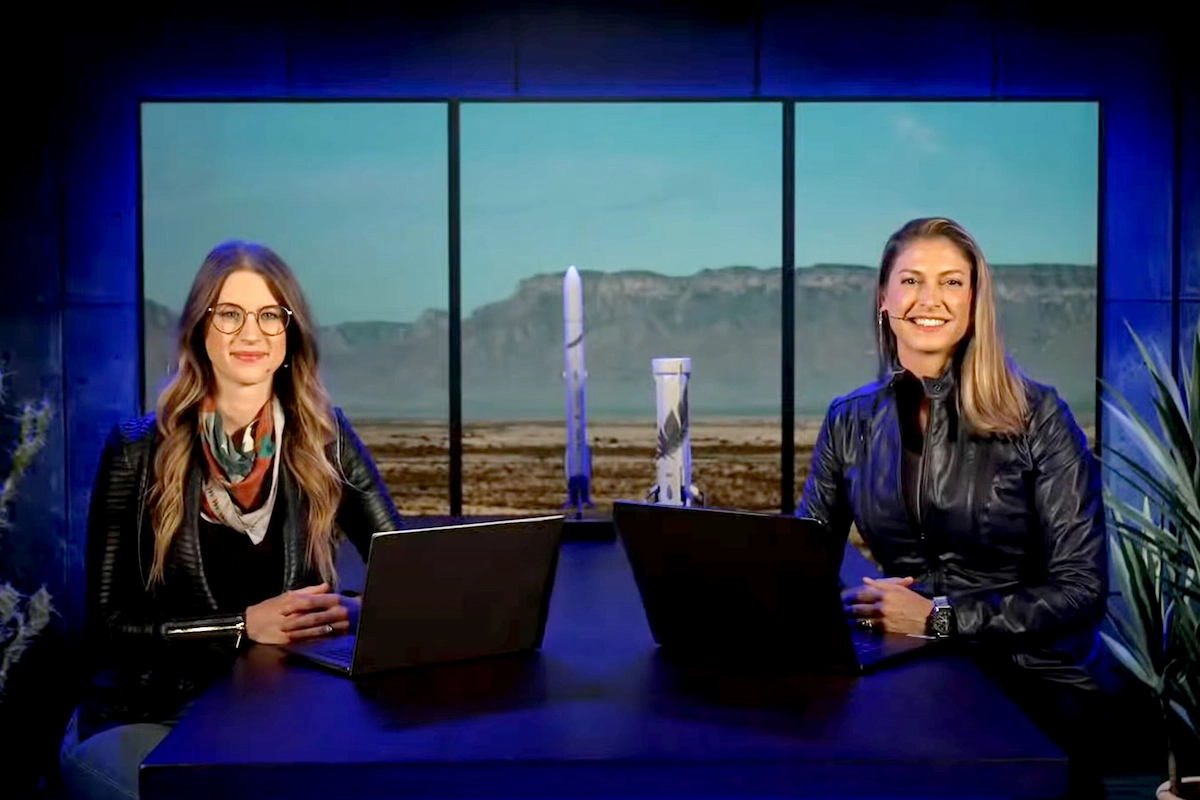
The production needed to combine live launch site coverage from Van Horn, Texas with studio programming from Blue Origin’s headquarters in Kent, Washington.
Those feeds had to be routed into one live show, giving viewers a seamless broadcast experience across anchor coverage, launch site visuals, mission updates, and landing coverage.
Building More Redundancy Into the Workflow
Live spaceflight coverage leaves no room for failure.
By centralizing the production inside BMG’s Network Operations Center, the workflow needed to create more visibility, more control, and stronger redundancy than a traditional on-site system alone could provide.
Impact
NS-32 showed how BMG’s proprietary REMI workflow could deliver the same caliber of Blue Origin mission coverage as a full on-site production model, while creating a more efficient and repeatable broadcast operation.
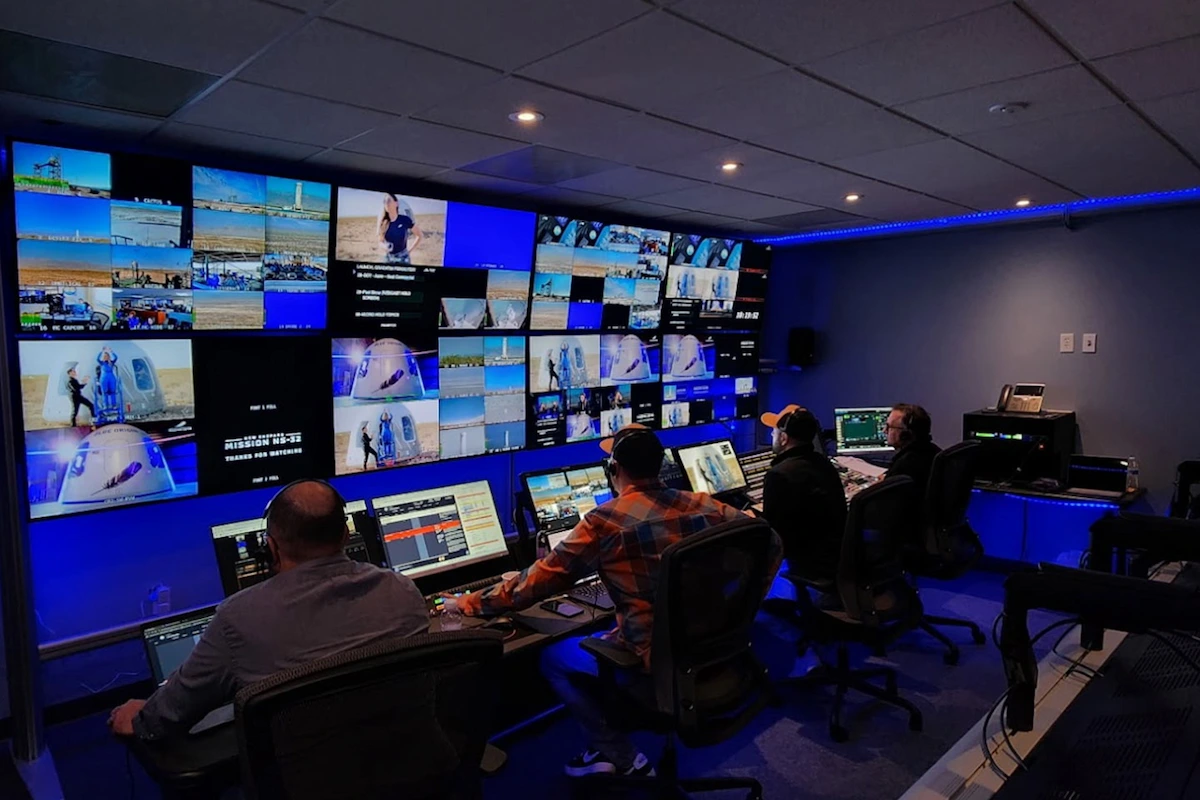
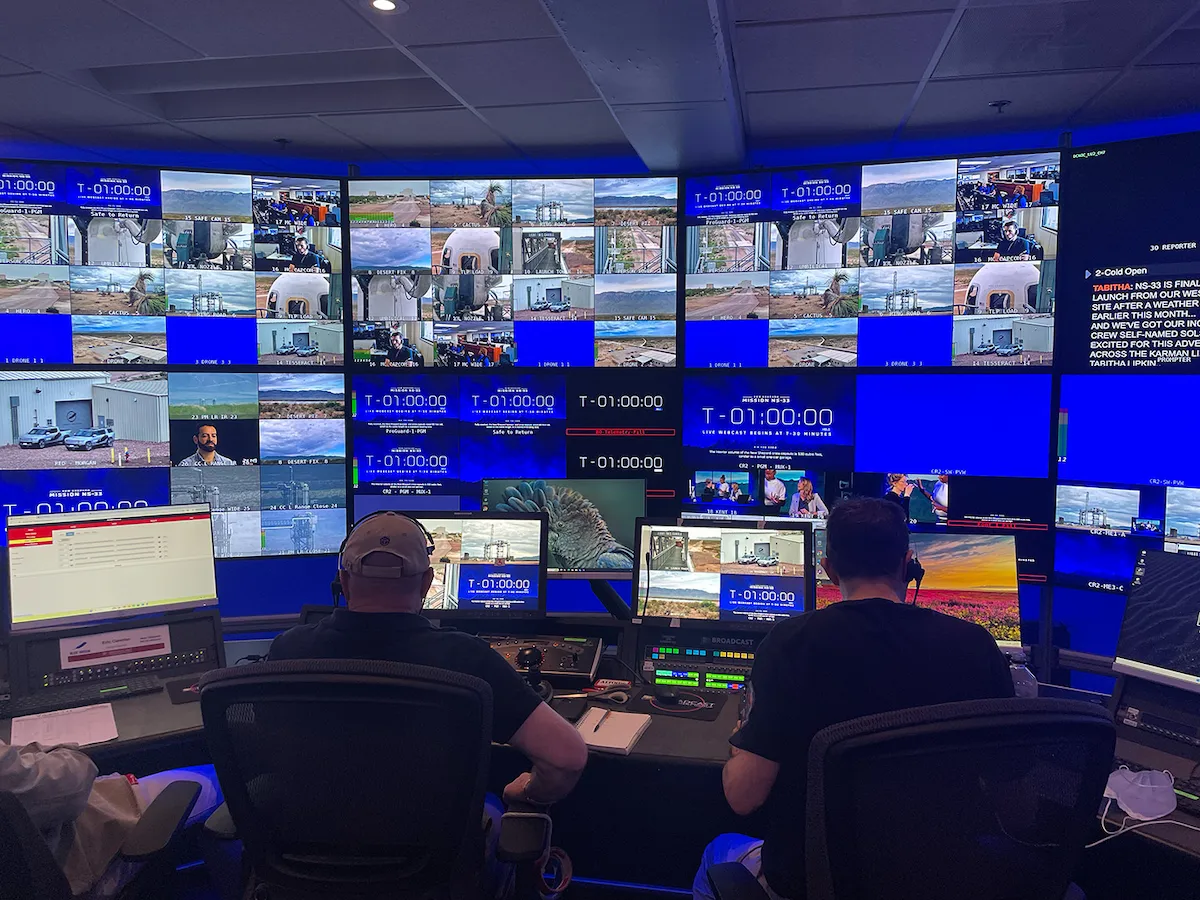
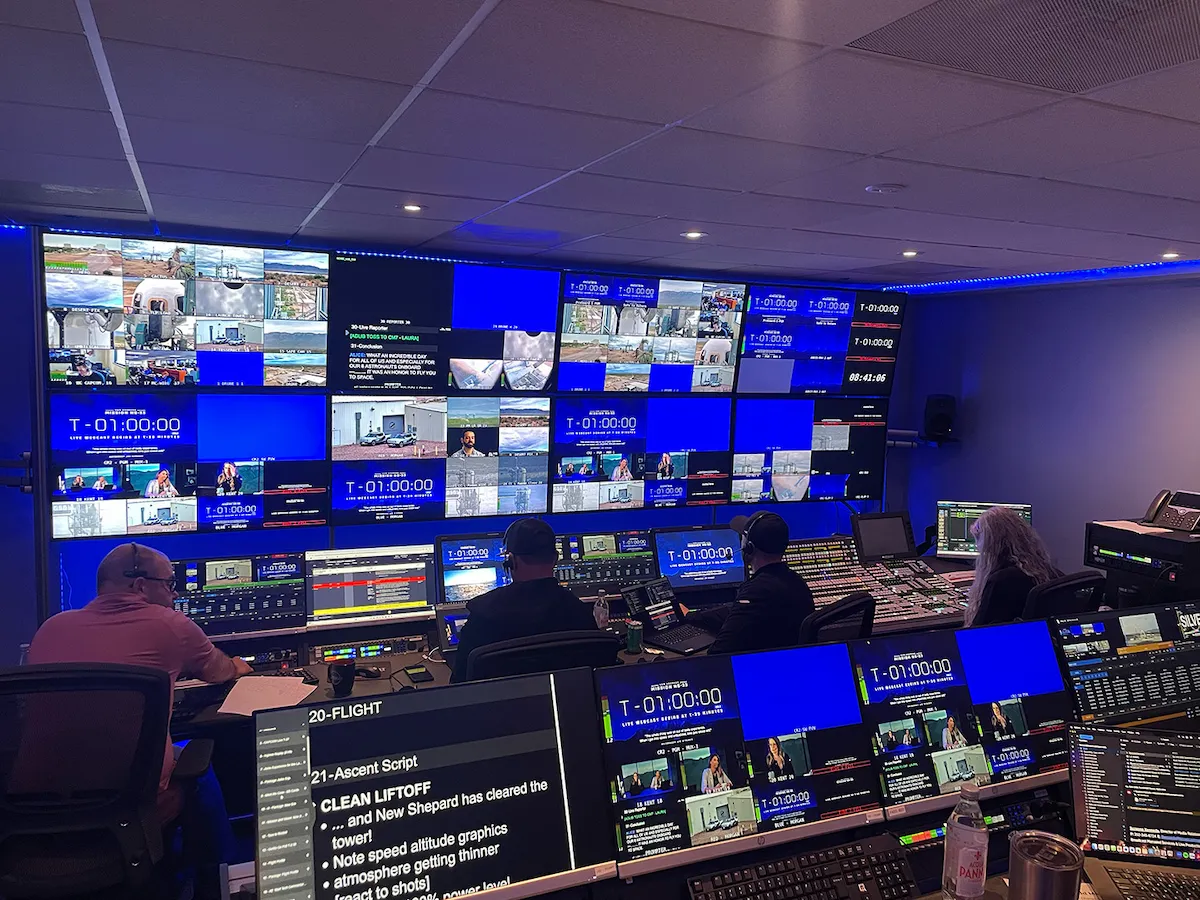
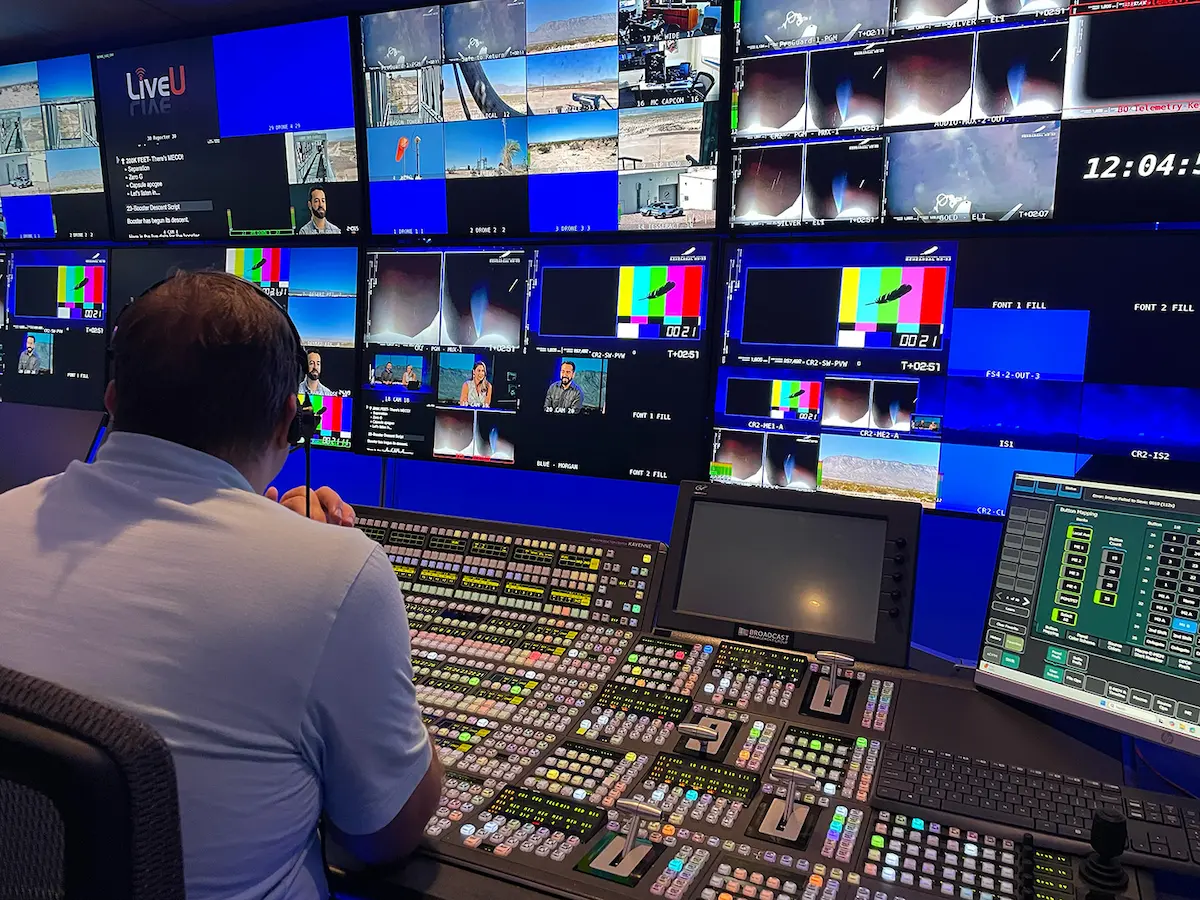
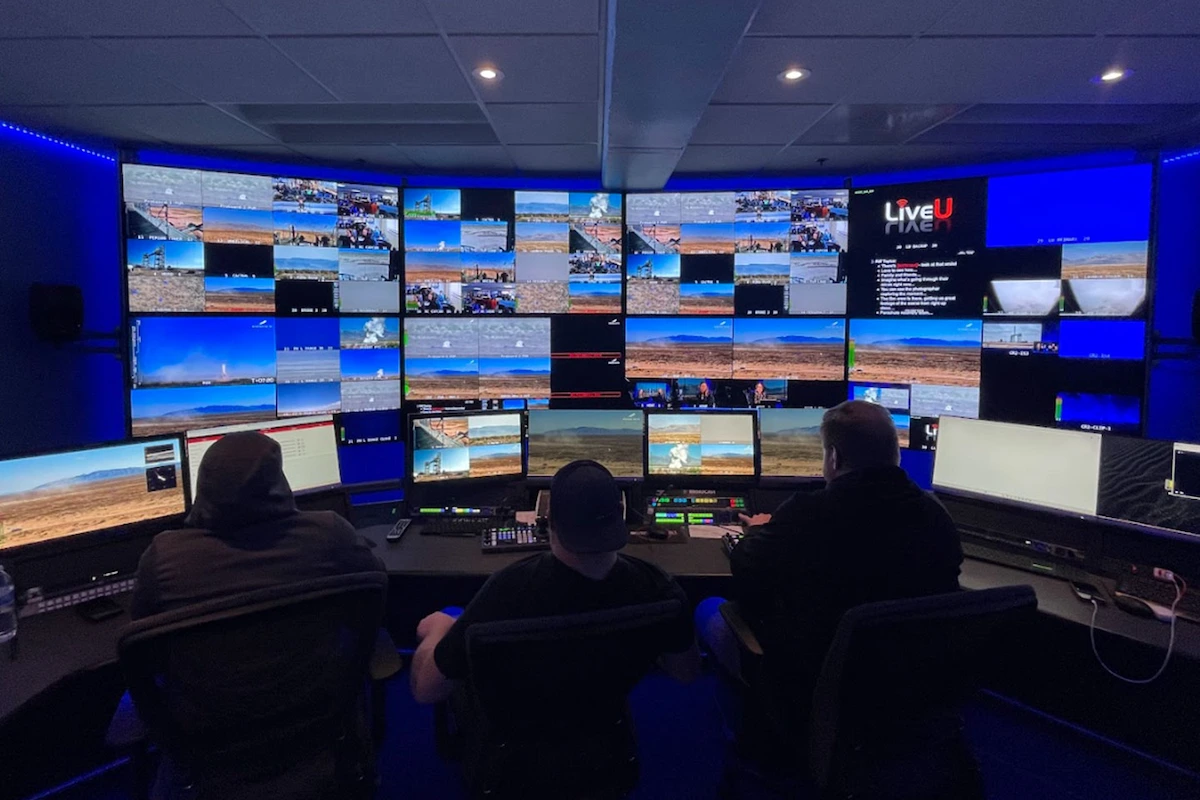
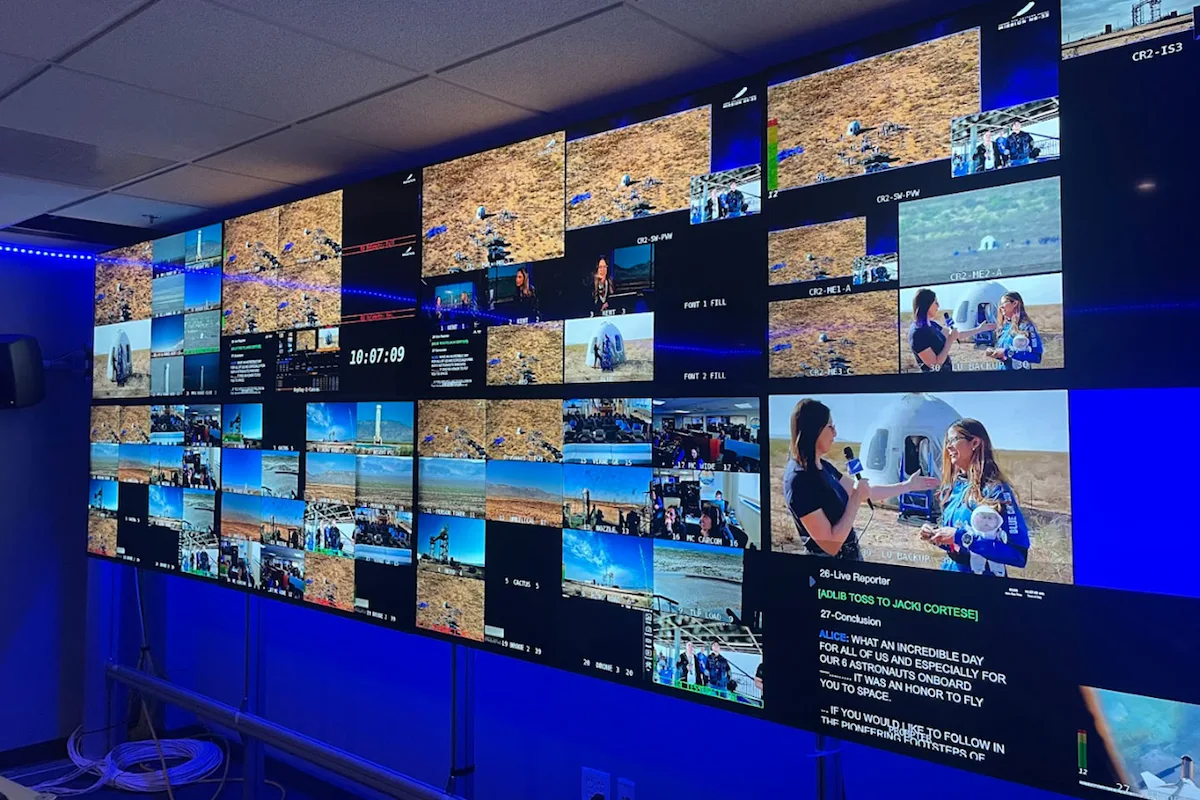
BMG integrated 31 live camera feeds across Texas and Washington, centralized the core production inside its Network Operations Center in Washington, DC, and reduced the on-site BMG crew from more than 60 people to one engineer.
The workflow reduced the production’s carbon footprint by approximately 90% while maintaining the visual complexity, reliability, and production quality required for a global Blue Origin broadcast.
For Blue Origin, the result was a mission broadcast model that preserved the quality of the on-site production approach while adding the benefits of centralized control, cloud-based redundancy, faster deployment, and a smaller operational footprint.
For BMG, NS-32 demonstrated how complex live events can move beyond traditional field production without compromising the final broadcast.
Deliverables
30-minute pre-launch broadcast production
Full live coverage of launch, flight, and landing operations
Integration of 31 live camera feeds across two locations
Drone, robotic, tracking, and fixed-camera deployment
Cloud-based REMI production workflow
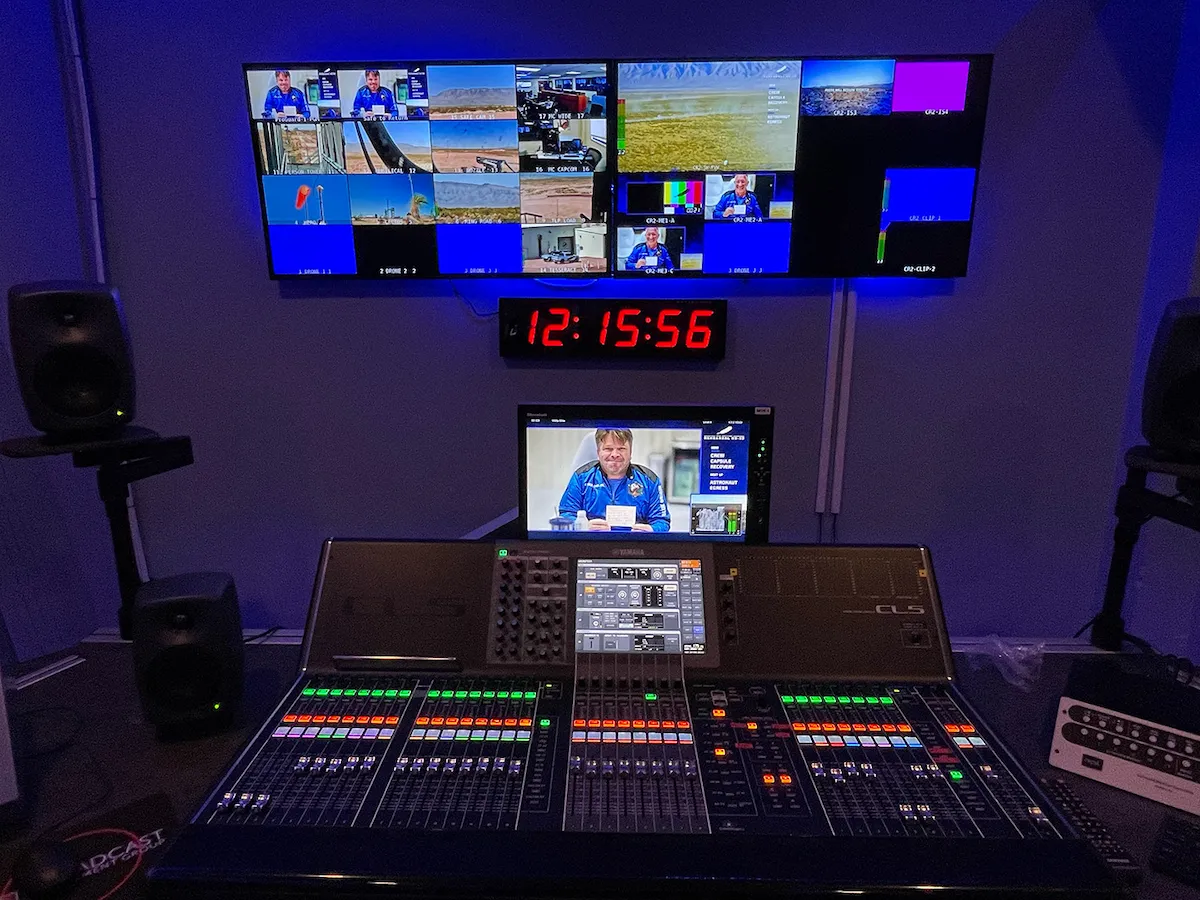
Centralized switching, graphics, replay, and audio operations
Live transmission and distribution services
Technical management and engineering support
Key Information
| Category | Details |
|---|---|
| Client |
|
| Event |
|
| Locations |
|
| Venue |
|
| Year |
|
| Services Provided |
|
Photo Gallery
Get in Touch with Our Team
Tell us what you’re working on, and we’ll connect you with the right team to help.
Gravity Forms Privacy Policy and Terms of Service apply.
"*" indicates required fields
Ready to get started?
Connect with us to discuss your project and get a quote. We'll get back to you as soon as possible.
"*" indicates required fields