Why the Right Team Matters More Than the Equipment
While technology powers modern broadcasts, skilled production crews are the driving force behind reliable execution, consistent quality, and engaging viewer experiences.
Many organizations rely on freelance crews to staff executive broadcasts, quarterly earnings calls, town halls, product launches, and other live events.
While freelancers bring valuable expertise, a rotating workforce can create challenges in workflows, communication, and knowledge.
An embedded broadcast managed services team offers a different approach.
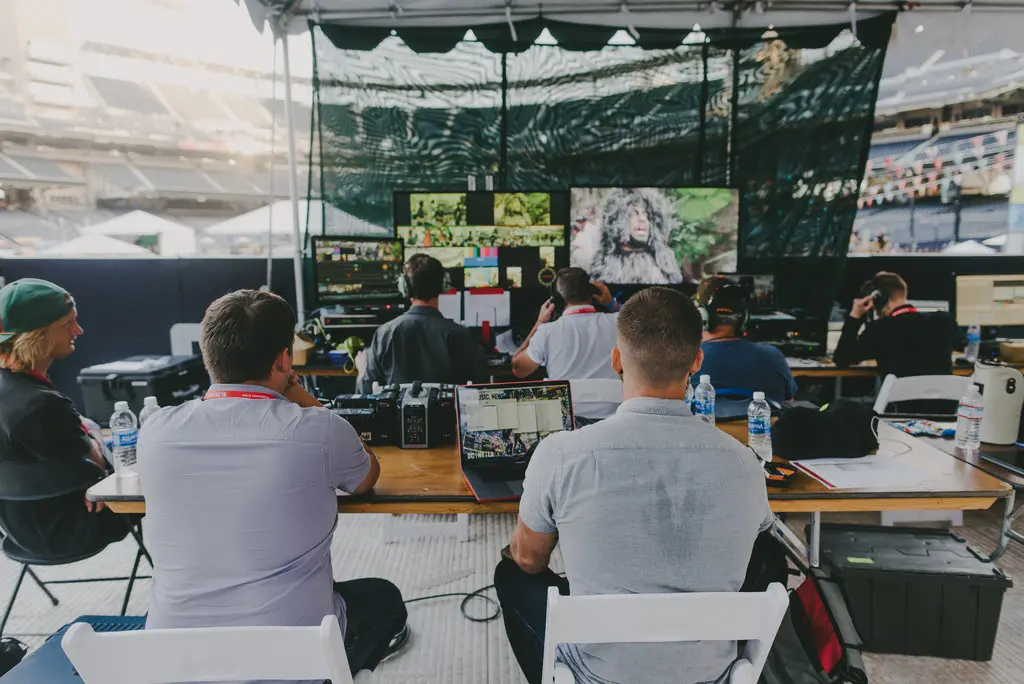
Instead of assembling a new crew for every production, organizations gain a dedicated team that becomes an extension of their business, learning their facilities, technology, executives, brand standards, and operational expectations.
For enterprises that communicate regularly with employees, investors, customers, and stakeholders, this continuity creates a more reliable and efficient production environment.
The Difference Between Freelance Staffing and Managed Production Crew Services
Both staffing models have their place, but they serve different business needs.
Traditional Freelance Staffing
Freelance production crews are often hired on an event-by-event basis. While they may have significant technical expertise, each production requires time to onboard, understand company expectations, and adapt to existing workflows.
This model often includes:
- Different crew members for each production
- Limited familiarity with internal systems
- Additional preparation before every event
- Knowledge leaves after the production concludes
- Inconsistent workflows between broadcasts
Freelancers are an excellent resource for supplemental staffing or specialized productions, but organizations with ongoing broadcast needs often require greater continuity.
Dedicated Production Crews
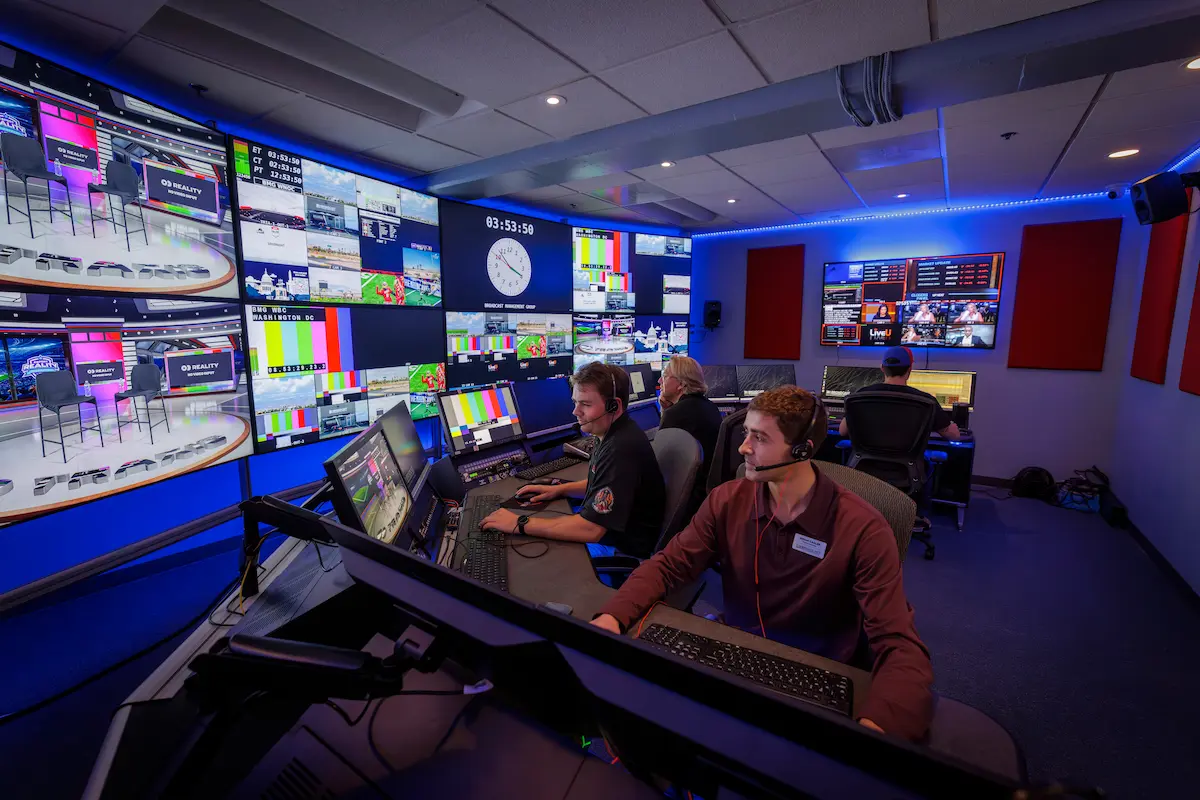
A managed production crew services team works inside your organization on an ongoing basis.
The team becomes part of your daily operations, working alongside communications teams, IT departments, facilities personnel, and executive leadership.
Over time, they develop deep knowledge of:
- Broadcast infrastructure
- Production workflows
- Executive presentation styles
- Corporate branding standards
- Security and compliance requirements
Instead of learning your organization before every event, they already know how everything operates.
Building Institutional Knowledge
One of the greatest advantages of an embedded team is the institutional knowledge that develops over time.
Every successful broadcast generates lessons that improve future productions.
A dedicated crew remembers:
- Camera positions that executives prefer
- Audio settings for recurring presenters
- Graphics workflows
- Lighting configurations
- Common technical challenges
- Venue-specific considerations
- Timing for recurring corporate events
Rather than starting from scratch each time, every production becomes more efficient than the last.
Consistency Across Every Broadcast
Large organizations often produce dozens or even hundreds of live events every year.
These may include:
- Quarterly earnings calls
- Investor presentations
- Executive town halls
- Internal communications
- Product launches
- Customer conferences
- Press announcements
- Leadership updates
An embedded production team creates consistency across every event.
Faster Response When Priorities Change
Corporate communications rarely follow a predictable schedule. When a CEO needs to address a sudden PR crisis at 4:00 PM on a Friday, freelance scrambling fails. Embedded crews are live in 15 minutes.
Executive announcements, breaking news, acquisitions, leadership changes, and crisis communications may require broadcasts with little notice.
Because a production crew is already integrated into the organization, it can respond far more quickly than an external crew can.
They already understand:
- Internal approval processes
- Available production spaces
- Equipment locations
- Existing broadcast infrastructure
- Distribution workflows
This reduces preparation time while maintaining production quality. In fact, in our experience, data shows that organizations can reduce operational budgets by up to 30% through managed services while achieving 18% to 22% lower total cost of ownership over a five-year period compared to scaling an ad hoc or in-house team.
Stronger Collaboration Across Departments
Successful enterprise productions require more than technical expertise.
Broadcast teams regularly collaborate with:
- Corporate communications
- Marketing
- Investor relations
- Human resources
- Executive leadership
- Information technology
- Facilities management
- Security teams
An embedded crew builds long-term relationships with each department, making communication more efficient and reducing operational friction.
Instead of explaining requirements to a new team for every event, departments work with familiar professionals who understand their goals and expectations.
Scaling Without Losing Consistency
Even organizations with dedicated internal teams occasionally need additional production resources.
An embedded managed services model makes scaling easier because the core team already understands the organization’s standards.
Additional crew members can be integrated into established workflows while the embedded team maintains operational consistency and quality control.
This allows organizations to expand production capacity for major events without sacrificing reliability.
A Long-Term Partner for Enterprise Broadcast Operations
Reliable enterprise communications require the right team behind every production.
Whether you’re producing executive town halls, quarterly earnings calls, investor presentations, or global corporate events, consistency and operational excellence are essential.
At Broadcast Management Group (BMG), our production staffing services teams help find dedicated embedded crews that become an extension of your organization.
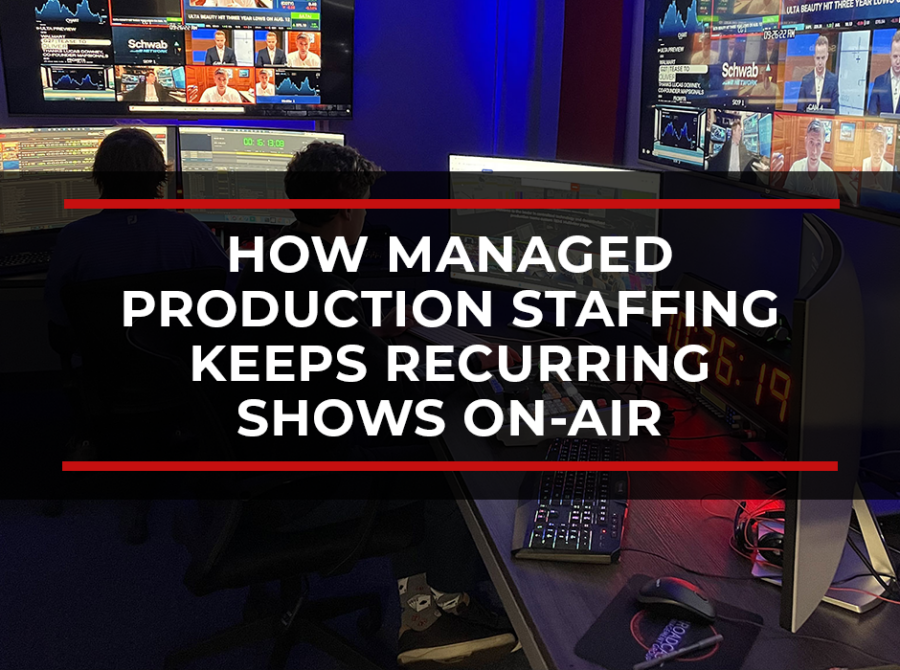
This long-term partnership approach has helped organizations like the Schwab Network maintain reliable, high-quality broadcast operations.
Since 2017, BMG has supported Schwab’s broadcast production through dedicated managed services, providing embedded engineering and production personnel who help power daily financial programming and major corporate broadcasts.
By combining experienced personnel with proven workflows and enterprise-grade broadcast infrastructure, BMG helps organizations deliver every broadcast with confidence.

Paige DeLoretta is a marketing professional with experience in social media and digital marketing, creating engaging content that helps brands grow and connect with audiences. She has supported marketing initiatives across a variety of industries. Paige is a graduate of George Mason University with a degree in marketing. Originally from Reading, Pennsylvania, she enjoys traveling, spending time outdoors, and exploring Washington, D.C. with friends and family.
About Paige DeLoretta