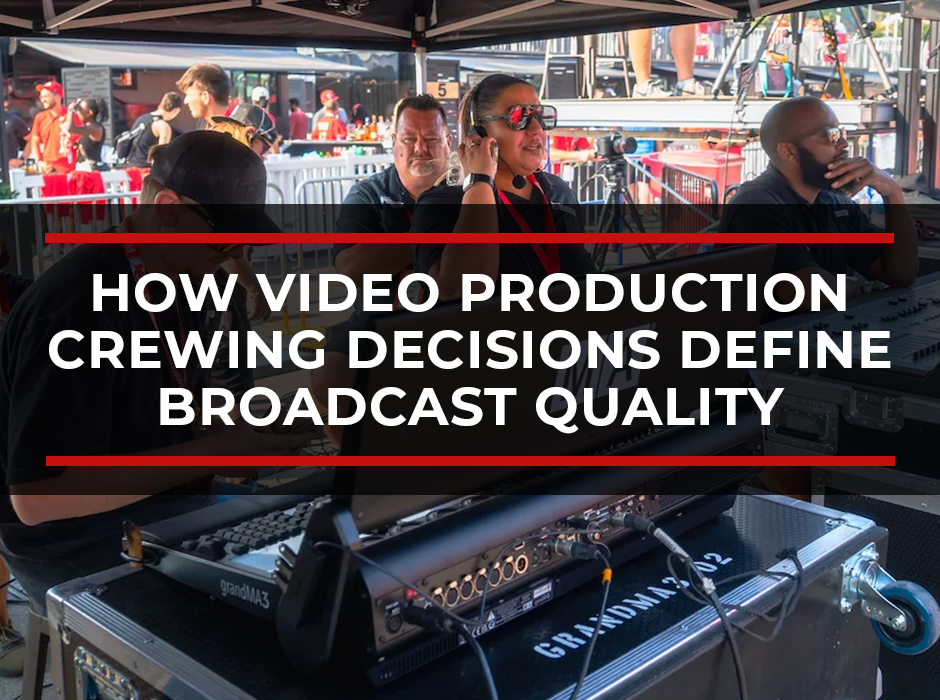
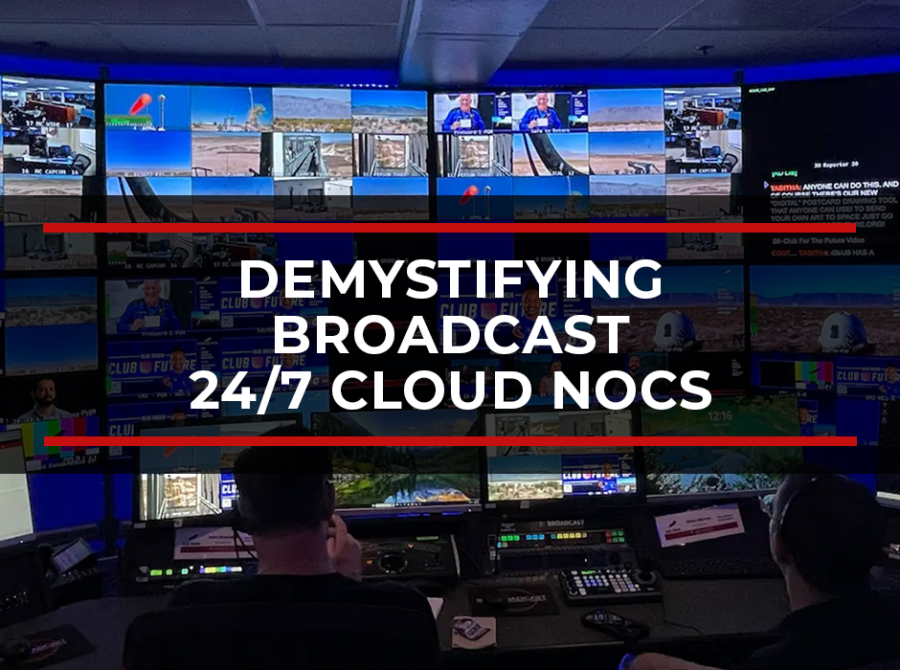
Broadcast teams are being asked to do more with less.
More live events. More internal broadcasts. More executive communications. More digital programming. More remote production. More content delivery across more platforms.
But building a full-time internal team for every production need is expensive, difficult to manage, and often inefficient. Many organizations do not have enough daily work to justify maintaining a large specialized broadcast staff year-round, but they still need the ability to scale quickly when a major event, show, launch, or broadcast opportunity arises.
That’s where an embedded broadcast managed services model becomes valuable.
Instead of hiring permanent headcount for peak production demand, organizations can work with an operational partner that provides trained production teams, broadcast infrastructure, technical oversight, and scalable workflows that fit into their existing environment.
The Broadcast Staffing Challenge
Specialized broadcast talent is hard to find, hire, and retain.
Experienced engineers, technical directors, audio mixers, replay operators, transmission engineers, master control operators, production managers, and live production crews are essential to a reliable broadcast operation. But these roles are not always needed at the same volume every day.
For many organizations, the challenge isn’t simply staffing, but scale.
- A corporate communications team may need a lean team for day-to-day video support, but a much larger crew for an executive town hall, investor event, or global announcement.
- A sports organization may need game-day support during the season, but not the same level of production staffing every week of the year.
- A network or OTT platform may need daily operational support, but also needs the flexibility to handle specials, breaking news, remote productions, or expanded programming.
Hiring for peak demand creates stranded labor when production slows down. Staffing only on a project-by-project basis can create inconsistency, knowledge gaps, and operational risk.
The better model is a team that can scale with the work.
What an Embedded Operational Team Provides
An embedded operational team is more than a group of freelancers.
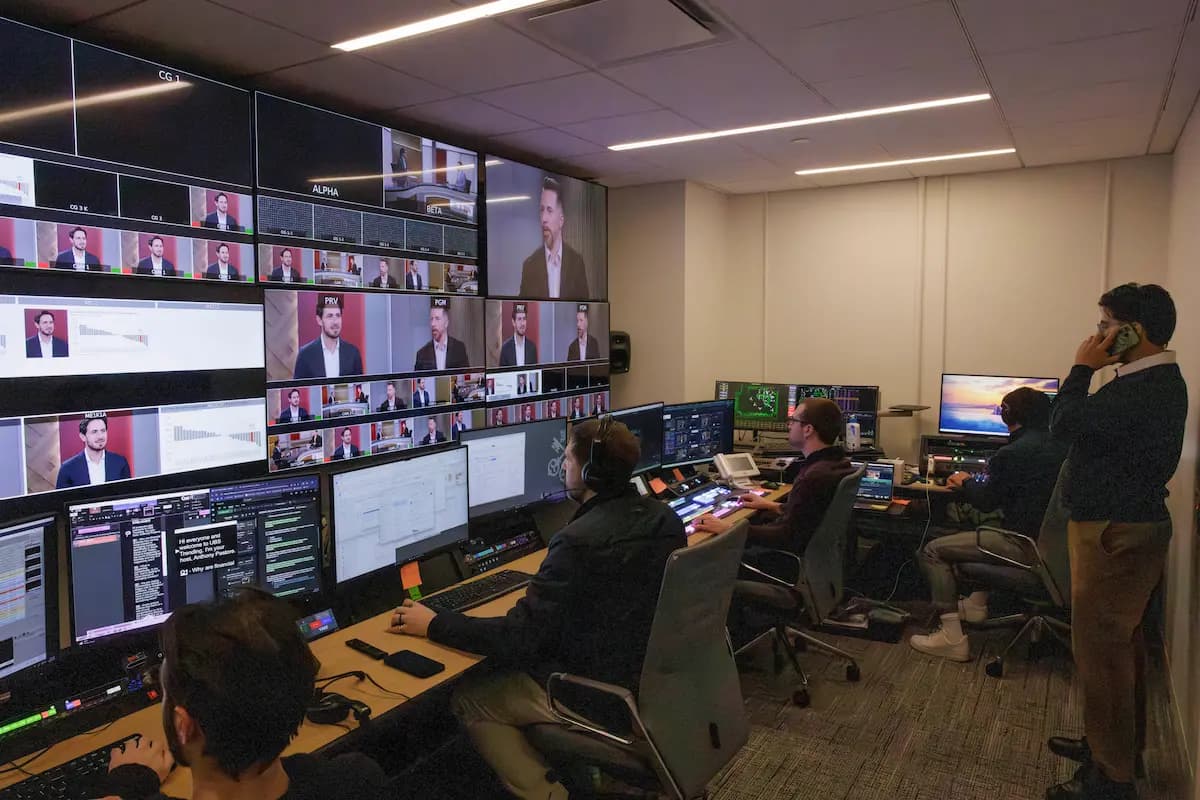
It’s a managed production model in which trained crews, technical systems, workflows, and oversight are tailored to the client’s needs. The team can work inside the client’s existing operation while being supported by BMG’s larger production infrastructure.
That means clients gain access to a complete operating model that includes staffing, scheduling, workflows, documentation, quality control, escalation, monitoring, and technical support, rather than just filling crew positions.
BMG can support clients with on-site teams, remote crews, or hybrid production models depending on the project. That flexibility allows organizations to maintain a leaner internal team while still having access to broadcast-grade resources when the work demands it.
Connecting Embedded Teams to the NOC
The real advantage of BMG’s model is that embedded teams are not operating alone.
They are connected to BMG’s 24/7 Network Operations Center, giving clients access to centralized production and operational support without having to build that infrastructure internally.
Through the NOC, BMG can support transmission, monitoring, master control, ingest, media asset management, quality control, escalation, and failover for live environments. This allows a client to keep a smaller team on-site while BMG provides the operational backbone for production.
For some projects, that may mean camera crews and producers are on site while switching, graphics, audio, monitoring, or transmission are supported remotely. For others, it may mean that BMG provides embedded staff within the client’s facility, while the NOC handles redundancy, oversight, and technical escalation.
The result is a more flexible production environment with fewer disconnected vendors and a stronger support structure behind every show.
Scaling Up Without Carrying Permanent Headcount
Not every organization needs a larger full-time broadcast team.
Many need the ability to scale up or down depending on the event, season, production schedule, or business need.
BMG’s managed services staffing model gives clients that flexibility. Teams can scale by show, season, event, or ongoing operational need. That helps organizations avoid long hiring cycles, reduce staffing volatility, and prevent internal teams from being stretched beyond capacity.
It also reduces the risk of carrying specialized roles that may not be fully utilized year-round.
Instead of building a large permanent team for occasional high-volume production needs, clients can rely on BMG to provide the people, systems, and oversight required when those needs arise.
Where This Model Fits
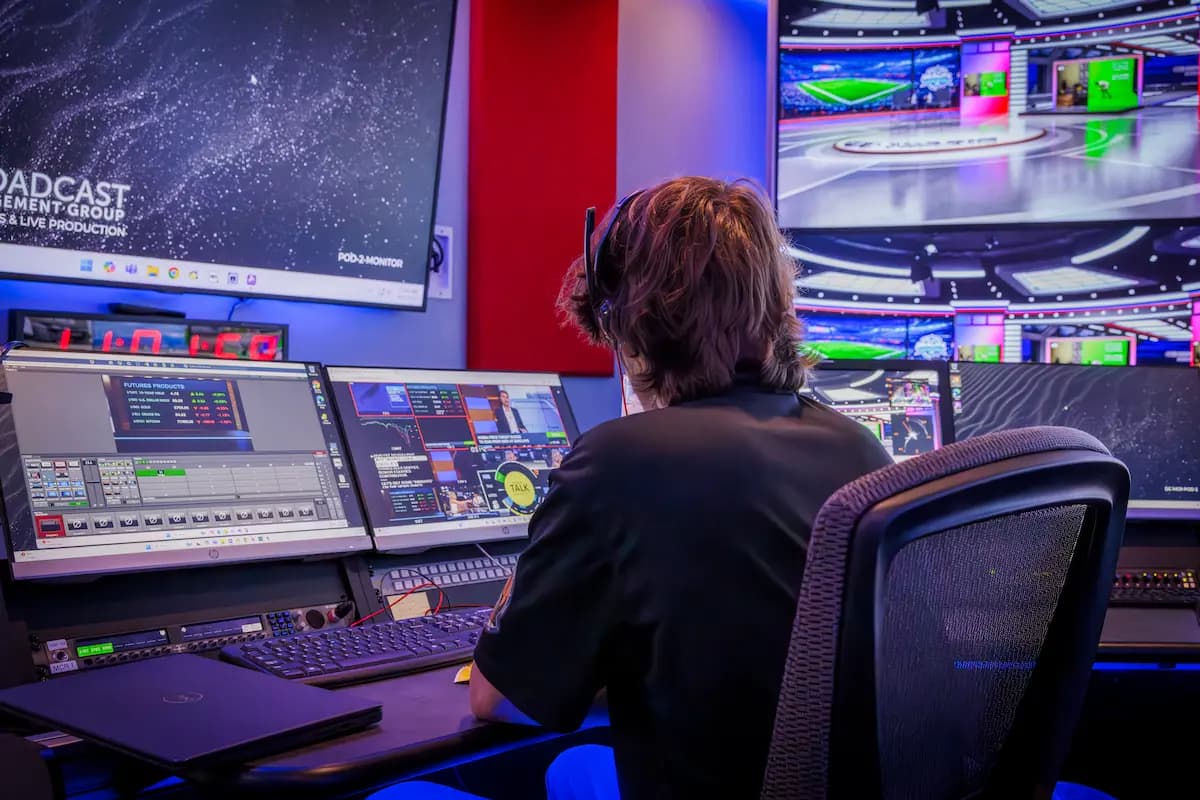
Staffing a broadcast production crew can support a wide range of media environments.
- For enterprise and corporate communications teams, BMG can provide scalable production support for executive broadcasts, internal events, town halls, product launches, and live corporate video.
- For broadcast and OTT networks, BMG can support daily live shows, master control, transmission, technical operations, media management, and channel workflows.
- For sports organizations and venues, BMG can provide in-venue crews, remote production teams, REMI workflows, and game-day production support.
- For news and multi-market operations, BMG can support studio production, control room staffing, remote production, and technical operations across multiple locations.
- For government and public sector organizations, BMG can provide secure, reliable production and AV staffing for public communications, live events, and broadcast operations.
In each case, the goal is the same: give organizations access to experienced production teams and broadcast infrastructure without forcing them to build and manage everything internally.
One Partner for People, Systems, and Operations
Fragmented staffing creates risk.
When one vendor provides crew, another manages transmission, another handles engineering, and another supports post-production, accountability becomes unclear. If something goes wrong, teams can lose valuable time figuring out who owns the issue.
BMG’s broadcast managed services model brings people, systems, workflows, and oversight together under one accountable partner.
That means the same team responsible for staffing can also support the technical infrastructure, production workflows, NOC monitoring, escalation paths, and operational standards behind the work.
For clients, that creates a more predictable and reliable production model:
- No vendor sprawl.
- No disconnected workflows.
- No operational gaps between people and systems.
- No need to rebuild a team every time a larger broadcast comes up.
Building a Smarter Broadcast Operating Model
The future of broadcast operations is about building a more flexible operating model, not just hiring more people.
Organizations need the ability to produce high-quality live content, support daily operations, manage technical complexity, and scale for major moments without carrying unnecessary overhead or operational risk.
BMG’s embedded managed services model provides clients with access to trained production teams, broadcast-grade infrastructure, 24/7 NOC support, and scalable workflows that adapt to each project’s needs.
It’s broadcast-grade production operations without the burden of building, staffing, or managing the entire operation on your own.
For organizations looking to grow their production capabilities without increasing permanent headcount, an embedded operational team provides a smarter path forward.

Kathy Samuels is Director of Creative Services at BMG. She is an Emmy-winning producer and media executive with nearly 30 years of experience across broadcast television, digital content, live production, and emerging media. Her background includes senior roles at NBC, CBS, ABC, and Joyus, as well as work launching major programs including Access Hollywood, Rachael Ray, and Katie. At BMG, Kathy leads creative services initiatives that help clients develop show formats, live experiences, content strategies, and audience-focused productions.
About Kathy Samuels