Production staffing that scales week to week protects consistency on air without overworking and burning out your core team.
Industry context: The 2024 Looking Glass Survey, conducted by the Film & TV Charity across more than 4,300 respondents, found that 63% of film and TV workers say their work negatively impacts their mental health, and 64% are considering leaving the industry entirely. These aren’t personal failures. They’re the measurable output of systemic operational overload. The fix isn’t a wellness program. It’s a better operations model.
The first show goes great. Then what?
The first live production goes off without a hitch. The crew was sharp. The signal held. The client signed on for a 52‑week run.
Now the real test begins.
A one‑time live event and a recurring weekly show are operationally different products. The tools, staff, and workflows that handle the former often fail the latter—not because they’re inadequate, but because they were never designed for the compounding demands of repetition.
What worked once by effort or luck does not reliably scale into weekly execution without a system underneath it.
The fundamental difficulty lies in achieving repeatability at scale: consistently delivering the same quality, crew conduct, and technical execution week after week, without placing the entire operational strain on the organization.
When that burden falls on a lean internal team, it bleeds into creative, strategy, and eventually the staff themselves. Burnout and turnover in this context aren’t HR problems. They’re operations infrastructure problems.
Why recurring shows are a different operational category
The episodic repetition tax
Every recurring show carries a fixed administrative load: scheduling, confirmation, briefing, day‑of coordination, and post‑show wrap.
It sounds manageable until you multiply it.
A weekly show running 52 episodes per year doesn’t just create 52 production days. It creates 52 cycles of coordination overhead. For a daily or 24/7 broadcast, the math becomes staggering.
When managed internally, recurring show coordination commonly consumes 20 to 50+ hours per week, depending on crew size and show complexity. That time cannot be spent on format development, sponsorship integration, or any of the higher‑order work that drives long‑term growth.
The show usually wins in the short term at the expense of everything that matters in the long run.
The “freelance rolodex” breaks at volume
A contact list of trusted freelancers works for occasional productions. It is not a reliable system when a show runs every week.
Under recurring pressure, cracks appear fast:
- Availability conflicts compound across weeks
- Rates escalate as the crew recognizes the leverage they hold
- Knowledge gaps emerge as different operators rotate through the same role without continuity
- Key‑person risk spikes—when your hard‑to‑replace TD or engineer goes dark at T‑48 hours, the client resolves the crisis
What that escalation actually looks like: emergency outreach across your entire network, inflated last‑minute rates, and hoping the replacement knows enough about the show to execute without a full briefing.
At best, it costs money. At worst—when no qualified person is available and the show has locked ad commitments—it can cost a client relationship. Per TVTechnology, broadcast failures tied to ad‑committed windows can generate financial exposure well into six figures depending on slot value.
An informal freelance network was never designed for that pressure. A managed staffing model is.
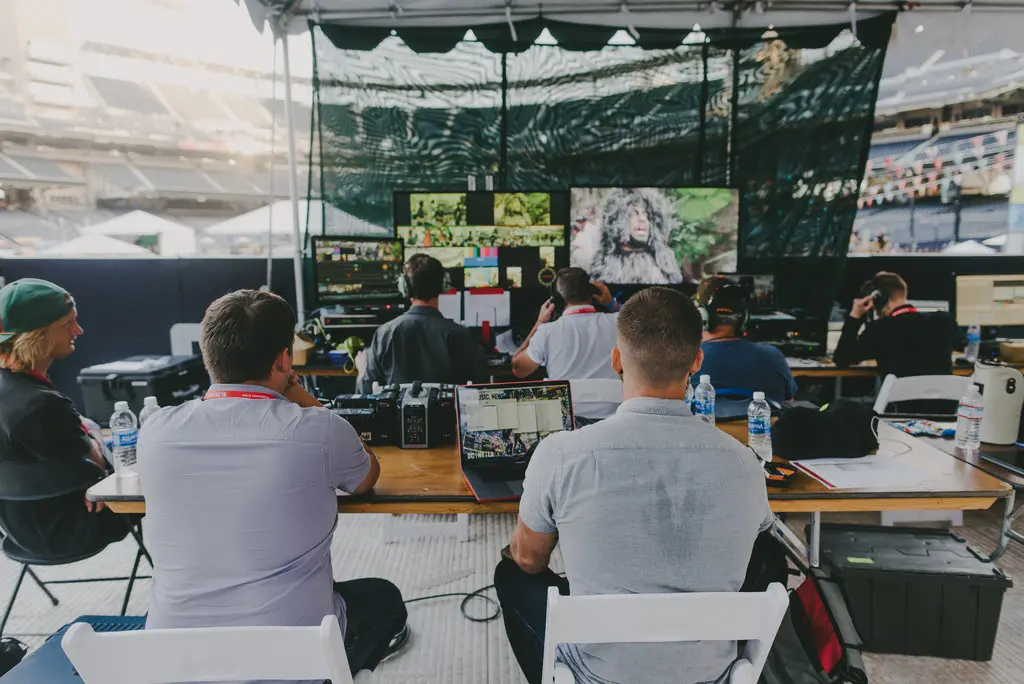
What a managed staffing and operations model actually covers
Crew acquisition, vetting, and role matching
A managed model begins before the show does.
The work starts with defined role requirements, technical competency standards, and a pre‑qualified crew roster built around the specific studio production or live production format, not a generic pool of available bodies.
At BMG, vetting draws from multiple channels:
- Sourcing qualified crew from completed prior projects
- Assigning candidates to one‑day gigs to assess skills under real conditions
- Gathering industry references
- Sourcing from platforms purpose‑built for production professionals
Not all camera operators, ADs, or technical directors are interchangeable. Role‑matching to show format matters in execution, and it matters even more in a recurring context where crew must translate show DNA into consistent output without constant direction.
Highly specialized roles signal path engineers and technical directors for complex multi‑camera formats are the hardest fills precisely because the qualified pool is smaller and the margin for error is lower.
Scheduling infrastructure and day‑of execution
Scheduling for a recurring show requires a system. Not a spreadsheet. Not a group text.
Confirmation workflows, backup call protocols, and escalation paths need to be formalized before the first production week begins. BMG operates on a digital scheduling infrastructure accessible to the full team, ensuring no single person holds the schedule in their head.
What does not vary is the protocol: when insufficient staff is confirmed for a production date, the backup protocol activates with a pre‑defined escalation sequence that does not require the client to lift a finger.
Payroll, compliance, and labor classification
Worker classification, union agreements, overtime rules, and state‑specific labor law—including California AB5 create legal exposure that scales directly with crew volume and frequency.
Managing payroll for a rotating recurring crew is not an administrative afterthought. It is a compliance function.
BMG manages end‑to‑end payroll and classification responsibilities for the crews it places, keeping clients out of the legal exposure zone that accompanies informal or misclassified crew relationships, particularly for organizations scaling from occasional to frequent production.
Documentation, standards, and show bibles
The clearest signal of an operational production: any qualified crew member can execute the show, not just the people who were in the room when it was built.
That requires documentation:
- Rundowns and technical standards sheets
- Escalation contacts and signal path logic
- Role‑specific checklists that encode show behavior
When documentation exists, the show survives personnel changes. When it doesn’t, only the “tribal knowledge” holders can run it, and their absence is a single point of failure.
BMG builds and evolves structured standards documentation as part of every managed engagement, so the show bible becomes a working tool that scales with the production.
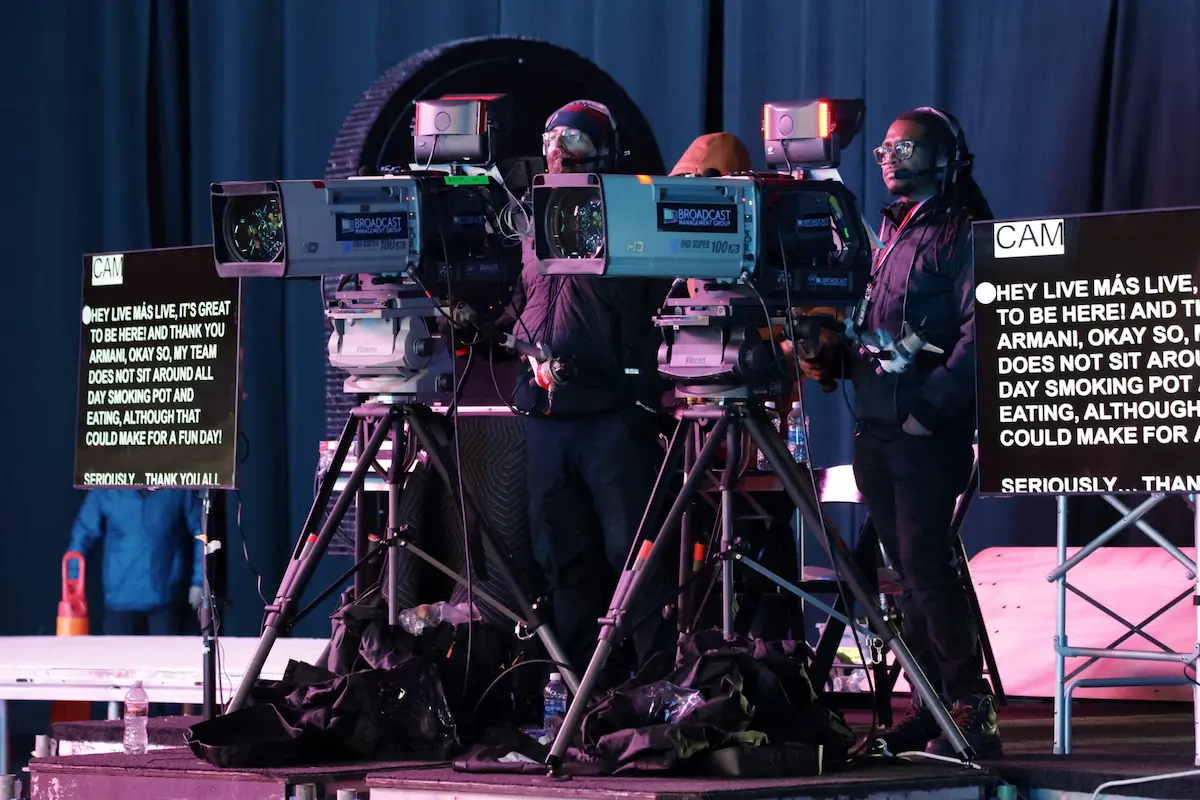
Burnout is an operations problem, not an HR problem
The warning signs appear before the resignation letter:
- Missed pre‑production steps
- Reactive instead of proactive scheduling
- Increasing error rate in technical execution
- Key staff quietly disengaging
BMG’s approach to preventing burnout is built into the operational structure itself:
- Manageable production days
- Consistent break schedules
- Access to qualified freelancers who absorb load spikes
- Schedules designed to be workable—not maximally efficient at the expense of the people running them
A managed operations partner doesn’t just fill crew slots. It absorbs the coordination load that would otherwise accumulate on your senior producers and department heads, the people most likely to burn out quietly, and most expensive to lose.
What clients keep vs. what they hand off
A common concern: “Will I lose creative control?”
That concern conflates two separate things. A managed model doesn’t transfer creative authority. It transfers operational overhead.
What the client retains:
- Editorial standards and show format
- Talent and vendor relationships
- Brand voice and creative direction
What the managed partner absorbs:
- Crew sourcing and scheduling
- Compliance and payroll
- Day‑of troubleshooting
- Post‑show reporting
When BMG enters a new managed engagement, the transition plan is agreed upon during the proposal process. For clients with existing production operations, the transition includes clear communication on expectations, crew structures, and goals before a single production day begins. For clients entering a first media venture, there is no handoff; there is a build.
When to consider a managed model
The best time to implement a managed model is before the operational ceiling is reached, not after a failure makes the need obvious.
Signs your internal management is approaching capacity:
- Scheduling tasks is consuming the senior producer or director’s bandwidth
- Crew inconsistency is producing quality variation across episodes
- A single person holds the scheduling knowledge and cannot be backfilled
- The show volume is increasing, but the headcount is not
BMG currently manages a daily, 24/7 broadcast with a medium-sized crew. The ROI at that volume is structural: it shows up in brand recognition, ad revenue from consistent professional output, and market positioning that makes an organization the recognized leader in its category.
For enterprise communications teams, media and entertainment operations, or any live production organization running recurring formats, the inflection point is the same: the managed model pays for itself before the operational ceiling collapses.
Operational consistency is a system, not a staffing list
A recurring show that runs well week after week isn’t evidence of a talented crew. It’s evidence of a functioning operations system that makes talent consistent.
The infrastructure decisions made before the first episode—how crew is vetted, how schedules are confirmed, how documentation is maintained, how backup protocols activate—determine whether the team scales sustainably or quietly absorbs operational debt until the structure cracks.
BMG’s Production Staffing & Operations managed services are built around experienced, interchangeable talent, with fewer instances of absenteeism and a structural focus on quality and client success. What that produces in practice is a show that still runs well by month six—not because the team is exceptional, but because the system behind them is.
Book a consult
If your recurring show is approaching the point where internal management is competing with everything else, schedule a Broadcast Operations Consultation to assess your current structure and identify where a managed model delivers the ideal production staffing model.

Kathy Samuels is Director of Creative Services at BMG. She is an Emmy-winning producer and media executive with nearly 30 years of experience across broadcast television, digital content, live production, and emerging media. Her background includes senior roles at NBC, CBS, ABC, and Joyus, as well as work launching major programs including Access Hollywood, Rachael Ray, and Katie. At BMG, Kathy leads creative services initiatives that help clients develop show formats, live experiences, content strategies, and audience-focused productions.
About Kathy Samuels