Washington, DC, is one of the most active video production markets in the country. Congressional hearings broadcast to national audiences. Federal agencies run training programs, public affairs content, leadership communications, and live events at a scale most commercial organizations never reach.
The demand is constant.
The problem is that much of this work is handled by vendors who are not built for the federal environment. They can execute a single production. They can’t support an ongoing program.
Federal video production is not just another version of commercial production. It operates under different requirements, procurement structures, and expectations for accountability. Government video production contractors who treat it like a standard engagement quickly run into issues.
The Federal Video Production Environment Is Categorically Different
Commercial clients evaluate vendors based on quality, cost, and reliability.
Federal agencies evaluate those factors, then ask a more important question: Can this contractor actually operate inside our environment?
That includes:
- Understanding federal procurement processes, including contract vehicles, compliance requirements, and documentation standards
- Navigating access protocols and approval structures within government facilities
- Providing personnel who meet security and vetting requirements
- Delivering broadcast-quality output for public-facing communications
Federal productions aren’t internal videos. They’re viewed by Congress, the press, and the public. And are often part of the official record.
That level of visibility requires a level of execution that most general AV vendors are not equipped to provide.
What Qualified Federal Broadcast Contractors Actually Deliver
The best government video production contractors consistently deliver across four key areas.
1. Personnel Consistency – Federal environments require vetted personnel, and agencies expect to work with the same team over time. Rotating crews create risk and disrupt continuity. Institutional knowledge matters, and it builds over the life of the contract.
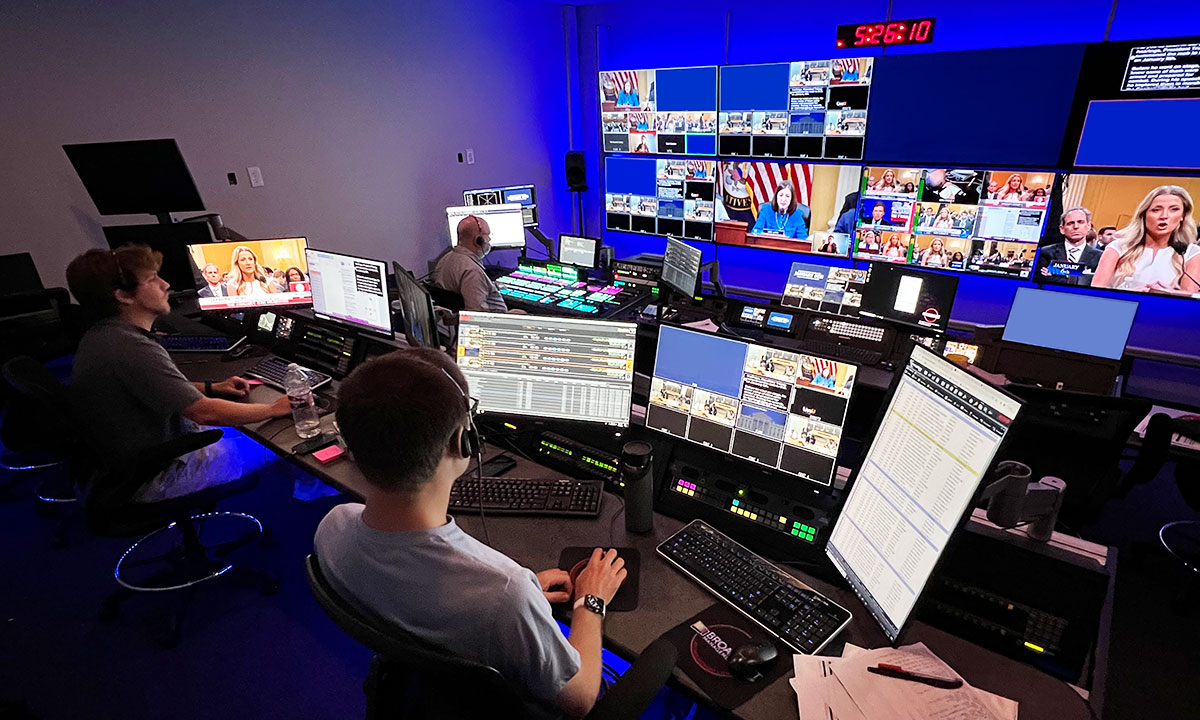
2. Technical Capability – Broadcast-grade switching, professional audio, real-time graphics, and multi-destination distribution are not optional. These are baseline requirements for federal production work.
3. Live Production Experience – Federal events run on fixed timelines. Hearings, briefings, and official broadcasts cannot be delayed due to technical issues. Contractors must be able to consistently execute under pressure.
4. Operational Accountability – Federal contracts require documentation, reporting, and long-term performance tracking. Agencies need partners who can maintain consistent output and meet oversight requirements across the full period of performance.
The Managed Operational Model Is the Right Fit for Federal Work
BMG approaches federal engagements differently.
Instead of operating as a project-based vendor, BMG works as a managed operational partner.
That distinction matters.
A project-based contractor completes a deliverable and moves on. A managed partner takes ownership of the production function over time.
That includes:
- A consistent, embedded production team
- Defined roles and documented processes
- Repeatable quality across every production
- Ongoing reporting aligned with contract requirements
BMG’s Production Staffing and Operations service is built around this model. For federal clients, it means working with a team that understands the agency’s environment, the facility, and the objectives from day one, and continues to build on that knowledge over time.
For procurement officers and communications leaders, this structure aligns with how federal contracts are designed to operate. It supports both performance and accountability.
BMG’s Presence and Track Record in the DC Federal Market
BMG operates directly in the Washington, DC market, where the majority of federal video production work takes place.
The company’s Cloud Network Operations Center and Washington Broadcast Center are based in DC, allowing BMG to support federal clients with existing infrastructure rather than building from scratch for each engagement.
BMG’s leadership has direct experience supporting congressional proceedings and high-visibility government productions. The company has also worked with federal clients, including the U.S. State Department, on production consulting and broadcast support.
For agencies operating across Washington, Northern Virginia, and Maryland, BMG provides a local, established presence backed by national-scale infrastructure.
The key question for agencies and prime contractors is not whether a vendor can produce video.
It’s whether they have experience operating inside the federal environment, understand its requirements, and can sustain performance over time.
Government video production contractors need to function as part of the system, not operate outside of it.
If your agency or organization is evaluating a production partner for federal work, BMG’s Production Staffing and Operations team is built for that environment.

Kathy Samuels is Director of Creative Services at BMG. She is an Emmy-winning producer and media executive with nearly 30 years of experience across broadcast television, digital content, live production, and emerging media. Her background includes senior roles at NBC, CBS, ABC, and Joyus, as well as work launching major programs including Access Hollywood, Rachael Ray, and Katie. At BMG, Kathy leads creative services initiatives that help clients develop show formats, live experiences, content strategies, and audience-focused productions.
About Kathy Samuels