Broadcast studio design doesn’t start with cameras, lighting, or sets.
It starts with how the studio will actually be used.
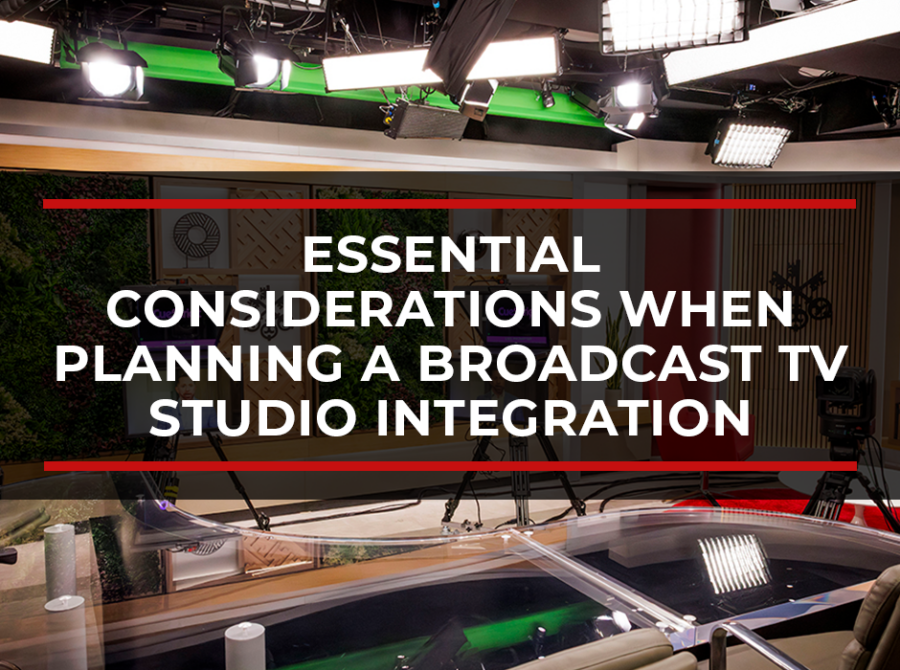
For enterprise teams, networks, and live production environments, studio design is about aligning space, workflow, and technology so production runs efficiently from day one. That process looks different for every client, but the goal is always the same: build a studio that supports the content being created and the team operating it.
Below are a few examples of how that process comes together, from initial consultation through final build.
UBS: From On-Prem Studio to Hybrid Broadcast Environment
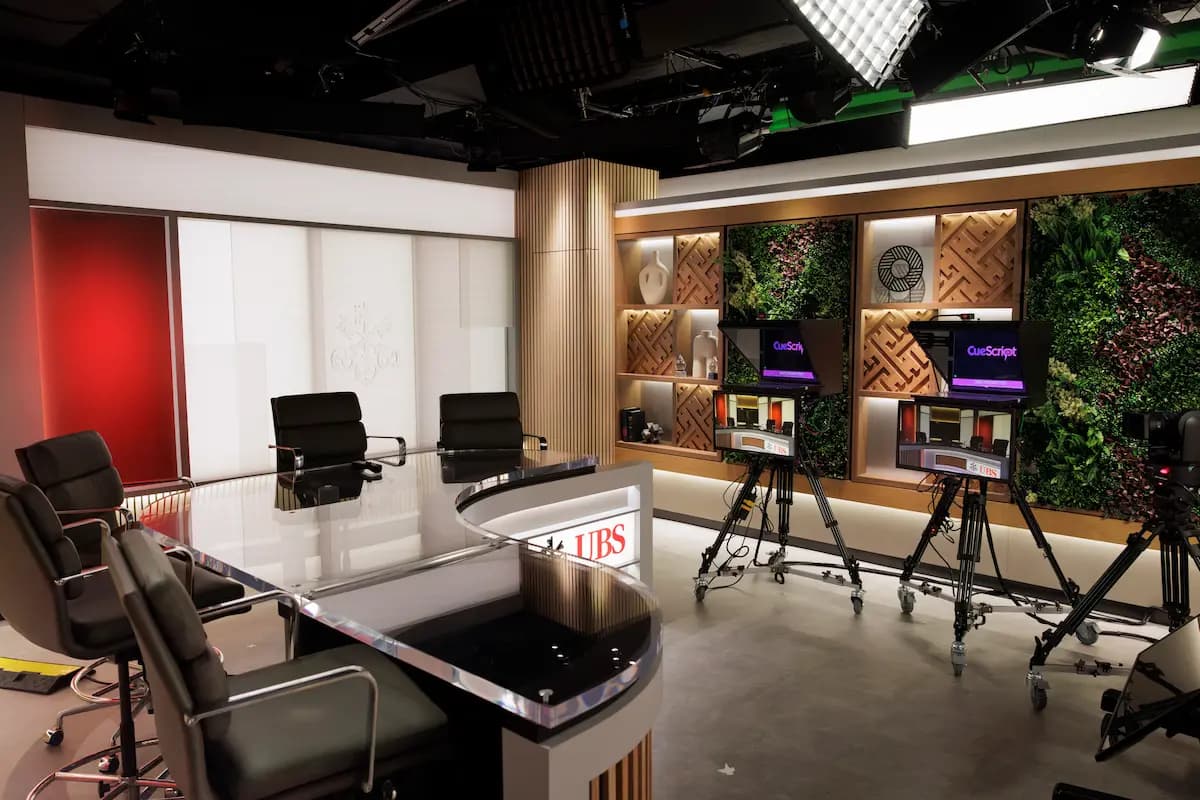
At UBS, the engagement started with consulting.
The goal was to create a broadcast-quality studio environment within a corporate headquarters capable of supporting both live and recorded content for internal communications. In 2019, this resulted in a fully on-prem studio and control room designed and built by Broadcast Management Group (BMG).
As the organization’s needs evolved, so did the studio.
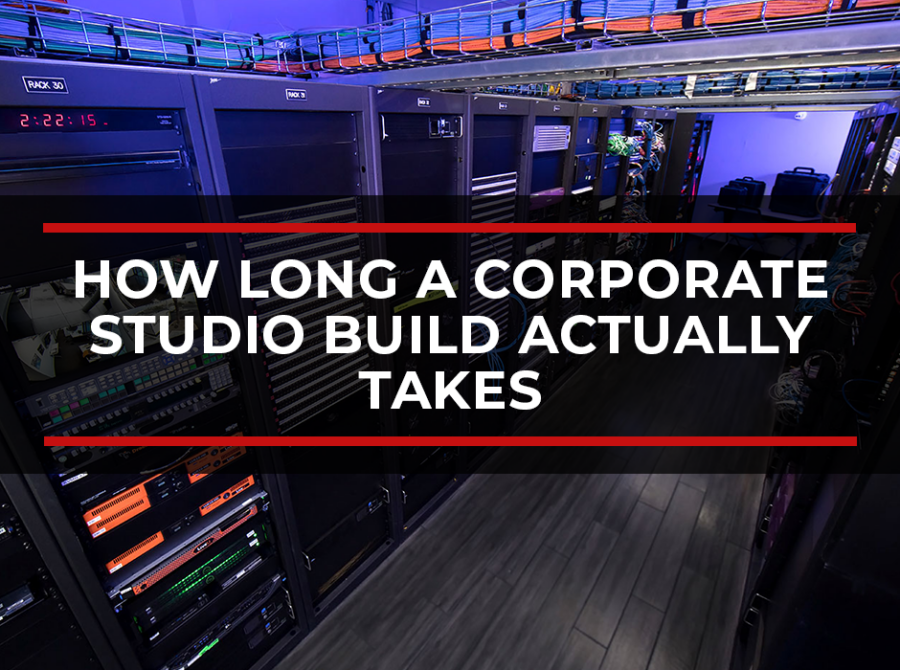
In 2025, BMG redesigned the space as part of a larger hybrid workflow, building a new studio and control room while moving backend systems into BMG’s Network Operations Center. This hybrid approach results in a New York City studio that looks and operates like a traditional broadcast environment but is powered by centralized infrastructure in Washington, DC.
Key takeaway: Studio design here wasn’t just about the client’s physical space. It was about how the client’s space connects to the larger production system.
Read BMG’s full UBS case study
Charles Schwab: Designing a Network from the Ground Up
For Charles Schwab, studio design was part of something larger.
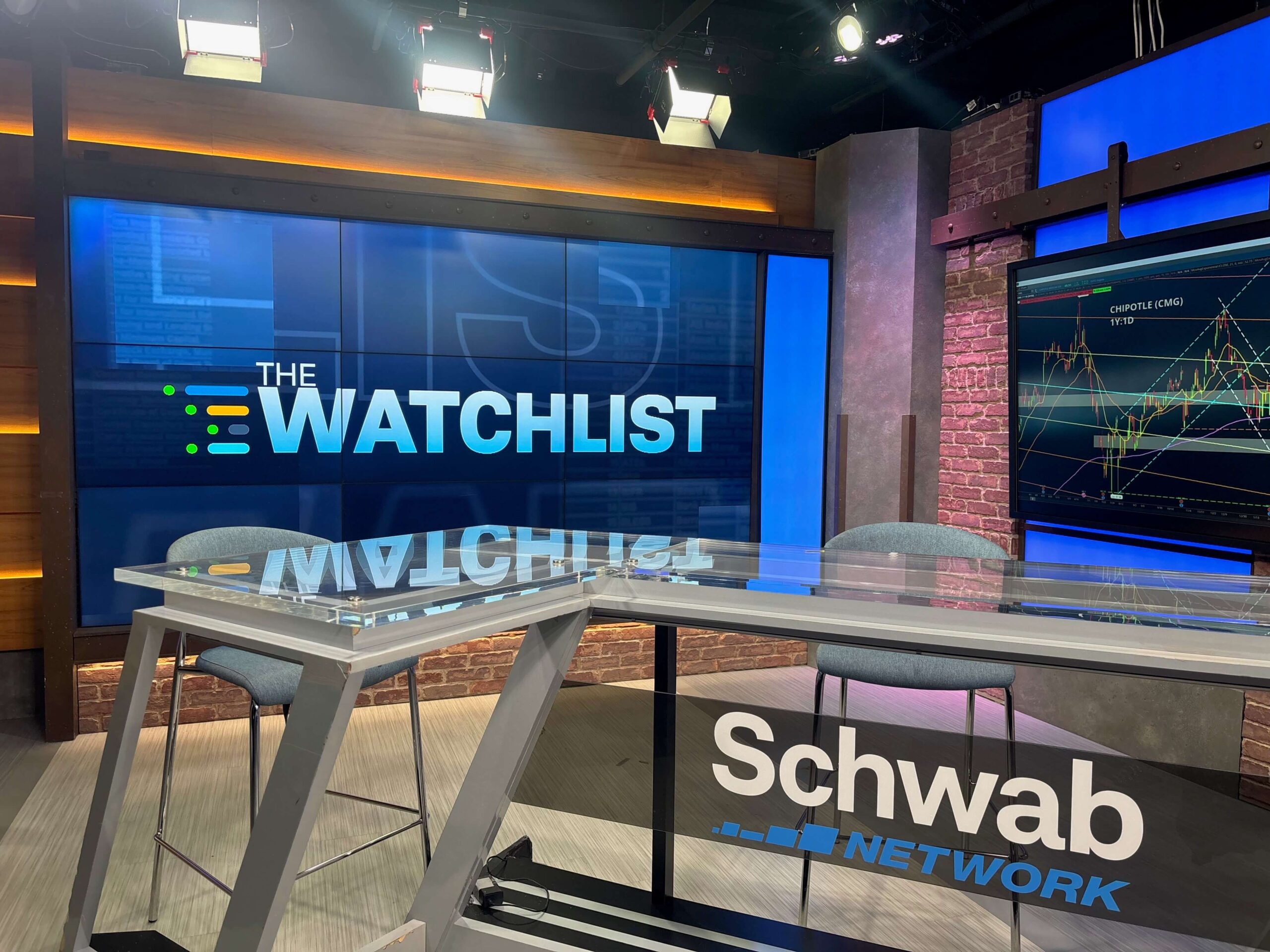
BMG recommended building what would become the first direct-to-consumer 24/7 OTT financial network. That meant designing not just one studio, but an entire production environment to support daily live programming.
The initial Chicago facility established the foundation, with a studio, control room, and workflow design built around live broadcast operations. As the network grew, the studio footprint expanded to include a new studio on the New York Stock Exchange floor.
Key takeaway: Each phase required BMG to rethink the studio design to match the client’s new programming formats, talent, and production scale.
Read BMG’s full Schwab Network case study
Al Jazeera: Designing a Studio That Moves
Not every broadcast studio is permanent.
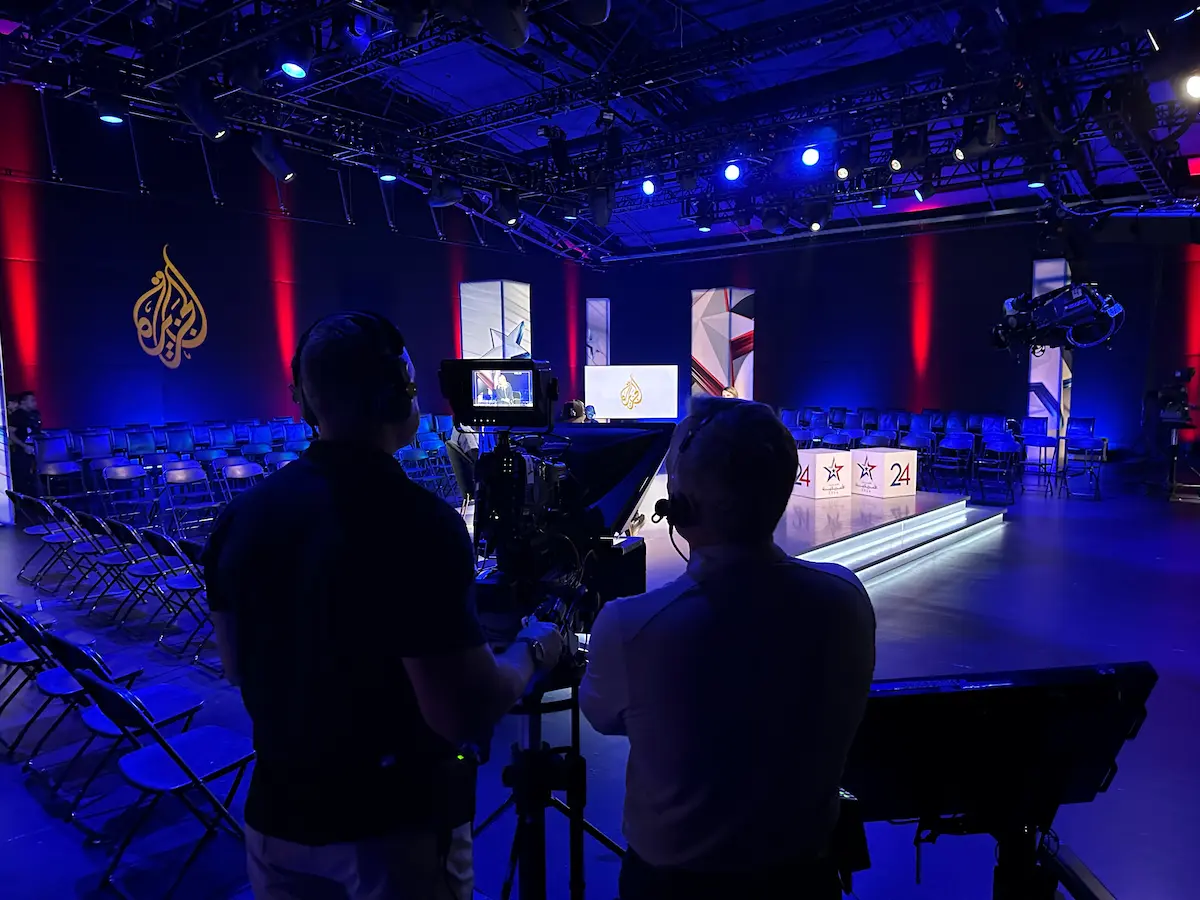
For Al Jazeera Network, BMG designed and built a custom studio set for a multi-city town hall tour across the United States.
The set needed to maintain a consistent on-air look while being deployed in four different venues over four weeks. That required designing scenic elements, lighting, and production workflows that could travel, be rebuilt quickly, and perform reliably across different environments.
Key takeaway: Studio design in this client’s case wasn’t tied to a single location. It was about portability, speed, and consistency across multiple cities.
Read BMG’s full Al Jazeera case study
BMG Studios: Designing for Our Own Workflows
We also design and build our own studios.
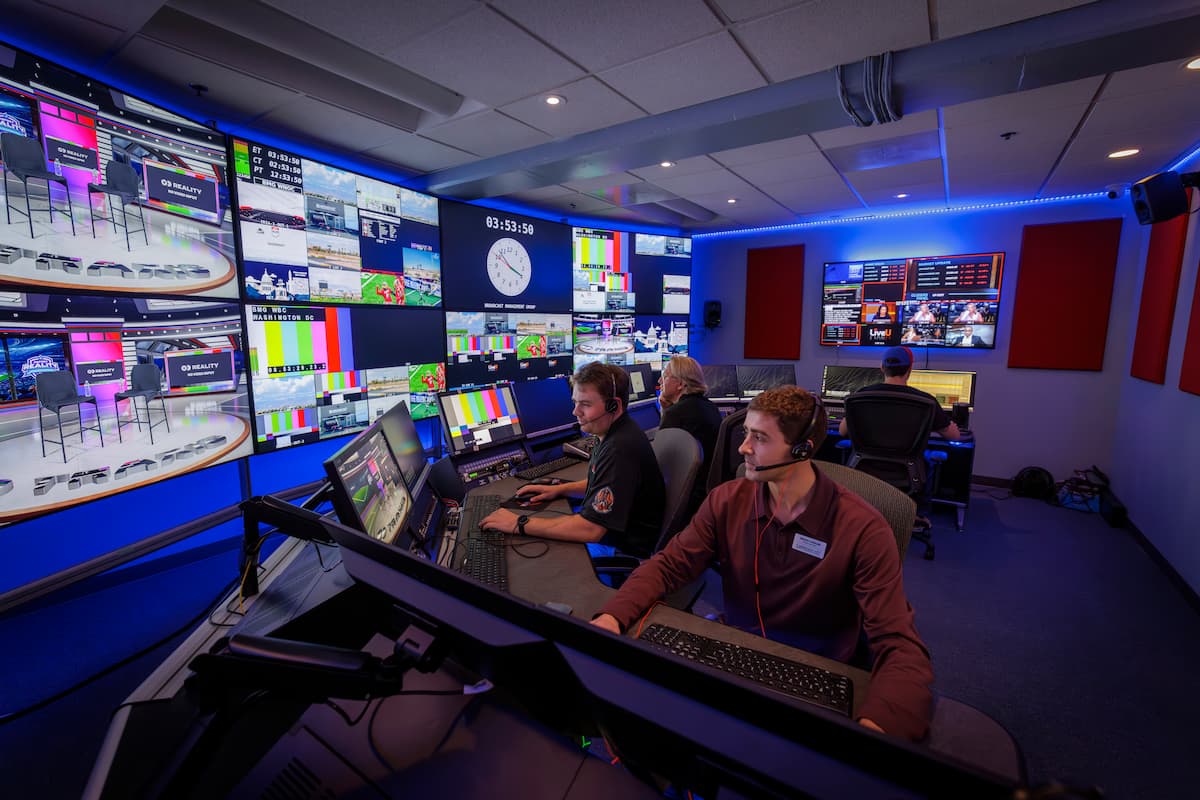
Inside BMG’s facilities, studio design is driven by the same requirements our clients have: flexibility, efficiency, and integration with live production workflows.
That includes:
- Multi-purpose studio environments for live and recorded content
- Integrated lighting, control rooms, and routing systems
- Direct connection to our Network Operations Center for centralized production
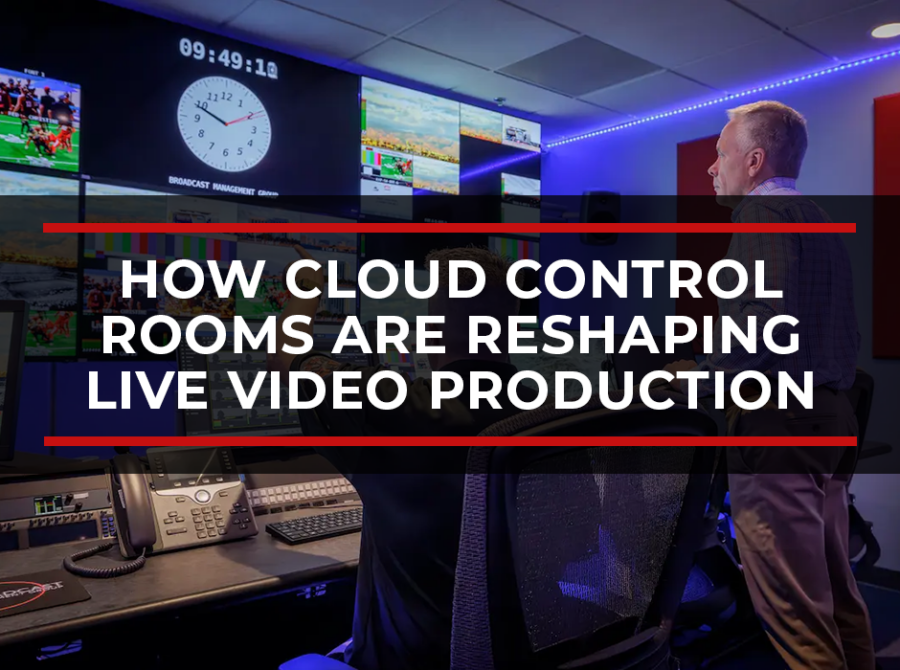
Key takeaway: Designing our own spaces allows us to continuously refine how studios should function in modern broadcast environments using cloud and remote workflows.
Tour BMG’s 62,000 Network Operations Center in Washington, DC
What Broadcast Studio Design Actually Requires
Across all of these projects, the process is consistent.
It starts with understanding the content and workflows, then designing the space and systems to support them.
That includes:
- Studio layout and sightlines
- Lighting design and control
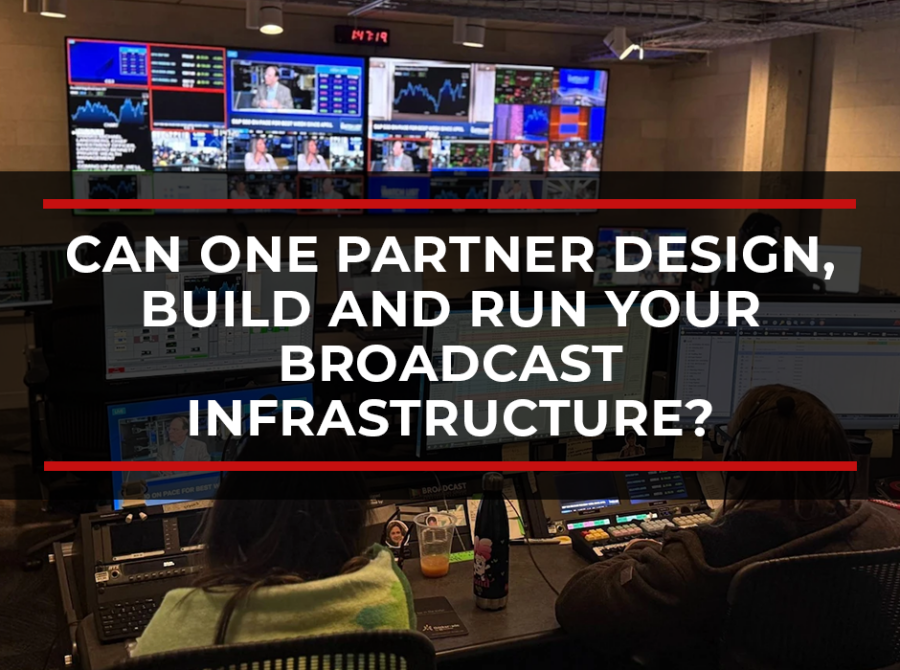
- Integration with control rooms and production systems
- Scalability for future growth
- Alignment with how teams actually produce content
The physical studio is only one part of the equation. The real value comes from how it fits into the larger production environment.
From Concept to Operation
Broadcast studio design isn’t a one-time project.
It’s an ongoing process that evolves as production needs change, whether that means expanding a facility, adapting to new workflows, or supporting content across more platforms.
The most effective studios aren’t just well-designed. They’re built to adapt.
If you are looking to build a new production studio or upgrade an existing one, contact us or visit our production studio design-and-build page.
Todd Mason is the Chief Executive Officer of Broadcast Management Group (BMG), a broadcast infrastructure and media operations company helping define the next generation of television production, live media operations, and broadcast network infrastructure in North America.
About Todd Mason