Executive Summary:
- Agency staffing fills a role, but when something breaks, whether it’s a scheduling gap, a last-minute call-out, or underperformance, the responsibility falls back on you.
- Managed services operate on a fundamentally different model: a single partner takes ownership of staffing outcomes, maintains a trained bench, and resolves issues before they ever reach your broadcast.
- In live production, where every failure is visible to your audience the moment it happens, this distinction determines who carries the operational risk: your partner or your team.
- Most companies think that agency staffing and managed services are interchangeable, when in reality they’re completely different staffing options.
When a broadcast contract is awarded, staffing decisions get made fast. Most organizations will default to whatever gets bodies in seats quickly, which usually means agency staffing.
It’s an understandable choice, but it comes with costs that don’t show up until something goes wrong, which is often too late.
The distinction between agency staffing and managed services may seem straightforward, but the operational gap between them is enormous. In live production, that gap is the difference between a seamless show and a crisis you’re left to manage alone, usually in the middle of a live event.
The question you should ask yourself before making any staffing decisions isn’t about price or speed; it’s “Who owns the problem when something goes wrong at 8 PM on a Tuesday?”
If the answer is you, that’s not a staffing solution; that’s a staffing liability.
What Agency Staffing Actually Delivers
With agency staffing, the engagement ends at placement. Everything that comes after, scheduling, coverage, and performance management, becomes your responsibility:
- You absorb the turnover risk in an industry where turnover is high
- You fill the gaps when someone calls out
- Hiring happens one role at a time, reactively
- The quality of each placement depends entirely on who happened to be available; once they’re placed, the problem is yours
The clock starts when someone is placed. It stops the moment something goes wrong.
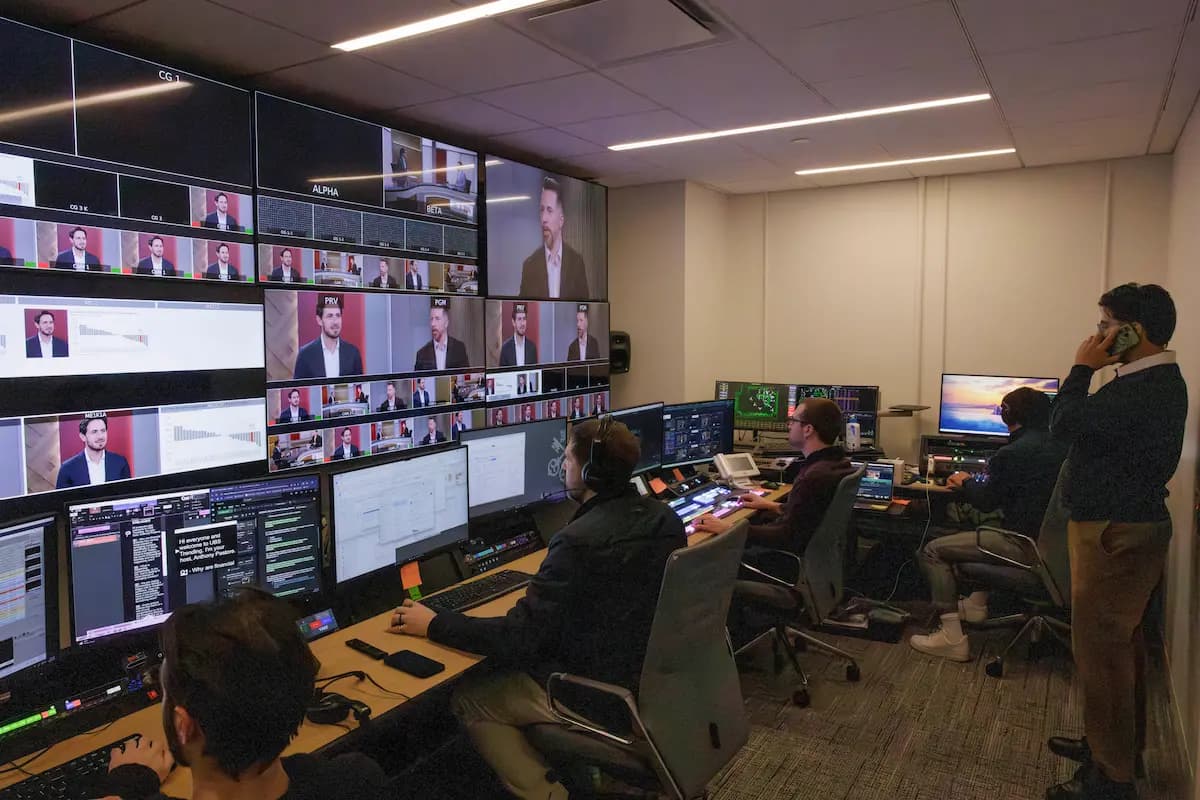
What Broadcast Managed Services is Built For
Broadcast managed services are built differently, and the difference is structural, not cosmetic.
- The provider owns the outcomes, not just the hire
- Scheduling, coverage, and performance management stay with them, not with you
- When someone calls out, turnover spikes, or production scales up overnight, the managed services partner absorbs it.
- They maintain a trained bench that’s ready to deploy, which means PTO, sick days, and volume surges don’t become your emergency to solve
- Teams are vetted and aligned with your workflows and culture, before they ever show up on site, so they can perform from day one
- One accountable partner across the full staffing lifecycle
The last point matters more than it initially sounds. Accountability without a single owner is just a list of excuses.
The Hidden Costs of Reactive Staffing
Reactive staffing doesn’t just create inconvenience; it creates compounding operational risk.
Finding a replacement, managing a coverage gap, and handling underperformance: None of these problems comes with any support from the staffing agency that placed the hire. By the time that something goes wrong, their job is already done.
Over time, that exposure adds up. Every gap is a moment where your broadcast is vulnerable, and in live production, every vulnerable moment is immediately visible.
Why the Gap Is Especially Costly in Live Production
Most industries can absorb a staffing gap with a delay; live production can’t. When something breaks on-air, it breaks in front of your audience. There’s no buffer, retry, or way to walk it back.
A show won’t wait for a staffing agency to find a backup TD. A live event won’t pause because your graphics op called out that morning. The production either has coverage or it doesn’t, and when it doesn’t, someone has to absorb that gap in real time.
With agency staffing, that someone is you. With managed services, it’s your partner.

What It Means to Have a Managed Services Partner
A true managed services partner doesn’t just fill seats; they maintain a trained bench of people who already know your environment, workflows, and standards before anything goes wrong.
That preparation is what makes the difference when something does go wrong. When headcount changes, production volume surges, or someone calls out, your partner has already accounted for it. Your internal team can stay focused on what they were hired to do, rather than scrambling to cover gaps that shouldn’t have been there in the first place.
That’s the model managed services are built around. A structure built for continuity, because continuity is what live production demands.
How Does BMG Deliver Managed Services For Broadcast Production Teams?
With over 20 years of building and operating production crews for organizations across broadcast, corporate, sports, and entertainment, BMG is built around managed services, not one-off placements and reactive hiring.
That means:
- Full lifecycle accountability from onboarding through ongoing operations
- A trained bench maintained to your technical standards — whether you operate Grass Valley, Ross Video, Sony, or IP-native infrastructure
- Documented runbooks, escalation paths, and performance standards for every role
- Continuous coverage management across 24/7 operations, live events, and surge periods
When something goes wrong at 8 PM on a Tuesday, the answer to “who owns this?” is BMG, not you.
Key Technical Insight: BMG’s managed services model provides single-partner accountability across the full staffing lifecycle — from onboarding and training through 24/7 coverage management and real-time incident absorption.

Steven Cotliar is Executive Vice President of Growth and Marketing at BMG. He brings more than 25 years of experience across digital marketing, advertising, entertainment, live streaming, and business development. His background includes work with major studios, brands, agencies, and platforms, including Twentieth Century Fox, NFL, Disney, Tesla Motors, FX Networks, Paramount, Lionsgate, Condé Nast, Target, Sundance Film Festival, and The Paley Center. In his current role, Steven leads growth and business development initiatives that help expand BMG’s client relationships and market presence.
About Steven Cotliar