As enterprise communications continue to evolve, studio design plays a critical role in helping organizations deliver consistent, high-quality content across every audience and platform.
Executive town halls, quarterly earnings calls, investor updates, employee broadcasts, product launches, training sessions, and branded content all require different production workflows, technology, and presentation styles.
A studio built primarily for webinars may struggle to support live broadcasts with multiple presenters, while a traditional television studio may include capabilities that most corporate teams never use.
A well-designed corporate studio reflects the way an organization creates and delivers content, ensuring every technical decision supports a specific business purpose.
Start With Communication Goals, Not Technology
Before selecting camera setups, lighting, or video walls, organizations should first define what the studio will actually produce.
Questions to consider include:
- Will executives regularly host live town halls?
- Will investor relations produce quarterly earnings broadcasts?
- Will the marketing team create branded content?
- Will the organization livestream events to customers or employees?
- Will productions require remote guests or hybrid participation?
The biggest mistake companies make is designing the technology before defining their communication goals.
A successful corporate studio starts with understanding its purpose, audience, content, and long-term needs, then building flexible infrastructure and operational workflows around those objectives.
By planning for future growth, staffing, and enterprise integration from the beginning, organizations create studios that deliver greater value and a stronger return on investment.
Design Flexible Spaces That Support Multiple Content Types
Most enterprise studios aren’t built for a single production. They’re expected to support dozens of different content formats throughout the year.
A flexible studio may need to accommodate:
- CEO announcements
- Employee town halls
- Investor relations broadcasts
- Executive interviews
- Podcasts and vodcasts
- Training videos
- Customer webinars
- Product demonstrations
- Internal communications
- Social media content
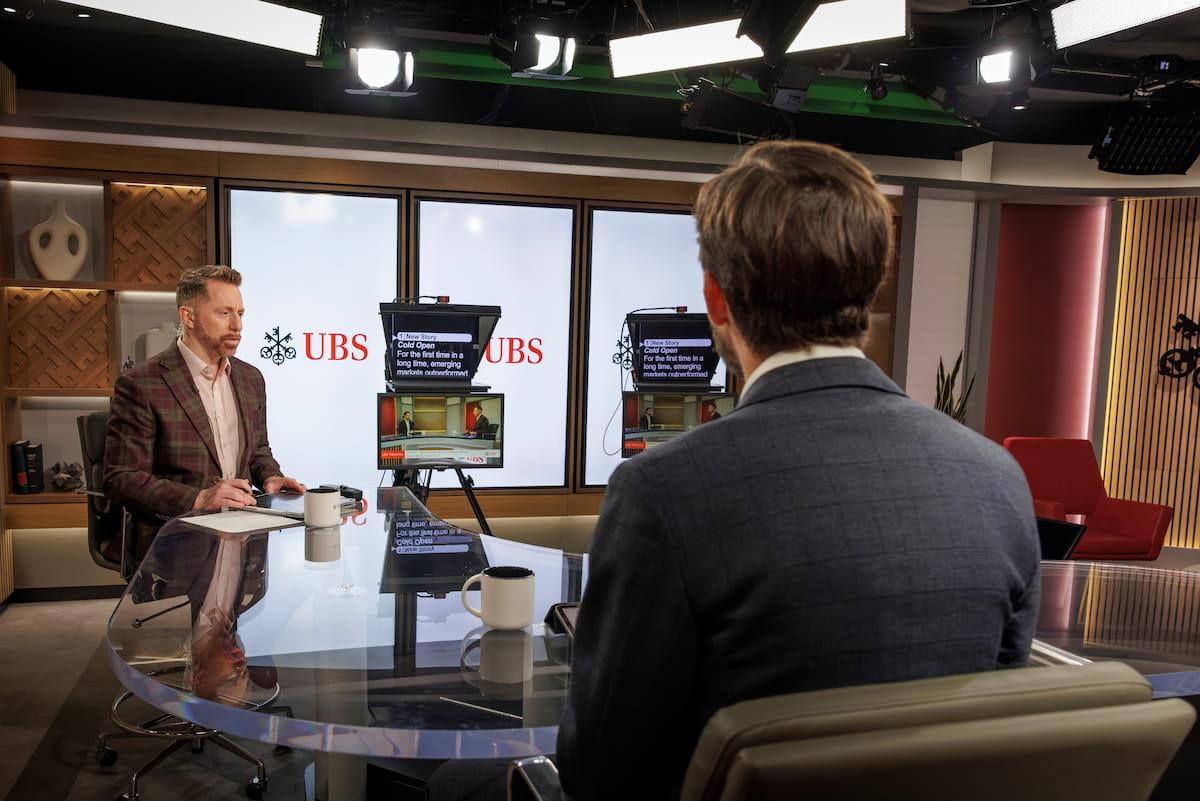
Movable furniture, configurable lighting, interchangeable set elements, and programmable video walls allow one space to support many different productions.
Flexibility comes from designing both the space and the technology to adapt to different production needs.
The goal is to create a studio that can evolve with changing business needs without requiring major upgrades.
Build for Hybrid and Remote Participation
Today’s corporate broadcasts rarely originate from a single room.
Hybrid production enables organizations to combine on-site studio capabilities with remote participants, production resources, and cloud-based workflows.
Studios should be designed with remote production in mind, including:
- High-quality video conferencing integration
- Broadcast-quality remote contribution
- Low-latency communication
- Reliable network connectivity
- Cloud-based production workflows
These capabilities make it easier to produce professional broadcasts without requiring every participant to be on-site.
Cloud-based workflows extend the capabilities of a corporate studio beyond its physical space by enabling remote switching, graphics, recording, monitoring, media management, and distribution.
This allows organizations to share production resources across multiple locations, scale operations as needed, improve business continuity, and reduce the need for dedicated on-site infrastructure, creating a more flexible and cost-effective production environment.

Consider Long-Term Scalability
The way organizations communicate is evolving rapidly.
As companies rely more heavily on video, live broadcasts, and digital platforms, their studio environments must be designed to support growing content demands and changing audience expectations.
A studio built only around current needs can quickly become limited as production demands grow and new content opportunities emerge.
Designing with scalability in mind allows organizations to expand their capabilities over time, whether that means adding cameras, enhancing control room functionality, integrating emerging technologies, supporting additional distribution platforms, increasing content storage, or adopting cloud-based production workflows.
By planning for future growth from the start, organizations can create a flexible studio environment that protects their investment and adapts alongside their communication needs.
Integrate Production Into the Broader Communications Strategy
An internal broadcast studio should be integrated into the organization’s overall communications ecosystem.
That means integrating with:
- Content management systems
- Media asset management (MAM) platforms
- Digital signage
- Internal communication platforms
- Streaming services
- Social media publishing workflows
- Archiving and content repurposing processes
This approach allows a single live production to generate content that can be reused across multiple channels and audiences.
Organizations should also balance in-house expertise with on-demand production and technical resources, while investing in training, maintenance, and ongoing support to ensure the studio remains reliable, efficient, and adaptable.
How Broadcast Management Group Helps Organizations Build Purpose-Built Broadcast Studios
Whether you’re launching your first corporate studio or modernizing an existing production facility, Broadcast Management Group (BMG) designs broadcast environments tailored to how your organization communicates. You can view a sample of studio design examples here.
BMG combines creative strategy, engineering, production expertise, and operational execution to deliver complete broadcast solutions.
Every studio is designed to support your organization’s unique workflows while providing the flexibility to evolve as your communication needs grow.
Ready to build a corporate studio designed around your communications strategy?
Contact Broadcast Management Group to learn how our integrated approach to creative services, engineering, production, and managed broadcast operations can help you create a future-ready production environment.

Dave Weiler is the Senior Vice President of Sports Packaging and Consulting. He leads BMG’s consulting practice, overseeing global consulting projects and building strategic client relationships. A nine-time Emmy Award winner, he brings more than 35 years of leadership experience across media operations, production, and business strategy, including senior roles at ESPN and as founder of Media Edge Consultants. His expertise helps clients develop efficient, scalable solutions across the evolving media landscape.
About Dave Weiler