Enterprise organizations are producing more video than ever. Town halls, investor communications, live events, internal channels, product launches. The volume is climbing and shows no signs of leveling off. The global enterprise video market is projected to grow from $22.45 billion in 2024 to $55.21 billion by 2032, according to Data Bridge Market Research.
The challenge is that the production infrastructure most organizations have built, or inherited, was not designed for that volume. Traditional models require dedicated facilities, large crews, expensive equipment, and significant travel budgets. They work on one production at a time in one location. They do not scale easily, and they do not move quickly.
Cloud-based enterprise remote production systems are changing that. Not by replacing what makes live production technically demanding, but by removing the constraints that make it expensive, slow, and location-dependent. This piece covers five specific ways that the shift is happening, and what it means for organizations investing in video at scale.
What Enterprise Remote Production Systems Actually Are
Before getting into the five shifts, it helps to define the term clearly.
Enterprise remote production systems refer to the infrastructure, workflows, and operational models that allow organizations to produce broadcast-quality video without centralizing all of their production resources at a single physical location. The key components include cloud-based switching and production control, distributed teams working from centralized hubs rather than on-site, IP-based signal transport replacing traditional hardware-heavy workflows, and integrated media management connecting production to distribution and archive.
In practice, this often means that an organization’s cameras are at the venue, while the production team, director, graphics operators, audio engineers, and technical staff work from a cloud-connected facility hundreds or thousands of miles away. The show is built centrally. The event is captured locally. Everything in between is managed through the cloud infrastructure.
Read more about the infrastructure of remote broadcasting.
So, What Are The 5 Ways the Cloud Is Changing Enterprise Video Production?
1. Production Is No Longer Tied to a Physical Location
The most significant structural change cloud infrastructure has introduced to enterprise video is the decoupling of production from location.
In a traditional model, producing a live event meant physically moving your production infrastructure to the event: trucks, gear, crew, all of it. That meant significant logistics, high cost, and a ceiling on how many simultaneous productions an organization could run.
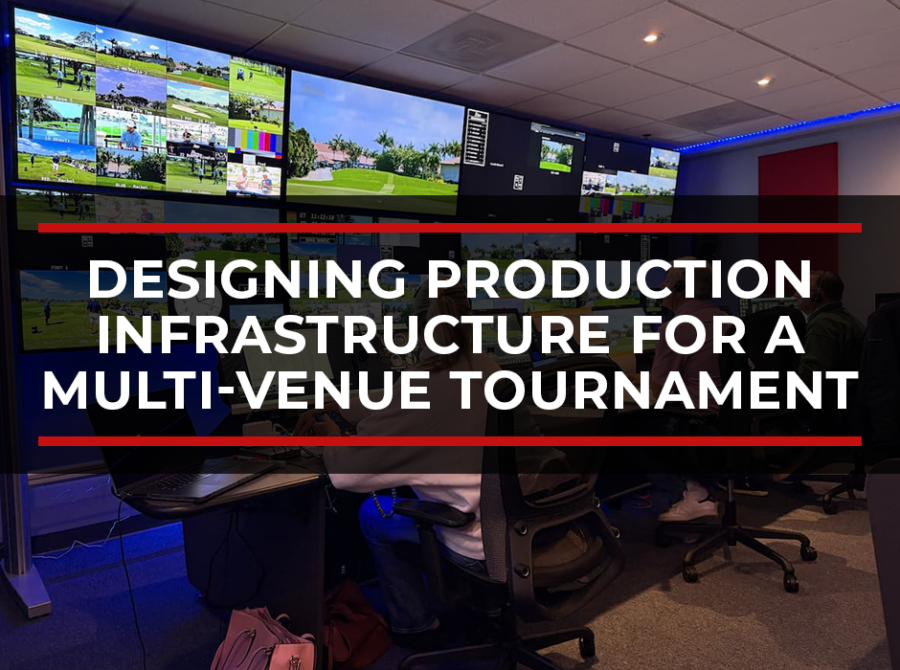
With cloud-connected enterprise remote production systems, the production team stays at a centralized facility while cameras and a minimal on-site crew operate at the venue. A single control room can manage productions across multiple cities simultaneously, with the same crew, infrastructure, and quality standards applied to each. For organizations with multi-city operations or recurring live content across locations, this fundamentally changes what is operationally possible.
2. Deployment Is Faster and More Flexible
Traditional production builds take time. Getting a full crew and infrastructure in place at a venue requires days of preparation, load-in, and technical setup.
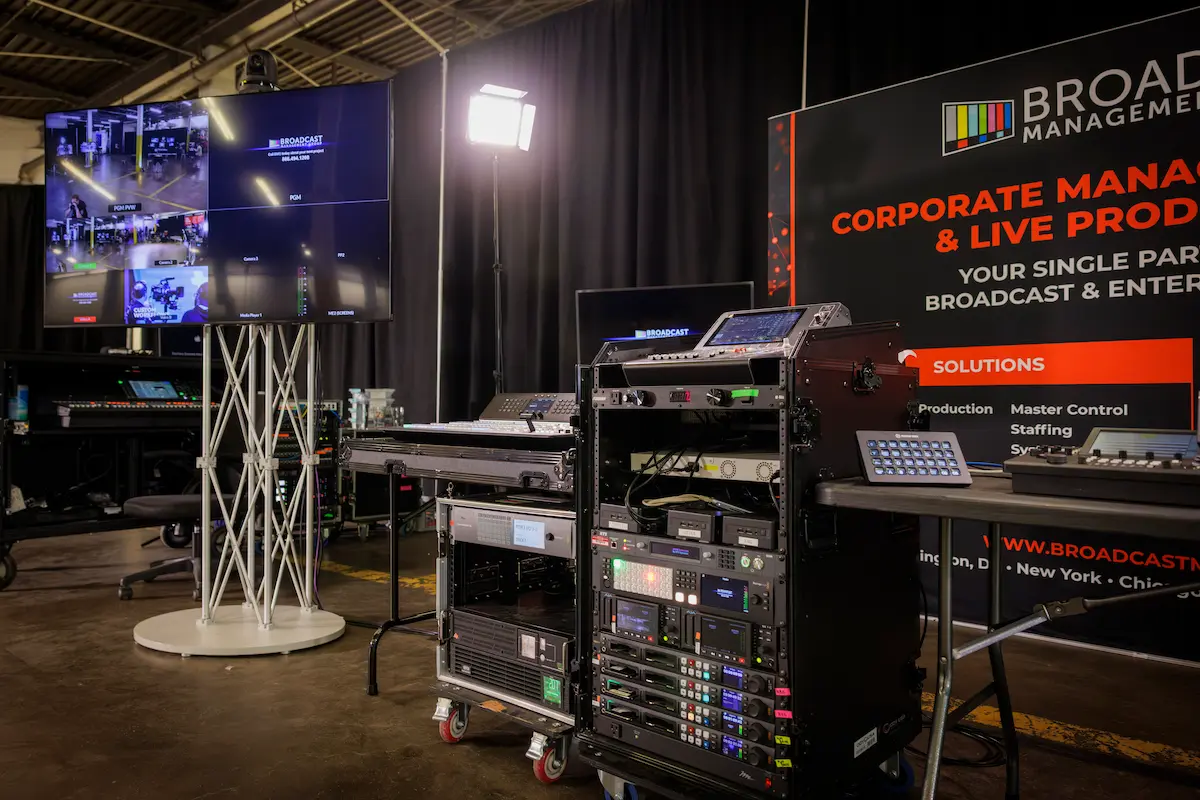
Cloud-based workflows compress that timeline significantly. With pre-configured flypacks and REMI kits, a lean on-site crew can establish a broadcast-quality feed from a venue in a fraction of the time it takes to build a full production infrastructure on location. The production team at the central facility is ready to take the feed and run the show without the venue setup dictating the schedule.
For enterprise teams producing content on a recurring basis or across a season of events, this flexibility matters operationally. Faster deployment between cities means more content output with the same team and without adding resources.
3. Operational Costs Drop Significantly
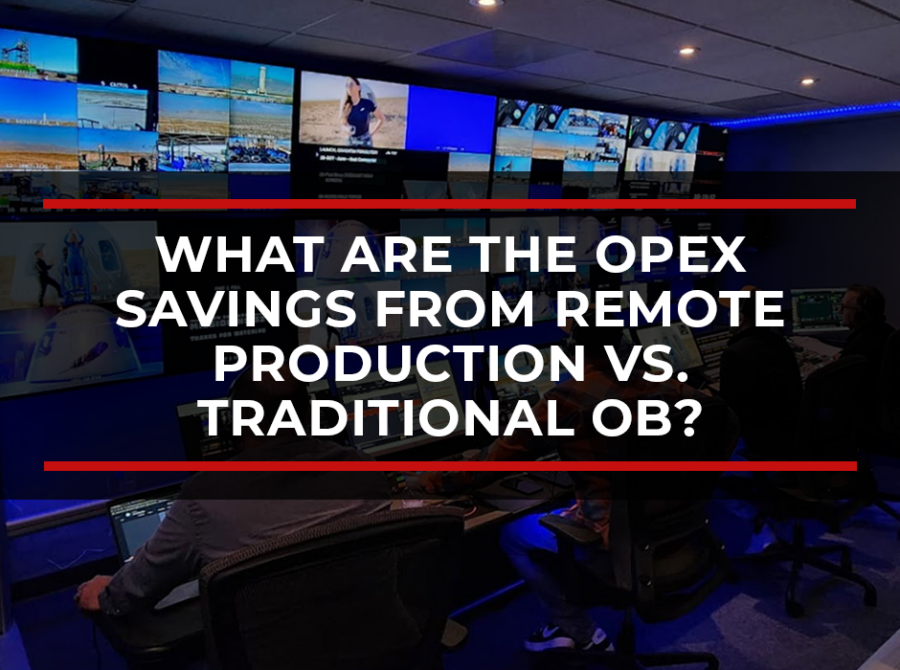
Cost reduction is one of the most direct, measurable impacts of cloud-based production. Broadcasters and enterprise production teams that have adopted remote production models report cost reductions of up to 70% compared to traditional on-site production approaches, according to EAR Professional Audio Video.
The savings come from multiple directions. Travel and freight costs decrease when production crews stay centralized rather than moving to each event. On-site crew footprints shrink. Equipment investment shifts from large capital expenditures that depreciate over time to operational costs tied to active production use. And when the same infrastructure can support multiple simultaneous shows, the cost per production goes down as output goes up.
Broadcast Management Group’s production of UBS’s internal broadcast operation is an example of how this plays out for an enterprise client. After integrating a cloud-connected studio and hybrid IP workflow, UBS reduced on-site production staffing by 40% while increasing daily content output. The infrastructure did more with fewer resources on the ground.
4. Teams Can Collaborate in Real Time Across Locations
One of the less-discussed advantages of cloud production infrastructure is what it enables for team coordination. In a traditional model, everyone involved in a production has to be in the same place at the same time. Directors, technical directors, graphics operators, audio engineers, producers: all on-site, all coordinating in person.
Cloud-connected workflows allow those roles to be distributed across spoke facilities, home workstations, and partner locations, while still operating as a unified production. A director in Washington can work with a graphics operator in New York and an audio engineer in Los Angeles on the same show in real time, all pulling from the same routing infrastructure.
For enterprise organizations managing ongoing video programs, this changes the staffing model. The best production talent does not have to be local to be available. And productions are not bottlenecked by the logistics of getting everyone to the same room before the broadcast starts.
5. Scaling Output Becomes an Operational Decision, Not a Capital One
Perhaps the most strategically significant shift cloud infrastructure introduces is its impact on scalability. In a traditional model, scaling video output meant buying more equipment, hiring more full-time staff, and building or leasing more physical space. Every incremental production added cost at a relatively fixed rate.
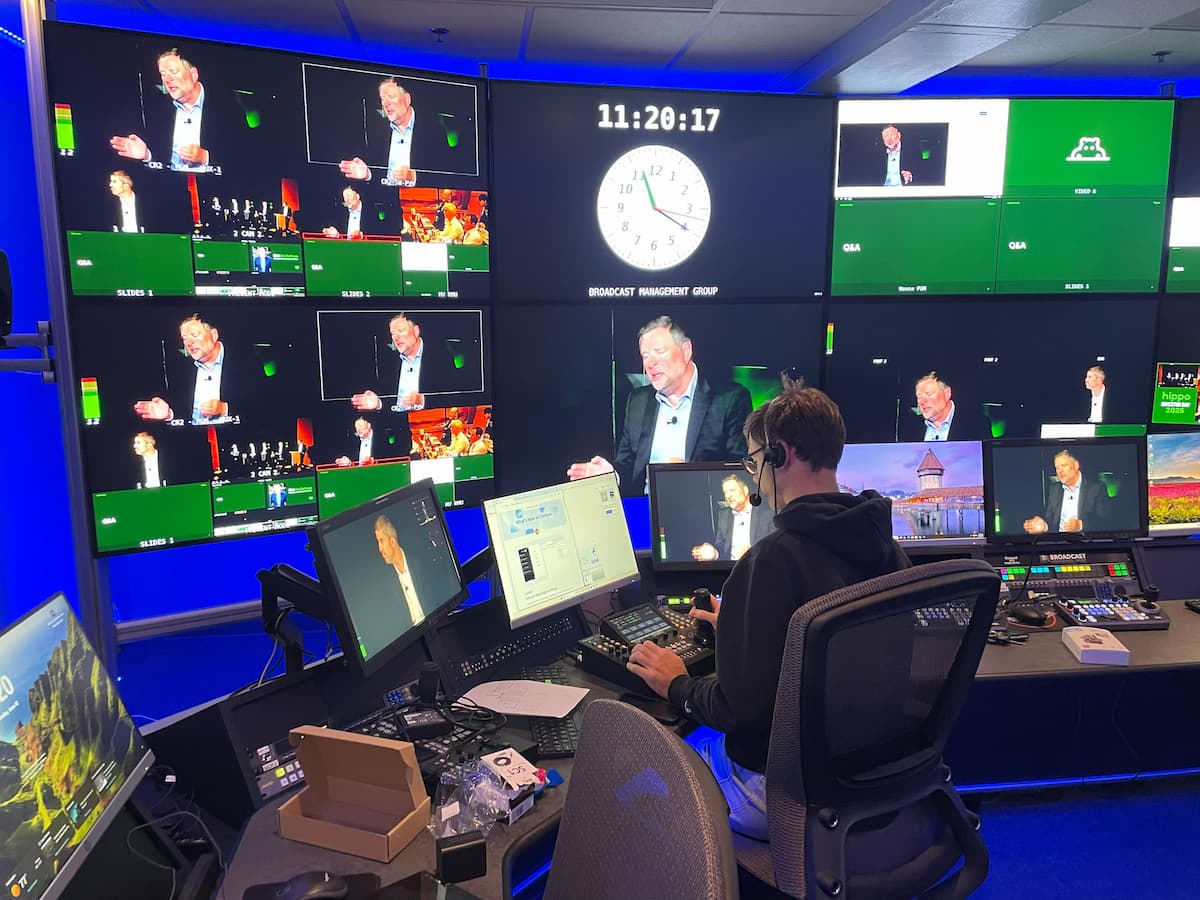
In a cloud-based enterprise remote production system, scaling is largely a matter of operational configuration. Adding a second or third concurrent production to an NOC that already has the routing infrastructure, control rooms, and technical team in place does not require starting from scratch. The same facility that handles one production on a Tuesday can handle three on a Wednesday.
For enterprise teams dealing with growing content demand, recurring live schedules, or multi-market distribution requirements, this significantly changes the business case for video investment.
Why This Matters for Enterprise Teams Right Now
Enterprise organizations are under pressure to produce more content, on shorter timelines, with greater consistency across channels. Internal communications have become more video-heavy. Investor programming has expanded. Live events are expected to deliver broadcast-quality output regardless of venue or geography.
The traditional production model struggles to meet those demands efficiently. The infrastructure and staffing requirements do not flex easily, and the cost structure does not reward high-volume output.
Cloud-based enterprise remote production systems address both of those constraints directly. The same infrastructure that handles a quarterly investor broadcast can support a weekly internal town hall series. The team that produces a flagship live event can run two other shows in the same week without doubling the headcount.
That kind of operational efficiency is what makes cloud production infrastructure a strategic decision for enterprise organizations, not just a technology one.
Challenges Worth Anticipating
Cloud production infrastructure is not without its operational demands, and organizations that go into it unprepared tend to encounter predictable problems.
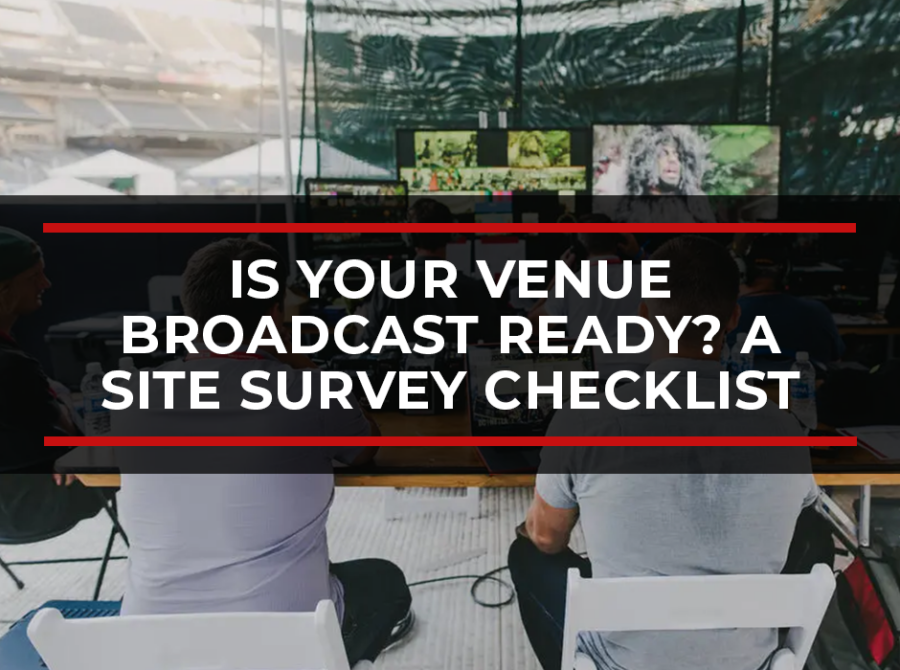
Connectivity is the most critical dependency. Remote production requires high-quality, low-latency network paths between the venue and the production facility. Redundancy is not optional. If the signal path fails, the broadcast fails. Building in multiple contribution paths and failover options before the show starts is a standard requirement, not a precaution.
Workflow design matters as much as technology selection. Organizations that move to cloud production without documenting how content will move through the system end up with new infrastructure running old, poorly defined processes. The cloud makes a well-designed workflow faster. It amplifies a poorly designed one.
Team training is consistently underestimated. Cloud and IP-based production environments require different technical skills than traditional hardware-based broadcast setups. Engineers and operators who have spent careers working with SDI signal flows need to develop fluency in IP networking, latency management, and cloud infrastructure troubleshooting. That transition takes time and investment.
The Cloud Is Where Enterprise Production Is Heading
Cloud-based enterprise remote production systems are not a niche technology or an emerging trend. They are the direction the industry is moving, and organizations that have already made the transition are producing more content, more consistently, at a lower cost per show than those still running traditional models.
The shift does not happen overnight, and it does not happen without the right infrastructure, workflows, and operational expertise in place. But for enterprise organizations with growing video demands, the question is less whether to move toward cloud production and more how to do it in a way that actually scales.
BMG’s managed services model is built around exactly that: the infrastructure, the operations team, and the expertise to support enterprise-level video production through a cloud-connected system designed to scale with your organization’s content demands. Learn more about BMG’s enterprise video and managed services here.

Todd Mason is the Chief Executive Officer of Broadcast Management Group (BMG), a broadcast infrastructure and media operations company helping define the next generation of television production, live media operations, and broadcast network infrastructure in North America.
About Todd Mason