Remote broadcast looks simple, it isn’t. Cameras at the venue. A clean feed. A show that runs without interruption.
What people don’t see is the system behind it. Signal paths move video across the country in real time. Control rooms hundreds of miles away switch between camera feeds, mix audio, and manage graphics. Redundant failover systems running in parallel in case anything goes wrong. Monitoring that continues after the show ends.
That system is what remote broadcast is. Understanding it matters if you’re evaluating whether this production model fits your organization.
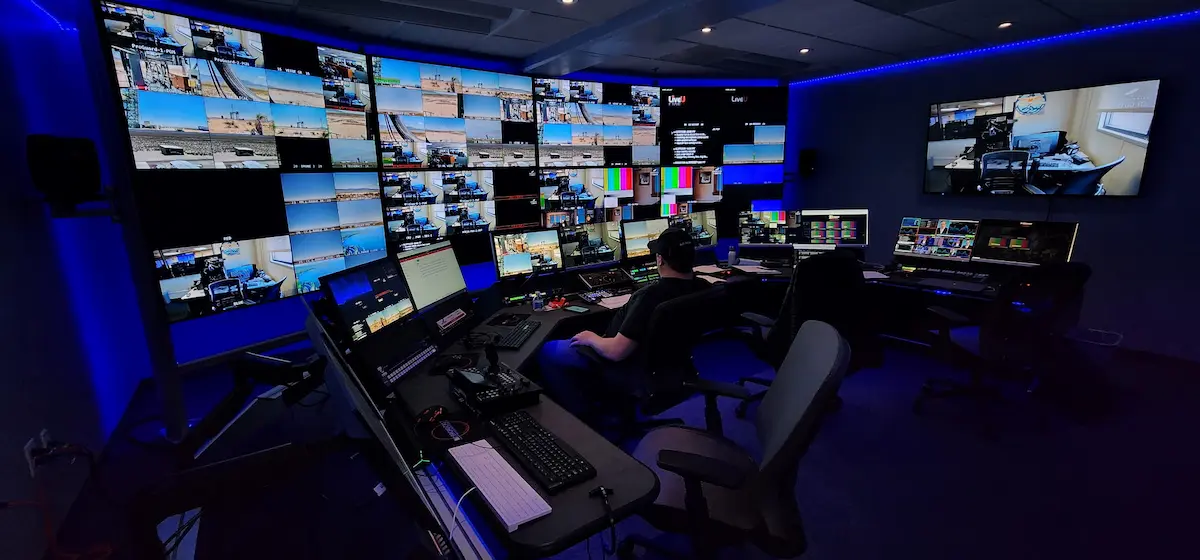
What is Remote Broadcast?
REMI, or Remote Integration, is a production model where cameras and essential crew operate on location while the full production workflow (switching, graphics, replay, audio, engineering, and monitoring) runs from a Network Operations Center (NOC).
The show is built at the NOC. The event is captured on-site. The infrastructure connects the two.
How Remote Broadcast Works
On-Site Capture
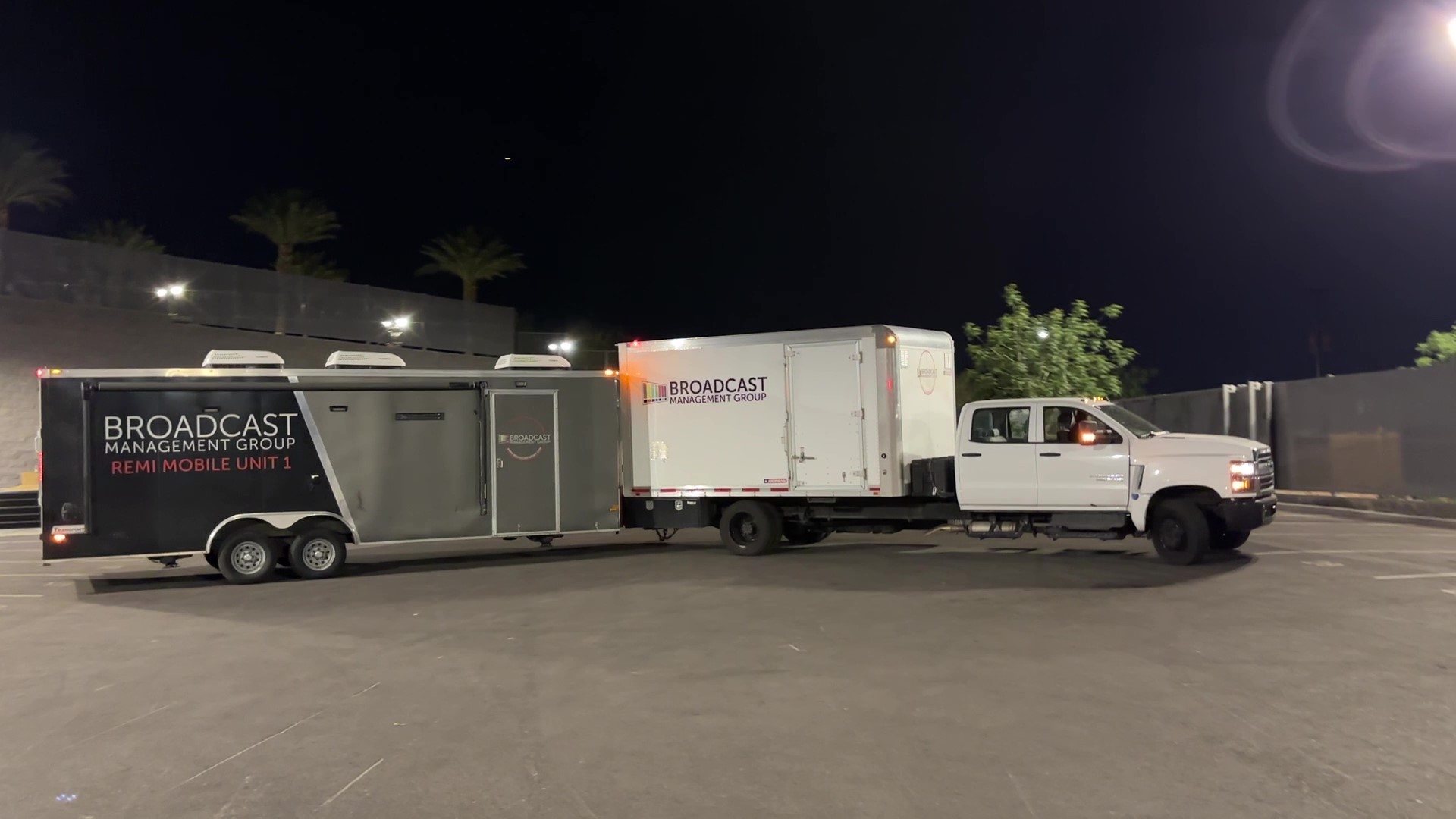
The on-site footprint in a remote broadcast is smaller than a traditional production. Instead of full production trucks and large crews, the on-site setup includes mobile units or flypacks: compact, pre-configured production kits designed to deploy fast and integrate with a central facility.
At BMG, on-site capture relies on LiveU bonded cellular units with optional Starlink redundancy, IP and fiber-based contribution paths, and REMI kits sized to the production’s needs. The goal is to capture clean video and audio from the venue with maximum reliability and minimum footprint.
Signal Transport
Getting the signal from the venue to the production facility is the most demanding part of remote broadcast, and the part most often underestimated.
Every camera feed, audio source, and communications channel captured on-site has to travel across IP networks, fiber paths, or bonded cellular connections in real time, with low enough latency that the production team can direct the show. A single dropped signal or delay can disrupt the entire broadcast.
Redundancy is not optional. BMG routes all feeds into its Cloud Control Center using multiple contribution paths at once: IP transport, fiber, LiveU bonded cellular, Starlink, private cloud interconnects, and direct ingest pathways. If one path degrades, another carries the load. The team engineers this before the show starts, not after something fails.
The signal transport layer is invisible when it works. When it doesn’t, the broadcast stops.
Centralized Production at the NOC
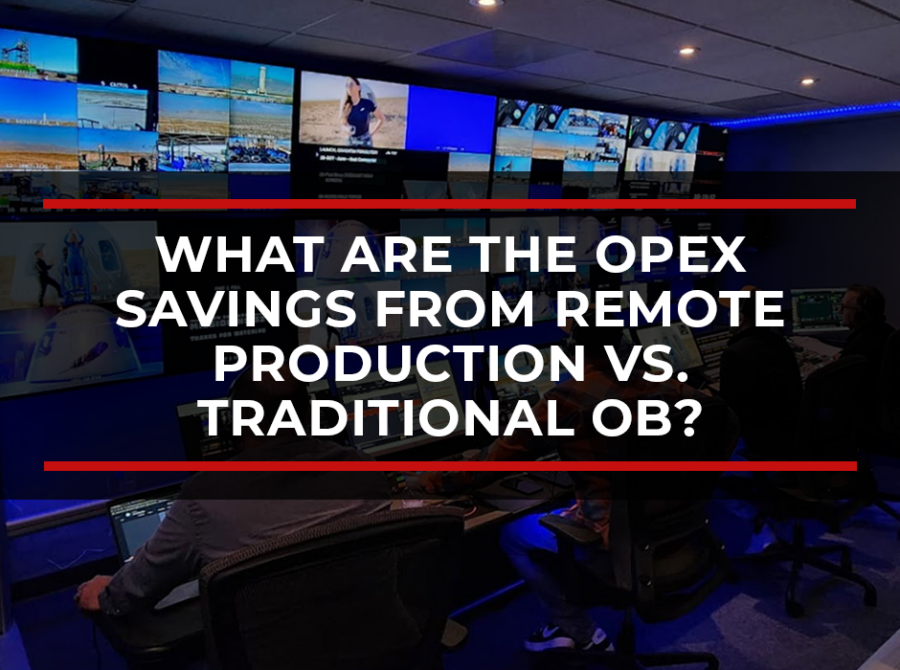
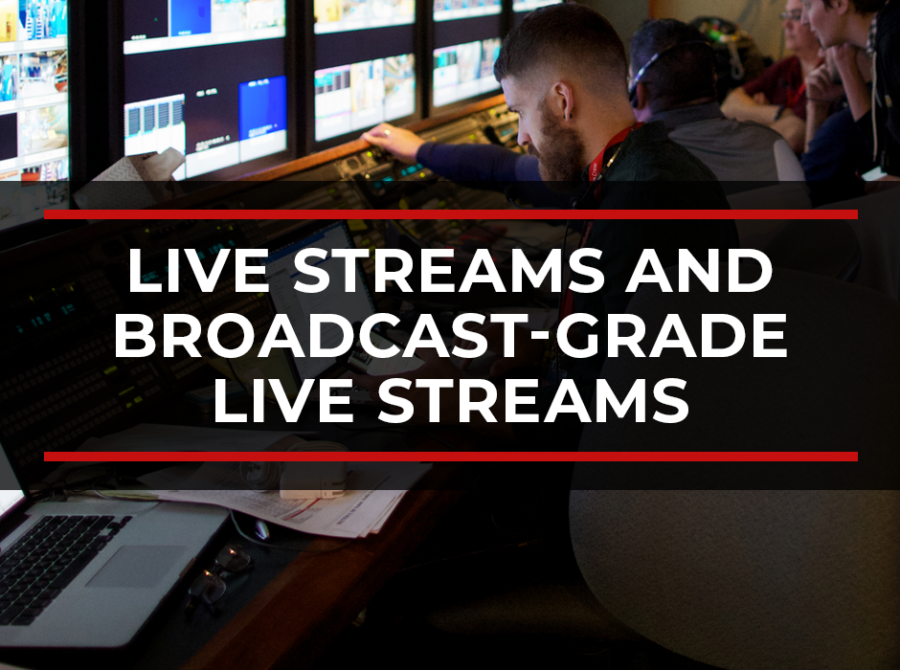
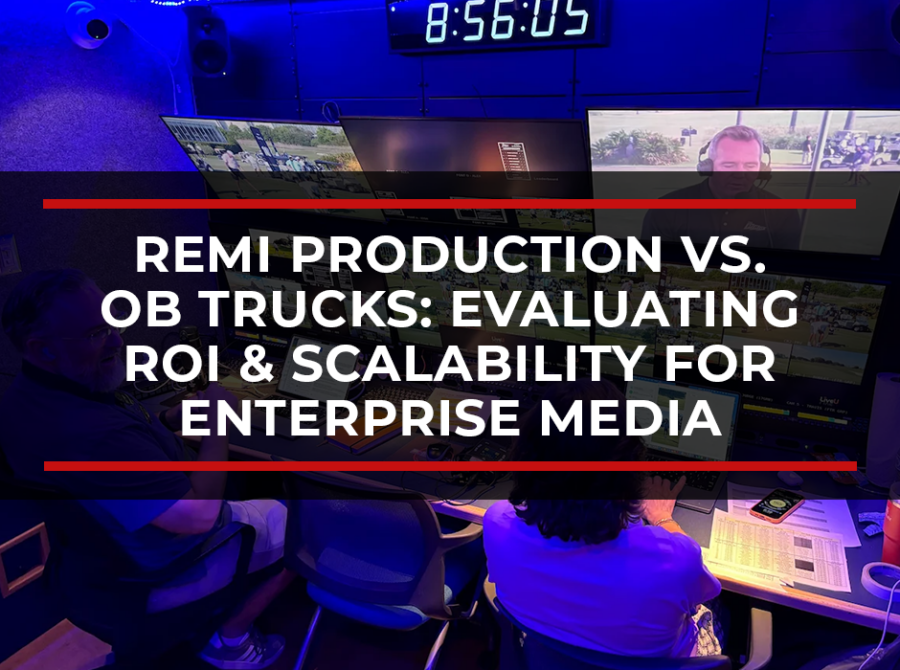
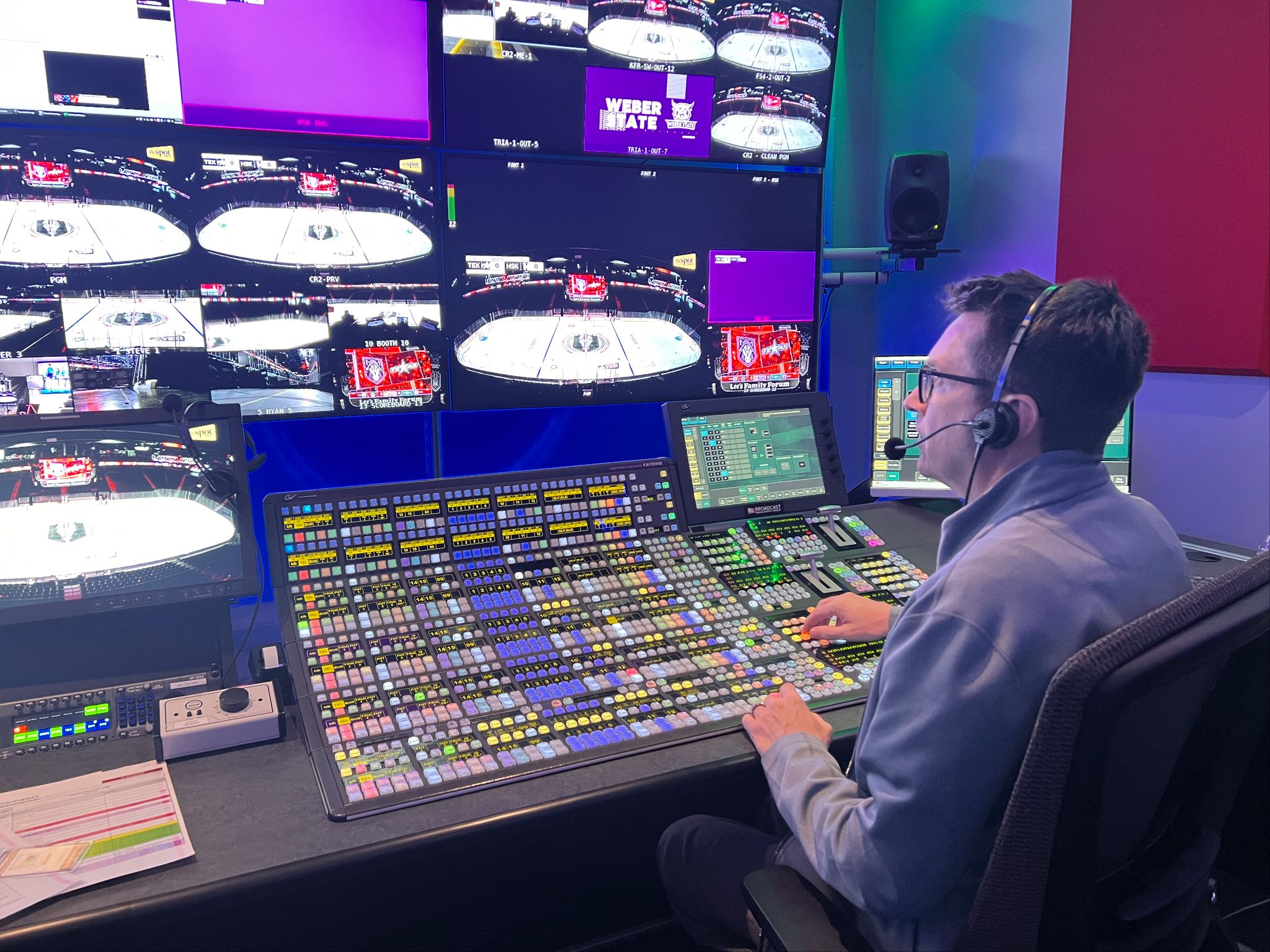
Once the signal arrives at the NOC, the production team takes over. Switching, graphics, replay, audio, technical direction, and engineering all run from a centralized facility equipped with broadcast-grade hardware.
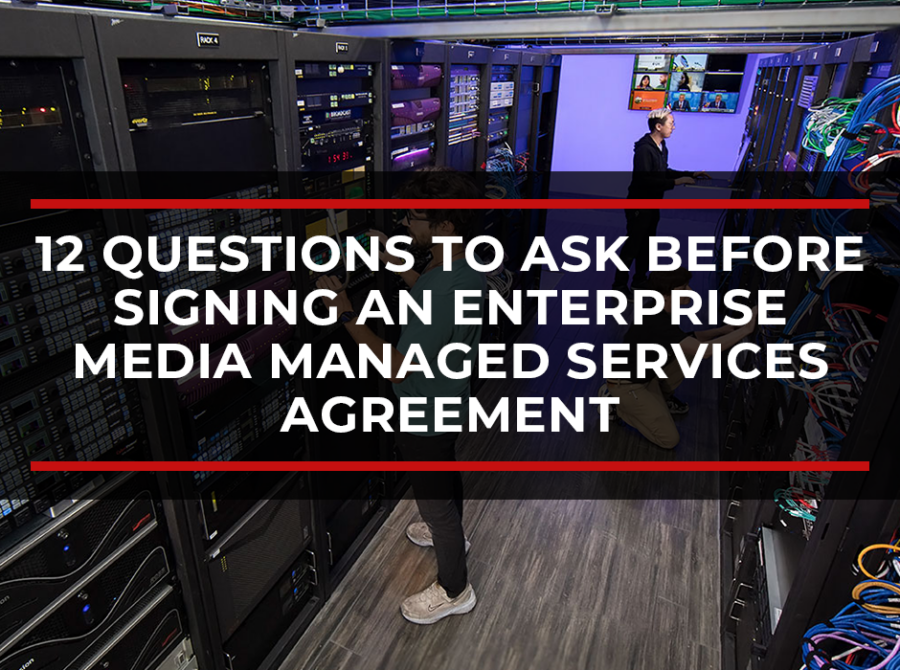
At BMG’s Network Operations Center in Washington, D.C., the production infrastructure includes two primary control rooms running Grass Valley K-Frame switchers with Kayenne panels, a third control room with a Ross Acuity 4 ME switcher, and an Evertz EQX router at 1,100 by 1,100 frames handling signal routing across the facility. Spoke facilities in New York, Las Vegas, and Chicago extend production capacity further.
A production team in Washington can direct a live event in Los Angeles with the same quality and creative control as if they were in the room. The show is built at the NOC. The audience never knows where it came from.
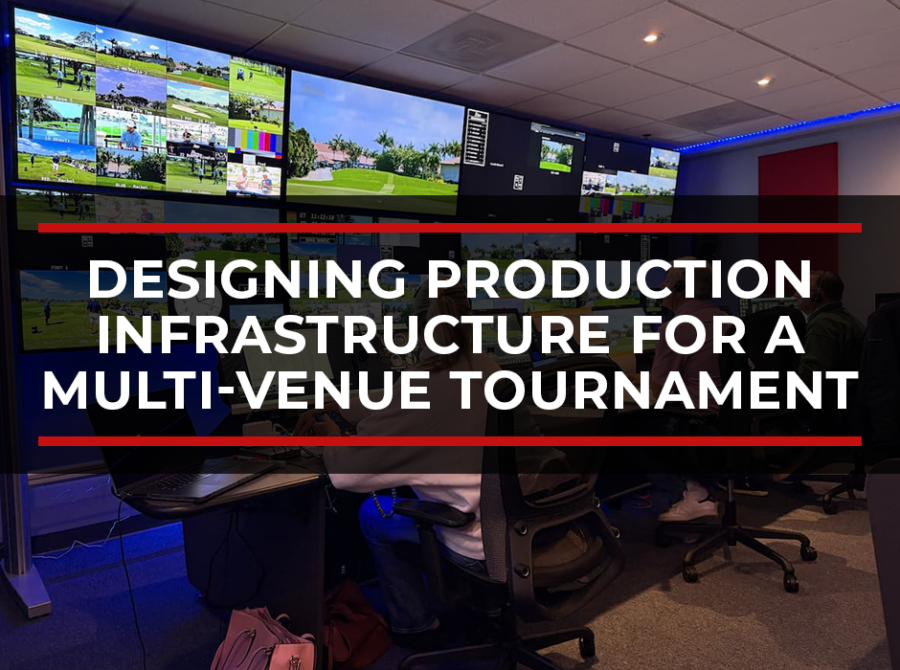
Centralization also enables something traditional on-site production cannot: BMG runs anywhere from two to fifty or more concurrent live feeds from a single NOC, supporting multiple productions across different venues, cities, and time zones.
Distribution
After the production team finishes the show, it has to reach the audience, usually across multiple platforms at once.
Distribution in a remote broadcast setup covers broadcast networks, OTT and FAST channels, corporate communication platforms, social and digital channels (YouTube, Meta, Twitch, TikTok, X), and internal portals. The NOC monitors every transmission path in real time.
The transmission layer at BMG uses LiveU, TVU, Haivision, NDI, LTN, Harmonic, Zixi, and SRT depending on the destination and delivery requirements. Different platforms require different encoding specs, latency tolerances, and delivery methods. Managing all of that at once, without failures, is its own technical discipline.
Archive and MAM
The broadcast doesn’t end when the show does. Every production generates content that needs to go somewhere useful.
All content from BMG’s REMI productions is routed into a Media Asset Management (MAM) system for archiving, clip extraction, highlights, post-production, and long-term lifecycle management. Raw feeds, isolated cameras, and finished masters are ingested, tagged, and made searchable so production teams can pull clips after the broadcast and editorial teams can access assets for ongoing use.
This layer is often treated as an afterthought. In a high-output production environment, it is as important as anything that happens during the live broadcast.
Why Remote Broadcast Is Hard to Execute Well
The individual components of a remote broadcast aren’t new. IP transport, centralized switching, cloud-connected infrastructure. These technologies have existed for years. Executing all of them at once, with no room for failure, is what separates a working REMI operation from a fragile one.
Remote broadcast involves multiple locations, production teams working across time zones, signal paths crossing thousands of miles of network infrastructure, and a broadcast clock that does not pause for technical problems. Every layer of the system has to work, and has to work together, on time.
Most REMI problems don’t start with the technology. They start with the operational experience required to run it under live conditions.
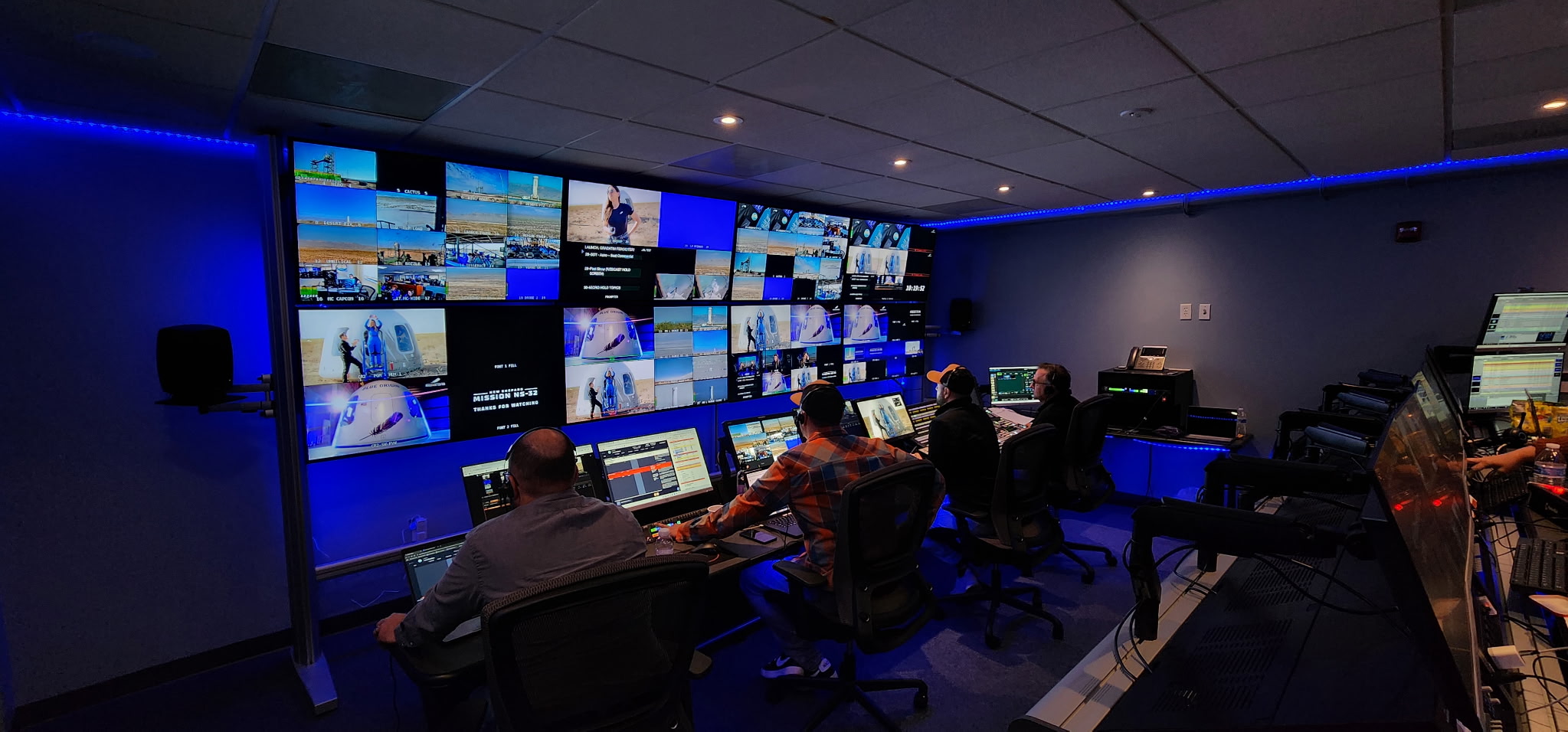
BMG produced Blue Origin’s NS-32 mission using a full REMI workflow from the NOC in Washington, D.C. Thirty cameras. Crews across multiple locations. On-site footprint reduced by up to 90% compared to a traditional broadcast of that scale. That result required every layer of the system, capture, transport, production, distribution, and archive, engineered to work together by a team that had done it before.
Why It Matters
When the infrastructure behind a remote broadcast is built and operated well, the production model delivers capabilities that traditional on-site production cannot match.
Scalability. A single NOC can support multiple productions at once. Adding a second or third show doesn’t require doubling the infrastructure or the crew on the ground.
Flexibility. Productions deploy faster, in more locations, with smaller on-site footprints. For organizations producing content across multiple markets or on recurring schedules, this changes the operational math.
Consistency. Because the same production team builds every show from the same facility using the same infrastructure, output quality holds regardless of where the event takes place. The audience experience doesn’t vary from city to city.
Cost efficiency. Reduced travel, smaller on-site crews, and repeatable workflows across multiple productions lower the total cost per show over time.
The System Behind the Signal
Remote broadcast is a different operating model from traditional production. It requires more complex technical infrastructure running out of sight, managed by people who understand how all of it connects.
The cameras at the venue are the visible part. The signal transport, the NOC, the redundant paths, the real-time monitoring, the distribution layer, the archive workflow: that is where the broadcast runs.
BMG has built its production model around that infrastructure. Every remote broadcast we produce runs through a system engineered for reliability, scalability, and broadcast-grade quality, regardless of where the show is.
If you’re evaluating using a remote broadcast for your next production, start with a conversation with our team.

Andrew Ryback is the Executive Vice President of Production. He brings over 17 years of experience in production management across live events, entertainment, and on-location shoots. He has managed production logistics for high-profile events, including The Emmys, The Oscars, TIFF, SXSW, Comic-Con, New York Fashion Week, Sundance, and both national political conventions. At BMG, he oversees complex productions from crew and equipment coordination to budgeting, permitting, and on-site execution.
About Andrew Ryback