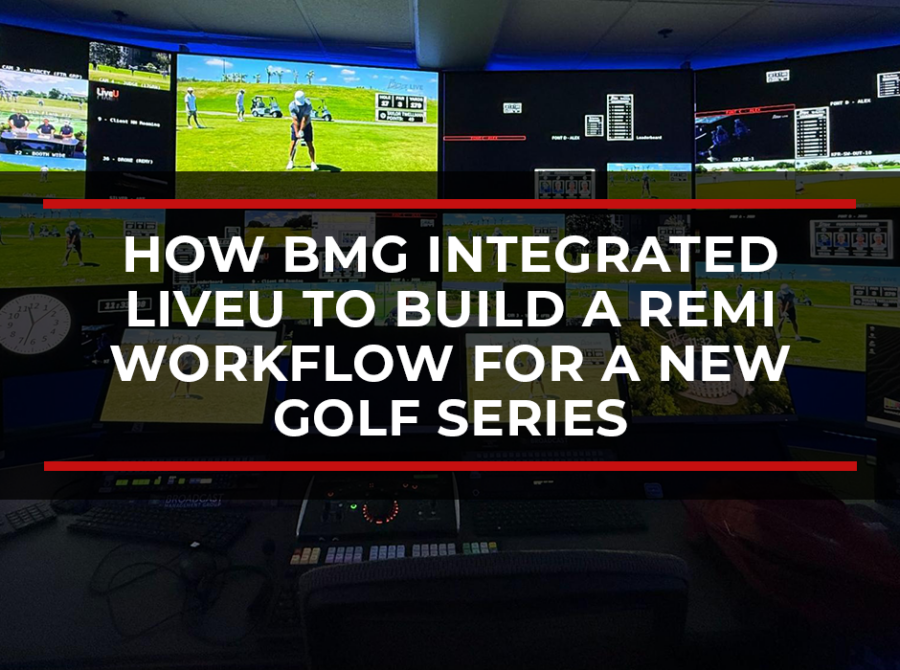
Remote production has moved from an emerging workflow to the operating model behind some of the world’s largest live broadcasts.
Over the past decade, Remote Integration (REMI) has fundamentally changed how live television is produced. What began as a way to reduce the size and cost of on-site production has evolved into a broader infrastructure strategy that allows broadcasters to centralize production, scale resources, strengthen redundancy, and connect talent and facilities across multiple locations.
Major global events, including the Olympics, the FIFA World Cup, the NFL, the NBA, European football, and international news coverage, are increasingly demonstrating the value of separating content acquisition from production. These workflows enable organizations to centralize production while maintaining flexible, scalable approaches to content capture and delivery.
It is now important for organizations to understand how quickly the rest of the industry will adopt the REMI workflow.
What Is REMI Production?
REMI, short for Remote Integration, separates acquisition at the venue from the core production operation.
Cameras, audio, and other acquisition equipment remain on site, while switching, graphics, replay, audio mixing, recording, and distribution are handled from a centralized broadcast facility.
This architecture can take several forms.
In a traditional REMI workflow, production is centralized away from the venue. Reverse REMI keeps processing at the venue while operators control the system remotely. Hybrid event production combines local and centralized resources, while cloud production virtualizes the centralized facility itself.
Today, the largest productions increasingly combine these approaches.
REMI production keeps cameras and capture crews at the venue while switching, graphics, replay, audio, and distribution are produced from a centralized broadcast facility, allowing a single acquisition unit to support multiple simultaneous productions.

The Evidence: REMI at the World’s Biggest Events
The last several years have provided some of the clearest evidence yet that remote production has reached the mainstream.
The Olympics
The Olympic Games have been an important proving ground for cloud and remote production.
- Tokyo 2020 introduced cloud-hosted Olympic broadcast infrastructure.
- Beijing 2022 expanded that model to 22 broadcasters.
- By Paris 2024, 54 broadcasters were using the cloud service, with approximately two-thirds of booked remote services delivered over the cloud.
- Milano Cortina 2026 continued that progression, reducing the size of its International Broadcast Center by 25% while using 33% less power.
Virtual OB van space and power requirements were reduced by up to half, while more than 590 multilateral feeds were processed outside the IBC.
These events demonstrated that major broadcast operations can move critical infrastructure away from the traditional on-site model without sacrificing scale.
FIFA and the World Cup
FIFA has also pushed centralized production to an unprecedented scale.
At the 2022 World Cup in Qatar, 24 cameras were fully remotely controlled from the International Broadcast Center, while 32 training sites were covered by two roving technicians instead of traditional OB trucks.
The 2026 World Cup takes the concept even further. With 48 teams and 104 matches across the United States, Canada, and Mexico, production is centralized through a 45,000-square-meter broadcast center in Dallas.
Multiple control rooms can produce matches simultaneously, while camera shading and replay are centralized across venues in all three countries.
Post-production is also being handled from London.
The model demonstrates that the production facility no longer has to travel with the event and is one of REMI’s greatest advantages.
American Sports
Major U.S. sports broadcasters are following the same workflow.
The NFL produced more than 11 hours of Super Bowl Sunday programming entirely through REMI workflows from Los Angeles control rooms in February 2025.
The NBA’s return to NBC is also incorporating REMI, with Monday and Tuesday games produced remotely from Stamford.
ESPN provides perhaps one of the clearest examples of how quickly the model can scale. What began as a single REMI event in December 2014 has grown to approximately 1,313 events annually across 21 sports.
European Sports and Broadcast
Remote production has become equally established across European sports.
Following the 2020 restart, Sky produced 100 Premier League and EFL matches remotely in just 40 days and continued using the model afterward.
TNT Sports now delivers approximately 80% of its live outside broadcasts remotely from a dedicated remote production center in London.
The BBC has also demonstrated the scalability of centralized workflows. Euro 2024 was produced from Salford, while the UK election night workflow ingested 369 simultaneous live feeds into a cloud-based production environment.
News at National Scale
REMI is not limited to sports.
Broadcast Management Group demonstrated the model at national scale by producing all ten January 6th Committee hearings using a REMI workflow.
A video village inside the Cannon House Office Building connected to a broadcast operations center in Las Vegas, more than 2,500 miles away, with additional support from facilities in Chicago and New York.
Pool cameras distributed feeds to networks across the country over fiber.
The production demonstrated that even politically sensitive, high-profile live events can be securely supported by a geographically distributed production infrastructure.
REMI in Action: BMG at Scale
BMG has applied the same architecture across live sports, entertainment, news, and large-scale events.
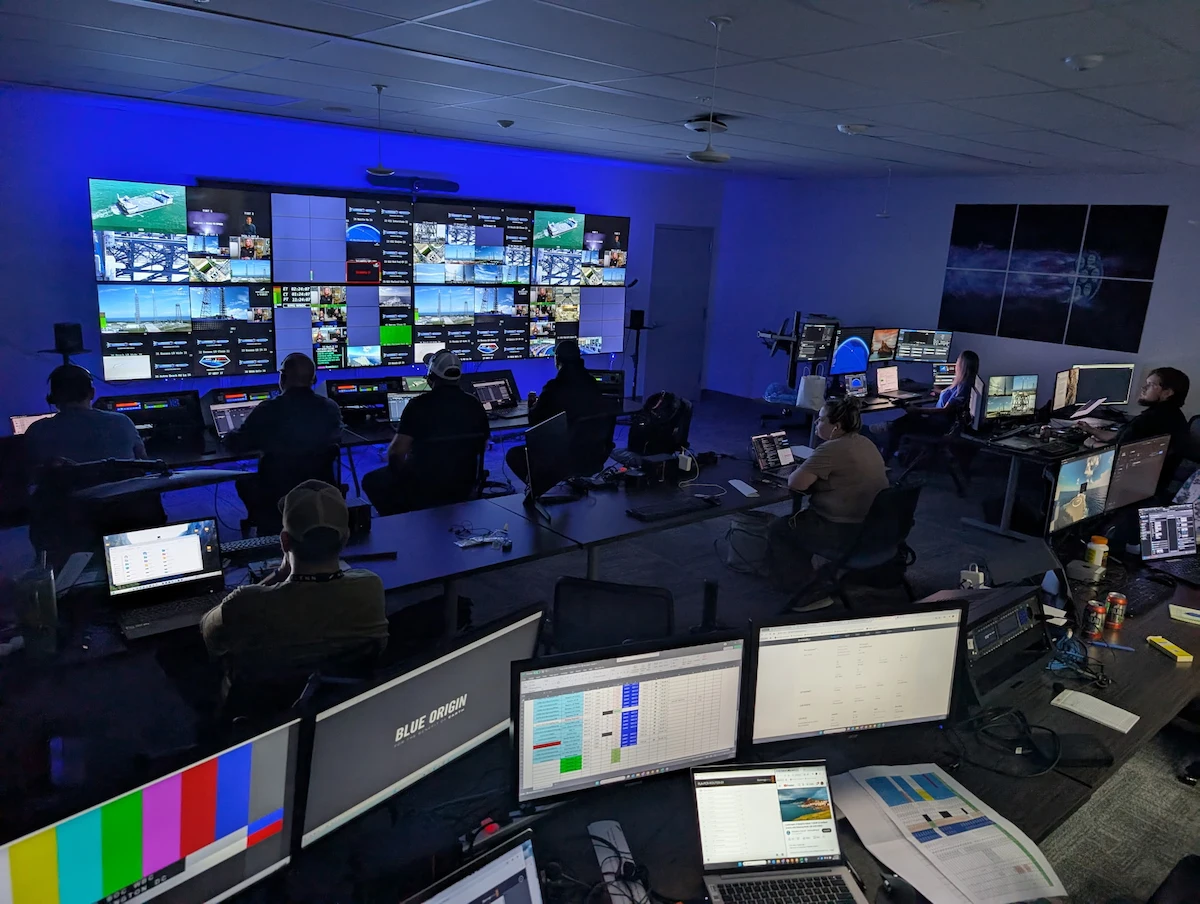
For Blue Origin’s NG-2 mission, BMG integrated more than 50 live camera feeds from locations across the country into its Washington, DC Network Operations Center, while maintaining an on-site production presence at Cape Canaveral.
BMG’s production of Prime Video’s Obsessed Fest illustrates how the model is extending into entertainment. BMG connected production teams across Los Angeles, Washington, DC, and New York City for a 7.5-hour livestream that reached more than 800,000 concurrent viewers, combining on-site creative direction with centralized technical operations and real-time social content workflows.
Finally, BMG has also applied distributed production models to election programming, producing five Al Jazeera town halls across four U.S. cities with more than 255 crew members coordinated across the tour.
REMI Is About More Than Cost Savings
One of the biggest misconceptions about REMI is that its primary purpose is to reduce travel costs.
Travel savings are real: fewer personnel need to travel, production footprints can shrink, and fewer large vehicles need to be deployed. But those savings are only part of the value.
The larger advantage is capability.
Higher-Quality Production
A centralized broadcast facility can provide multiple Tier 1 control rooms, replay systems, graphics, audio suites, recording infrastructure, and other resources that would be difficult or impossible to fit into a single production vehicle.
Instead of building that infrastructure for one event, the same facility can support multiple productions throughout the year.
Production That Scales with Demand
Cameras, control rooms, editors, and distribution channels can be added as the show requires, allowing production resources to match the size and complexity of each event.
This flexibility makes it easier to support multiple productions, expand coverage, and allocate technical resources where they are needed most without building an entirely new production infrastructure for every event.
Greater Redundancy
Centralized infrastructure can also create redundancy that is difficult to achieve with a single vehicle.
Multiple transmission paths, backup control rooms, geographically separated facilities, and simultaneous recording can provide additional layers of protection against equipment or connectivity failures.
Access to creative and technical talent
Once the production is centralized, the crew no longer has to be in one room.
A director and creative leadership can work on location, technical positions at the broadcast center, operators at connected facilities in other cities, and specialists from home, all on the same show.
Crew location becomes a staffing decision rather than a travel decision.
One REMI Unit Can Support Multiple Productions
This is where a purpose-built REMI architecture begins to separate itself from a traditional mobile production model.
Once acquisition feeds reach a centralized facility, a single production unit can support multiple simultaneous control rooms.
The same camera acquisition can feed:
- A national broadcast
- A rights-holder production
- A regional or alternate-language feed
- A streaming or social production
- A client’s owned-and-operated channel
Behind those control rooms is an entire production ecosystem that can include media asset management, master control, global transmission, post-production, growing-file workflows, and connected studios.
The result is a connected broadcast infrastructure.
BMG’s work with The Pro Tour demonstrates how this model can reduce the infrastructure required at the venue while expanding what can be accomplished centrally.
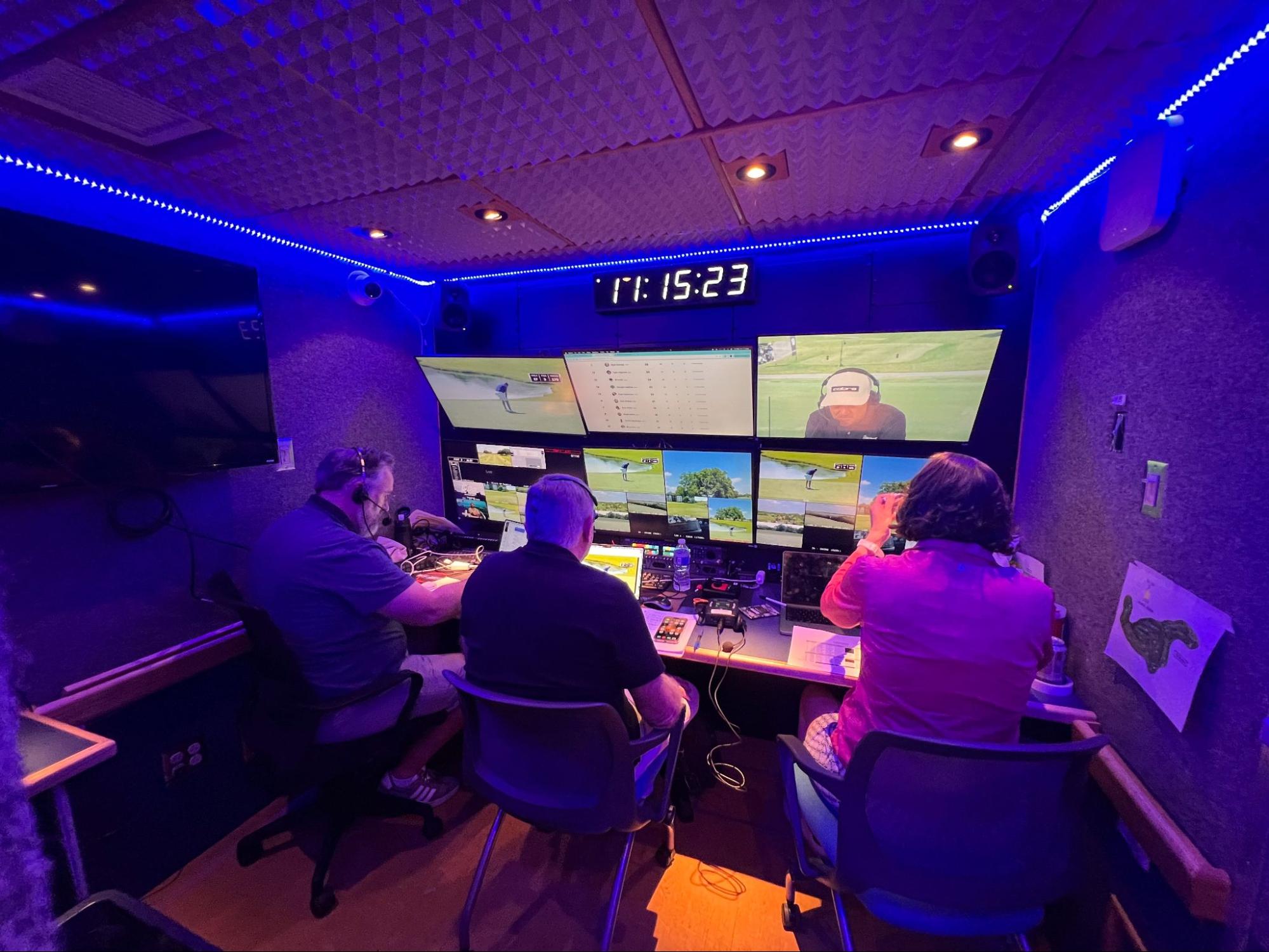
Across five tournaments and five golf courses, BMG used wireless camera and drone acquisition to connect the venues back to its Washington, DC Network Operations Center, where production, graphics, audio, engineering, MAM, and channel operations could be centralized.
What Does REMI Mean for the Traditional Production Truck?
When the production moves to a centralized facility, the vehicle’s job narrows to acquisition, and a rolling datacenter room becomes an expensive way to carry cameras.
Several legacy truck companies are now tapping into their existing fleets for remote control to raise utilization on assets that would otherwise sit idle.
Given that they already own those vehicles and carry the depreciation, this is the rational play. But it is an adaptation of an installed base rather than a purpose-built architecture: the datacenters are still in the trucks, the trucks still roll to the venue, and capacity is still bounded by what fits inside a trailer.
A retrofitted truck can be operated remotely, but it carries its own ceiling to every job.
A purpose-built REMI unit connected to a broadcast center has no ceiling of its own, because the show scales with a full broadcast datacenter ecosystem behind it.
BMG’s production model illustrates this distinction.
Rather than relying on a full mobile control room at every venue, BMG deploys purpose-built acquisition and production resources such as its REMI Mobile Units while moving the core technical operations into its centralized infrastructure.
The result is a smaller venue footprint without limiting the show’s production capabilities.
Why Broadcast Cloud Infrastructure Is Evolving
The cloud chapter started with the public cloud, and it is now moving on.
Public cloud gave the industry elasticity without capital and proved the concept at the highest level. But broadcast is close to the worst possible fit for public cloud pricing: public cloud rewards workloads that burst and stop, while broadcast workloads run continuously, move enormous amounts of data, and pay egress on every byte that leaves.
A 24/7 channel never scales down. Egress fees and consumption pricing turn a predictable operation into a variable bill that arrives after the show, which is why cloud repatriation onto owned or multitenant private infrastructure has become one of the defining infrastructure themes of 2025 and 2026.
The destination is a purpose-built multitenant private cloud designed specifically for broadcast: infrastructure engineered from the start for continuous, deterministic, high-bandwidth live production.
This is what BMG Cloud Control Center™ was built to serve. Multitenancy is what makes the economics work.
A client building its own broadcast cloud pays for peak capacity it uses a fraction of the time; a client renting public cloud pays a metered fee on every hour, every gigabyte stored, and every byte delivered, forever.
A multitenant private cloud offers the third option: the economies of scale and high capacity of a large shared facility, sized and staffed for the biggest shows, without the capital of building it and without the fee structure of the public cloud.
Where Does REMI Go From Here?
The next phase of REMI will be less about proving the technology and more about expanding access to it.
Industry forecasts generally point toward continued growth in remote production through 2030, but the event calendar itself may be the more useful indicator.
Los Angeles 2028 is expected to continue the move toward virtualized master control. The Dakar Youth Olympics is positioned as a testbed for fully virtualized master control operated remotely from Madrid.
Meanwhile, the 2027 Women’s World Cup and 2030 men’s World Cup will require production infrastructure capable of supporting events distributed across multiple countries and continents.
Leagues are also increasingly becoming their own networks as the traditional regional sports network model changes. Streaming platforms are expanding beyond individual events and moving toward full-season coverage, while major corporate and enterprise organizations continue demanding broadcast-quality live programming.
The Middle of the Market May Move Fastest
Tier 1 entertainment and news programming, Tier 2 sports, corporate events, conferences, and other recurring productions can increasingly benefit from remote-first architectures without requiring the infrastructure footprint traditionally associated with major broadcasts.
The technology is no longer the primary constraint.
The infrastructure is.
Organizations that have access to connected acquisition, centralized production, cloud or private cloud infrastructure, redundant connectivity, and experienced broadcast operations teams will be well positioned to take advantage of this shift.
Frequently Asked Questions
What does REMI stand for in broadcasting?
REMI stands for Remote Integration. Cameras and acquisition crews operate at the venue while switching, graphics, replay, audio, and distribution are handled from a centralized broadcast facility.
Is REMI production cheaper than a traditional production truck?
It can be. Travel, staffing, and on-site infrastructure requirements can all be reduced. However, the stronger business case is usually the ability to improve production quality, scale resources, increase redundancy, and access talent regardless of location.
How many cameras can a REMI production support?
The number depends on both the acquisition equipment and the centralized facility supporting the production. Purpose-built REMI units typically support 12 to 25 cameras, with larger productions scaling up with additional acquisition units, FlightPacks, control rooms, and centralized resources. BMG projects have integrated more than 50 camera feeds from multiple locations.
What is the difference between REMI and Reverse REMI?
In a traditional REMI workflow, production processing occurs at the centralized facility. With Reverse REMI, processing remains at the venue while operators control the production remotely.
Does REMI require fiber at the venue?
No. Modern REMI workflows can use private fiber, public internet, bonded cellular connectivity, and satellite services, including low Earth orbit (LEO) satellite networks. The availability of multiple connectivity options has significantly expanded where remote production can operate.
Which companies are leading remote production?
At the mega-event level, organizations such as Olympic Broadcasting Services and Host Broadcast Services have operated large-scale centralized production workflows. Companies including NEP, EMG, Broadcast Management Group, ESPN, Sky, the BBC, DMC Production, and Timeline TV also operate remote production at scale, alongside technology providers such as LiveU, TVU Networks, Grass Valley, Net Insight, and Appear.
The Next Era of Live Production Is Connected
The world’s largest broadcasts have already demonstrated that remote production is not an experiment.
The Olympics have moved significant portions of their broadcast infrastructure into the cloud. FIFA has centralized production for events spanning multiple countries. Major U.S. sports networks are producing more programming remotely, while news and enterprise productions are adopting the same architecture.
The shift is about when REMI changes where production happens, how resources are shared, how teams collaborate, and how broadcast infrastructure is built.
Over the next several years, the competitive advantage will increasingly belong to organizations that can connect acquisition sites to scalable, redundant production infrastructure and operate it reliably.
The future of live production is connected, centralized, scalable, and built around infrastructure that can support whatever the next production demands.

Todd Mason is the Chief Executive Officer of Broadcast Management Group (BMG), a broadcast infrastructure and media operations company helping define the next generation of television production, live media operations, and broadcast network infrastructure in North America.
About Todd Mason