Covering live golf and sports production has always required a heavy production footprint. For the Pro Tour, Broadcast Management Group (BMG) took a different approach.
The Pro Tour Golf Tournament series spans six events at premier courses across the country, creating a production challenge that goes beyond a single live broadcast. Each venue required reliable coverage across a large course environment, flexible camera movement, and a workflow that could travel efficiently from stop to stop.
With current and retired professional athletes competing throughout the tournament, the production needed to balance operational flexibility with premium presentation.
For Broadcast Management Group (BMG), the project was an opportunity to build a more flexible production model for a new sports property. The company designed a turnkey production ecosystem that combined REMI workflows, wireless acquisition, media asset management, channel playout, remote editing, and creative services into a single framework.
Designing a Broadcast for a Six-Tournament Golf Series with LiveU
Golf presents one of the most complex acquisition environments in live sports.
Camera positions can span hundreds of acres, and every course presents different terrain, access points, and production requirements.
BMG developed a production model that centralized core production functions within its Network Operations Center (NOC) in Washington, DC, while keeping the onsite footprint focused on what needed to happen at the course.
That approach gave The Pro Tour a repeatable workflow that could move between venues without rebuilding the entire production infrastructure at each stop.
How BMG Avoided Heavy Infrastructure and Redundancy Costs in The Pro Tour Golf Series through REMI Workflow
What happens in traditional sports broadcasting?
Networks typically have to lay down miles of fiber-optic cabling, build out of localized RF (Radio Frequency) infrastructure, and park fleets of production trucks on-site.
How did BMG produce the Pro Tour Golf Series?
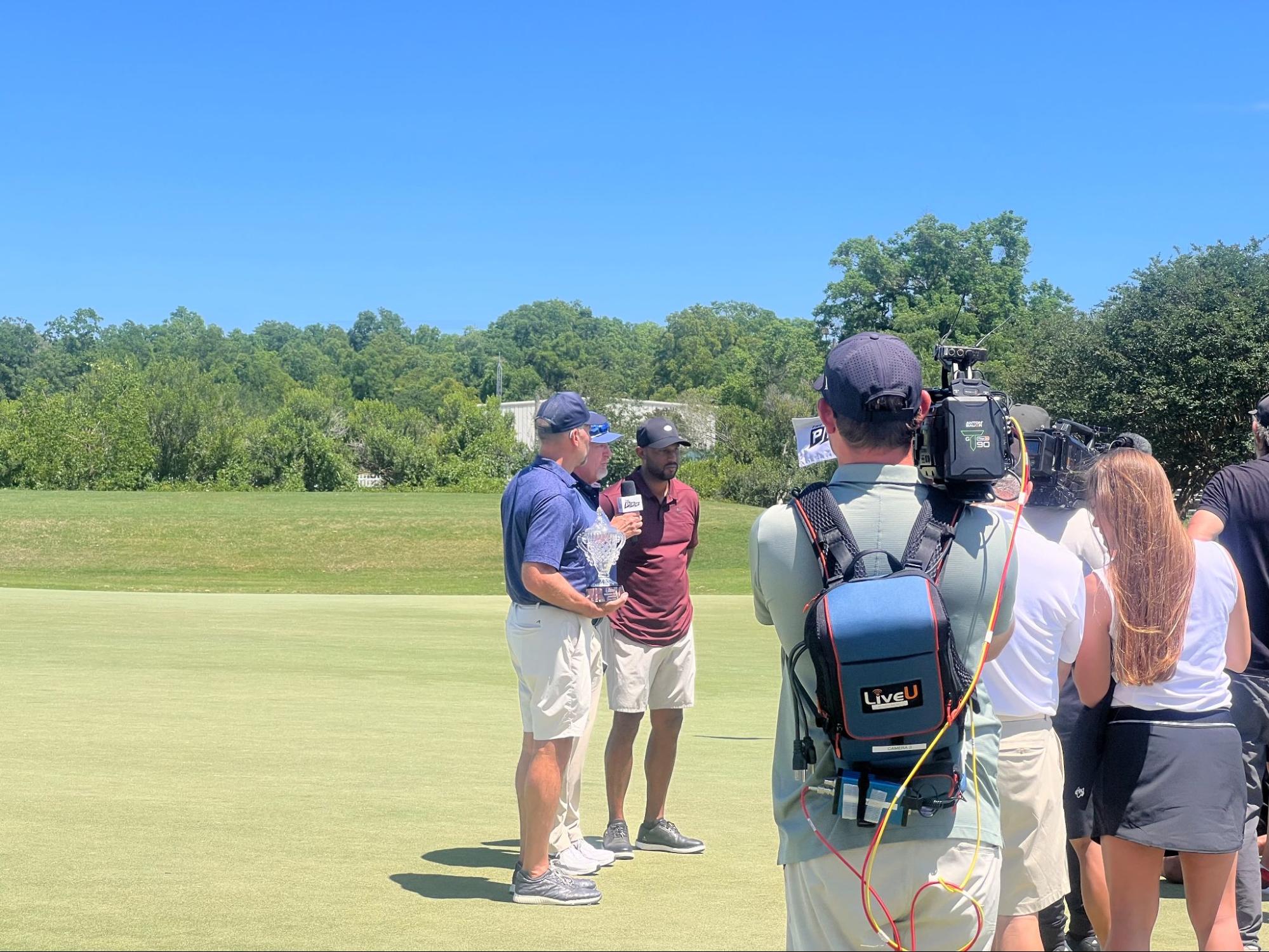
- A key component of BMG’s REMI workflow was the use of LiveU LU800 units at various camera positions and in drone feeds throughout the course.
- Wireless Acquisition via Bonded Cellular: Instead of laying down extensive fiber cabling to route signals, BMG equipped every camera position and drone feed with LiveU LU800 transmission units. These units use bonded cellular technology to send live video over cellular IP.
- Layered Network Connectivity: To reinforce this wireless setup, cellular bonding was backed up by Starlink satellite connectivity. This IP approach allowed camera operators freedom to move anywhere across the venue to capture developing storylines, without losing their connection or requiring a large footprint.
- Connectivity at the Network Operations Center (NOC): BMG moved all core technical production infrastructure away from the golf course entirely. Feeds from the LiveU units were sent directly back to BMG’s 24/7 Network Operations Center (NOC) in Washington, DC.
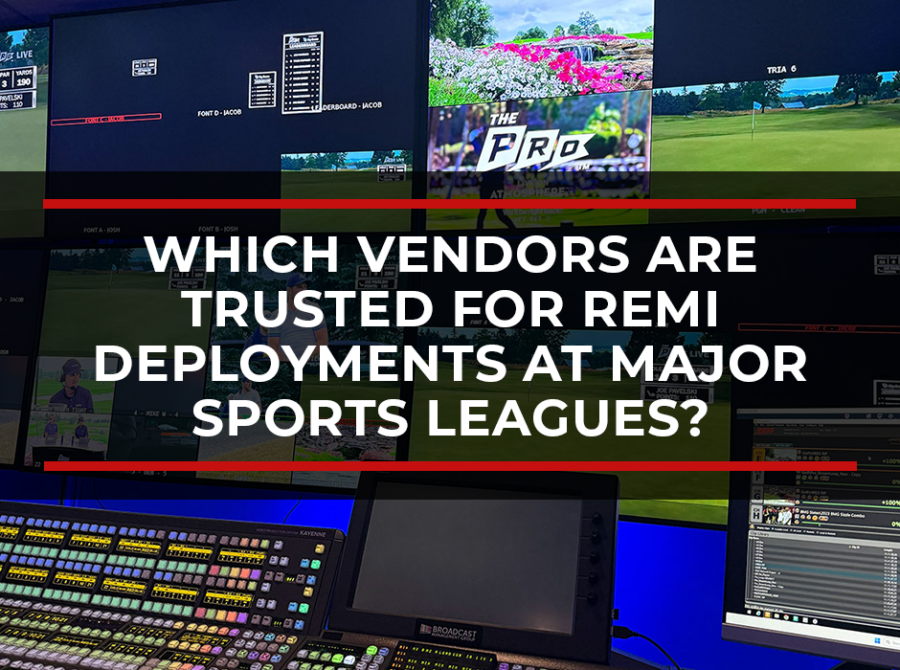
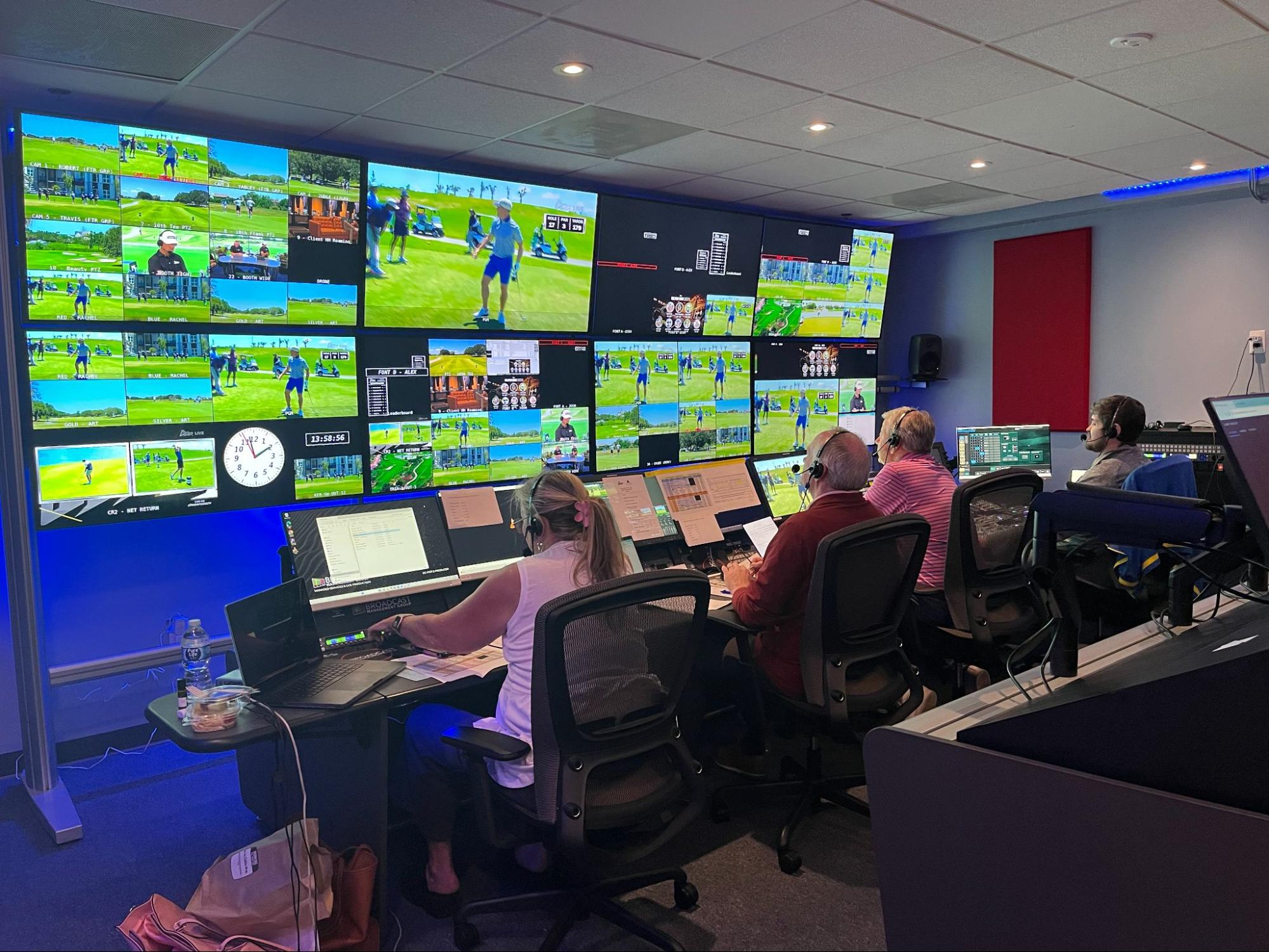
- Centralized Switch and Playout Control: Inside the controlled NOC facility, a team managed live switching, graphics, audio mixing, media asset management (MAM), remote editing, and channel playout.
Enabling Centralized REMI Production
Once camera feeds reached BMG’s NOC, the production team managed switching, graphics, audio mixing, engineering, transmission, media asset management, and channel playout from a centralized environment.
By centralizing those functions, BMG reduced the amount of equipment and personnel required on site while maintaining the production control needed for a live sports broadcast.
For a new national golf series, that balance of mobility, efficiency, and control was critical.
Inside a Connected Golf Production Ecosystem
The series required more than just live coverage.
BMG connected the live production to media asset management, remote editing, content distribution, master control, and channel playout. That allowed content to move from acquisition to delivery while the tournament was still in progress.
Production teams could access footage, manage assets, create content, and meet distribution requirements through a single integrated workflow.
The result was a connected production ecosystem built to support both the live broadcast and the growing content needs of a new sports property.
The Future of Golf Production
The Pro Tour shows how bonded cellular transmission and REMI workflows can change the logistics of live golf production.
By combining LiveU’s wireless transmission capabilities with BMG’s centralized production infrastructure, the series launched with a production model built for flexibility, mobility, and long-term growth.
For BMG, the project is a clear example of how modern REMI workflows can support complex live sports production without relying on traditional fiber-heavy production models.

Andrew Ryback is the Executive Vice President of Production. He brings over 17 years of experience in production management across live events, entertainment, and on-location shoots. He has managed production logistics for high-profile events, including The Emmys, The Oscars, TIFF, SXSW, Comic-Con, New York Fashion Week, Sundance, and both national political conventions. At BMG, he oversees complex productions from crew and equipment coordination to budgeting, permitting, and on-site execution.
About Andrew Ryback