More enterprise teams are producing video every week.
CEO messages. Town halls. Investor updates. Product launches. Executive interviews. Internal announcements. Training content. Podcasts. Customer-facing broadcasts.
At some point, the question changes from “Where can we shoot this?” to “Do we need our own studio?”
The answer depends on more than cost. A rented production space may be the right choice for occasional shoots or one-off events. A dedicated corporate studio may make more sense when production is frequent, confidential, unpredictable, or heavily tied to brand control and executive availability.
The best decision starts with four questions: how often you produce, how sensitive the content is, how much control the brand needs, and how often the schedule changes.
When Renting Production Space Makes Sense
Renting works well when production needs are occasional, planned in advance, and easy to schedule.
A company may only need a professional studio a few times a year for campaign videos, executive interviews, training modules, or special announcements. In that case, renting space can provide access to a polished environment without the cost of building, staffing, maintaining, and operating a dedicated facility.
It also gives teams flexibility. Different productions may need different looks, different room sizes, different crews, or different technical setups. Renting lets the company choose the right space for the project instead of forcing every shoot into the same internal studio.
Renting is usually the better option when video production is important, but not constant.
When Owning a Corporate Studio Makes Sense
Owning starts to make more sense when the studio becomes part of the company’s communications infrastructure.
If executives are often on camera, if town halls happen regularly, if investor communications require a controlled environment, or if internal teams produce recurring video series, the cost and friction of renting can add up quickly.
A dedicated studio gives the organization more control over the environment. The set can match the brand. The equipment can be configured around the company’s needs. The team can move faster when an executive becomes available, or a message needs to go out quickly.
Ownership is not just about having a room with cameras. It is about having a repeatable production environment that supports the way the company communicates.
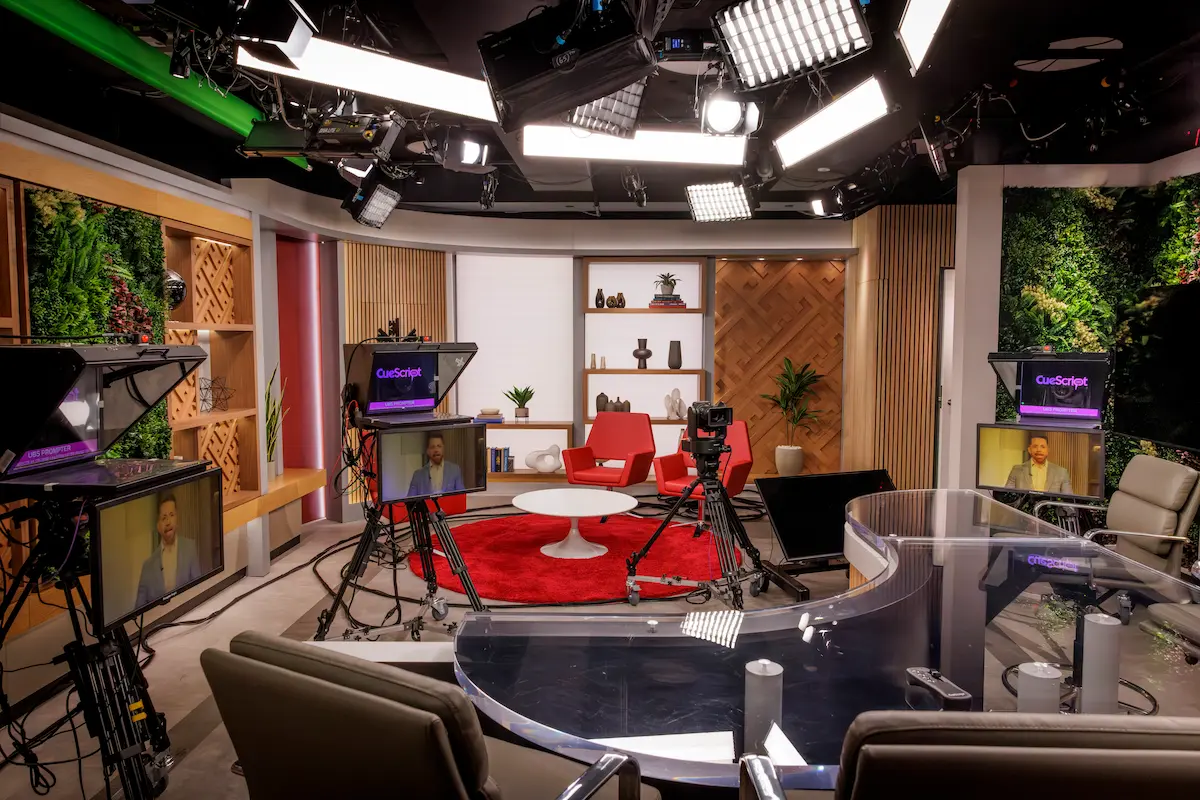
The Four Decision Drivers
| Decision Driver | Renting Production Space | Owning a Corporate Studio |
|---|---|---|
| Events per year | Better for low or irregular volume | Better for recurring production demand |
| Confidentiality | Requires more outside coordination | Keeps sensitive content inside a controlled environment |
| Brand control | Depends on the available rented space | Creates a consistent branded production environment |
| Schedule volatility | Harder when requests are last-minute | Easier for rapid-response executive content |
The Break-Even Math Your VP Will Ask For
The simplest way to compare build versus book is to look at the annual cost of ownership against the savings per production.
Break-even events per year = annual fixed ownership cost ÷ savings per event
A more useful version looks like this:
Break-even events per year = annual fixed ownership cost ÷ (all-in rental cost per event – owned studio variable cost per event)
Here is a simple example:
| Cost Item | Example |
|---|---|
| Annualized studio build and equipment cost | $250,000 |
| Annual staffing or managed operations | $300,000 |
| Maintenance, software, and support | $60,000 |
| Annual fixed ownership cost | $610,000 |
| Average all-in rental cost per event | $25,000 |
| Owned studio variable cost per event | $5,000 |
| Savings per event | $20,000 |
| Break-even point | 31 events per year |
In this example, if the organization produces more than 31 studio events per year, owning or operating a dedicated corporate studio may become easier to justify financially.
If the company produces far fewer events, renting production space may still be the better financial choice.
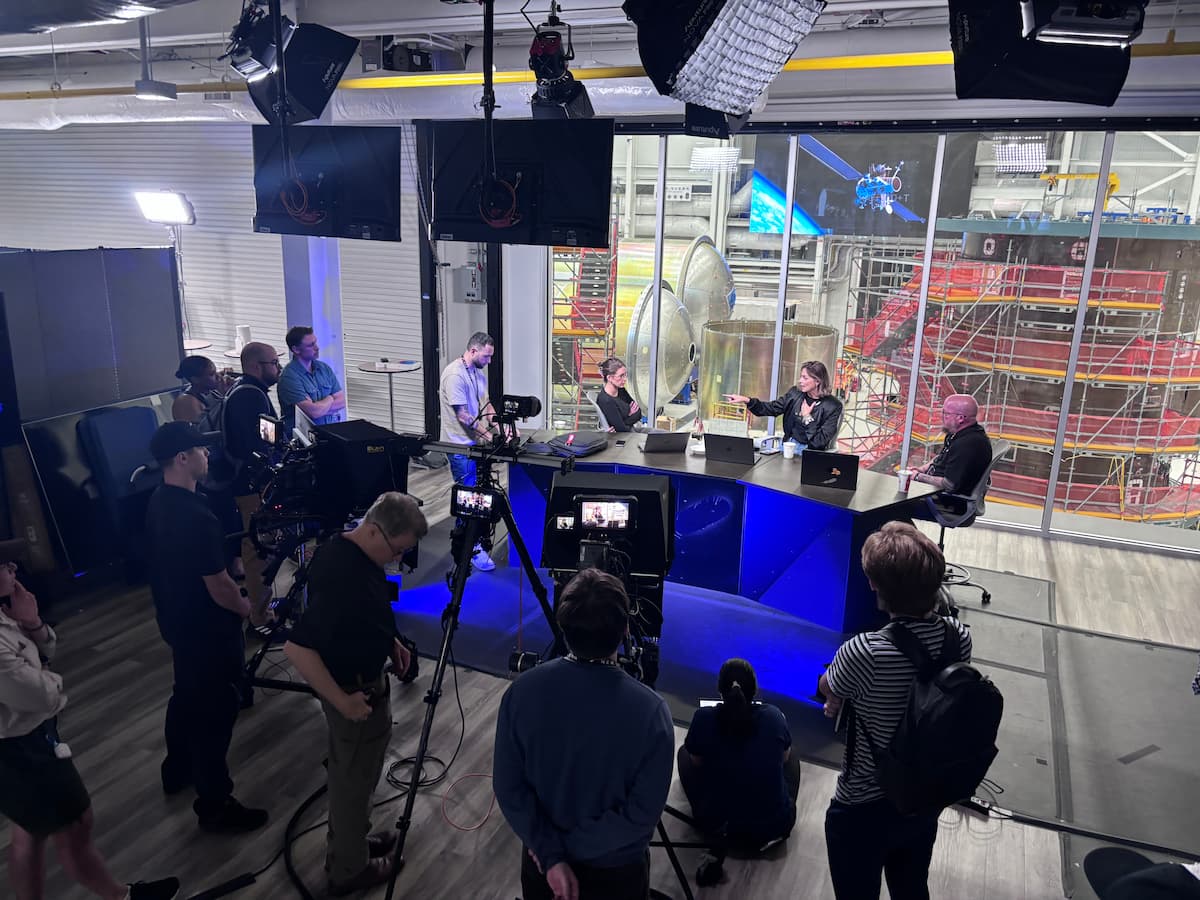
The Math Does Not Capture Everything
The break-even point is useful, but it isn’t the whole decision.
A company may build a studio before it reaches the strict financial break-even point because the content is confidential, the CEO needs fast access, or the brand requires a consistent environment.
That can matter for earnings-related communications, leadership transitions, crisis response, internal announcements, product updates, investor events, and sensitive employee messaging.
There is also a time cost that rarely shows up in the first spreadsheet.
Every rented production requires scheduling, travel, setup, coordination, approvals, executive movement, security, and handoff. For a 15-minute CEO recording, the actual production may be short, but the disruption can be much larger.
A dedicated studio reduces that friction.
A Hybrid Model Often Makes the Most Sense
Build versus book doesn’t have to be an all-or-nothing decision.
Some organizations build a small executive studio for recurring communications, then rent larger production spaces for major events. Others use an internal studio for everyday content and bring in Production Staffing & Operations for larger broadcasts.
A hybrid model can also include Remote Production (REMI) workflows, Managed Services, mobile studio support, or a connection to a Network Operations Center for monitoring, transmission, and technical oversight.
The right model depends on the mix of content.
A small internal studio may be enough for executive messages, podcasts, remote interviews, and internal updates. Larger town halls, product launches, and branded events may still require a bigger venue or a custom production build.
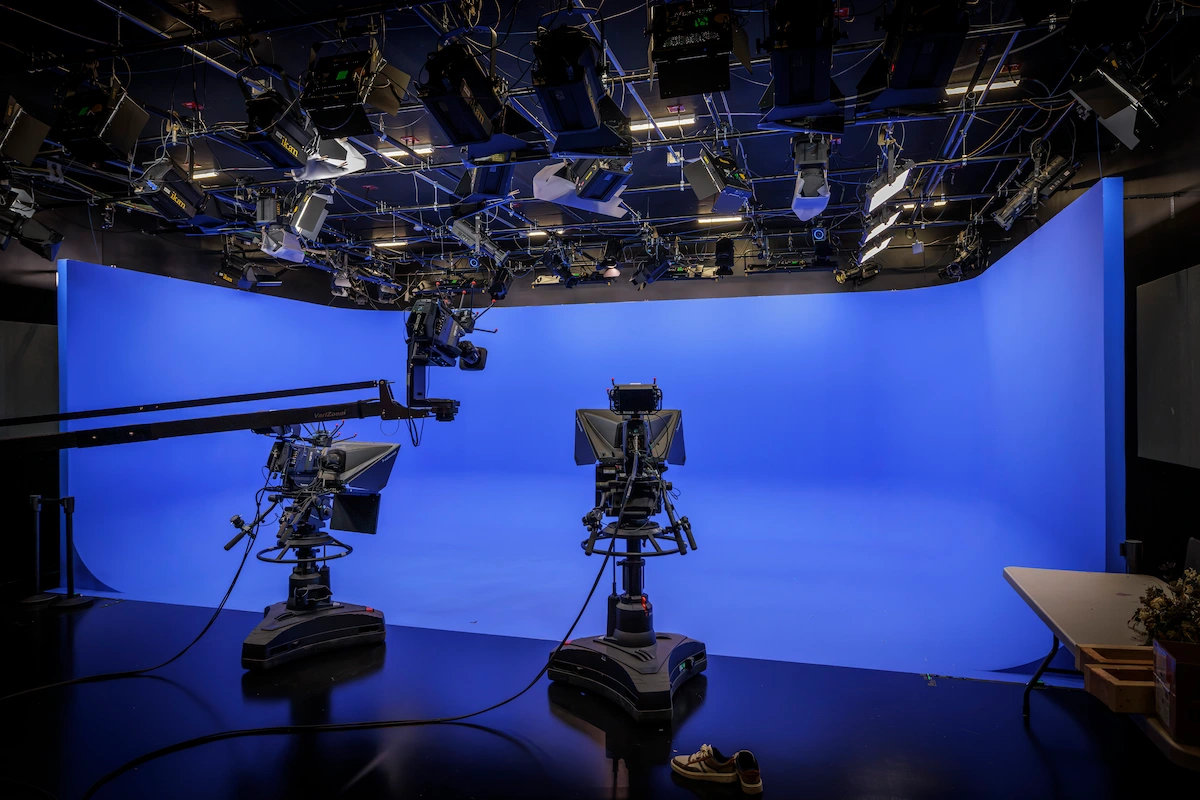
How to Make the Decision
Start with production volume, but do not stop there.
Ask:
- How many studio events or shoots do we produce each year?
- How many are executive-led or time-sensitive?
- How often do we need a branded environment?
- How confidential is the content?
- How much do travel and scheduling disrupt leadership?
- Do we have the staff to operate a studio?
- Do we need outside engineering or managed operations support?
- Will the studio support live broadcasts, recorded content, podcasts, remote guests, or internal events?
- Could a smaller internal studio meet most needs while larger events are still booked elsewhere?
If production is occasional and predictable, renting may be enough.
If production is recurring, sensitive, brand-driven, or hard to schedule, owning a studio becomes a stronger option.
Building the Right Studio Strategy
A corporate studio should match the way the organization actually communicates.
For some teams, that means renting space a few times a year. For others, it means building a dedicated Studio Design & Build environment, staffing it through Studio Production, supporting it with Enterprise Video & Content Operations, or connecting it to remote workflows and managed technical support.
The goal is not simply to own more equipment. The goal is to create a production model that saves time, protects sensitive communications, supports the brand, and gives the organization the right level of control.
Not sure whether to build a corporate studio or rent production space?
Talk to BMG about building the right studio strategy for your organization.

Steven Cotliar is Executive Vice President of Growth and Marketing at BMG. He brings more than 25 years of experience across digital marketing, advertising, entertainment, live streaming, and business development. His background includes work with major studios, brands, agencies, and platforms, including Twentieth Century Fox, NFL, Disney, Tesla Motors, FX Networks, Paramount, Lionsgate, Condé Nast, Target, Sundance Film Festival, and The Paley Center. In his current role, Steven leads growth and business development initiatives that help expand BMG’s client relationships and market presence.
About Steven Cotliar