Enterprise live streaming has become a core communications channel for major organizations.
Leadership summits, investor events, town halls, product launches, press events, conferences, employee broadcasts, and global announcements all carry real business visibility. When these events are live, the production partner needs to do more than just show up with cameras and encoders.
The right partner should understand broadcast workflows, enterprise requirements, redundancy, security, staffing, remote contributors, audience delivery, and what it takes to keep a live stream stable when the stakes are high.
For procurement teams, event directors, communications leaders, and marketing teams, the RFP process should help identify whether a vendor can truly support an enterprise-grade live production.
Here is what to look for.
1. Enterprise Experience and Proof of Reliability
Start by evaluating whether the production partner has experience with the type of event you are producing and proof that they can deliver under pressure.
Enterprise live streams often involve executives, employees, investors, customers, media, partners, or public audiences. The production needs to reflect the brand, protect the message, and run with a level of polish and reliability that matches the visibility of the event.
Your RFP should ask:
- What types of enterprise live events have you produced?
- Have you supported town halls, investor events, leadership summits, product launches, conferences, or internal broadcasts?
- Can you provide case studies for similar live streams?
- Can you share references from clients with comparable event needs?
- What was the scale of the crew, audience, and technical workflow?
- What challenges did you solve?
- Do you provide post-event reporting or performance summaries?
- How do you document technical issues, resolutions, and recommendations?
A strong partner should be able to show relevant experience, explain how they manage complex live productions, and provide proof that they can support high-visibility events before, during, and after the stream.
2. Service-Level Agreements and Operational Support
For high-visibility live streams, reliability should be built into the engagement from the beginning.
An enterprise production partner should be able to define service expectations, escalation paths, monitoring responsibilities, and support coverage before the event goes live.
Your RFP should ask:
- Do you provide defined service-level agreements?
- What uptime or reliability standards can you support?
- Who monitors the live stream during the event?
- What is your escalation process for technical issues?
- Do you provide real-time engineering support?
- Is support available before, during, and after the event?
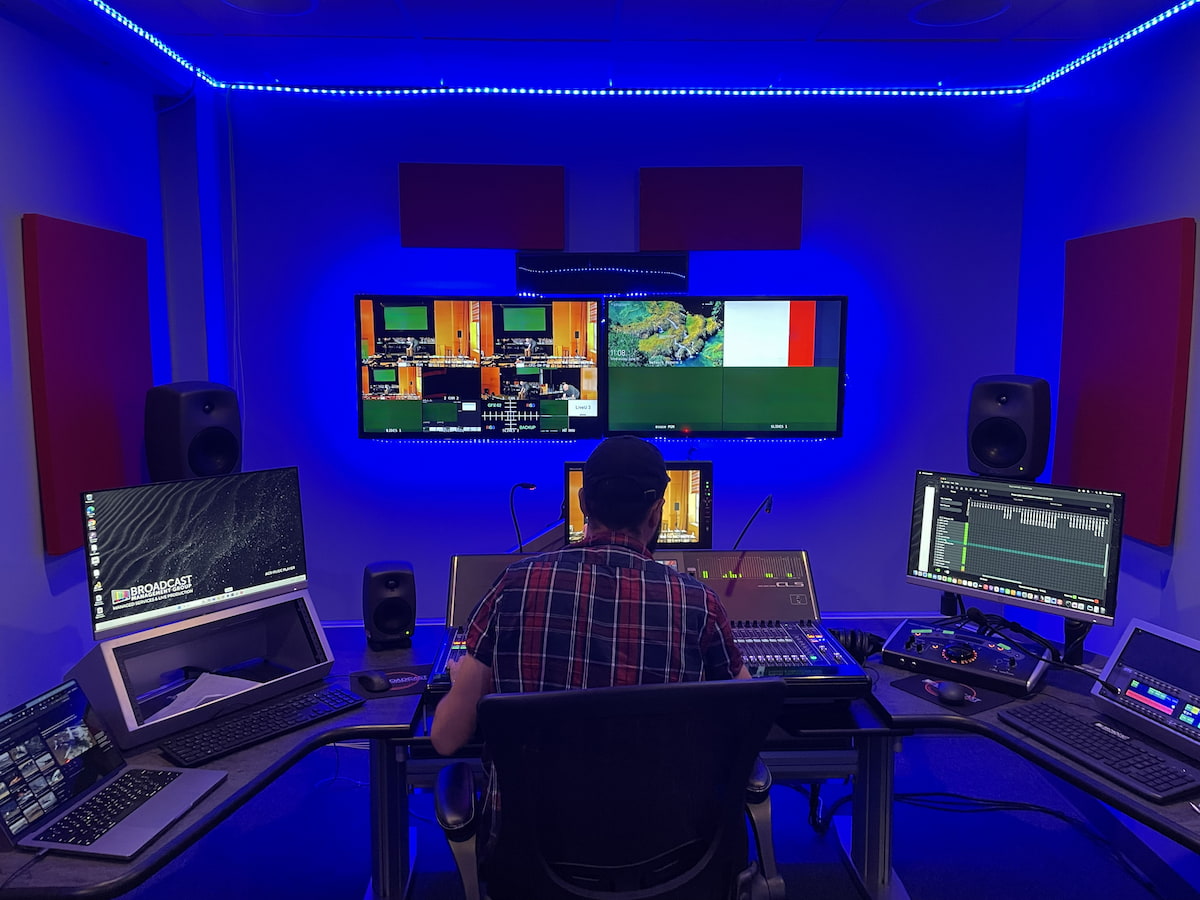
- Do you have a Network Operations Center or centralized monitoring environment?
The goal is to understand how the partner prevents issues, identifies issues, and responds if something changes during the live production.
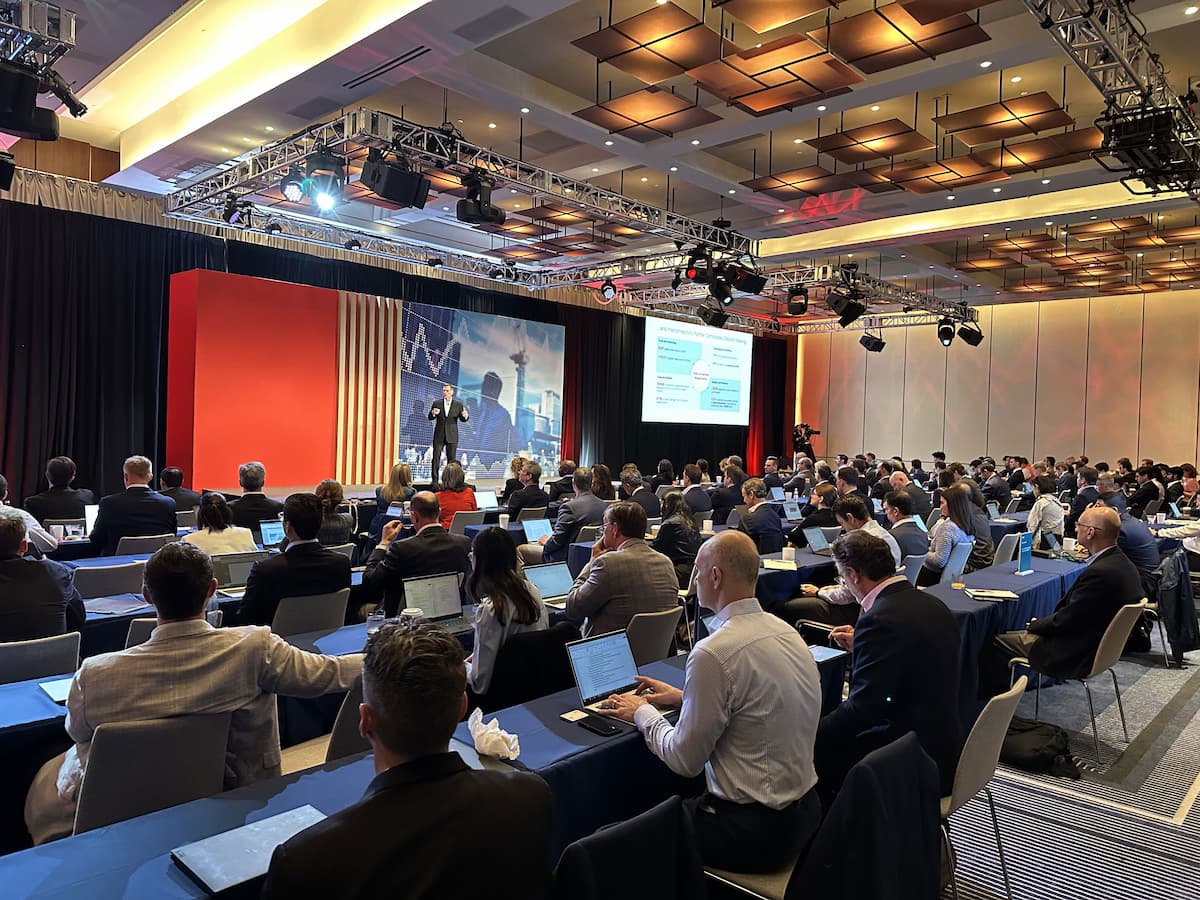
3. Redundancy Across the Workflow
Redundancy should extend beyond the final stream.
A reliable enterprise live streaming workflow should include backup planning across power, internet, encoders, signal paths, audio, video, transmission, graphics, and distribution.
Your RFP should ask:
- What parts of the workflow are redundant?
- Do you provide primary and backup encoders?
- Do you support redundant internet paths?
- Can you provide bonded cellular, fiber, diverse IP paths, satellite, or Starlink when needed?
- Do you support multi-CDN delivery?
- What happens if the primary stream fails?
- What backup power options are available?
- How do you monitor signal quality throughout the event?
The best production partners can explain redundancy in practical terms. They should be able to demonstrate how the workflow protects the event against common failure points.
4. Crewing Capabilities and Production Staffing
Enterprise events require the right people in the right roles.
Depending on the event, that may include a producer, director, technical director, audio engineer, graphics operator, camera operators, lighting director, video engineer, streaming engineer, production manager, stage manager, replay operator, or remote production support team.
Your RFP should ask:
- What production roles do you provide?
- Are crews staffed in-house, freelance, or both?
- Who manages the crew?
- Can you scale staffing based on the size of the event?
- Do you provide technical leadership and production management?
- Can you support union venues or complex venue requirements?
- Can you provide teams across multiple cities?
- Do your crews have experience with executive-level events?
A strong partner shouldn’t force every event into the same crew model. They should be able to build a production crew around the event’s format, venue, audience, and technical requirements.
5. REMI and Cloud Production Capabilities
Many enterprise events now involve multiple locations, remote presenters, hybrid teams, or centralized production workflows.
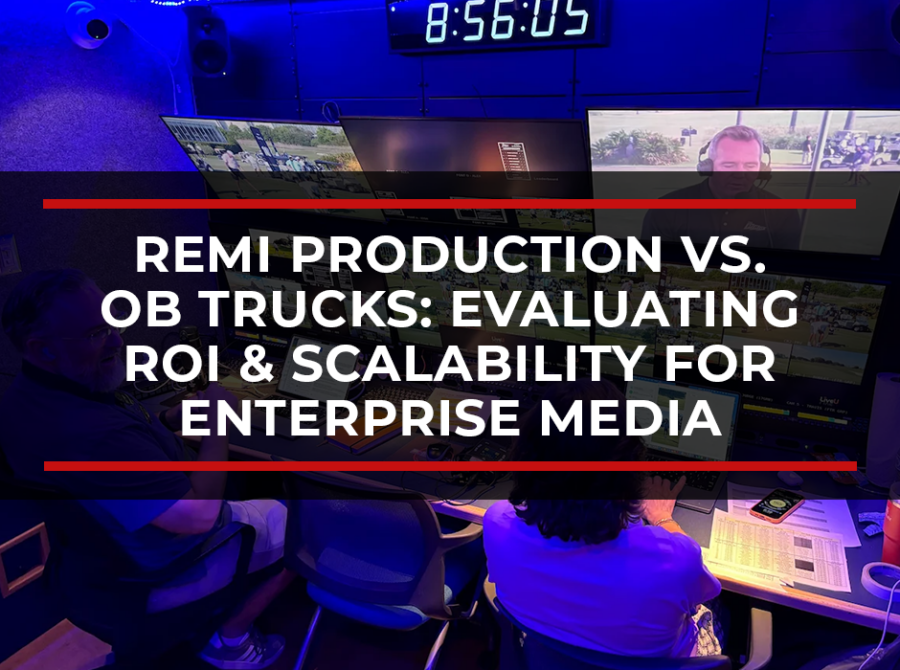
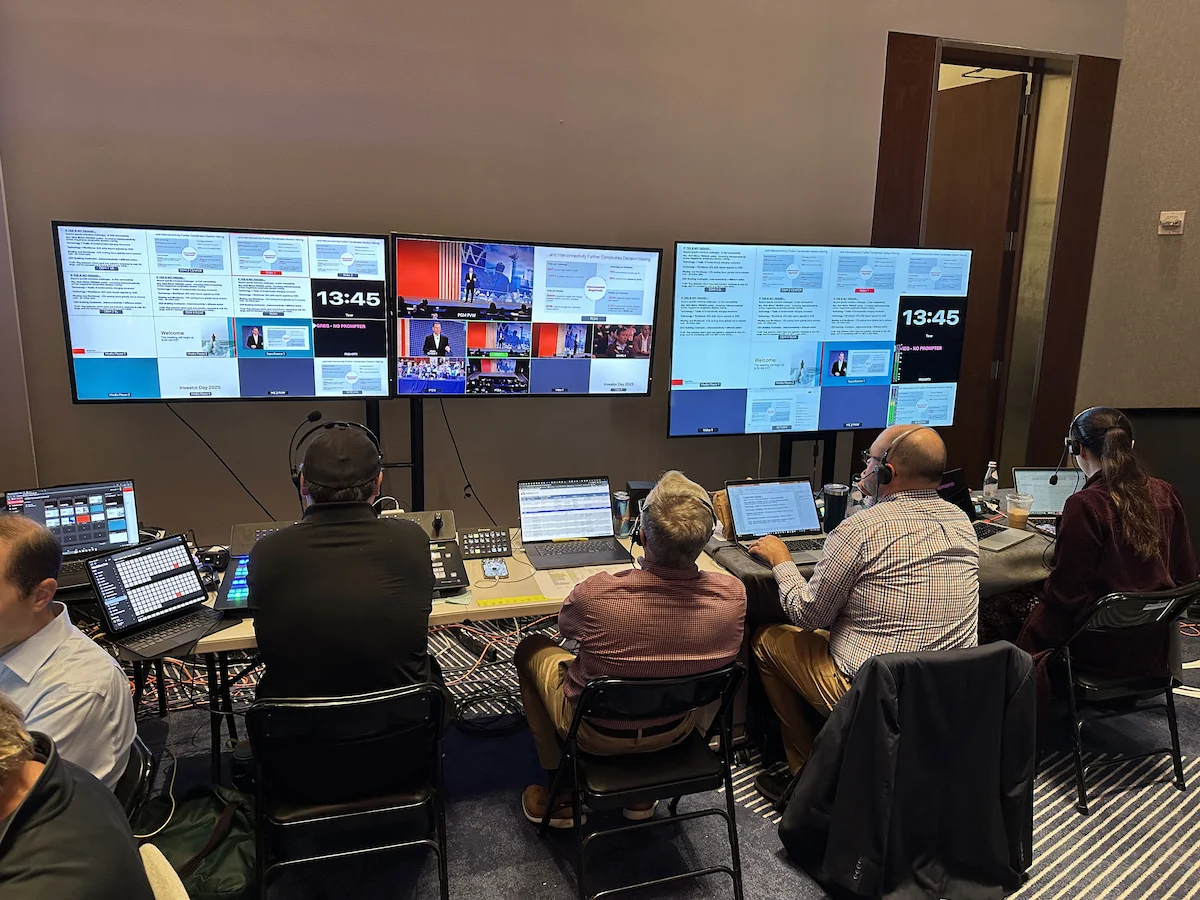
A production partner with REMI and cloud production capabilities can help reduce the on-site footprint, centralize technical operations, and connect remote teams to a single production environment.
Your RFP should ask:
- Do you support REMI or remote production workflows?
- Can feeds be routed to a centralized production facility or Network Operations Center?
- Can remote contributors, producers, directors, or graphics operators work from different locations?
- Do you support low-latency multiviews?
- Can remote teams access production tools securely?
- Can your workflow combine on-site cameras, remote presenters, studios, and virtual contributors?
- What cloud-based production tools or infrastructure do you use?
This matters when the event is distributed across offices, venues, studios, or remote participants. The partner should be able to connect the pieces into one cohesive live production.
6. Encoding, Transmission, and Delivery
The stream is only successful if it reaches the audience reliably.
Enterprise organizations may need to deliver to internal platforms, event pages, social channels, OTT platforms, investor portals, private streams, or multiple destinations at once.
Your RFP should ask:
- What platforms can you stream to?
- Can you deliver to multiple destinations at the same time?
- Do you support private and authenticated streams?
- Can you provide encoding and transmission monitoring?
- Can you deliver to internal enterprise platforms?
- Can you support social platforms, OTT channels, or custom event pages?
- Can you provide backup streams or failover paths?
A qualified partner should understand both the production side and the delivery side of the event.
7. Security and Enterprise IT Requirements
Enterprise live streaming often involves internal communications, confidential information, executive messaging, investor content, or unreleased product information.
Security needs to be addressed before production begins.
Your RFP should ask:
- How do you secure contribution feeds?
- How do you manage access to production systems?
- Can you work with enterprise IT teams?
- Do you support private streaming environments?
- How are recordings stored and transferred?
- Can you meet internal security or compliance requirements?
- What is your process for managing remote contributors?
- How do you protect confidential event content?
A strong production partner should be comfortable working with internal IT, communications, security, and legal teams.
8. Content Management After the Live Event
The value of a live event often extends beyond the live stream.
Recordings, highlights, social clips, executive messages, training assets, internal recaps, and on-demand versions may all need to be created, stored, edited, and distributed after the event.
Your RFP should ask:
- Do you provide recording and archiving?
- Can you create highlight clips or social content?
- Can you support post-production and editing?
- Do you offer media asset management?
- How quickly can files be delivered after the event?
- Can content be organized for future use?
For many enterprise organizations, the right partner can help turn a live event into a longer-term content asset.
9. Planning, Documentation, and Pre-Production
Successful live streams are built before show day.
A strong production partner should support technical planning, site surveys, production schedules, show flows, testing, rehearsals, backup planning, and stakeholder coordination.
Your RFP should ask:
- Do you provide technical site surveys?
- Do you create production books or technical documentation?
- Do you support rehearsals and presenter preparation?
- Do you provide run-of-show support?
- How do you test contribution feeds, remote presenters, and streaming destinations?
- Who owns pre-production coordination?
- How do you manage last-minute changes?
The planning process is often what separates a smooth live production from a stressful one.
Enterprise Live Streaming RFP Checklist
Use this checklist when evaluating potential partners:
Production Experience
- Enterprise event experience
- Executive communications experience
- Hybrid and multi-location event support
- Corporate, investor, product launch, or conference experience
- Show planning and run of show support
Technical Infrastructure
- Broadcast-quality cameras, audio, lighting, and graphics
- Encoding and transmission systems
- REMI or cloud production capabilities
- Centralized production or NOC support
- Multi-platform delivery
- Remote contributor support
Redundancy and Reliability
- Redundant encoders
- Redundant internet paths
- Backup power options
- Backup audio and video paths
- Multi-CDN or failover delivery
- Real-time monitoring
- Engineering escalation plan
Staffing and Operations
- Production management
- Technical direction
- Camera, audio, graphics, and engineering crews
- Streaming and transmission engineers
- Scalable crew model
- Remote and on-site staffing options
- Experience working with enterprise stakeholders
Security and Compliance
- Secure contribution feeds
- Controlled access to production systems
- Private streaming support
- IT coordination
- Secure recording and file transfer
- Confidential content handling
Post-Event Support
- Recording and archiving
- Editing and post-production
- Highlight clips
- Social content
- Media asset management
- On-demand file delivery
- Content reuse strategy
Choosing the Right Partner
An enterprise live streaming production partner should give your team confidence before the event begins.
They should understand the production, the technology, the audience, the risks, and the operational support required to keep everything moving.
The strongest partners bring the full workflow together: planning, crewing, production, transmission, redundancy, cloud infrastructure, monitoring, post-production, and long-term content management.
For enterprise organizations, that kind of partner can make live streaming more reliable, more scalable, and more valuable across the business.
Are you planning an enterprise live stream, leadership event, product launch, investor meeting, or internal broadcast?
BMG helps organizations produce high-visibility live events with broadcast-quality production, REMI workflows, cloud-connected infrastructure, NOC support, redundancy, and experienced production teams.
Talk to BMG about building the right live streaming workflow for your next event.

Steven Cotliar is Executive Vice President of Growth and Marketing at BMG. He brings more than 25 years of experience across digital marketing, advertising, entertainment, live streaming, and business development. His background includes work with major studios, brands, agencies, and platforms, including Twentieth Century Fox, NFL, Disney, Tesla Motors, FX Networks, Paramount, Lionsgate, Condé Nast, Target, Sundance Film Festival, and The Paley Center. In his current role, Steven leads growth and business development initiatives that help expand BMG’s client relationships and market presence.
About Steven Cotliar