A corporate audience can only absorb so much from a speaker alone.
When an executive is walking through financial performance, a product roadmap, customer growth, market expansion, or company priorities, the screen has to help carry the story. The right graphic can make a number easier to understand, a timeline easier to follow, or a message easier to remember.
That’s why real-time motion graphics have become such an important part of corporate storytelling.
For live events, executive broadcasts, investor presentations, product launches, town halls, and branded programming, graphics are part of the communication strategy. They help turn information into something the audience can follow in the moment.
The Screen Has to Explain Quickly
Corporate content often includes information that is important but dense.
Quarterly results. Business unit performance. Product milestones. Market data. Customer metrics. Roadmaps. Strategic priorities. Regional updates. Leadership changes.
If all of that information sits in a slide deck, the audience has to work harder to follow the message.
Real-time motion graphics help simplify the experience. A dynamic chart can show a trend as the speaker explains it. A ticker can surface key metrics without stopping the program. A video wall can organize product stages, customer segments, or regional performance in a way that feels more visual and less static.
Lower Thirds With More Purpose
Lower thirds are treated as basic name graphics, but they can do more in a corporate production.
A well-designed lower third can identify the speaker, reinforce their role, support the topic being discussed, and keep the viewer oriented throughout the program.
For executive broadcasts or investor presentations, that clarity matters. Viewers may be joining remotely, watching on a small screen, or moving between speakers quickly. Clean lower thirds help maintain structure without interrupting the flow of the event.
They also need to match the brand.
Fonts, colors, animation speed, spacing, logo treatment, and hierarchy all affect how professional the broadcast feels. When those details are handled correctly, the graphic feels like part of the company’s visual system rather than a production add-on.
Making Corporate Data Easier to Follow
Some of the best uses of real-time graphics happen when data is changing, updating, or being explained live.
That may include:
- Financial performance charts
- Revenue or growth metrics
- Product adoption numbers
- Market data
- Customer milestones
- Regional performance
- Timeline updates
- Operational KPIs
- Investor day metrics
- Event polling results
For a financial report, a real-time chart can help the audience see the trend behind the number. For a product roadmap, motion can guide viewers through what has launched, what is in progress, and what comes next. For a corporate town hall, key metrics can appear as the speaker references them, keeping the presentation more engaging than a static slide.
This is where design and timing have to work together.
The graphic should arrive when it helps the speaker, not after the moment has passed.
3D Ticker Tapes and Live Information Layers
Ticker tapes, data ribbons, and live information layers can give corporate broadcasts more energy while keeping important details visible.
In a financial or investor-focused program, a 3D ticker tape can support market data, company metrics, segment highlights, stock information, or key performance indicators. In a product launch, a live information layer can reinforce feature names, release dates, customer stats, or audience prompts.
These elements work best when they are designed with restraint.
Too much movement can distract from the speaker. Too little visual hierarchy can make the information hard to read. The right approach gives the audience useful context while keeping the main message in focus.
Video Walls as Storytelling Tools
A video wall can change the feel of a corporate event immediately.
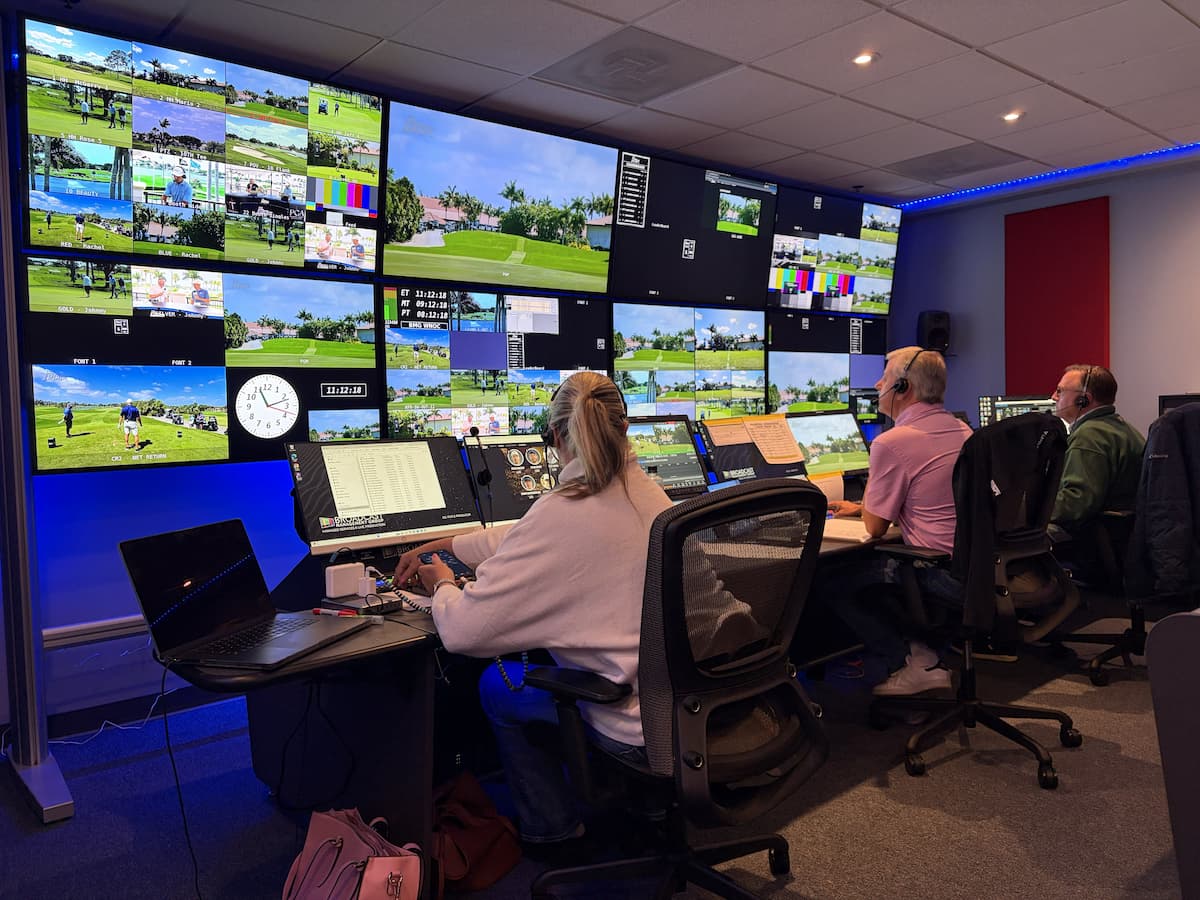
It can frame an executive keynote, create a branded environment, support a product reveal, display live data, introduce remote guests, or give the production a more broadcast-quality look.
For corporate storytelling, the video wall should be designed around the message.
A financial presentation may need clean charts and simple motion. A product launch may need layered visuals, animation, and feature callouts. A leadership summit may need branded backgrounds, speaker support, and environmental graphics that make the room feel connected to the larger company story.
The best video wall content is built for the camera, the room, and the remote viewer at the same time.
Brand Compliance Still Matters
Corporate graphics have to be creative, but they also have to stay on brand.
That means the motion package needs to respect the company’s visual identity, including logo use, colors, typography, spacing, accessibility, and approval requirements. For public companies, investor communications, healthcare brands, financial institutions, and large enterprise organizations, those standards matter even more.
A polished motion graphics package should make the production feel elevated without making the brand feel unfamiliar.
The design can move, animate, and adapt, but it still needs to look like the company.
Where BMG Fits
BMG helps organizations design and integrate real-time motion graphics into live and recorded corporate productions.
That can include lower thirds, branded opens, 3D ticker tapes, animated charts, video wall content, show packages, executive presentation graphics, product launch visuals, and live data-driven elements.
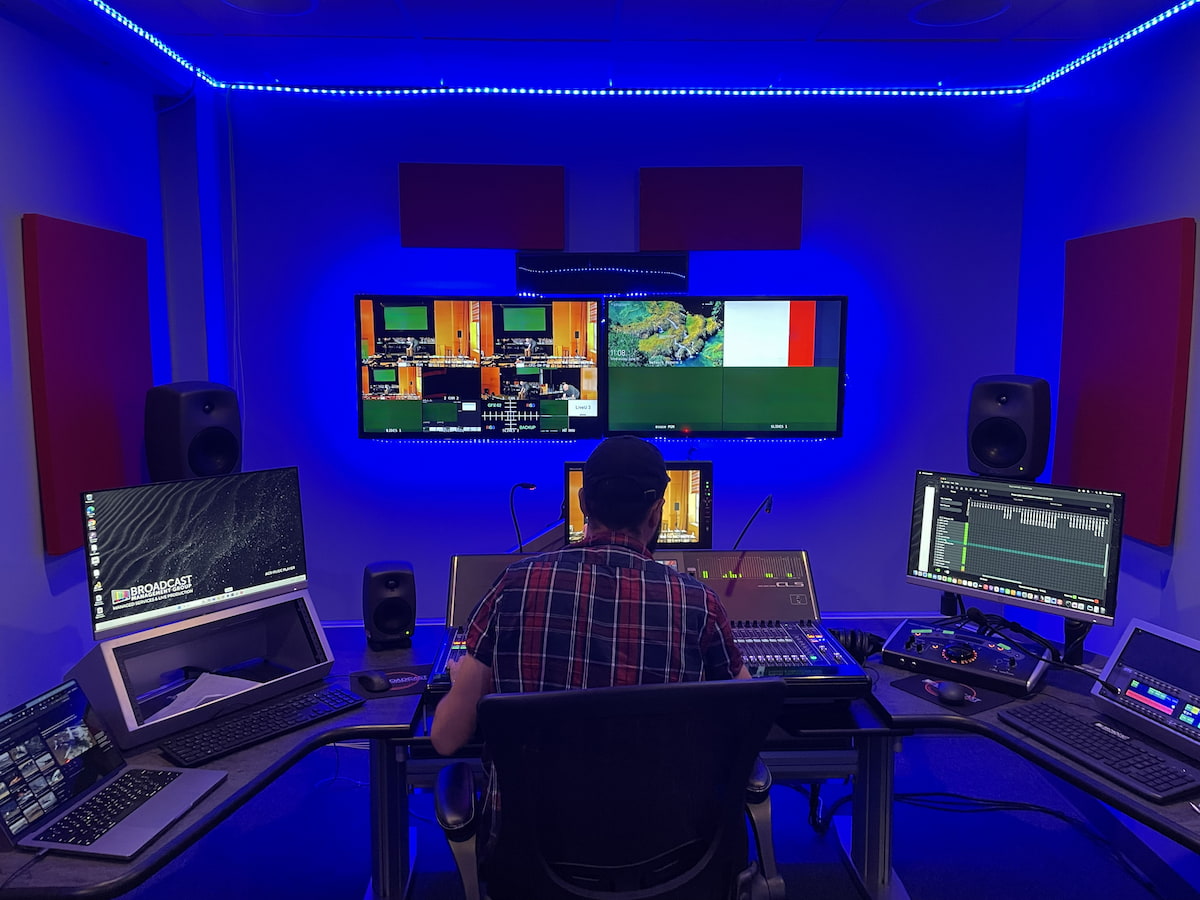
Because BMG combines Creative Services with live production, REMI workflows, studio production, and broadcast operations, the graphics are designed for how the show will actually run. The creative team can build visuals that support the story, while the production team makes sure they work inside the live environment.
For corporate events, investor presentations, executive broadcasts, and product launches, that combination matters.
The graphics have to look right, arrive at the right time, support the speaker, and hold up on every screen.
Stronger Stories Start With Better Visuals
Corporate storytelling becomes stronger when the screen is doing real work.
A clean lower third can clarify who is speaking. A chart can make a financial trend easier to understand. A ticker can keep key information visible. A video wall can turn a presentation into a more immersive experience.
Real-time motion graphics help companies communicate with more clarity, energy, and control.
When the information is complex, the design should make it easier to follow.
Planning a corporate event, investor presentation, product launch, leadership summit, or executive broadcast?
BMG brings the creative, technical, and production teams together to support your event from concept through execution.
If you’re interested in BMG being your one-stop production partner for your next live corporate event, reach out to our team.

Karen Landry is Director of Master Control, Playout & Transmission at BMG. She brings over 20 years of experience across post-production, broadcast engineering, and client services, having supported major entertainment productions, live sports, and premier events, including the Super Bowl, the Olympics, and Amazon’s Thursday Night Football. In her current role, Karen partners with clients to develop and deliver cloud-based channel playout and transmission solutions that drive operational excellence.
About Karen Landry