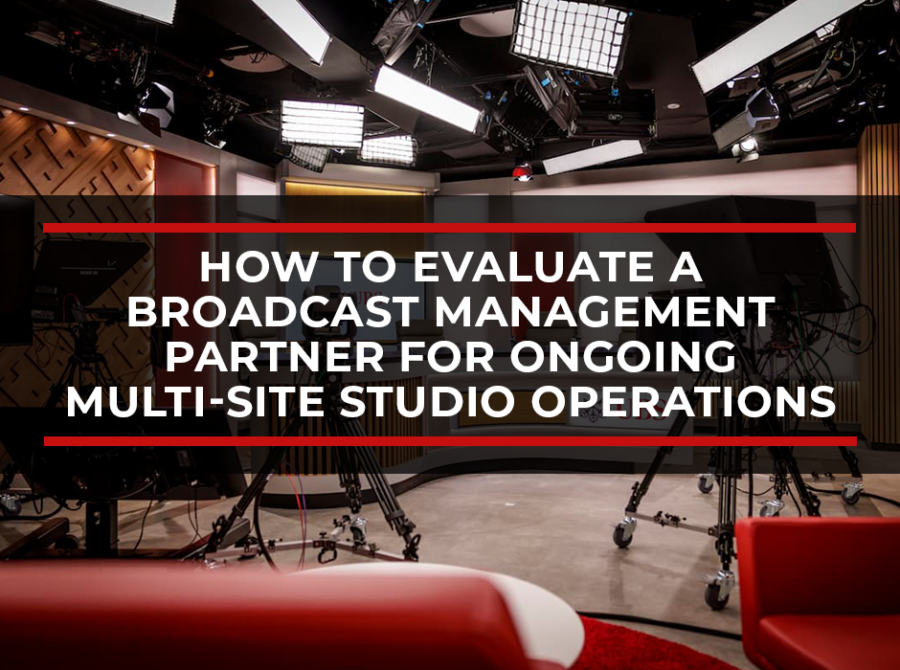
Building a corporate studio is only part of the challenge.
The harder question is who will run it.
A studio may have the right cameras, lighting, audio, control room, and production technology, but the staffing model determines how well it works day to day. Someone has to produce the content, operate the equipment, support executives, manage technical issues, maintain standards, schedule crews, troubleshoot problems, and scale the operation when a larger event comes up.
For enterprise teams, there are usually three ways to staff a corporate studio: build an in-house team, use contract production staff, or partner with a managed operations provider.
Each model can work. The right choice depends on how often the studio is used, how complex the productions are, and how much technical support the organization needs.
1. In-House Studio Team
An in-house studio team gives an organization the most direct control over daily production.
This model works well when the studio is used constantly for executive messages, internal broadcasts, training content, podcasts, interviews, investor communications, or recurring programming. The team understands the company’s brand, culture, approval process, leadership preferences, and internal stakeholders.
For organizations with high production volume, that familiarity can be valuable.
An in-house team can also move quickly. When an executive needs to record a message or a communications team needs a last-minute shoot, the people operating the studio are already inside the organization.
The challenge is that corporate studios often require more roles than companies expect.
A strong in-house operation may need producers, directors, camera operators, audio support, lighting knowledge, graphics support, editors, engineers, schedulers, and technical maintenance. Even if the studio is simple, someone still needs to understand signal flow, equipment behavior, software updates, recordings, routing, troubleshooting, and live production risk.
The in-house model works best when the production volume justifies the headcount and the company is prepared to support the technical side of the studio over time.
2. Contract or Freelance Staffing
Contract staffing gives companies flexibility.
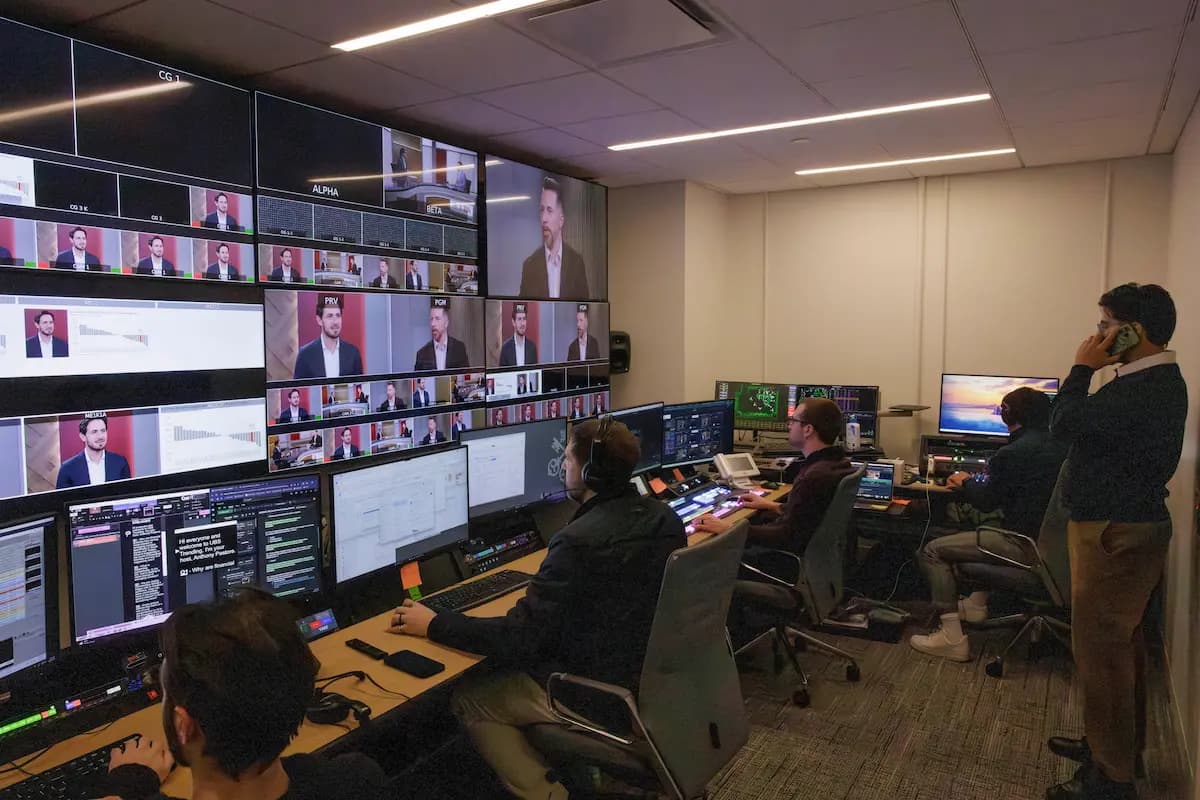
This model works well for organizations that have a corporate studio but do not need a full production team every day. Freelancers or contract crews can be brought in for town halls, investor events, leadership summits, product launches, interviews, podcasts, or larger studio productions.
It can also help fill specific gaps. A company may have an internal producer but need a technical director, audio operator, camera operator, graphics operator, engineer, or production manager for certain shows.
The benefit is scalability. Teams can add the right roles when they need them without carrying every position full-time.
The risk is consistency.
Different crews may not know the studio, the equipment, the company’s standards, or the executive preferences. More time may be needed for setup, orientation, testing, and troubleshooting. Someone inside the organization still has to book the crew, explain the workflow, manage the day, and make sure the studio is ready.
Contract staffing works best when there is a strong internal owner who understands the studio and can manage outside production teams effectively.
3. Managed Studio Operations
Managed operations gives companies a more complete support model.
Instead of staffing every role internally or rebuilding the crew for each production, the organization works with a partner that can operate, staff, support, and maintain the studio on an ongoing basis.
This model is often a strong fit for enterprise teams that need broadcast-quality production but do not want to build a full internal production department.
Managed studio operations can include embedded production staff, technical management, engineering support, equipment maintenance, show support, documentation, standard operating procedures, training, remote production workflows, NOC monitoring, media management, and backup staffing.
It can also scale based on need. A company may need daily studio support during the week, larger crews for major events, remote production support for hybrid broadcasts, or additional post-production and content operations after the live show ends.
The main advantage is reliability.
A managed operations partner can help keep the studio running, support the internal team, troubleshoot issues, and provide the production expertise needed for higher-profile moments.
For organizations producing executive broadcasts, investor communications, town halls, live streams, podcasts, training content, and branded programming, this model creates a more stable operating foundation.
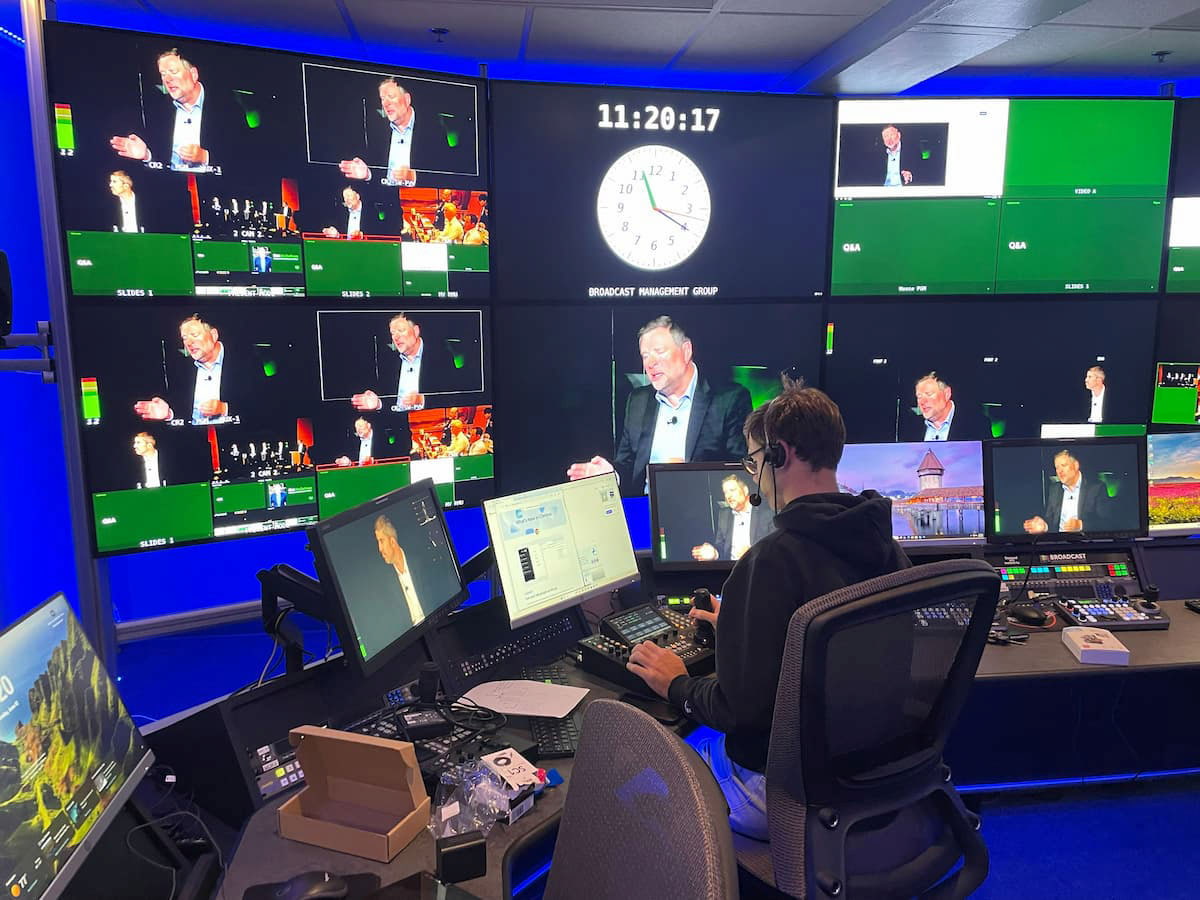
Comparing the Three Models
| Staffing Model | Best For | Watch Out For |
|---|---|---|
| In-House Team | High-volume daily production, sensitive internal content, fast access to executives, strong brand familiarity | Full-time headcount, technical gaps, training needs, limited backup coverage |
| Contract Staffing | Occasional productions, larger events, specialty roles, overflow support | Inconsistent crew familiarity, more internal management, extra setup and prep time |
| Managed Operations | Ongoing studio needs, broadcast reliability, technical support, scalable production volume | Requires choosing the right partner and defining responsibilities clearly |
How to Choose the Right Staffing Model
Start with production volume.
If the studio is used every day, an in-house team or managed operations model may make more sense than booking crews one project at a time.
Then look at complexity.
A simple recorded interview setup requires a different staffing plan than a live executive broadcast, investor event, hybrid town hall, or multi-camera studio show.
The third question is support.
Does the internal team have the engineering knowledge to maintain the system, troubleshoot issues, manage updates, document workflows, and support live productions under pressure?
The right staffing model should match the way the studio is actually used. A company may even use a blended approach: an internal producer, contract crews for larger events, and a managed operations partner for engineering, staffing, NOC support, and technical oversight.
Where BMG Fits
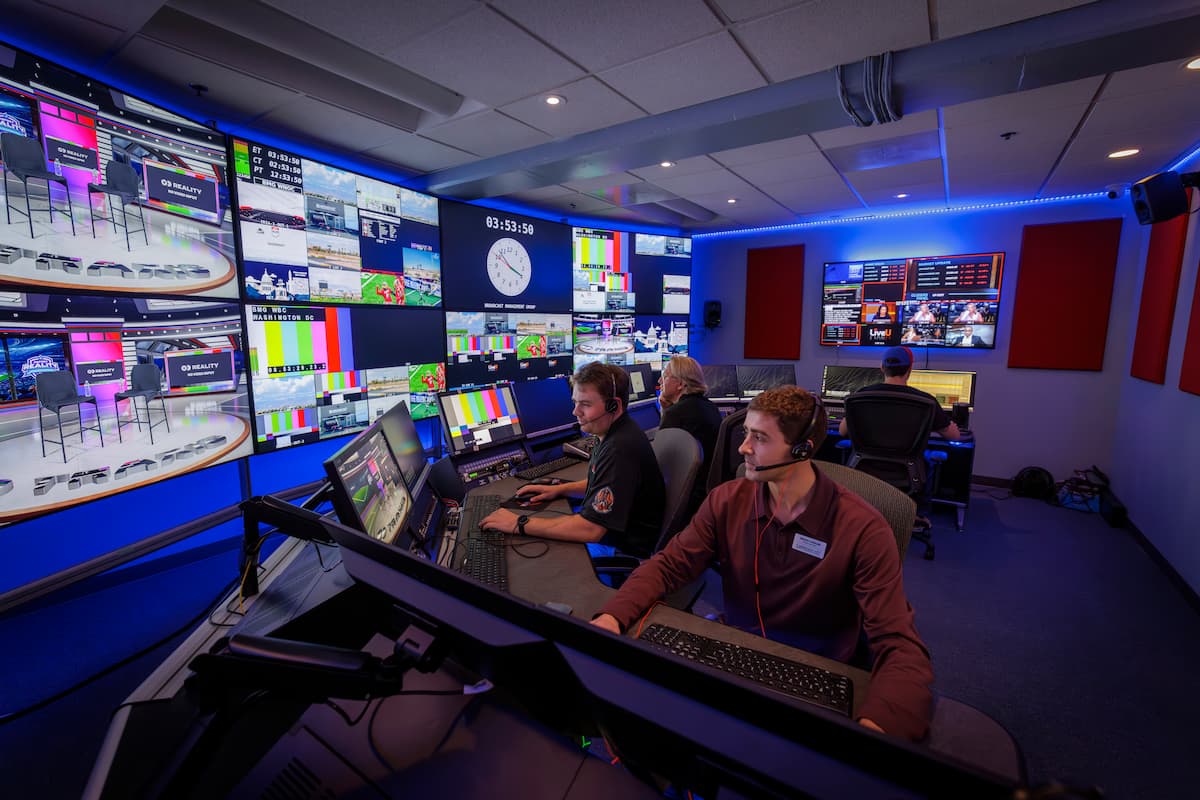
BMG helps enterprise organizations design, staff, operate, and support corporate studios.
That can include Studio Production, Production Staffing & Operations, Enterprise Video & Content Operations, Remote Production (REMI), Media Asset Management, and support through BMG’s 24/7 Network Operations Center.
For some clients, BMG provides production staffing for specific shows or events. For others, BMG supports the full studio operation with embedded teams, engineering oversight, technical documentation, remote workflows, monitoring, and ongoing operational support.
The goal is to give corporate teams a staffing model that fits the way they produce content today and can scale as the studio becomes more important to the organization.
Not sure how to staff your corporate studio?
BMG helps enterprise teams build the right operational model for corporate studios, executive broadcasts, internal communications, investor events, podcasts, and live productions.
Talk to BMG about staffing, operating, and supporting your corporate studio.

Steven Cotliar is Executive Vice President of Growth and Marketing at BMG. He brings more than 25 years of experience across digital marketing, advertising, entertainment, live streaming, and business development. His background includes work with major studios, brands, agencies, and platforms, including Twentieth Century Fox, NFL, Disney, Tesla Motors, FX Networks, Paramount, Lionsgate, Condé Nast, Target, Sundance Film Festival, and The Paley Center. In his current role, Steven leads growth and business development initiatives that help expand BMG’s client relationships and market presence.
About Steven Cotliar