Multi-site studio operations fail when the systems, teams, and workflows across locations aren’t built to work cohesively as a single unit.
With every additional site organizations add besides their main facility, another failure point is created. Most broadcast partners are built to support a single facility well, but only a few are built to run five, ten, or twenty locations as a single, accountable operation.
When evaluating a broadcast management partner for ongoing multi-site studio operations, the most important consideration is whether they can run every studio the same way, every time.
The Core Issue: Why Multi-Site Operations Break Down
Once a broadcast environment expands beyond a single facility, each site becomes its own single point of failure, with nothing forcing them to operate in the same way.
This issue shows up in a few places:
- Fragmented signal routing: Each site is often built independently, with its own routing architecture, equipment standards, and redundancy plan, or lack thereof.
- No centralized monitoring: Without a unified view across locations, problems are discovered after they’ve affected the broadcast.
- Inconsistent workflows: When each site runs its operations differently, output quality varies, training doesn’t transfer over, and everyone starts from square one, regardless of previous experience.
- Disconnected vendor relationships: When you have different vendors across sites, there are multiple parties to coordinate with, and no single owner to hold accountable when something breaks between them.
These problems often surface during a live event production, when there’s no time to figure out who and what is responsible for the failure. The good news is that this can be fixed by implementing an operational system that holds everything together.
The Diagnostic Checklist: Evaluating Your Current Risk
Before evaluating potential partners, it’s important to have a complete understanding of your current operation and where the gaps are within it. A future-ready, multi-site setup should answer “yes” to the following questions:
Do you have centralized monitoring across every site?
A problem at one location should be visible to people at every location.
Do you have one accountable partner?
When something breaks between systems, someone should be owning the fix immediately.
Can you add a new site without rebuilding your operational model?
You should be able to onboard a new location without having to start from scratch.
Is staffing centrally managed?
You should be able to staff your productions easily from a trained bench of candidates.
Do documented runbooks and escalation paths exist across every location?
Every person on your production team across every site should know what to do when something goes wrong.
Are equipment standards and workflows consistent?
Output quality shouldn’t depend on the location where it was produced.
By understanding where the risks are in your current system, you can better evaluate partners based on your production needs.
The Solution Framework: Building One System Across Every Site
Organizations can address multi-site risk by creating an operational architecture that all sites use, rather than trying to fix each location individually.
Step 1: Centralize monitoring through a NOC
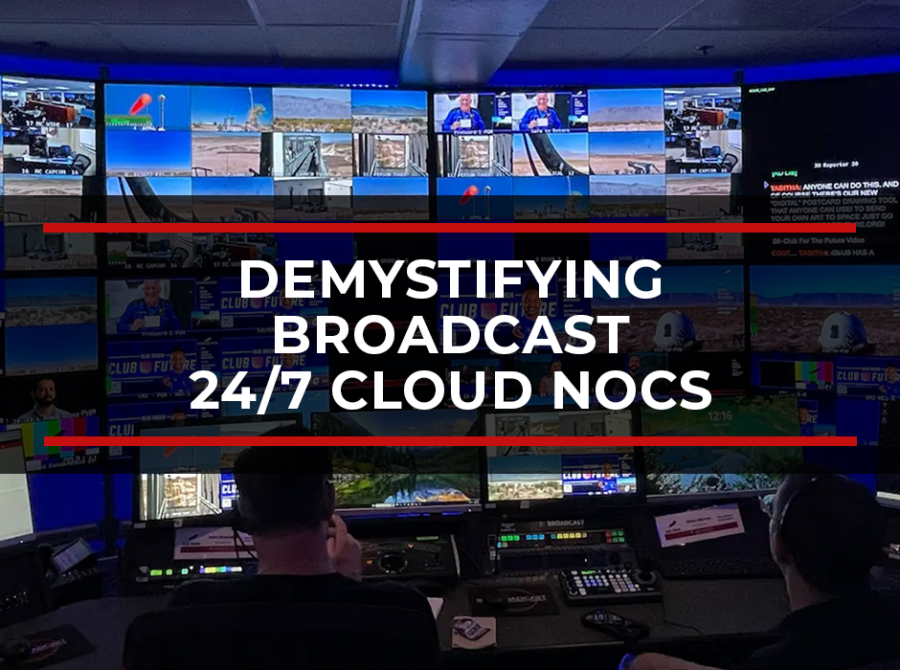
Every site should report to a Network Operations Center so problems, regardless of location, can be caught before the audience sees them.
Step 2: Standardize workflows and equipment protocols
Create one set of operational standards for equipment configuration, redundancy requirements, and production workflows that applies to every site. Consistency is key.
Step 3: Build a shared, trained staffing bench
Maintain one bench of vetted, cross-trained personnel that can be deployed to any location, turning hiring into a managed process.
Step 4: Architect redundant signal paths and failover
Every site needs to be engineered at the design stage across the full signal chain and a defined failover plan for when something goes wrong.
Step 5: Establish one accountable owner and SLA
When you have a single partner responsible for the full operational stack, there’s only one point of contact when something goes wrong and a standard that everyone is held to.
When done properly and together, these five steps create a single, coordinated operation that can be scaled to any number of studios.

Case Study: Scaling a Multi-Site Broadcast Operation Without Losing Control
BMG’s work with the Schwab Network (formerly TD Ameritrade Network) demonstrates what happens when multi-site growth is supported by a single operational system.
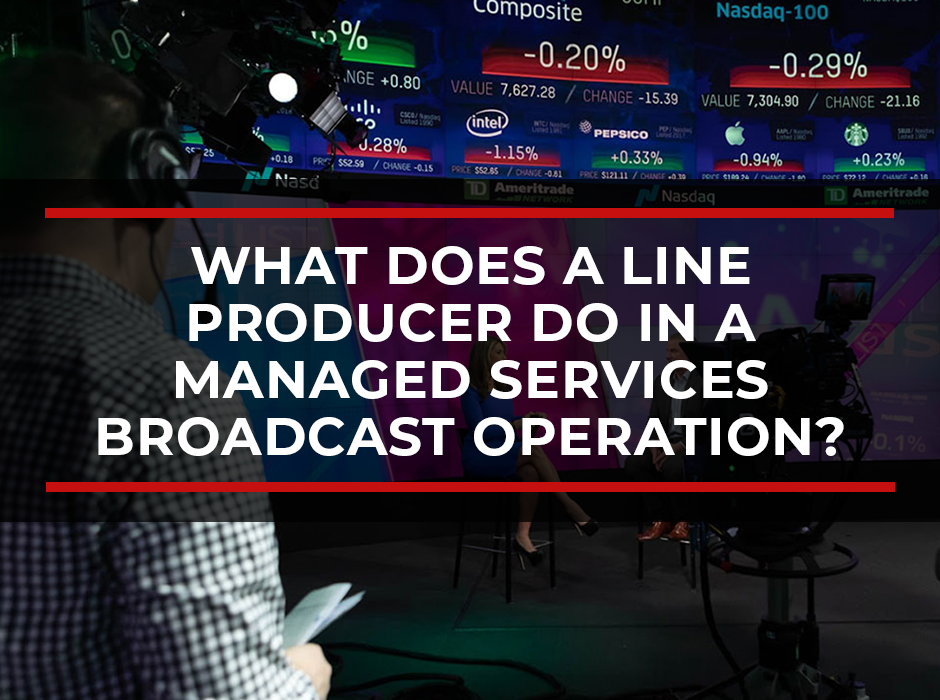
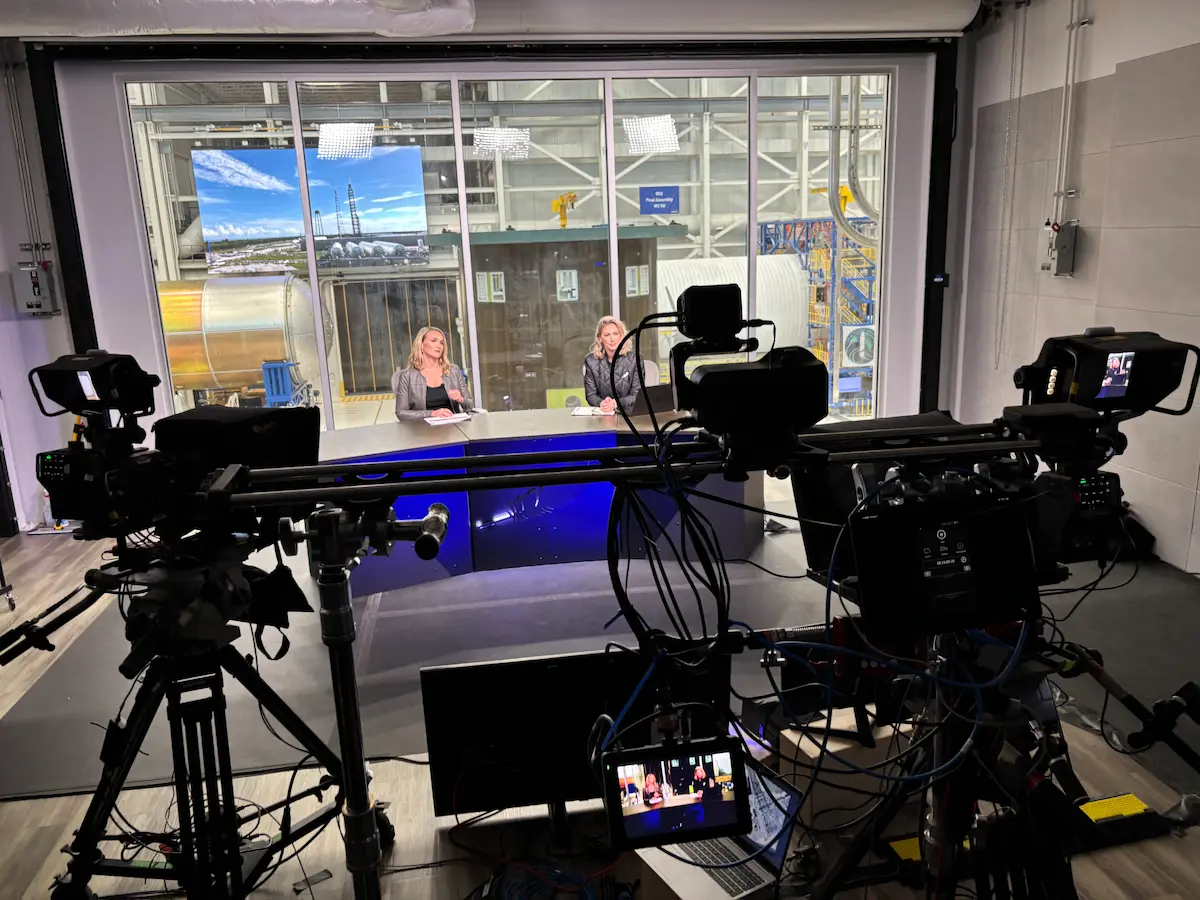
Since 2017, BMG has served as the network’s turnkey managed services partner. It began as a single Chicago broadcast facility and has since expanded to include live financial programming across Chicago Studios, the Chicago Stock Exchange, the NASDAQ, and a dedicated studio on the floor of the New York Stock Exchange.
Each location plugs into the same operational system and is managed through BMG’s Cloud Control Center, providing the network with centralized production, monitoring, and disaster recovery across all sites.
This structure has held strong through the 2021 facility expansion that doubled production capacity, the 2023 Charles Schwab acquisition of TD Ameritrade, and the 024 build of a new NYSE-floor studio. During all of this, live programming continued every day.
BMG has helped the network produce over 1,800 live programs annually, maintaining 99.9% uptime through redundant encoders and multi-CDN paths, all with a single accountable partner overseeing the operation.
How BMG Makes This Model Work
When evaluating a partner for multi-site studio operations, it’s important to ask, “Can they operate as one system across every location?”
This is what BMG’s model is built for, with centralized oversight through the Cloud Control Center, its 24/7 Cloud NOC in Washington, DC, a trained bench of qualified staff, and operational standards that scale.
Regardless of whether you have one studio or a network spanning multiple markets, your broadcast operations require a single partner, system, and accountable team, and that’s exactly what BMG provides.

Dave Weiler is the Senior Vice President of Sports Packaging and Consulting. He leads BMG’s consulting practice, overseeing global consulting projects and building strategic client relationships. A nine-time Emmy Award winner, he brings more than 35 years of leadership experience across media operations, production, and business strategy, including senior roles at ESPN and as founder of Media Edge Consultants. His expertise helps clients develop efficient, scalable solutions across the evolving media landscape.
About Dave Weiler