The broadcast industry has experienced major infrastructure shifts over the past several decades: from tape to file, from SDI to IP, from satellite to fiber, and now the transition to the cloud.
Each shift has changed how production is built, operated, and financed. The latest transition is prompting a new question: What type of cloud infrastructure makes the most sense for broadcast and enterprise video?
The answer is increasingly moving beyond the traditional public cloud model toward private, purpose-built infrastructure.
Act One: When Broadcasters Owned Everything
For decades, producing television or corporate video meant building and operating a dedicated facility.
Organizations owned the routers, switches, cameras, servers, tape machines, and control rooms. They also carried the costs of real estate, maintenance, engineering staff, and equipment replacement.
The model provided control, but it required significant capital investment.
Infrastructure also remained in place between production periods, meaning organizations continued to pay for equipment and facilities whether they were actively producing or not.
The industry began looking for ways to change that equation.
Act Two: The Public Cloud Promise
Public cloud platforms introduced a different model: less hardware ownership, flexible capacity, and the ability to pay for infrastructure as it is used.
For certain applications, particularly short-term events, development environments and burst workloads, that model can be highly effective.
Broadcast, however, operates differently.
A 24/7 channel does not shut down.
Live productions require continuous processing, storage, connectivity, and distribution, often involving high-bandwidth video and audio. When these workloads operate continuously on general-purpose public cloud infrastructure, costs can accumulate across compute, storage, data movement, and distribution.
The public cloud remains an important technology for media organizations, but its economics do not always align with the requirements of always-on broadcast operations.
Act Three: Building a Private Cloud
The next logical step is to bring infrastructure back in-house via a dedicated private cloud.
For large networks and enterprises with the resources to build and operate one, this can provide greater control and predictable infrastructure.
But it also brings back many of the challenges the cloud was intended to solve.
The organization must fund the capital investment, hire engineering resources, maintain the infrastructure, and carry the cost of capacity even when it is not being fully utilized.
Instead of paying a public cloud provider, the organization is now responsible for an entire infrastructure environment.
Act Four: The Private Multi-Tenant Broadcast Cloud
A different model is emerging: private cloud infrastructure purpose-built for broadcast and shared across multiple tenants.
This is the approach behind BMG Cloud Control Center™.
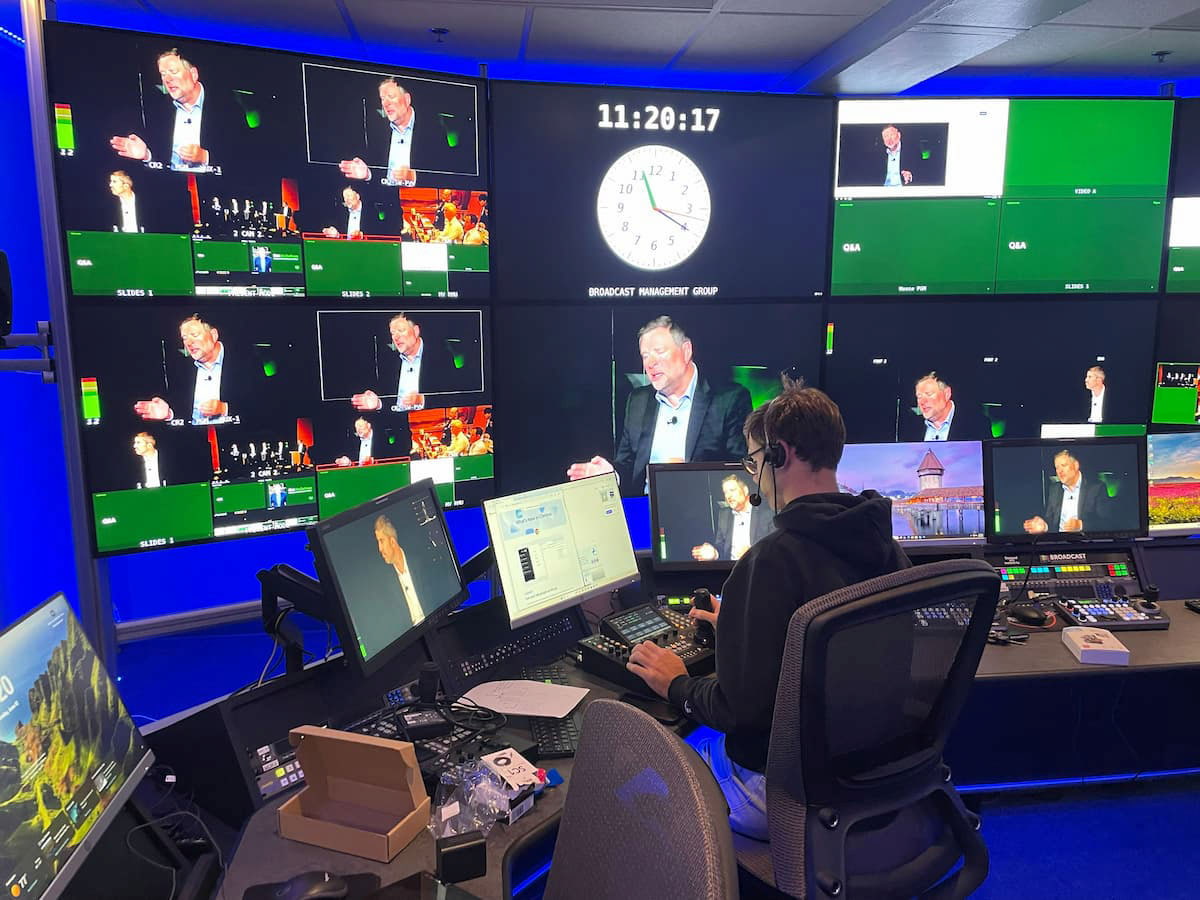
BMG Cloud Control Center™ is a private, redundant broadcast cloud connecting BMG facilities and client-owned locations through dedicated network infrastructure and operated 24/7 from BMG’s Washington, D.C. Network Operations Center.
Rather than adapting general-purpose cloud infrastructure to broadcast, the platform is designed around the specific requirements of live production and channel operations.
Switching, graphics, replay, master control, media asset management, channel playout and transmission, recording, and distribution can be centralized while cameras, crews, and production teams operate wherever the production requires them.
Scale With Production Demand
Multi-tenant infrastructure allows production resources to scale with the event rather than with an organization’s capital budget.
A 30-camera production may require significant resources for a single weekend. A channel may require continuous infrastructure. An enterprise may need additional capacity for a major town hall or corporate event.
The infrastructure can scale up when needed and scale back down afterward.
Share the Infrastructure Investment
Multi-tenancy distributes infrastructure costs across multiple clients rather than requiring one organization to fund an entire facility.
Clients gain access to broadcast-grade infrastructure without having to build and maintain the entire environment themselves.
Build for Broadcast
Broadcast infrastructure has requirements that differ from general-purpose computing.
Low latency, redundancy, predictable performance, dedicated connectivity, and 24/7 operational support are critical when infrastructure is responsible for putting live programming on the air.
Purpose-built broadcast cloud infrastructure is designed around those requirements from the start.
Proven in Live Operations
The model also has to perform under real production conditions.
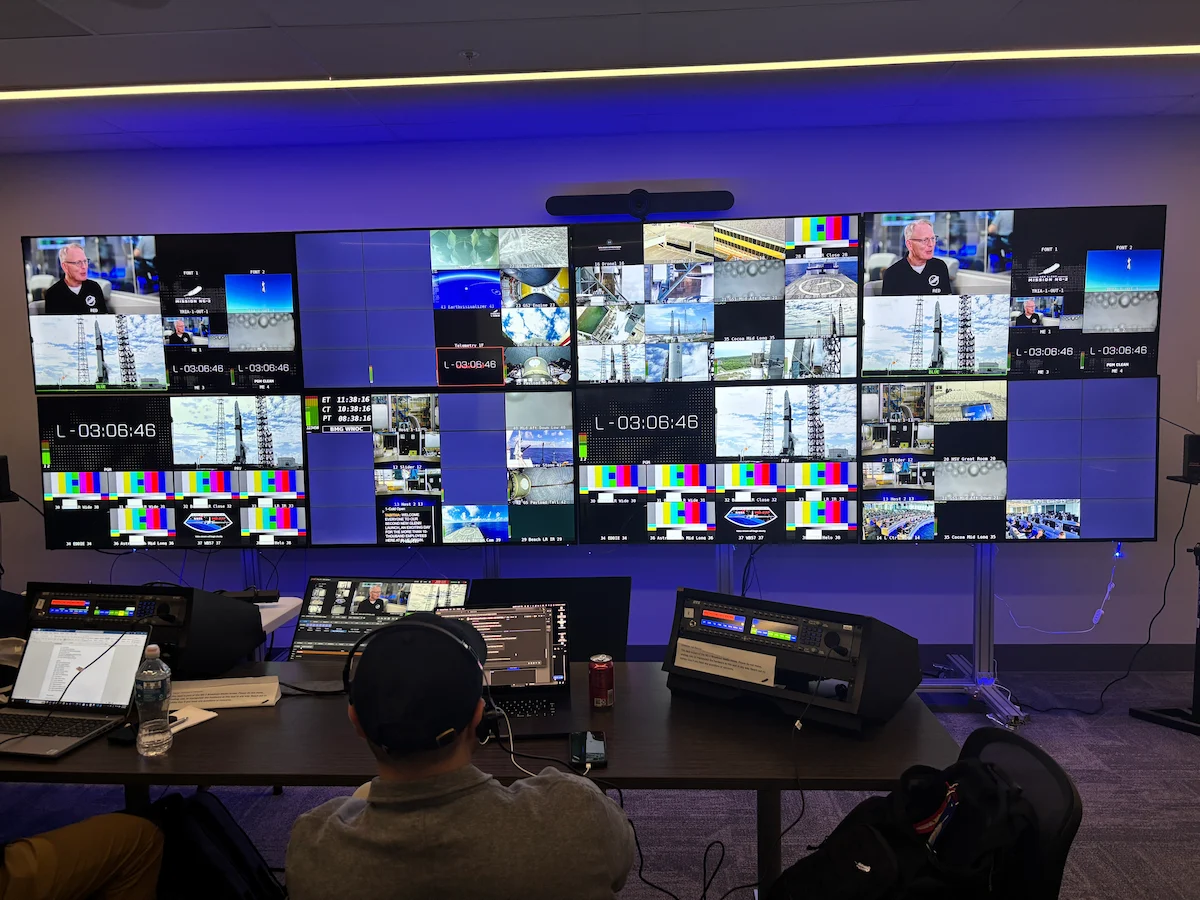
BMG has supported 24/7 channel operations, REMI sports productions like Pro Tour, entertainment broadcasts, major news events, and enterprise communications through its cloud infrastructure.
The company has also supported Blue Origin New Glenn launch broadcasts integrating more than 50 live camera feeds from multiple locations.
These types of productions demonstrate the practical value of infrastructure designed specifically for live media operations.
The Enterprise Example
The model extends beyond traditional broadcasters.
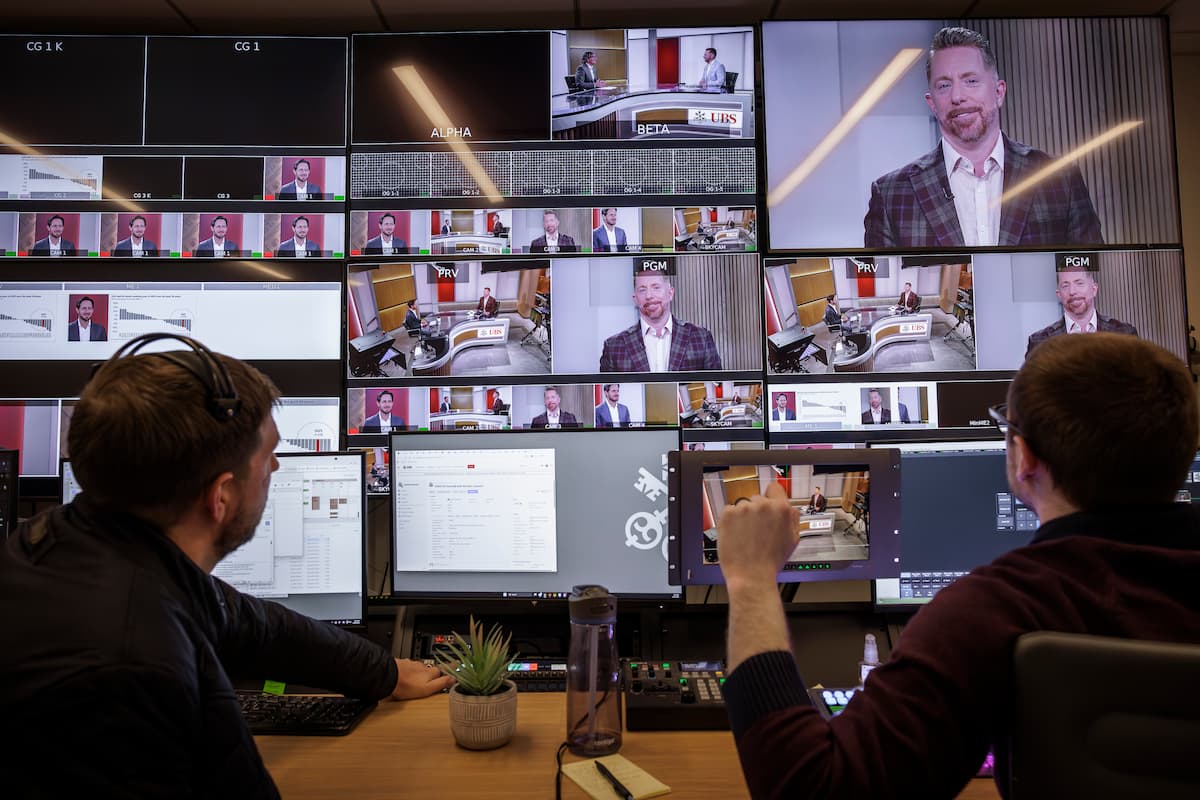
UBS Financial has been a BMG client for six years, and BMG recently completed a new studio facility for the organization in New York City.
UBS talent works from a purpose-built Manhattan studio, while the back-end infrastructure that supports the operation runs through BMG Cloud Control Center™.
BMG also provides the production staff who support UBS programming on-site.
The result is a complete broadcast operation without requiring UBS to build and staff the entire supporting infrastructure.
The studio is located where the production takes place. The infrastructure can operate wherever it is most efficient.
That is one of the fundamental advantages of distributed production.
The Financial Model Is Changing Too
Infrastructure decisions are increasingly tied to financial strategy.
Some organizations prefer an OpEx model and want to avoid owning additional infrastructure. Others want to make capital investments in their studios or production equipment. Many prefer a combination of the two.
A modern infrastructure model can accommodate all three.
An organization can own its studio, control room, or production equipment while using a shared private cloud infrastructure for the backend. Alternatively, more of the operation can be delivered as a managed service.
The financial model does not have to determine where the infrastructure lives.
What This Means for Broadcast and Enterprise Video
For broadcast networks, studios, and enterprise video operations, the strategic question is no longer simply whether to move to the cloud.
The more important questions are:
- Who owns the infrastructure?
- What was it designed for?
- How does it scale?
- Who operates it?
- And who carries the cost when capacity is not being used?
Owning everything can be expensive and inflexible.
Running always-on broadcast workloads in a general-purpose public cloud can create high operating costs.
Building a dedicated private cloud can place the capital and operational burden back on a single organization.
A private, multi-tenant broadcast cloud provides another option: shared, purpose-built infrastructure designed around the realities of live video.
After decades of infrastructure evolution, one conclusion is becoming increasingly clear:
The facility is no longer just a place. It is a network.
Learn more about how BMG can help you build a more flexible, scalable, and resilient broadcast operation with private cloud infrastructure designed for live video.

Todd Mason is the Chief Executive Officer of Broadcast Management Group (BMG), a broadcast infrastructure and media operations company helping define the next generation of television production, live media operations, and broadcast network infrastructure in North America.
About Todd Mason