Live broadcasts are built on precision, preparation, and problem-solving.
One of the most critical technical leaders on-site is the Mobile Unit Engineer in Charge (EIC).
While producers, directors, and on-air talent are often the most visible members of a production, every successful broadcast relies on engineers working behind the scenes to ensure every signal, camera, microphone, and communication path functions flawlessly.
Acting as the technical authority for the mobile production unit, the EIC oversees engineering operations before, during, and after a live event, serving as the bridge among the production team, the venue, and the broadcast infrastructure.
Here’s what a typical day looks like for a Mobile Unit EIC supporting a REMI (Remote Integration Model) production.
To better understand what the role entails, we spoke with Jordan Wiessen, a Mobile Unit Engineer in Charge at Broadcast Management Group (BMG).
Drawing from his experience supporting live sports, entertainment, and REMI productions, Jordan shares what goes into preparing for a live broadcast, managing technical operations under pressure, and delivering a successful production from the first setup to the final sign-off.
Preparation Starts Long Before Show Day
A successful live production begins days or even weeks beforehand.
The EIC spends time preparing equipment lists, coordinating crew assignments, reviewing technical requirements, and researching the venue.
Everything from loading docks and power availability to parking logistics and camera positions is evaluated in advance.
Digital tools such as venue maps and satellite imagery help familiarize the engineering team with the location before arriving onsite.
This planning minimizes surprises and allows the crew to execute efficiently once production begins.
Arrival: Park, Power, and Connectivity
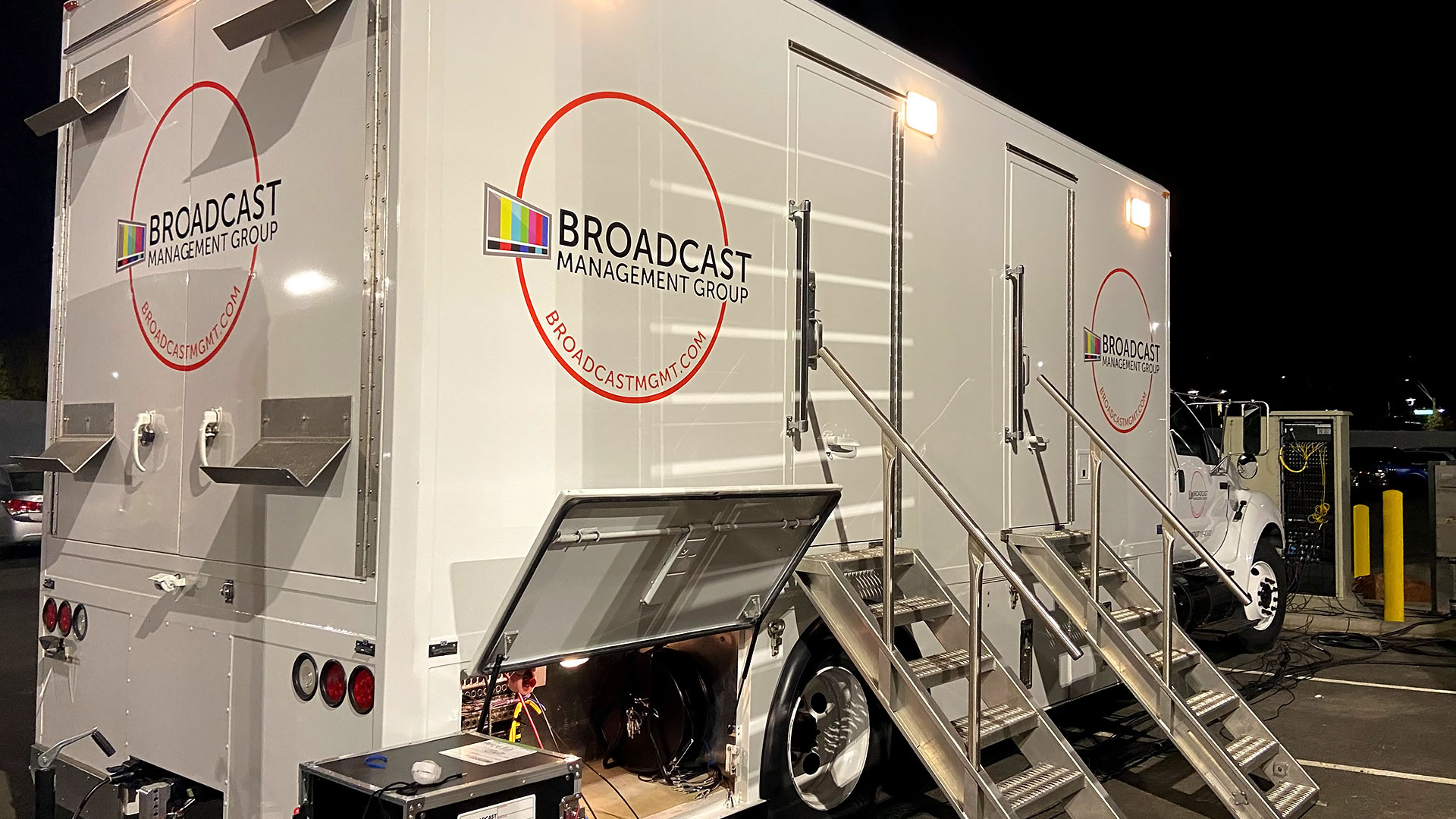
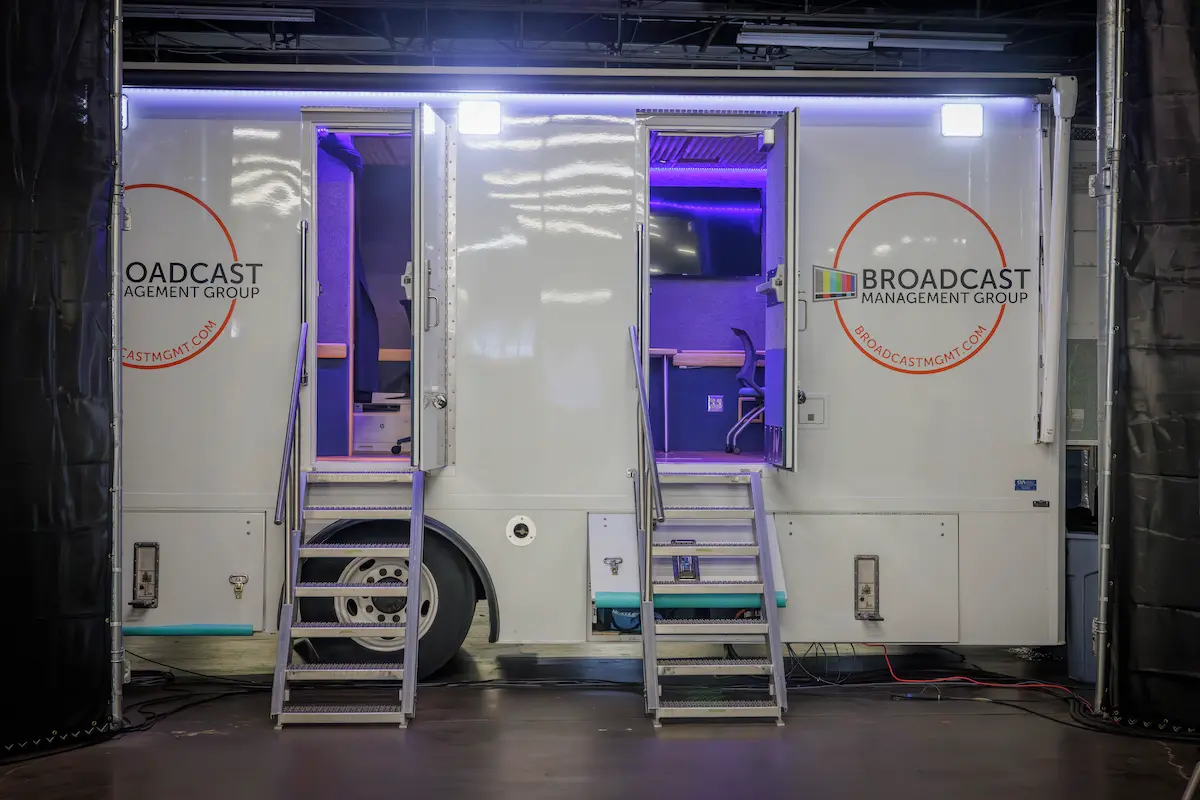
Whenever possible, the production Mobile Unit truck arrives the day before the event.
The first priority is often referred to as “Park and Power,” positioning the truck in its designated location, connecting utility power, establishing internet and fiber connectivity, and verifying communications with the venue.
The advance arrival also provides an opportunity to walk the venue, understand existing infrastructure, and begin assembling elements that can save valuable time on production day.
For example, for live sporting events, this may include:
- Building the announcer booth
- Installing talkback systems
- Setting up confidence and program monitors
- Positioning PTZ cameras for beauty shots, scoreboards, and game clocks
- Testing venue fiber and camera paths
Completing these tasks early allows the crew to focus on more complex technical work once the full production team arrives.
Show Day: Building the Production
On show day, the EIC is typically one of the first people onsite.
Before crew call, essential systems are verified, including:
- Power distribution
- Internet connectivity
- Communications systems
- Routing infrastructure
- Production truck readiness
Once the crew arrives, a kickoff meeting helps align everyone on the day’s schedule, responsibilities, safety procedures, and production expectations.
As cameras are built, microphones are installed, graphics are configured, and production positions are assembled, the EIC oversees the technical integration between the mobile unit and the venue.
This includes routing signals between multiple cameras, replay systems, graphics, audio consoles, remote production centers, and network operations centers to ensure every feed reaches its intended destination.
Coordinating with the Production Team
A Mobile Unit Truck EIC works closely with nearly every department.
During setup, they collaborate with producers, technical directors, camera operators, audio engineers, utilities, and venue staff to verify infrastructure, identify potential challenges, and coordinate technical workflows.
Understanding how a venue is wired, where fiber junction boxes are located, and how signals will travel throughout the facility helps eliminate issues before they impact the show.
These conversations become valuable when productions require custom workflows or unique transmission paths.
Managing Critical Systems During the Broadcast
Once the show begins, the EIC’s attention shifts from setup to maintaining operational stability.
Primary responsibilities include monitoring:
- Camera signal paths
- Audio routing
- Communications systems
- Network connectivity
- Signal transmission to the Network Operations Center (NOC)
- Distribution of outgoing program feeds
The EIC also serves as the first line of technical troubleshooting.
If equipment fails during a broadcast, they quickly diagnose the issue, prepare replacement equipment, reroute signals if necessary, and restore normal operation with as little disruption as possible.
In live television, every second matters.
The Skills That Keep Live Productions Running
Solving Problems in Real Time
No matter how much planning goes into a production, unexpected requests are inevitable.
A client may request an additional camera position just minutes before air, need an extra monitor in a production area, or require a last-minute signal feed.
Once those requests are approved, the engineering team immediately begins designing and implementing the necessary technical changes while keeping the production on schedule.
Flexibility and rapid decision-making are essential parts of the job.
Why Staying Calm Matters
Perhaps the most important skill for a Mobile Unit Truck EIC is composure.
Live productions leave little room for error, and technical issues often require immediate solutions.
Remaining calm under pressure allows the engineering team to troubleshoot methodically, communicate clearly with production leadership, and keep the broadcast moving without unnecessary disruption.
Experience, preparation, and clear communication are often what separate successful recoveries from costly mistakes.
How REMI and Cloud Production Have Changed the Role
Modern IP-based workflows, REMI production models, and cloud-enabled broadcast systems have transformed the responsibilities of today’s EIC.
Rather than solving every issue alone onsite, engineers can now collaborate with specialists located hundreds or even thousands of miles away.
Engineers at a Network Operations Center can remotely access production systems, troubleshoot software, monitor network performance, and assist with diagnostics while the onsite EIC focuses on hardware, signal routing, and venue infrastructure.
This distributed engineering model enables faster issue resolution, reduces travel requirements, and allows technical expertise to be shared across multiple productions simultaneously.
Behind Every Broadcast Is an Engineering Team
While viewers focus on the content they see on screen, an enormous amount of technical coordination happens behind the scenes.
Mobile Unit Engineers in Charge combine planning, technical expertise, leadership, and adaptability to ensure live productions remain reliable under constantly changing conditions.
Whether supporting a live sporting event, corporate broadcast, entertainment special, or REMI production, the EIC plays a central role in delivering the seamless viewing experience audiences expect.
What Success Looks Like
For a Mobile Unit EIC, success is measured by the client experience.
If the production runs smoothly, the broadcast reaches its audience without interruption, and the client leaves satisfied with the final result, the mission has been accomplished.
The best engineering work often goes unnoticed because every technical element simply works.

Meet the Engineer
A Passion for Problem-Solving
The most rewarding part of being a Mobile Unit EIC for Jordan Wiessen is solving the unexpected challenges that come with live production.
While every event is carefully planned, new situations can arise once the team arrives onsite.
Finding solutions, adapting in real time, and working through challenges with the production team is what he enjoys most and makes each project unique.
How It All Started
Wiessens’ path into broadcast engineering was unexpected.
He initially entered the industry as a utility, looking for an opportunity to work alongside friends already involved in live production. As he gained experience and expanded his technical knowledge, new opportunities continued to develop, leading him toward engineering.
His journey with BMG began with the Jumanji 2 “blue carpet” world premiere, where he joined the production team as a production assistant supporting Todd Mason, BMG’s Director and CEO.
Seeing BMG’s vision and the direction the company was heading inspired him to become part of the team and contribute to the growth of innovative live production workflows.
Final Thought
After every production, his definition of success remains simple: “If the client is happy, we’ve succeeded.”
Supporting the People Behind Every Production
A successful live broadcast requires experienced professionals who know how to manage complex workflows, solve challenges in real time, and keep productions moving under pressure.
At BMG, our Engineers in Charge are supported by a team of broadcast professionals, innovative production infrastructure, and decades of live production experience.
From mobile production units and REMI workflows to cloud-enabled solutions and our Network Operations Center, BMG provides the tools and resources needed to deliver reliable broadcasts from any location.
By combining skilled engineering teams with flexible production models, BMG helps clients navigate the complexities of live production events while maintaining the quality, reliability, and precision audiences expect.
Whether supporting live sports, entertainment, corporate events, or enterprise broadcasts, our team ensures every signal, system, and workflow works together seamlessly.
Behind every successful production is a team prepared for the unexpected, and BMG is built to make live production possible.

Paige DeLoretta is a marketing professional with experience in social media and digital marketing, creating engaging content that helps brands grow and connect with audiences. She has supported marketing initiatives across a variety of industries. Paige is a graduate of George Mason University with a degree in marketing. Originally from Reading, Pennsylvania, she enjoys traveling, spending time outdoors, and exploring Washington, D.C. with friends and family.
About Paige DeLoretta