A successful live production requires a director who can see beyond the next camera shot and understand the production as a whole.
Today’s shows can involve multiple locations, remote teams, complex graphics, live playback, audience interaction, streaming platforms, talent management, and constantly changing production requirements.
As production becomes more complex, so does the director’s role.
Their involvement stretches across the entire production lifecycle.
They help establish the visual language of the show, work with creative and technical teams to build the production, and ultimately make real-time decisions when the plan meets the unpredictability of live television.
With an extensive background directing live productions, Todd Mason, BMG CEO and Founder, explains how his experience has reinforced that the role extends far beyond calling the show.
At BMG, that experience has helped shape an approach to production that brings together creative strategy, technical expertise, and operational support from pre-production through the live show.
The Director Starts Building the Show Before It Goes Live
A successful live production begins with preparation.
Long before the opening shot, the director is working to understand what the production needs to accomplish.
- What is the story?
- Who is the audience?
- What moments need to have the greatest impact?
- How should the production feel visually?
Those questions influence decisions throughout pre-production.
During pre-production, the executive producer and producer are typically responsible for developing the overall show, coordinating the rundown, and keeping the production aligned with its goals.
The director works alongside them, providing insight into how the creative vision can translate into a successful live broadcast.
That can mean weighing in on camera types and positions, lighting, scenic design, graphics, playback elements, and other production considerations that will ultimately shape what the audience sees.
A director may also take information developed during the planning process, including minute-by-minute worksheets, production notes, and creative decisions, and help translate it into a practical rundown or run of show.
This is where the director begins turning a production plan into something executable.
The director’s job is to understand how each decision affects the larger production and ensure the creative vision can be executed within the show’s technical and operational realities.
The Director as Storyteller
At its core, directing is about storytelling.
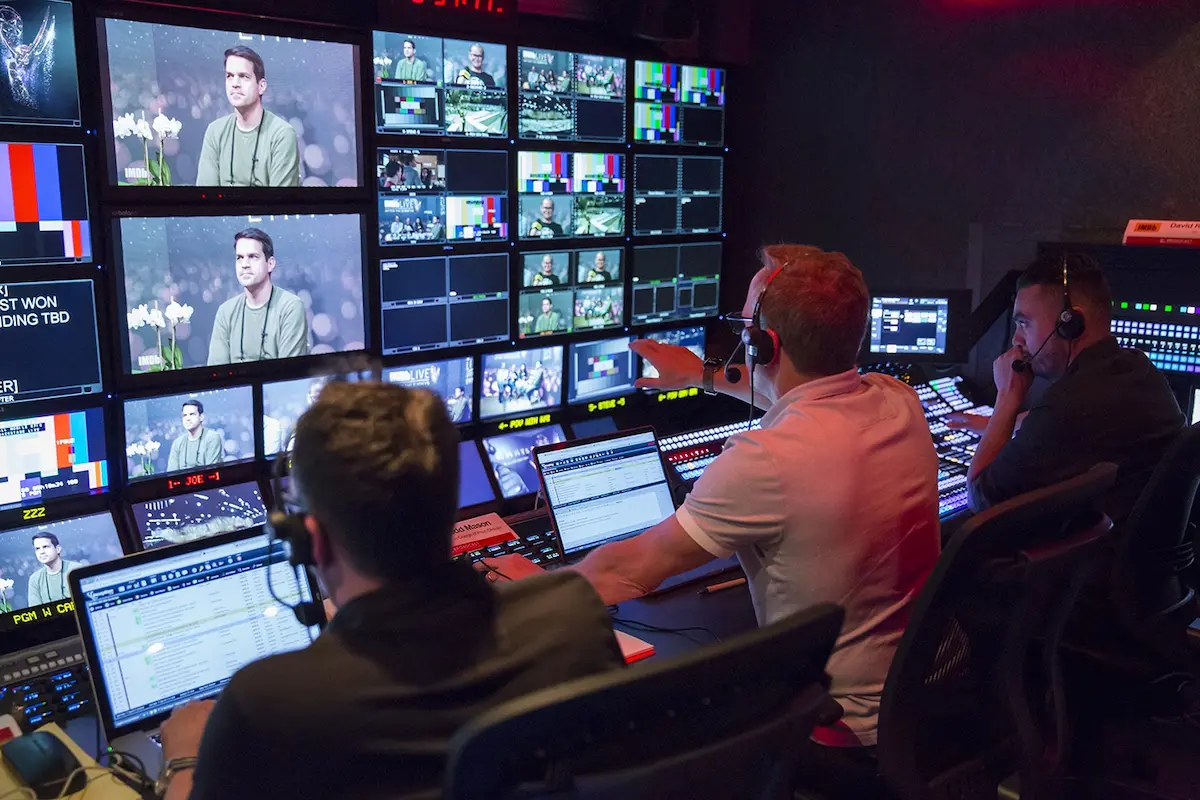
A live production can have dozens of cameras, graphics, playback elements, lighting cues, microphones, and other technical components. But technology alone does not create an engaging broadcast; it is the tool.
The director has to understand what the audience needs to see, and that means staying connected to the story throughout the production.
That is where creative production services become an important part of the process.
The right creative and technical support gives directors the resources to turn a production’s vision into a cohesive live experience. From camera direction and graphics to content, playback, and on-site production support, every element needs to work together with the story in mind.
Communication becomes one of the most important parts of the job.
With a large production team, communication has to be concise.
The crew needs to know what is changing, what the priorities are, and what the production is trying to accomplish without being overwhelmed by unnecessary information.
That communication continues throughout the day as the production evolves.
The best directors know how to keep their teams informed while allowing each department to do its job.
Storytelling becomes especially important when a live production takes place somewhere outside a traditional studio.
BMG saw this firsthand while producing Live on the Line in Las Vegas, one of the productions that originated from the MGM Grand Pool during NFL Draft coverage. Instead of treating the pool environment as simply a production location, the team incorporated the setting into the experience of the show.
The location helped establish the energy and atmosphere surrounding the event, while cameras, graphics, talent interactions, and live content worked together to keep viewers connected to what was happening.
The director had to constantly make decisions about when to focus on the host, when to show the environment, when to move to supporting content, and when to let the location itself communicate the excitement of the event.
No Two Directors Work the Same Way
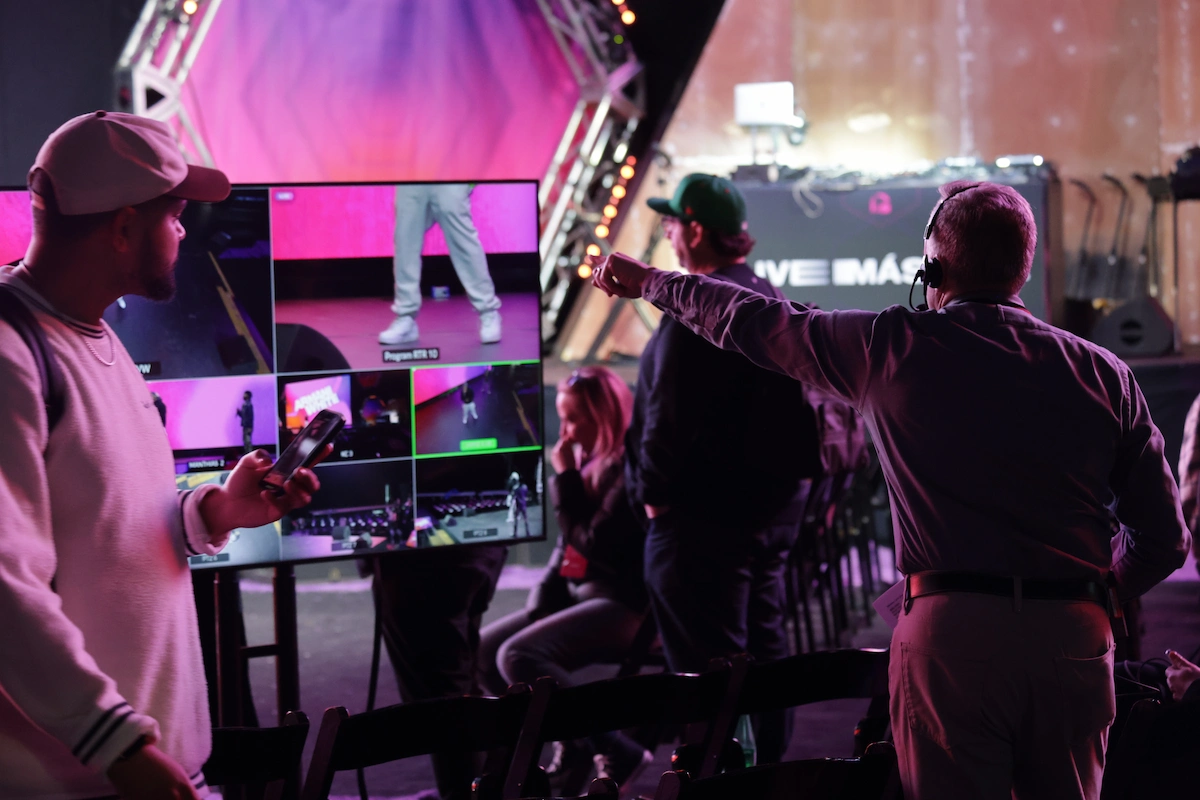
Every director brings a different perspective and style to a production.
Some directors may have extensive experience in entertainment, news, sports, corporate events, or other areas of live production.
Those experiences influence how they approach a show, communicate with a crew, and tell a story.
For someone like Todd, experience across entertainment, news, and corporate events creates the ability to approach productions from different perspectives.
That versatility becomes especially valuable when working with different clients.
A client that has produced live broadcasts for years may communicate very differently from an organization producing its first live event. The director has to recognize that difference and adjust their approach accordingly.
The same principle applies across industries.
A corporate client may use different terminology and have different expectations than a broadcast network or entertainment production. The director may have to translate those expectations across the production team so everyone understands what the client is trying to accomplish.
The ability to communicate across those different functions is just as important as the technical knowledge required to direct the show.
Bringing Dispersed Crews Together
The ability to work with talent across different locations gives production teams greater flexibility and opens up new possibilities for how live productions are built.
REMI workflows have accelerated that shift by allowing productions to move beyond a single physical location.
Instead of being limited to the talent available in one market, producers and directors can bring together the right people, technical resources, and expertise for each production while still operating as one integrated team.
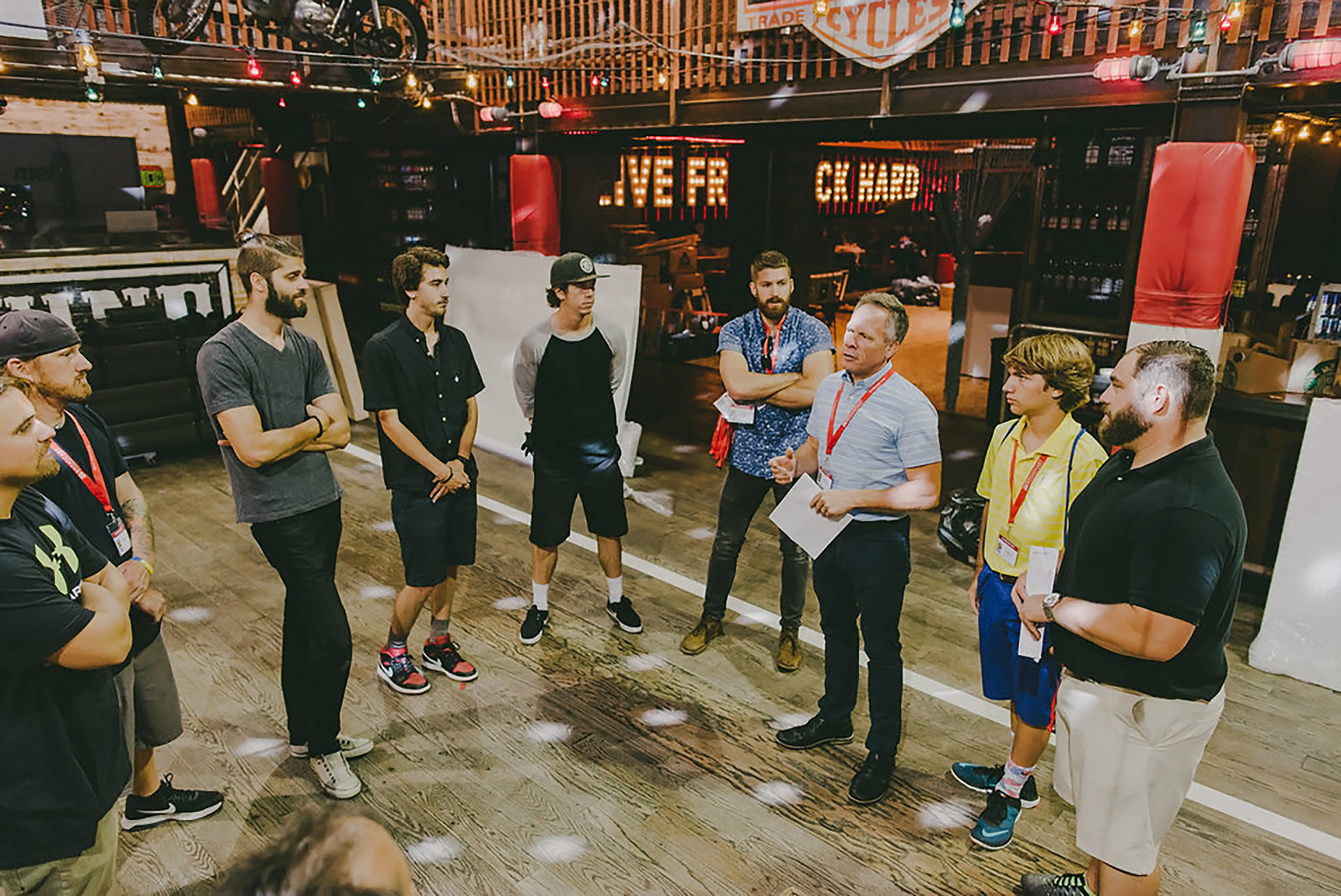
A director may work with a production team on-site while other specialists, operators, and technical personnel support the show from another location.
That changes how directors lead. They have to be comfortable communicating with a team that may not all be in the same room and making sure everyone understands the creative direction, production goals, and their role within the larger workflow.
Communication, preparation, and trust become even more important.
BMG has a great full-time creative, technical, and engineering staff and has also created a network of industry freelancers that gives BMG the flexibility to build production crews around the needs of each production, bringing together specialized talent and experience rather than relying on a one-size-fits-all staffing model.
As production becomes increasingly distributed, the ability to connect the right people is just as important as the technology that connects them.
The technology will continue to evolve, but the objective remains the same: bring the right people together to tell the story.
Technology Has Expanded the Director’s Responsibilities
As production workflows have evolved, so has the director’s role.
Modern production technology has created more creative possibilities, but it has also introduced more variables for directors to manage.
REMI workflows, distributed teams, cloud-based video infrastructure, AI, additional camera sources, digital graphics, playback, streaming platforms, and productions taking place across multiple locations all require directors to understand how different pieces of the production connect.
The result is a role that extends beyond calling the show.
Directors have to be comfortable working within production environments while still keeping the audience experience and the story at the center of every decision.
That balance will become even more important as live production continues to evolve.
Technology can expand what a production is capable of, but it is the director who determines how those tools come together to create a cohesive experience for the audience.
Supporting the Director at Every Stage
The changing role of the director also changes what production partners need to provide.
At Broadcast Management Group, we understand that directors need more than equipment to execute a successful production. They need experienced people, dependable technology, effective workflows, and a production environment that allows them to focus on telling the story, and BMG provides that complete ecosystem.
That support starts during planning and continues through execution.
Whether a production requires traditional live production, remote workflows, cloud-based infrastructure, or a combination of technologies, the goal is to give the director the resources and support needed to make decisions with confidence.
Before the show, they are helping shape the vision. During the show, they are making decisions in real time. When something changes, they determine how the production moves forward.
As the role of the director continues to evolve, the right production partner should evolve with it, providing the expertise, technology, and support needed to bring the vision to life. At BMG, we are fortunate to create, produce, and distribute it.

Todd Mason is the Chief Executive Officer of Broadcast Management Group (BMG), a broadcast infrastructure and media operations company helping define the next generation of television production, live media operations, and broadcast network infrastructure in North America.
About Todd Mason