Enterprise video has become a core part of how large organizations communicate.
Leadership updates, internal broadcasts, investor events, product launches, training programs, conferences, and executive messages all rely on video to reach employees, customers, partners, and stakeholders. As the volume of content grows, expectations continue to rise. Audiences expect video to look professional, stream reliably, and be available across multiple platforms after the live event ends.
For enterprise organizations, that creates a new production challenge.
Building a full broadcast infrastructure in every office or event location is expensive and difficult to manage. Internal teams may have strong communications, marketing, or AV capabilities, but high-quality live production often requires specialized workflows, experienced operators, technical redundancy, and real-time monitoring.
Cloud video production gives enterprise organizations a more scalable way to produce live and on-demand content across teams, locations, and events.
What Cloud Video Production Means for Enterprise Teams
Cloud video production allows key parts of the production workflow to be centralized, remote, or hybrid.
Cameras, talent, and on-site teams may be located in one place, while switching, graphics, audio, encoding, monitoring, transmission, and distribution can be supported from another. This gives organizations the ability to produce broadcast-quality content without building a full control room at every location.
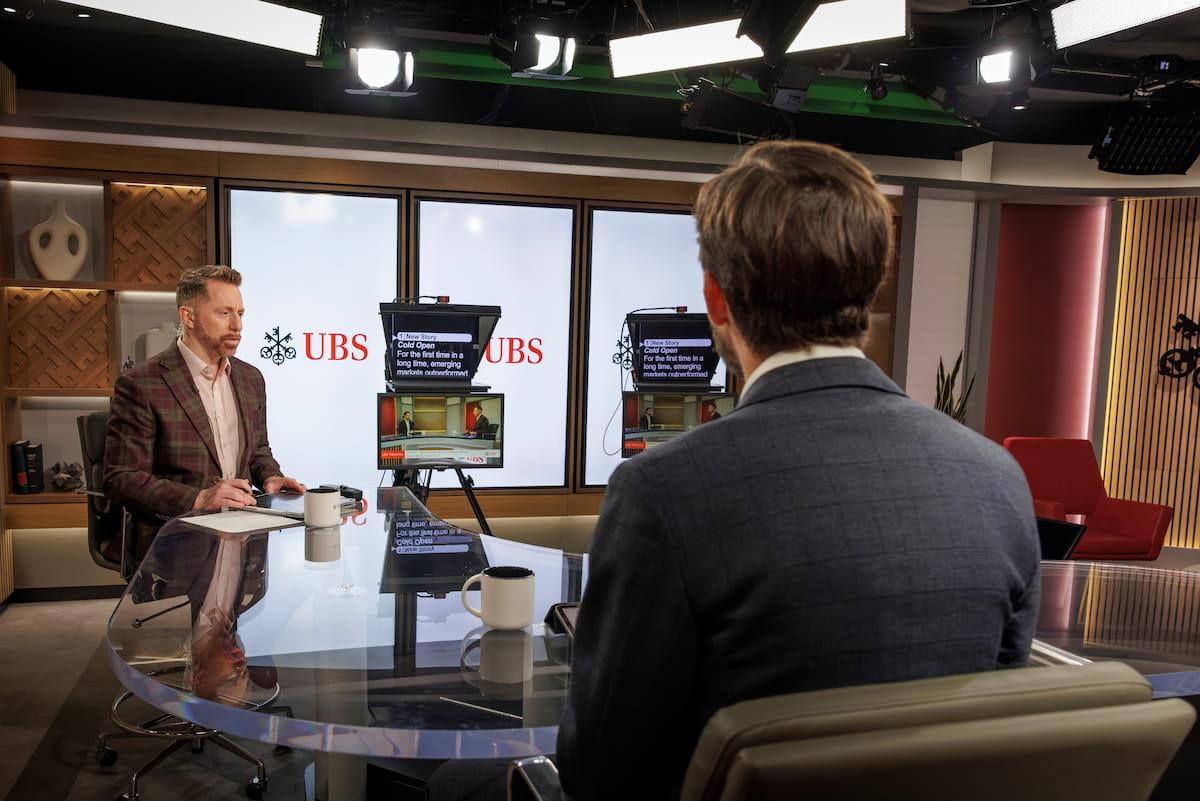
For enterprise teams, cloud production can support a wide range of needs, including executive town halls, investor days, product launches, hybrid conferences, internal communications, studio-based content, and multi-location live events.
The right model depends on the event, audience, security requirements, venue, timeline, and production goals. Some productions may need a larger on-site team. Others may only need a lean crew on location, with the rest of the workflow supported remotely through a centralized production environment.
Why Enterprises Are Moving Toward Cloud Production
Enterprise organizations are producing more video across more locations.
A company may need to support a CEO broadcast from headquarters, a product launch from an event venue, a leadership meeting across multiple offices, and an internal communications series from a studio. Managing each production as a separate technical build can create unnecessary cost, complexity, and inconsistency.
Cloud production helps create a more repeatable model.
Instead of rebuilding the workflow for every event, organizations can connect offices, studios, venues, and remote teams into a centralized production backbone. That makes it easier to maintain consistent production quality, support multiple locations, access specialized talent, and scale resources to meet each project’s needs.
It also helps internal teams avoid carrying more infrastructure and staffing than they need day-to-day. A leaner on-site setup can be supported by experienced production, engineering, transmission, and monitoring teams working remotely.
What Enterprises Need to Get Right
Cloud video production works best when the operational foundation is planned correctly.
Connectivity is one of the first priorities. Live video requires reliable network paths, backup connectivity, and a clear signal transport plan. If the production depends on a single internet connection or an untested venue network, the entire event is exposed to unnecessary risk.
Security also matters, especially for executive communications, financial updates, investor events, internal meetings, and confidential business information. Enterprise video workflows need to account for access control, platform security, transmission security, recording policies, and content management.
Broadcast Workflow design is equally important. Every production needs a clear plan for who is on-site, who is remote, how teams communicate, where feeds are routed, who monitors the stream, and how issues are escalated during the live event.
Redundancy and monitoring should be built into the model from the start. Backup encoders, diverse network paths, signal monitoring, transmission support, and technical escalation can make the difference between a contained issue and a failed broadcast.
Production Staffing and Operations remain a major part of the equation. Cloud production still depends on experienced producers, directors, technical directors, audio operators, graphics operators, engineers, transmission specialists, and support teams. The advantage is that those people do not all need to be in the same physical location to support the show.

Where BMG’s Network Operations Center Fits
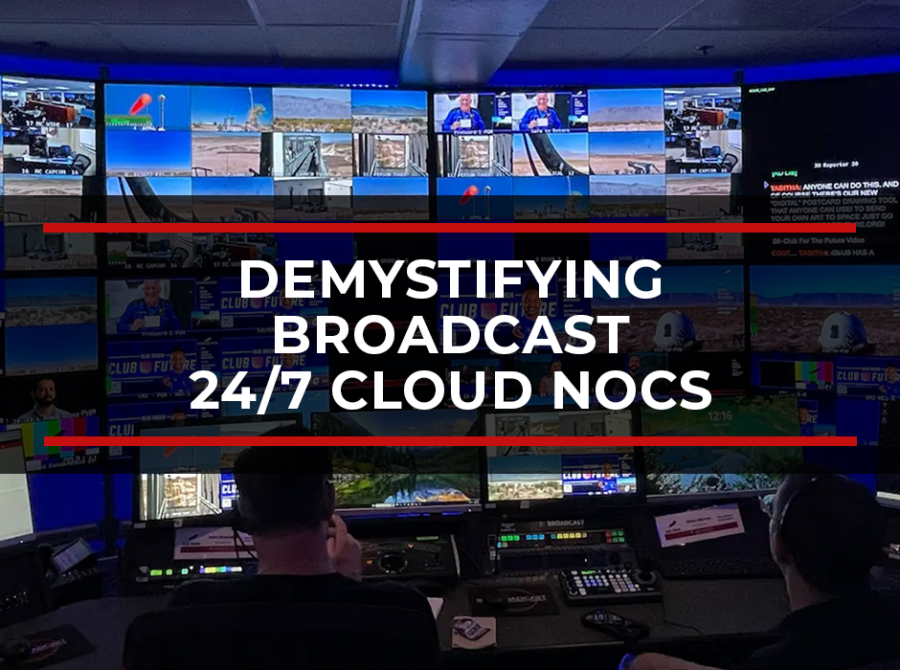
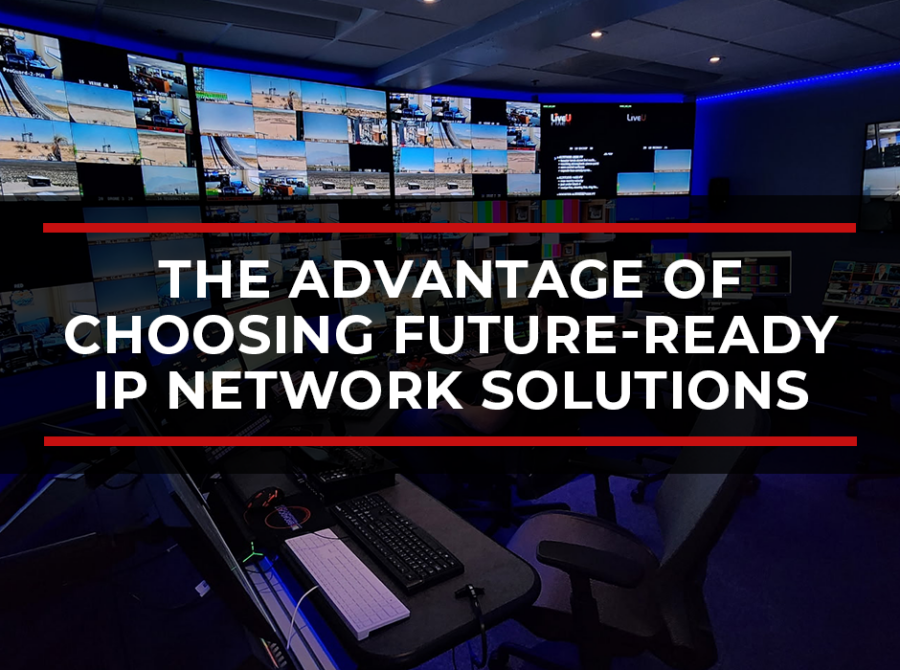
BMG’s Network Operations Center gives enterprise organizations access to a centralized broadcast operations environment built for live production, monitoring, transmission, media management, and managed services.
Through the NOC, BMG can support remote switching, graphics, audio, encoding, transmission, master control, media asset management, quality control, technical escalation, and live monitoring. That allows enterprise clients to connect offices, studios, venues, and event locations into one professional production backbone.
For some events, BMG may support a small on-site team while the NOC handles the control room workflow, transmission, and monitoring. For others, BMG can provide a hybrid model with on-site production leadership, remote operators, centralized engineering support, and post-event content management.
This model gives enterprise organizations the flexibility to produce high-quality live content without building every production resource internally.
Common Enterprise Use Cases
Cloud video production can support many enterprise communication and content needs.
Executive town halls can be produced in a polished, live format with professional graphics, remote contributors, reliable streaming, and post-event access for employees who could not watch live.
Investor days and financial communications can be supported with secure workflows, high production standards, live distribution, and technical monitoring.
Product launches can integrate speakers, demos, videos, graphics, remote contributors, and audience engagement tools into a single managed live experience.
Internal broadcasts and leadership meetings can be produced consistently across offices and regions, giving employees a more professional and reliable viewing experience.
Hybrid conferences and corporate events can be built around a combination of on-site production, remote support, live streaming, content capture, and post-event distribution.
Studio-based executive content can also be supported through cloud-connected workflows, allowing companies to produce recurring communications without rebuilding the production model every time.

Cloud Production and Content Management
Enterprise video doesn’t end when the live stream is over.
Most live events create content that needs to be recorded, clipped, archived, repurposed, and distributed. Without a clear content management workflow, valuable footage can quickly become difficult to find or use.
Media asset management is an important part of a strong cloud production model. It allows teams to organize recordings, add metadata, manage versions, search content, control access, and deliver assets to the right teams.
For enterprise organizations, this can support marketing, communications, training, sales enablement, executive messaging, and internal knowledge sharing. A town hall can become an on-demand replay. A product launch can become social clips, sales assets, or internal training content. A conference can become a library of sessions available after the event.
Cloud production becomes more valuable when live production and content management are connected from the start.
Building a Scalable Enterprise Video Model
Enterprise organizations need video workflows that can grow with demand.
Some months may include only recurring internal communications. Other months may include investor events, conferences, leadership meetings, product launches, or special broadcasts. A scalable production model enables organizations to expand support as needed and return to a leaner operation when demand slows.
BMG supports enterprise cloud video production through live production, REMI workflows, embedded staffing, NOC support, transmission, media asset management, master control, and managed services.
That combination gives organizations access to experienced production teams, broadcast-grade infrastructure, and operational support without requiring every capability to be built and managed internally.
Cloud video production is most effective when it is treated as a complete operating model. The technology, staffing, workflow, monitoring, security, and content management all need to work together.
For enterprise organizations looking to produce more content across more locations with greater consistency and reliability, cloud video production provides a flexible path forward.
Contact BMG to build a cloud video production model that supports your organization today and scales with your needs tomorrow.

Todd Mason is the Chief Executive Officer of Broadcast Management Group (BMG), a broadcast infrastructure and media operations company helping define the next generation of television production, live media operations, and broadcast network infrastructure in North America.
About Todd Mason