Why Broadcast Control Room Design Matters More Than Ever
Broadcast operations are undergoing a shift in broadcast control room design. Rising demand for hybrid production models, cloud-based infrastructure, and REMI production has changed what a control room needs to be.
Modern facilities are no longer built around a single-purpose environment. Instead, they function as multi-use production hubs that support broadcast, streaming, digital, and social outputs at the same time and production.
When broadcast control room design is done poorly, the consequences are immediate and expensive:
- Workflow challenges that slow down live production
- Increased staffing requirements to account for inefficiencies
- Equipment redundancy that increases maintenance costs
- Production delays that impact delivery and audience experience
Today, effective broadcast control room design requires flexibility and efficiency for every function of the workflow.
1. Designing Without a Workflow in Mind
One of the most common mistakes is designing a control room around current production needs.
This approach creates a short lifecycle for the facility. As production demands grow, systems become outdated, forcing costly renovations or redesigns.
The solution is to prioritize adaptable infrastructure from the beginning. Systems should be designed to expand across additional channels and formats without requiring a rebuild.
2. Ignoring IP-Based and Cloud-Ready Architecture
Many traditional control rooms still rely on SDI and/or baseband-based infrastructure, limiting flexibility and remote capabilities.
This creates a barrier to modern production workflows that depend on distributed teams and cloud integration.
Forward-thinking broadcast control room design incorporates dynamic orchestration, IP standards such as ST 2110, NDI, Dante Audio and cloud-enabled playout systems. These technologies allow broadcasters to route, process, and deliver content from anywhere, improving production agility.
3. Poor Signal Flow and Routing Design
When signal flow is overly complex, even simple production tasks become difficult.
A lack of centralized routing creates confusion, increases troubleshooting time, and introduces unnecessary latency into workflows.
Modern orchestration systems often rely on centralized routing backbones to simplify signal distribution and improve clarity.
4. Overloading the Control Room with Redundant Equipment
Another costly mistake is duplicating systems.
Extra switchers, encoders, and monitoring tools may seem like a safeguard, but they may create more problems than they solve. Redundant hardware increases maintenance costs, consumes physical space, and complicates workflows.
A more efficient approach is to implement unified control surfaces and shared infrastructure that reduce duplication while maintaining reliability.
5. Not Designing for Multi-Use Production Environments
Traditional control rooms were built for a single purpose. Modern environments are expected to do much more.
Today’s production facilities must support many outputs from a single space, including broadcast television and live streaming.
When rooms are not designed for multi-use functionality, organizations lose potential ROI on both space and equipment.
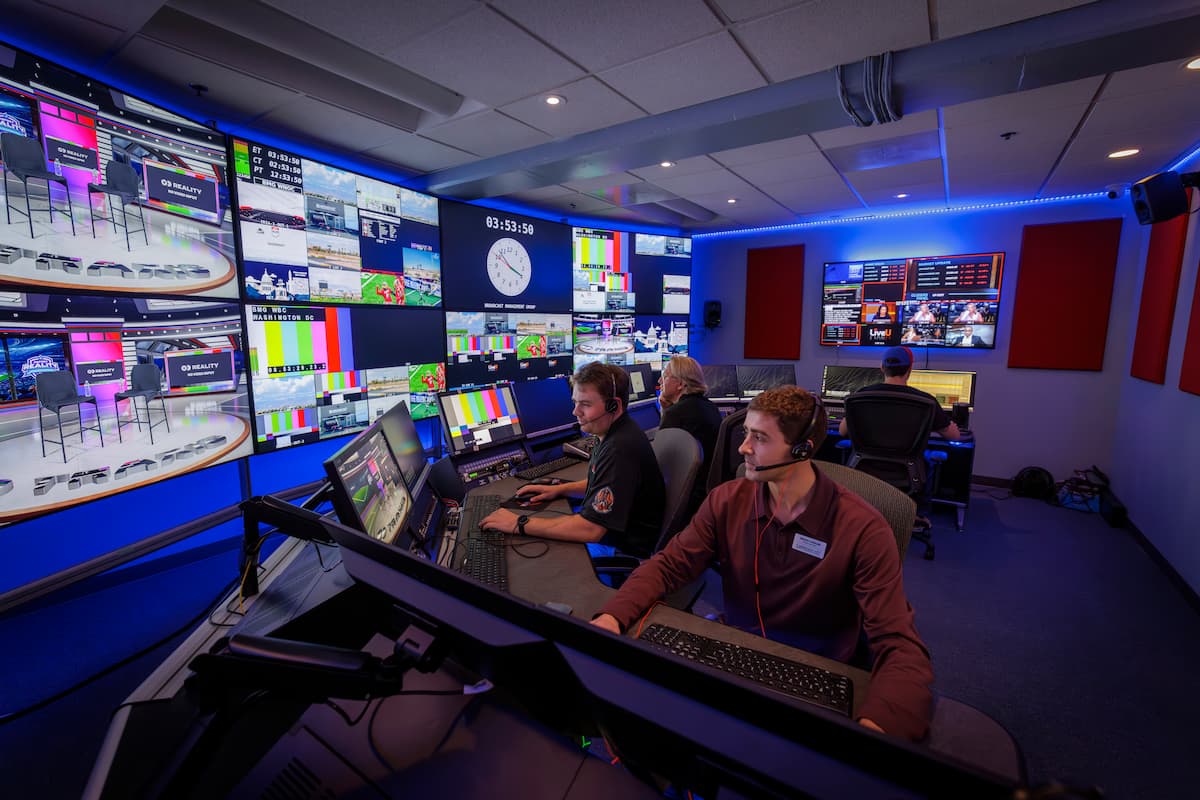
At Broadcast Management Group, this shift is reflected in its Network Operations Center (NOC) Live Production model. The NOC approach centralizes and supports multiple simultaneous productions within a connected environment rather than treating them as a single control room.
This allows teams to create outputs across broadcast, streaming, and managed services without having to rebuild infrastructure for each new project.
6. Poor Workflow Layout
Even the most advanced technology can be compromised by poor physical design.
In many traditional control rooms, inefficient seating arrangements, poorly placed monitors, and obstructed sightlines create unnecessary friction during live production.
These design issues slow down decision-making and reduce overall situational awareness. This is especially true in high-pressure environments where seconds matter.
Modern broadcast control room design takes a human-centered approach, prioritizing workflow layout. Operators should be positioned to move seamlessly between systems, with displays and control surfaces aligned to sightlines and task flow.
When the physical environment supports the workflow, production teams can react faster, collaborate more effectively, and maintain consistency across live outputs.
7. Lack of Proper Redundancy Planning
Redundancy is essential in live production environments, but it is often inconsistently implemented.
Critical systems such as power, networking, and signal paths must have backup options in place to prevent downtime.
Without proper redundancy planning, even minor failures can lead to production disruptions and financial loss.
8. Underestimating Audio Integration in Control Room Design
Audio is sometimes treated as a secondary system, which creates long-term operational issues.
When audio and video processes are not integrated, sync/timing issues and workflow inefficiencies become common.
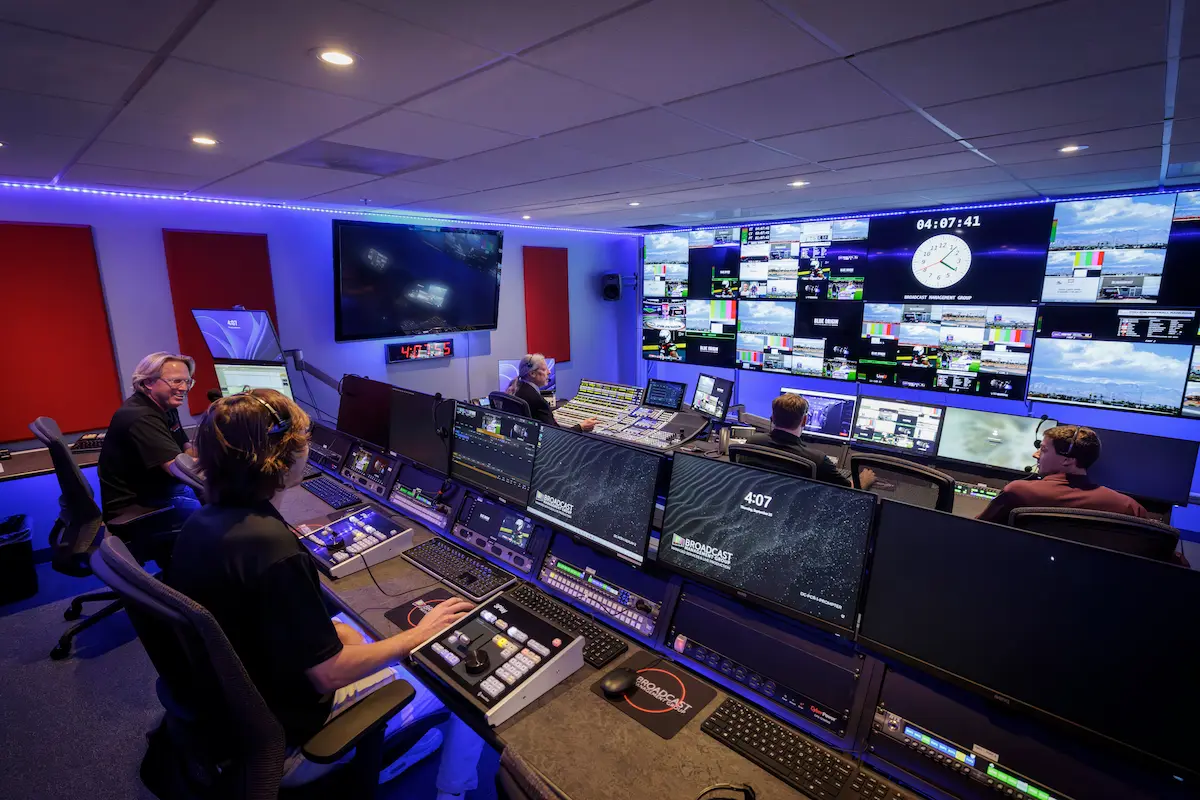
Modern control rooms require tightly integrated audio control surfaces and monitoring systems that operate with video infrastructure, ensuring consistency and reliability across all outputs.
9. Poor Monitoring and Multiviewer Strategy
Control rooms overloaded with disconnected displays may suffer from a lack of situational awareness.
When operators cannot see a unified production environment, decision-making becomes slower and more error-prone.
Modern broadcast control room design emphasizes customizable multiviewers and dashboards that provide visibility across all feeds, tally signals, and outputs.
10. Failing to Design for Remote and Distributed Production
One of the biggest strategic failures in control room planning is the failure to consider remote production capabilities.
Without support for REMI workflows, organizations are forced to rely on larger on-site crews and increased travel costs.
Hybrid production ecosystems now allow teams to operate across multiple locations, reducing overhead while increasing production flexibility.
Building Smarter, Future-Ready Control Rooms
Broadcast control room design is now about building flexible, interconnected production ecosystems that adapt to changing industry demands.
The next generation of control rooms is being shaped by automation, cloud infrastructure, and distributed production models.
Key trends include:
- AI-assisted production monitoring for real-time decision support
- Cloud-native control rooms that reduce dependency on physical infrastructure
- Remote collaboration is becoming a standard practice across production teams
- Multi-production environments operating from one hub
- Media Asset Management platforms to centralize storage, tagging, and distribution of media files
Organizations like Broadcast Management Group are building around this model. Through its Network Operations Center (NOC) Live Production framework, BMG demonstrates how centralized, multi-use production environments can support simultaneous live broadcasts, streaming outputs, and managed services without duplicating infrastructure.
This approach reflects scalability, IP-based workflows, multi-use design, and remote production readiness, showing how modern control room strategy translates into execution.
Contact BMG to explore how modern production workflows can reduce costs, streamline operations, and spread your content output across every platform through BMG-managed services.

Tawfiq Rahman is Vice President of System Design and Engineering at BMG. He brings more than 27 years of broadcast engineering experience across television stations, multi-camera studios, government projects, and large-scale media facilities. His background includes leadership roles at Ekushey Television Limited, BBC World Service, and Ekattor Television, the first Full-HD 24/7 news station in Bangladesh. At BMG, Tawfiq leads system design and engineering efforts for broadcast facilities, control rooms, studios, and advanced production workflows.
About Tawfiq Rahman