Washington, DC is one of the most active markets for live interviews, from government and public affairs to finance, corporate announcements, policy commentary, and national news.
But booking a live interview isn’t just finding an available room. The right location needs to support video, audio, lighting, connectivity, and the production requirements of a live broadcast.
Different spaces can work for different situations. A corporate office may make sense for a branded executive interview. A hotel may be the right choice during a conference. A dedicated studio may be better for a high-stakes media appearance.
The key is understanding what each location can support before the interview goes live.
If the interview is going live, the room matters.
Broadcast Studios
For high-stakes interviews, a broadcast studio is usually the safest option because the space is already designed around live production. Equipped with features such as:
- Professional lighting
- Controlled audio environment
- Broadcast cameras
- Reliable connectivity
- Production support
- Ability to connect to networks, streaming platforms, or internal channels
Facilities like BMG’s Washington Broadcast Center are built specifically for live interviews, panels, media tours, and executive communications. The infrastructure is already in place, which reduces setup time and lowers the risk of technical issues.
Corporate Offices and Conference Rooms
Corporate offices and conference rooms can work well when the interview needs to happen in a familiar or branded environment. These spaces can offer a few advantages:
- Convenient for executives
- Uses a familiar environment
- Can show company branding or office setting
The challenge is that most office spaces are not built for live production:
- Poor lighting
- Echo/bad audio
- Weak internet or limited broadcast connectivity
- Background distractions
- Harder to control interruptions
Corporate offices can be a viable option, but they usually require additional lighting, audio, connectivity, and production support to be ready for a live interview.
Hotels and Event Venues
Hotels and event venues are common choices for interviews tied to conferences, meetings, and major events in the DC area. They can work well because:
- It’s convenient when speakers are already on-site
- It’s a good space for conferences, summits, and association events
- They can support multiple interviews in one day
But they also require more planning than many teams expect:
- Shared Wi-Fi is usually not enough
- Loading and setup access can be difficult
- Rooms may need lighting, pipe and drape, sound treatment, and dedicated connectivity
If you plan to use a hotel or event venue, production logistics should be confirmed early, especially connectivity, load-in access, power, and room control.
Government/Public Affairs Locations
Some interviews happen near Capitol Hill, federal agencies, think tanks, or policy organizations, making these potentially prime locations for live interviews:
- Relevant to the topic or guest
- Convenient for political, policy, or government guests
- Adds context to the interview
These locations can also come with significant logistical challenges:
- Security access
- Limited setup windows
- Restricted equipment access
- Unpredictable schedules
Government and public affairs locations can be useful, but they require experienced crews who understand access, security, setup windows, and live production timing.
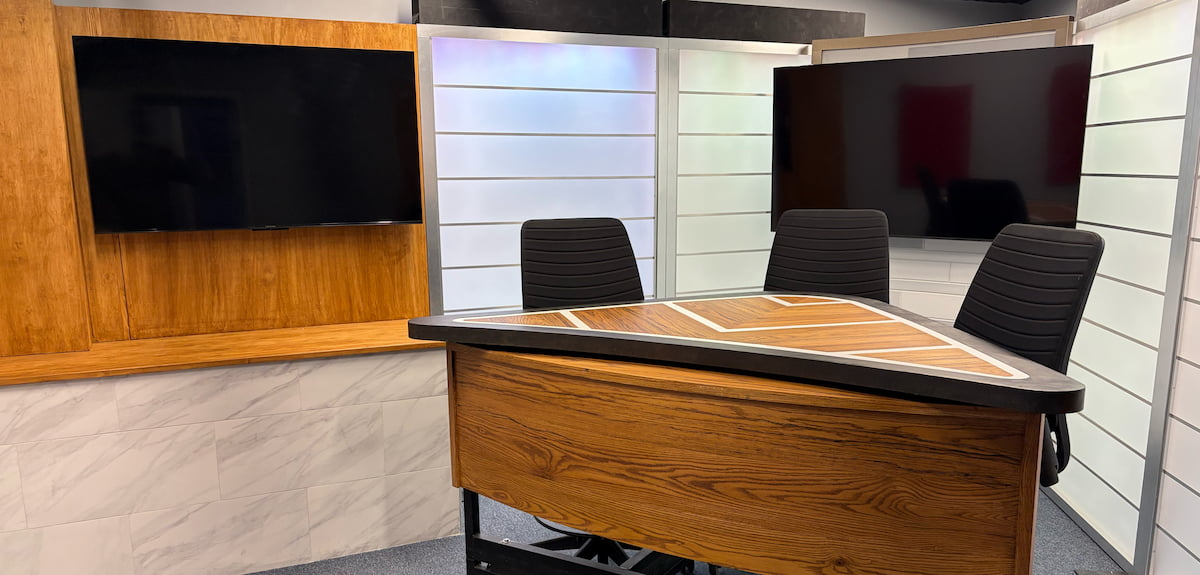
Dedicated Live Shot Studios
Sometimes the best option is a smaller dedicated live shot studio. These spaces are built for quick interviews, expert commentary, and remote guest appearances without requiring a full studio build. They’re especially useful for:
- Quick expert interviews
- Satellite/IP live shots
- News hits
- Executive interviews
- Remote guests
When evaluating a live shot studio, look for:
- Camera-ready setup
- IFB/earpiece support
- Reliable transmission paths
- Professional lighting and audio
- Fast booking and setup
What to Look for Before Booking
Before booking a live interview space, confirm that it can support the technical and logistical needs of the production. Start with these questions:
- Is there reliable internet or dedicated transmission?
- Is the room quiet?
- Can lighting be controlled?
- Is there enough space for cameras and crew?
- Is there a clean background?
- Is there access for load-in?
- Are there power limitations?
- Is there production support on-site?
- Can the feed be sent to where it needs to go?
- Does it fit within your budget and timelines?
If the answer to several of these questions is “no,” the space may create more problems than it solves. The right room should make the production easier, not create new issues on show day.
Why a Broadcast-Ready Facility Is Often the Safest Choice
If the stakes are high, a broadcast-ready facility can reduce a lot of the risk that comes with going live. These facilities are commonly used for:
- National media interviews
- Executive announcements
- Investor communications
- Government affairs interviews
- Live streaming events
- Media tours
BMG’s Washington Broadcast Center provides access to professional studios, control rooms, production crews, transmission support, and connectivity to BMG’s Network Operations Center from one facility.
Summary
There are plenty of places to book a live interview in Washington, DC, but the best choice depends on the stakes of the interview, the technical requirements, and how much production support your team needs on-site.
For lower-risk interviews, offices, conference rooms, hotels, or event venues may be workable with the right planning. For national media hits, executive announcements, investor communications, public affairs interviews, or other high-visibility moments, a broadcast-ready facility is usually the safer choice.
If you need to book a live interview in Washington, DC, BMG supports studio production, live shots, transmission, and full live production services from our Washington Broadcast Center.
Learn more about BMG’s Washington, DC studios and live interview production capabilities.

Andrew Ryback is the Executive Vice President of Production. He brings over 17 years of experience in production management across live events, entertainment, and on-location shoots. He has managed production logistics for high-profile events, including The Emmys, The Oscars, TIFF, SXSW, Comic-Con, New York Fashion Week, Sundance, and both national political conventions. At BMG, he oversees complex productions from crew and equipment coordination to budgeting, permitting, and on-site execution.
About Andrew Ryback