The physical footprint of live production has changed dramatically.
For decades, the scale of a production was easy to see. Larger shows usually meant larger switcher frames, more racks, more conversion gear, more cabling, more power, more cooling, and more on-site infrastructure. If a production needed more capability, it usually needed more physical space.
Year after year, the model is changing.
Modern broadcast hardware has become smaller, denser, more powerful, and more efficient. At the same time, live production workflows have become more distributed, more software-defined, and more connected to centralized infrastructure.
The result is a major shift in how production systems are designed.
Production Equipment Is Doing More in Less Space
A Tier 1 production switcher that once required a full rack can now be deployed with far less physical infrastructure. Recording systems, routers, multiviewers, processing gear, and conversion tools have all followed a similar path.
The great part is that the equipment isn’t just smaller. It’s more integrated.
Functions that used to require separate pieces of hardware are now built into the core systems. Routing, multiview generation, frame synchronization, up/down/cross conversion, embedding, de-embedding, and signal processing can often be handled inside fewer devices.
That changes the physical and operational requirements of a production facility.
Smaller, denser systems can reduce:
- Rack space
- Power requirements
- Heat load
- Cabling complexity
- Setup time
- Transportation requirements
- On-site footprint
For live production, that matters. It allows more capability to fit into smaller rooms, portable flypacks, REMI mobile units, and centralized Network Operations Center environments.
What This Looks Like Inside BMG
BMG has seen this shift firsthand.
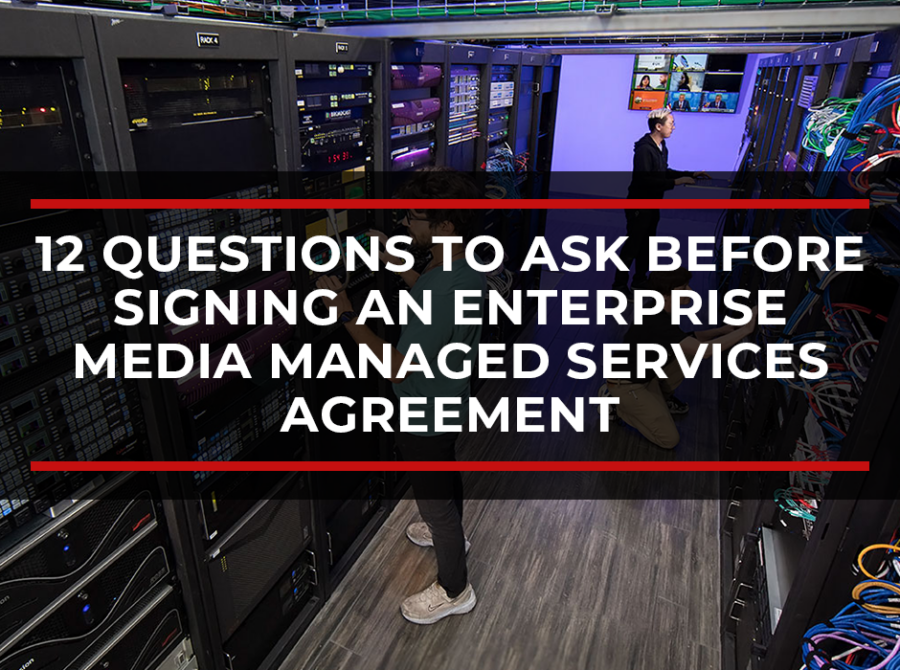
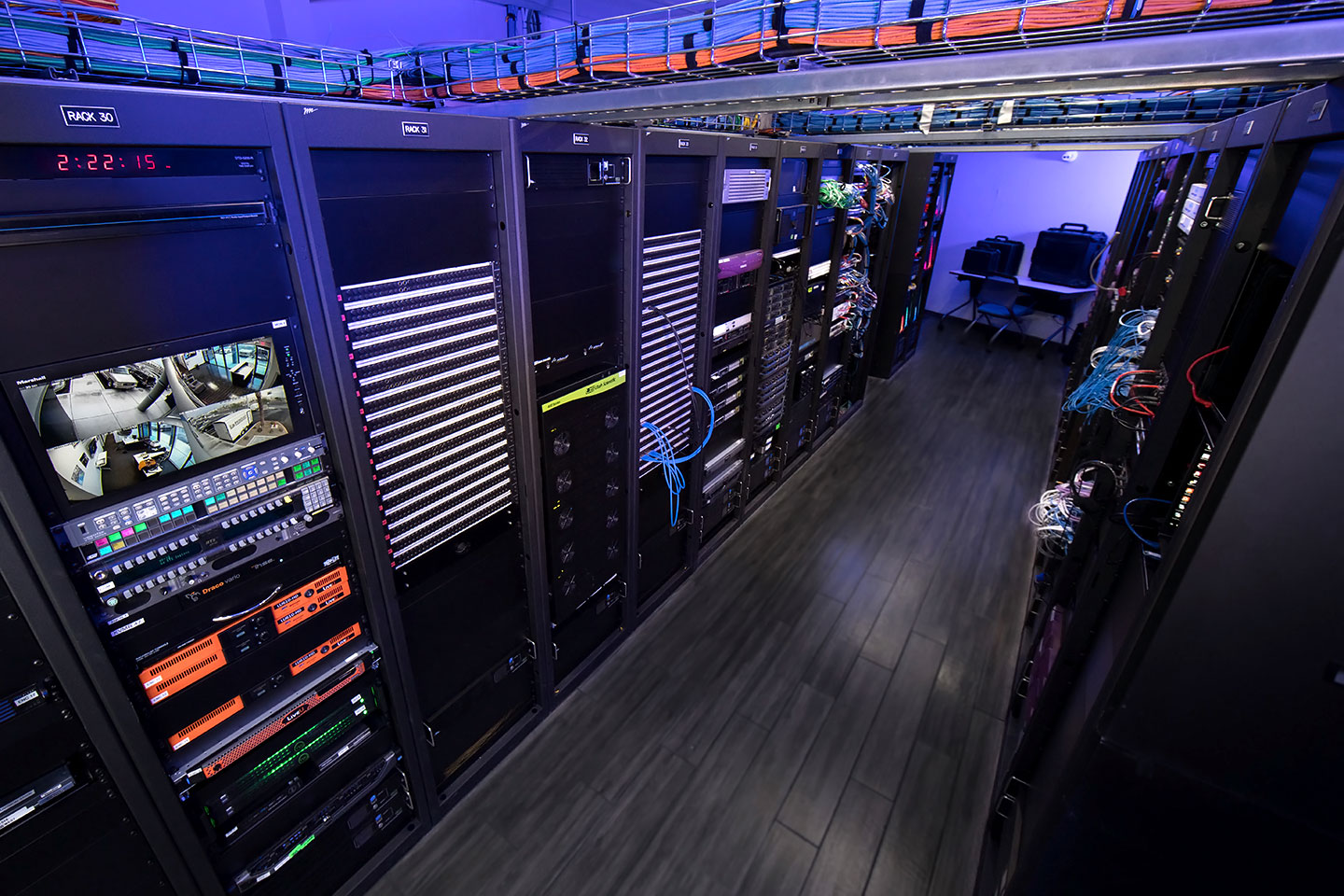
When we operated our Las Vegas Network Operations Center, the facility supported a much smaller production footprint than the Network Operations Center we operate today in Washington, DC. The current NOC has significantly more capability and more than three times the production capacity, but the physical rack footprint has not scaled the way it would have years ago.
Smaller, denser, more integrated systems changed the math.
Good examples are routing, multiviewing, and conversion. In earlier environments, those functions required three separate systems. Today, BMG’s 1100×1100 Evertz router in the Washington, DC, NOC supports routing, multiviewing, conversion, and additional signal management functions inside a more integrated infrastructure model.
That kind of consolidation affects more than the rack count. It simplifies signal flow, reduces the number of devices in the chain, lowers failure points, and gives operators and engineers a more unified environment to manage.
Why Miniaturization Supports REMI and Cloud Production
Hardware miniaturization is one of the reasons REMI and cloud production workflows have become more practical at scale.
Some production elements still need to happen on-site. Cameras, audio capture, transmission gear, field communications, and certain producer or talent-facing workflows may still belong at the venue. But the heavier production infrastructure can often remain centralized inside a permanent facility.
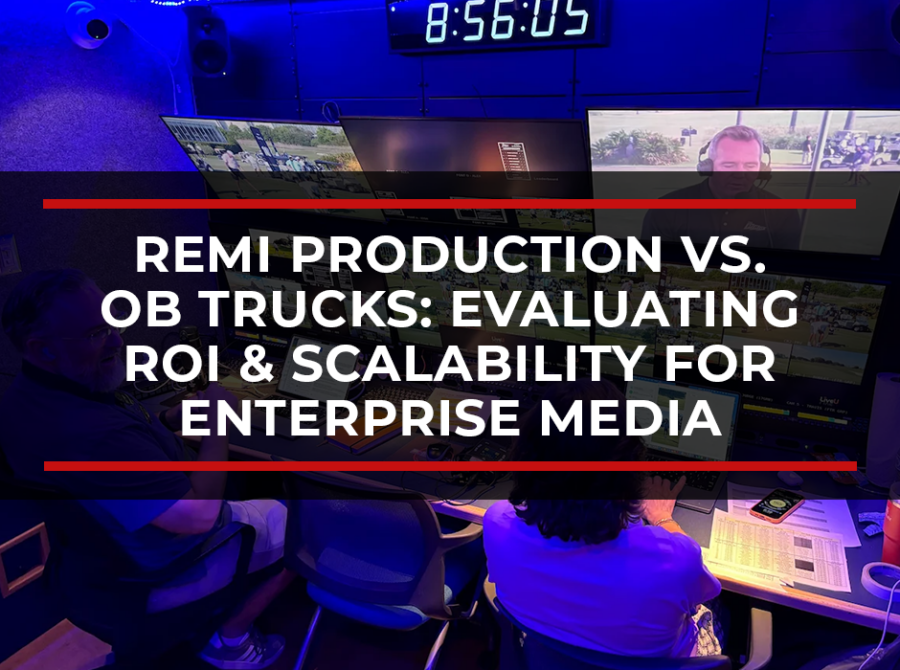
That is where BMG’s REMI workflow comes in.
By keeping core production infrastructure inside the Network Operations Center, BMG can centralize switching, graphics, replay, audio, video shading, transmission, monitoring, media asset management, editing, and channel playout inside one connected ecosystem.
The field footprint can stay lean while the centralized production environment remains powerful, redundant, and already tested.
Instead of rebuilding the entire production system from scratch for every event, productions can connect to a permanent infrastructure environment designed for scale.
Smaller Gear Doesn’t Necessarily Mean Simpler Systems
The physical footprint is shrinking, but the decision-making is getting more complicated.
Modern production infrastructure now requires decisions across hardware, software, cloud, networking, licensing, security, support, and long-term scalability. A production system is no longer just a collection of boxes from a single manufacturer.
Today, organizations have to evaluate:
- Hardware-based systems vs. software-based systems
- Private cloud vs. public cloud
- On-premises infrastructure vs. centralized production
- SDI vs. IP workflows
- ST 2110 and NMOS readiness
- Third-party hardware dependencies
- Licensing and subscription models
- Redundancy and failover design
- Monitoring and observability
- Cybersecurity requirements
- CapEx vs. operating cost
- Long-term support and upgrade paths
Each of those decisions affects how the system performs under pressure.
That’s especially important in live production, where small workflow decisions can have large operational consequences once a show is on air.
The Shift From Single-Vendor Systems to Integrated Ecosystems
Another major change is the way manufacturers are evolving.
Many vendors that historically delivered complete hardware-based systems are now moving deeper into software. In many cases, that software runs on third-party hardware, shared compute, cloud infrastructure, or hybrid environments.
That can be the right direction. It gives organizations more flexibility and allows systems to scale in ways that traditional hardware could not.
But it also changes who is responsible when something doesn’t work.
If a workflow depends on software from one provider, hardware from another, network infrastructure from another, and cloud resources from another, the integration becomes just as important as the individual products.
When something fails, the answer cannot be finger-pointing between vendors.
The software provider may blame the hardware. The hardware provider may blame the network. The cloud provider may blame the configuration. Meanwhile, the production still has to go live.
That’s why system design, integration, and operational ownership matter more than ever.
Why the Right Design Matters
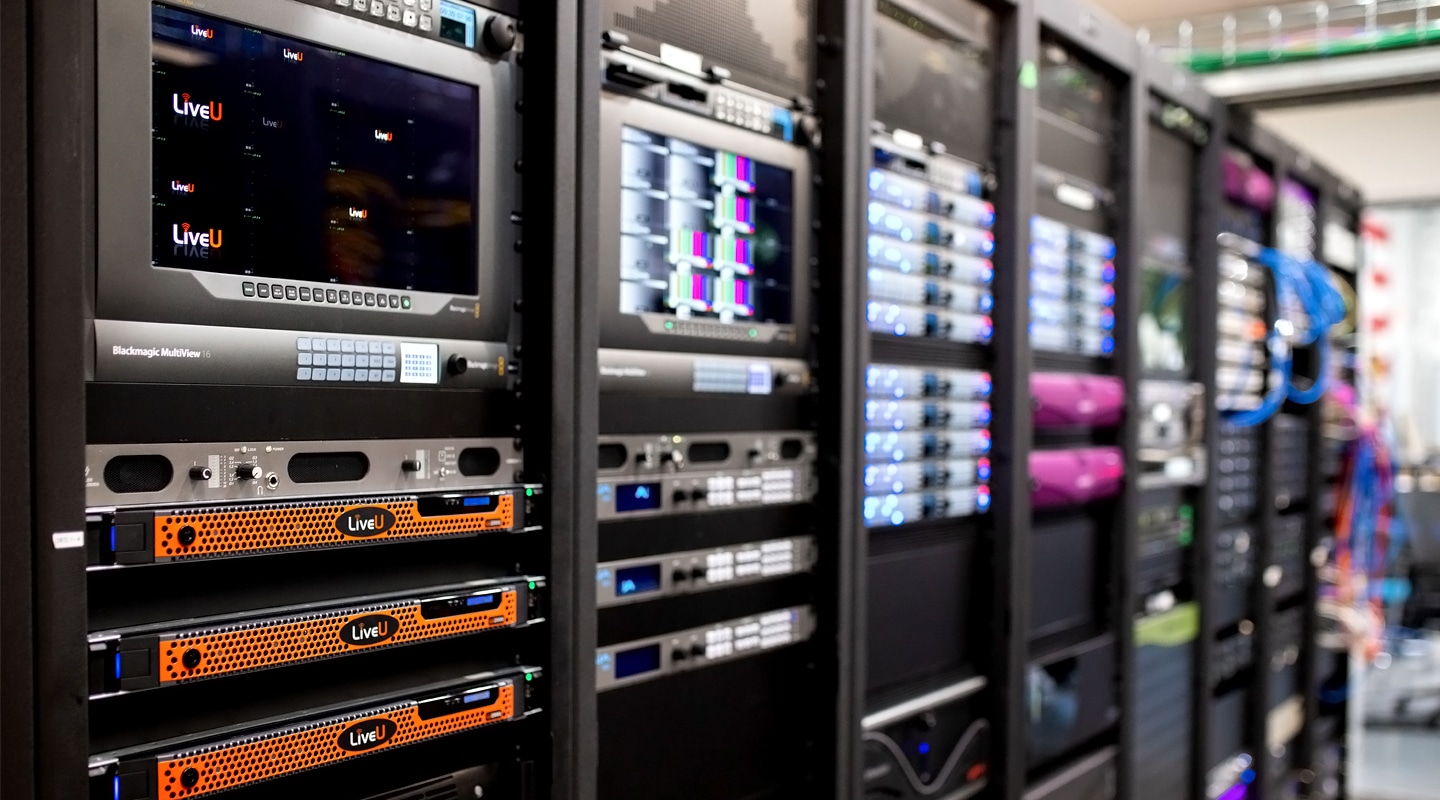
The best production infrastructure isn’t defined only by how powerful the individual equipment is, but by how well the entire system works together.
That includes:
- How signals move through the environment
- How operators control the system
- How failures are detected and resolved
- How redundancy is designed
- How workflows scale for larger productions
- How easily the system can adapt to new formats, platforms, and distribution needs
- How the engineering team supports the environment during live operation
This is where the industry is becoming more complex.
The tools are smaller. The workflows are more flexible. The options are broader. But the cost of making the wrong architectural decision is also higher.
A system that looks efficient on paper may become difficult to operate if the control layer is weak. A cloud workflow may create new issues if latency, security, or monitoring are not designed correctly. A software-based platform may offer flexibility, but only if the underlying hardware, network, and support model are built to match.
What This Means for Broadcasters and Content Organizations
For broadcasters, sports organizations, enterprises, and media companies, hardware miniaturization creates real opportunity.
It allows teams to build more capable facilities in smaller spaces. It supports lighter on-site footprints. It makes portable production systems more powerful. It enables centralized production models that were harder to execute at scale in the past.
But those benefits only appear when the full system is designed correctly.
As the industry moves toward more compact hardware, more software-defined workflows, and more cloud-connected infrastructure, organizations need to think beyond the equipment list.
The key questions are no longer just:
“What gear do we need?”
They are:
- “How does the full system operate?”
- “How does it scale?”
- “How is it supported?”
- “What happens when something fails?”
- “Who owns the workflow from end to end?”
Those questions matter because live production infrastructure is now about designing a system that can operate reliably, adapt quickly, and support the business long term.
The Bigger Takeaway
Hardware miniaturization has changed what is possible in live production.
Smaller, denser, more integrated systems allow more production capability to fit into less space. They support REMI workflows, centralized production, portable flypacks, smaller vehicles, and more efficient production facilities.
But the shrinking physical footprint hasn’t made live production simpler. It’s made system design more important.
The organizations that benefit most from this shift will be the ones that understand both sides of the equation: the compact power of modern production hardware and the operational complexity of making it all work together.
That is where the future of live production is heading.

Todd Mason is the Chief Executive Officer of Broadcast Management Group (BMG), a broadcast infrastructure and media operations company helping define the next generation of television production, live media operations, and broadcast network infrastructure in North America.
About Todd Mason