For decades, building a broadcast operation usually meant making a major upfront capital investment.
Organizations purchased cameras, switchers, routers, audio systems, replay servers, encoders, storage, control room equipment, and transmission infrastructure. They hired engineering teams to design, operate, maintain, and refresh those systems. They built facilities around peak production needs, even though those needs occurred only a few times a year.
That model still works for some organizations. But for many enterprises, sports, media, and corporate production teams, it has become harder to justify.
Broadcast technology changes quickly. Hardware depreciates. Workflows evolve. Cloud, REMI, IP, media asset management, and remote production models have changed what is possible. At the same time, organizations are under pressure to control costs, reduce operational risk, and scale production without adding unnecessary headcount or stranded infrastructure.
That is why more teams are rethinking the balance between capital expenditure and operational expense.
The Problem With a CapEx-Heavy Broadcast Model
A traditional CapEx model gives an organization ownership of its infrastructure, but ownership also creates long-term responsibility.
The upfront purchase is only the beginning.
Once the equipment is installed, the organization is responsible for maintenance, support, upgrades, staffing, training, monitoring, troubleshooting, and eventual replacement. As production needs change, the original system may become too limited, too complex, or too expensive to adapt.
The challenge is even greater when infrastructure is built for peak demand.
A company may need a large broadcast setup for major executive events, investor days, product launches, sports coverage, or special programming, but does not need that same level of capacity every day. In that case, the organization may end up carrying expensive systems and specialized staff that are only fully utilized during certain periods.
That creates a difficult financial problem: large upfront investment, ongoing operating burden, and limited flexibility when production needs shift.
Hardware Depreciation Is Only Part of the Cost
Broadcast infrastructure doesn’t stand still.
Production teams are constantly adapting to new formats, distribution platforms, remote workflows, security requirements, and content demands. Equipment that made sense five years ago may no longer support the way an organization needs to produce, manage, and deliver content today.
But the cost isn’t only the hardware.
Internal teams also have to manage systems integration, engineering support, documentation, troubleshooting, software updates, vendor relationships, redundancy planning, transmission paths, and operational continuity.
That means the true cost of a CapEx-heavy model includes both the technology and the people required to keep that technology working.
For many organizations, you should no longer be asking, “Can we afford to buy the equipment?”
The better question is, “Can we afford to own, staff, maintain, refresh, and operate this environment long-term?”
The chart below shows the typical lifecycle for broadcast technology in television stations and managed services is 5–10 years, depending on the equipment category.
Broadcast Equipment Lifecycle: Category Breakdown
| Equipment Category | Typical Lifespan (Years) | Depreciation (Years) | % Replaced in 5 Years | % Replaced in 7 Years | % Replaced in 10 Years | Main Replacement Triggers |
|---|---|---|---|---|---|---|
| Cameras | 5–10 | 5–7 | 40% | 70% | 95% | Tech advances (4K, HDR), wear, format changes |
| Production Switchers | 7–10 | 5–7 | 30% | 60% | 90% | Format transitions (SD to HD, HD to 4K) |
| Encoders/Decoders | 5–7 | 5 | 50% | 80% | 98% | Codec evolution, IT hardware cycles |
| Transmitters (RF) | 10–20 | 10 | 10% | 30% | 80% | Regulatory changes, tech obsolescence, and efficiency decline |
| Playout Systems | 5–7 | 5–7 | 50% | 80% | 98% | IP/cloud migration, vendor support |
| Routing Infrastructure | 7–12 | 7–10 | 20% | 60% | 90% | SDI-to-IP migration, bandwidth/format upgrades |
| Video Servers/Storage | 5–7 | 5–7 | 50% | 80% | 98% | Capacity, performance, tech advances |
| Satellite Uplink/Downlink | 10–15 | 10 | 10% | 30% | 80% | Standard/frequency changes, tech advances |
Why an Operational Expense (OpEx) Model Is Gaining Ground
An operational expense model gives organizations a different path.
Instead of making a large upfront investment in infrastructure that must be owned and maintained internally, organizations can use a broadcast managed services model that bundles broadcast technology, systems integration, engineering support, production staffing, monitoring, and operations into a more predictable operating budget.
This shifts the strategy from ownership to access.
Clients gain access to the infrastructure, workflows, and specialized talent they need without having to build every piece of the operation themselves. They can scale resources up or down based on production volume, event schedules, programming needs, or business priorities.
That flexibility is especially valuable for organizations that need broadcast-grade production capabilities but do not want to carry the full cost and complexity of a permanent broadcast operation.
What a Managed Services Model Provides
A managed services model is not simply renting equipment or hiring freelancers.
At BMG, managed services combine people, systems, workflows, infrastructure, and operational oversight into one connected model.
That can include facility design, systems integration, production staffing, engineering support, REMI workflows, transmission, master control, media asset management, monitoring, and distribution.
It can also include embedded teams that operate within a client’s existing operations while supported by BMG’s Network Operations Center and Cloud Control Center™. This gives organizations the benefit of dedicated production and engineering support, backed by a larger operational infrastructure that can scale as needed.
Instead of managing separate vendors for equipment, integration, staffing, transmission, and support, clients work with one accountable partner responsible for the entire production environment.
Scaling Without Overbuilding
One of the biggest advantages of an OpEx-based managed services model is the ability to scale without overbuilding.
A client may need a small operational team for daily communications, but a much larger production model for quarterly town halls, annual meetings, major events, or live programming. A sports property may need expanded crew and technical support during the season, but not year-round. A network may need daily operational support with the ability to add resources for specials, remote productions, or new channels.
In a traditional model, scaling often means buying more equipment, hiring more staff, or building additional infrastructure.
In a managed services model, scaling can happen by show, season, event, or workflow.
That helps reduce idle capacity, limit staffing volatility, and keep production resources aligned with actual demand.
Predictable Budgets and Reduced Operational Risk
The financial benefit of an OpEx model is not just lower upfront cost.
It also creates more predictable planning.
When infrastructure, staffing, support, monitoring, and engineering are bundled into a managed service, organizations can better understand what they are paying for and how those resources support their production needs.
It also reduces operational risk.
There are fewer gaps between the people designing the workflow, the teams operating the production, and the engineers supporting the infrastructure. There is clearer accountability when issues arise. There is a defined support structure for escalation, monitoring, and continuity.
That matters because broadcast operations are not judged only by whether the system works on a normal day. They are judged by whether the system works when the event is live, the audience is watching, and there is no opportunity to try again.
When CapEx Still Makes Sense
Some broadcast infrastructure should still be owned. Dedicated facilities, core systems, security-sensitive environments, and heavily used production spaces may justify direct investment.
For many organizations, a blended strategy is stronger. Own the infrastructure that is central to daily operations, and use managed services for specialized workflows, production staffing, remote operations, media management, transmission, and peak-demand capacity.
This gives teams more control where ownership matters, while adding flexibility where demand changes from project to project.
Rethinking Broadcast Infrastructure for the Future
Broadcast infrastructure isn’t just a technical decision. It’s a financial and operational strategy.
Organizations need the ability to produce more content, support more live events, reach more platforms, and maintain higher reliability without constantly expanding internal teams or making large capital investments that may become outdated.
An OpEx-based managed services model provides organizations with access to broadcast-grade infrastructure, engineering expertise, production staffing, and operational support through a predictable, scalable framework.
For many teams, the new goal is to build a smarter production operation: one that can scale when demand increases, stay efficient when demand slows, and remain supported by experienced teams and reliable infrastructure at every step, not just its own equipment.
That’s the value of rethinking broadcast infrastructure from a managed services perspective.
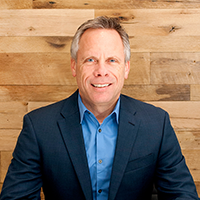
Todd Mason is the Chief Executive Officer of Broadcast Management Group (BMG), a broadcast infrastructure and media operations company helping define the next generation of television production, live media operations, and broadcast network infrastructure in North America.
About Todd Mason