The quality of a live production is determined long before air time by the production staffing decisions made, the people selected, the workflows established, and the preparation completed.
A technical director working with an unfamiliar camera operator, an audio engineer troubleshooting untested IFB workflows, or a graphics operator finalizing show files moments before rehearsal are not equipment failures.
They are production staffing challenges.
The cameras may be ready. The switcher may be online. The graphics system may be configured correctly.
But without the right crew, even the best technology cannot deliver a seamless broadcast.
Experienced crew members understand the format, anticipate challenges, communicate effectively, and know how to perform under pressure.
Production staffing is a strategic decision that impacts efficiency, reliability, and the overall viewer experience.
Building the Right Production Team
Every live production requires a unique combination of creative, technical, and operational expertise.
The crew needed for a live sports broadcast differs significantly from that for a corporate executive town hall, an entertainment event, or a cloud-based REMI production.
For example, BMG faced the challenge of crewing a fast-paced esports event in Miami without the budget to travel staff from outside markets. Crewing for esports is difficult because it requires a fast-paced blend of live sports and live entertainment experience.
BMG solved this by searching their database for local freelancers with combined experience in live sports, live entertainment, and esports. After conducting phone interviews to vet qualified candidates and clarify their roles, they successfully filled the production team using entirely local talent.
Before a single name appears on a call sheet, producers must understand the production requirements, technical workflow, audience expectations, and level of expertise needed for execution.
Who Does What: The Production Crew
Director
The director is the creative and technical leader of the production. Working from the control room, the director makes real-time decisions about camera shots, pacing, storytelling, and the overall viewer experience.
Technical Director (TD)
The technical director brings the director’s decisions to life by operating the production switcher. The TD manages transitions, effects, and live execution while maintaining speed and accuracy under pressure.
Camera Operators
Camera operators are responsible for capturing the story. Their role must understand timing, composition, coverage expectations, and how their images contribute to the overall production.
The number of camera operators and specialized positions, including handheld, PTZ, jib, or Steadicam operators, depends on the production format and creative requirements.
Audio Engineer
Audio is one of the most important elements of any broadcast and one of the easiest to underestimate during planning.
The audio engineer manages the complete sound environment, including talent microphones, commentary, program audio, crowd reactions, music, and IFB communication between talent and crew.
Graphics Operator
Graphics operators manage the visual information presented to viewers, including lower thirds, titles, scoreboards, sponsor integrations, and other on-air elements.
Successful graphics execution starts well before production day. Show files, templates, assets, and workflows must be prepared, tested, and approved before the broadcast begins.
Replay Operator
For sports and entertainment productions, replay operators provide real-time storytelling support through instant replay, highlights, slow-motion playback, and critical moment review.
Their ability to quickly identify and deliver content can change the pace and impact of a broadcast.
Shader / Shader Operator
On multi-camera productions, consistency is essential. Shader operators manage camera matching, exposure, color balance, and image quality to ensure multiple cameras appear as one unified broadcast.
The shader is often the difference between a collection of cameras and a cohesive visual experience.
Engineer in Charge (EIC)
The Engineer in Charge oversees the technical infrastructure supporting the production.
Signal flow, routing, patching, troubleshooting, and technical coordination all fall under the EIC’s responsibilities. During onsite productions, the EIC is often the person solving unexpected challenges that no one planned for.
Transmission / Encoder Operator
The transmission and encoder operator manages the final connection between the production environment and the viewer.
Whether delivering to broadcast networks, streaming platforms, OTT services, or digital destinations, this role ensures the program reaches its intended audience reliably.
A2
The A2 works under the guidance of the A1 to help setup, configure, and troubleshoot all field audio equipment.
This may include announce kits, interview mics, and EFX mics. For REMI workflows, the A2 serves as the eyes and ears (terrible pun intended) for the A1 as it relates to audio.
Utility
Utilities are responsible for all on-site technical setup, outside the truck or control room.
Often working under the guidance of the Tech Manager, utilities are responsible for helping to load in equipment, run cabling, set up monitors, and assist with camera builds. A strong utility team can have a huge impact on both the technical setup and strike.
Production Assistant
Production Assistants can play many different roles. From helping with pre-show preparation and planning to helping on-the-ground with catering, craft services, and talent management. The scope of a PA varies greatly, but no matter the ask, they are an important part of any successful broadcast.
A sharp PA can identify issues before they become problems, knows when to jump in to provide support, and is reliable, consistent, and trustworthy.
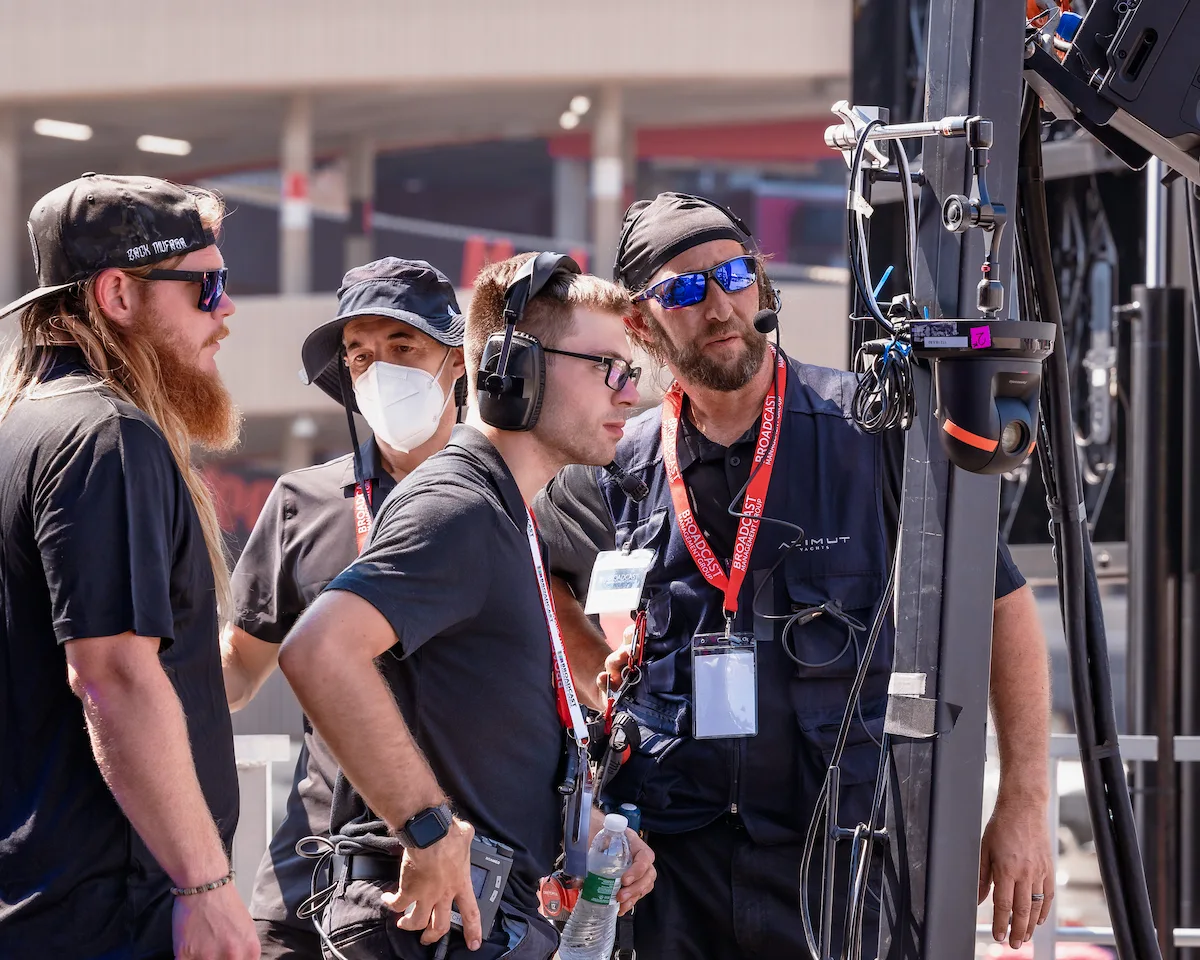
The Crew Looks Different Depending on What You’re Producing
A production title only tells part of the story.
Two professionals can share the same role but bring very different skill sets based on their experience, platform knowledge, and production background.
The right crew is defined by having the right experience for the specific production.
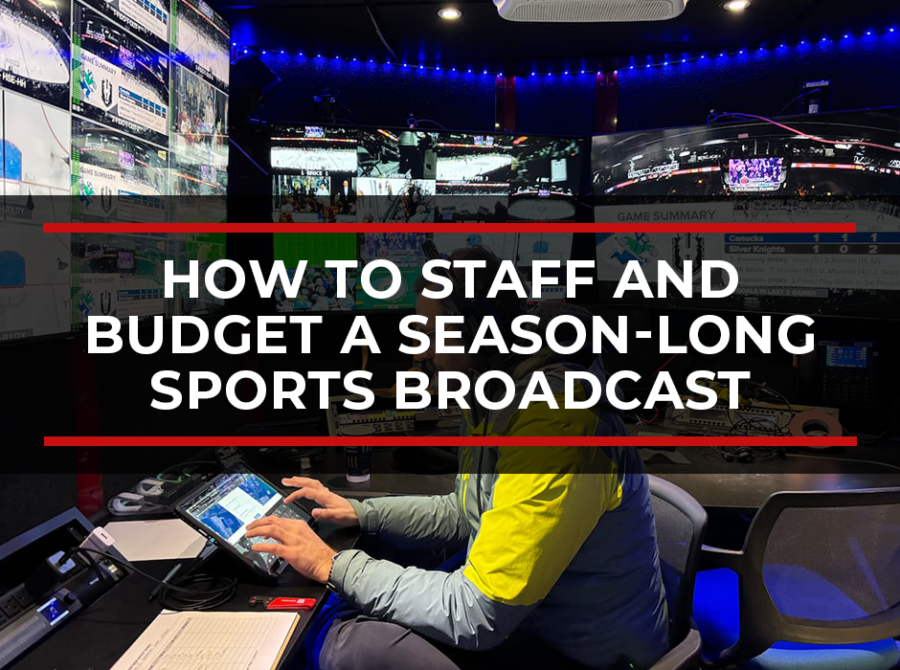
Live Sports
Live sports production requires specialized experience, precise timing, and a deep understanding of live storytelling.
Multiple camera positions, replay operations, live graphics, real-time statistics, and fast-paced action require a crew that can anticipate what will happen next.
Sports crews must operate with speed, communication, and instinct because there is no opportunity to recreate a missed moment.
Crewing for a sporting event can vary widely depending on the production’s size and scale.
A typical sporting event would include
- Director
- Technical Director
- Graphics Operator
- Scorebug Operator
- Replay Operator
- Audio Engineers
- Video Engineers
- Camera Operators
- Spotters or Statisticians
Larger or more complex shows would include an Audio Director, Graphics Producer, additional technical crew, and additional support roles.
The production environment also plays a major role in planning and execution.
Indoor sporting events, such as basketball and hockey, often provide a more controlled environment with consistent lighting, shorter cable runs, and infrastructure already installed in the venue.
Outdoor events, including football, baseball, soccer, and beach volleyball, present additional challenges. Longer cable runs, changing weather conditions, and shifting sunlight require more detailed planning and adaptable crews. Managing shading, maintaining consistent image quality, and protecting equipment from environmental factors are all critical components of a successful outdoor sports production.
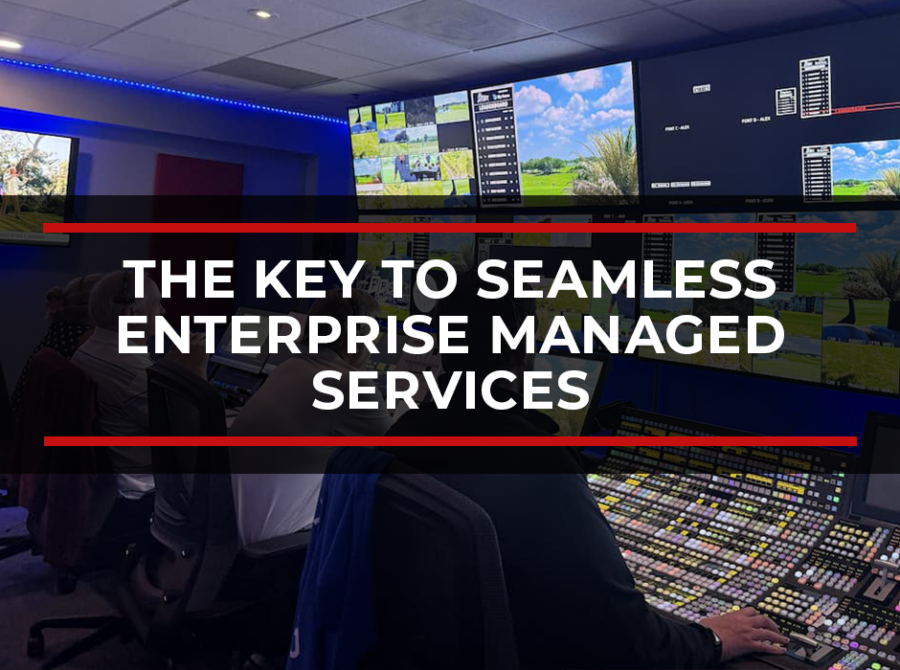
For a live production golf tournament, the crewing model uses a hybrid structure split between two locations. A small field team works on-site to handle camera operation, drones, wireless gear, and course communications.
The main production staff operates remotely from Broadcast Management Group’s Network Operations Center in Washington, DC. Key roles such as directors, graphics operators, and technical engineers connect via low-latency feeds. This allows The Pro Tour to maintain high production quality while keeping on-site staffing lean across every venue.
Whether inside an arena or on a field, every sports production depends on experienced crews who understand the pace of live events and can deliver a seamless viewing experience for audiences.
Corporate & Enterprise Live Events
Corporate and enterprise live events require a different level of precision, professionalism, and attention to detail.
Executive town halls, investor communications, product launches, and internal broadcasts put the production directly in front of key audiences, making every visual and audio element an extension of the organization’s brand.
Every camera shot, graphic, transition, and audio cue contributes to the overall viewer experience.
Clean audio, accurate graphics, reliable playback, and a director who understands the tone and objectives of executive communication are essential to a successful production.
Crew members with experience in corporate environments understand the importance of preparation, discretion, and maintaining a polished on-site presence.
These productions often involve extensive rehearsal schedules, frequent last-minute changes to graphics, playback elements, and prompter content, as well as the familiar “hurry up and wait” pace that comes with executive events.
Because corporate broadcasts frequently involve direct interaction with C-suite leaders, executives, and high-profile stakeholders, client-facing crew members must bring both technical expertise and professionalism to every interaction.
Understanding the expectations, communication style, and nuances of executive environments is just as important as operating the equipment.
A successful corporate production depends on a team that can adapt quickly, remain composed under pressure, and deliver a seamless experience that reflects the organization’s message and brand.
Live Entertainment
Concerts, fashion shows, awards programs, and pageants require crews that understand the unique demands of performance-driven storytelling.
Unlike traditional productions, live entertainment events often unfold without predictable timing, requiring operators and production teams to react instantly to performers, lighting changes, audience energy, and creative direction.
The strongest entertainment crews know how to anticipate moments before they happen. Camera operators must capture the emotion and excitement of a performance while keeping the talent and production design in focus.
Entertainment programming spans a wide range of formats, from award shows and live musical performances to fashion events, red-carpet coverage, and cast interviews.
Each format brings its own creative vision, technical requirements, and labor needs. Successful crewing begins with understanding the event’s style, pacing, and production goals to build a team that meets the show’s demands.
Experience matters when assembling entertainment crews.
Operators who understand performance environments, work well under pressure, and can adapt in real time bring significant value to a production.
Familiarity with each other’s communication styles and workflows reduces uncertainty and allows the team to focus on delivering a seamless production. Crews with a history of working together often create a more efficient and collaborative environment.
At BMG, we understand that the right crew helps bring an entertainment production’s creative vision to life.
Outside Broadcast & Field Production
Outside broadcast environments require crews that are adaptable, self-sufficient, and prepared to deliver high-quality productions in constantly changing conditions.
Unlike fixed facilities, field productions often take place in venues with limited infrastructure, unique technical challenges, and tight schedules that require teams to work efficiently from the moment they arrive on site.
Experienced OB crew members must be able to build, troubleshoot, and operate systems in a variety of locations while maintaining the same level of production quality expected from a traditional facility.
The scale of an outside broadcast can significantly impact crewing requirements. A fully staffed on-site production may involve a large team of operators, engineers, production staff, and support personnel, creating additional layers of logistics, travel coordination, and scheduling.
As crew size increases, the responsibility placed on Production Managers and Crewing Coordinators also grows, requiring careful planning to ensure the right personnel are in the right roles.
Flight-pack productions offer additional flexibility in crew size and deployment, but they also require a highly experienced engineering team.
Engineers who are familiar with the system design, workflow, and capabilities of the flight pack are essential to ensuring efficient setup, troubleshooting, and operation in the field.
Whether operating from a mobile unit, flight pack, or temporary production environment, successful outside broadcast crews combine technical expertise, adaptability, and teamwork to deliver reliable live productions anywhere.
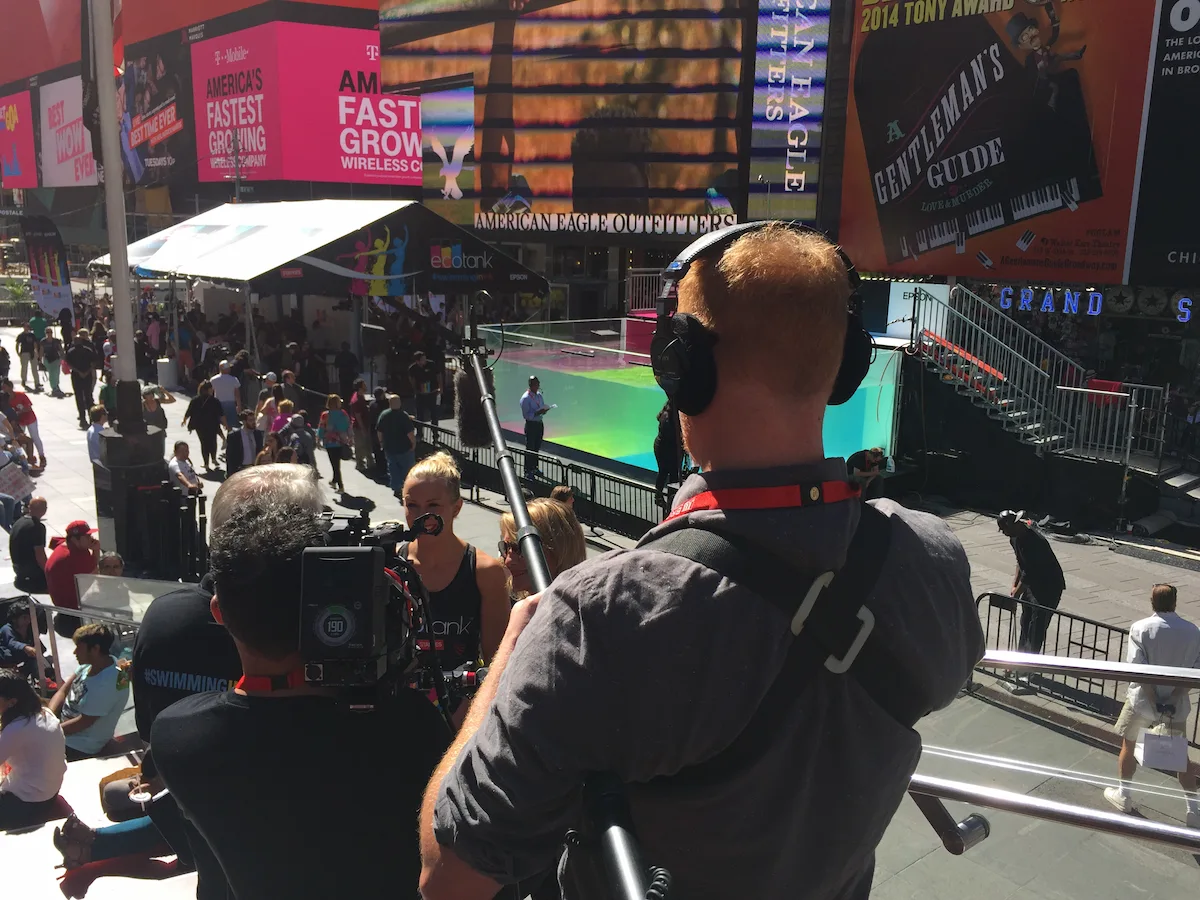
The Difference Between a Good Crew and the Right Crew
The strongest production teams are built by matching the right experience, technical knowledge, and communication style to the demands of the event.
Platform Experience Matters
A crew member’s experience is most valuable when it aligns with the technology and workflow of the production.
Technical expertise requires familiarity with the specific systems, platforms, and operational processes needed to perform effectively in a live environment.
The right crew brings both role experience and the technical knowledge required for the production’s unique demands.
Format Experience Matters
Live news, live sports, entertainment, and corporate productions require different instincts.
A crew member who excels in one environment may not naturally fit another. Understanding the format is just as important as understanding the equipment.
Remote Production Experience Matters
As REMI workflows, cloud production, and hybrid workflows become more common, crews must be comfortable operating across distributed environments.
Working remotely requires different communication habits, workflow discipline, and technical awareness than traditional onsite production.
How BMG Approaches Crewing
At BMG, every production begins with a clear understanding of the project’s unique requirements.
Before selecting a crew, we evaluate the production format, technology, workflow, audience, and operational expectations to ensure each team member is aligned with the needs of the event.
Crew selection is based on experience, technical expertise, and familiarity with the production environment.
Whether it’s a live sports broadcast, corporate event, entertainment production, or outside broadcast, the right crew is essential to delivering a seamless production.
BMG’s crewing process starts with a nationwide network of more than 7,000 industry freelancers, organized by role, location, and skill set. This extensive database allows our team to identify the right candidates for each position based on their experience, past performance, and alignment with the production’s requirements.
After crew members are confirmed, BMG manages booking confirmations, onboarding documentation, travel coordination, and final scheduling adjustments to ensure every detail is addressed before production begins.
From initial planning to final execution, BMG’s approach to crewing focuses on building the right team for each production, combining experience, reliability, and collaboration to support successful live events.

Andrew Ryback is the Executive Vice President of Production. He brings over 17 years of experience in production management across live events, entertainment, and on-location shoots. He has managed production logistics for high-profile events, including The Emmys, The Oscars, TIFF, SXSW, Comic-Con, New York Fashion Week, Sundance, and both national political conventions. At BMG, he oversees complex productions from crew and equipment coordination to budgeting, permitting, and on-site execution.
About Andrew Ryback