Most infrastructure decisions are a bet on today’s requirements. Facilities choosing to architect utilizing an IP Network infrastructure to transport video through the plant are making a smart bet that can pay off for years to come.
The shift from traditional SDI to IP is the current operations reality for broadcasters, enterprise video teams, and rights holders who want to stay competitive.
A future-ready IP Network video transport solution moves live feeds with the scalability, reliability, and flexibility modern media demands.
As the industry shifts toward OTT and FAST channels, away from traditional linear channels, IP‑based architectures are the only ones built to support the distribution of streaming services.
What “Future-Ready” Actually Means in a Distribution Context
It means standards-based, not vendor-locked.
SMPTE ST 2110, NMOS, and IMPX insurance policies provide a layer of protection to your IP infrastructure, ensuring it’s scalable and future-ready. A future-ready environment is one where you can swap components, add vendors, or integrate new platforms without rebuilding the signal path.
It means cloud-ready by design, not by retrofit.
Future-ready IP architecture accounts for hybrid and cloud workflows at the design stage, not as an afterthought bolted on later. Routing, monitoring, and distribution functions that live at the software layer can be extended to cloud venues, remote production sites, and streaming endpoints without new hardware.
It means operational visibility at scale.
SDI gives you a physical signal you can trace with a cable. IP gives you a logical signal you need to monitor intelligently. Future-ready IP environments include orchestration and monitoring layers that give operators real-time visibility across the full distribution chain. The vast majority of broadcast equipment being manufactured today is IP Network ready, so you can be confident in building your own environment or partnering with an experienced organization.
It means bandwidth and capacity that scales without a forklift upgrade.
In a traditional SDI plant, adding capacity usually means new routers, cabling, and infrastructure refresh cycles. In an IP-based environment, capacity scales through software configuration, network upgrades, and virtual routing, not a capital equipment crisis.
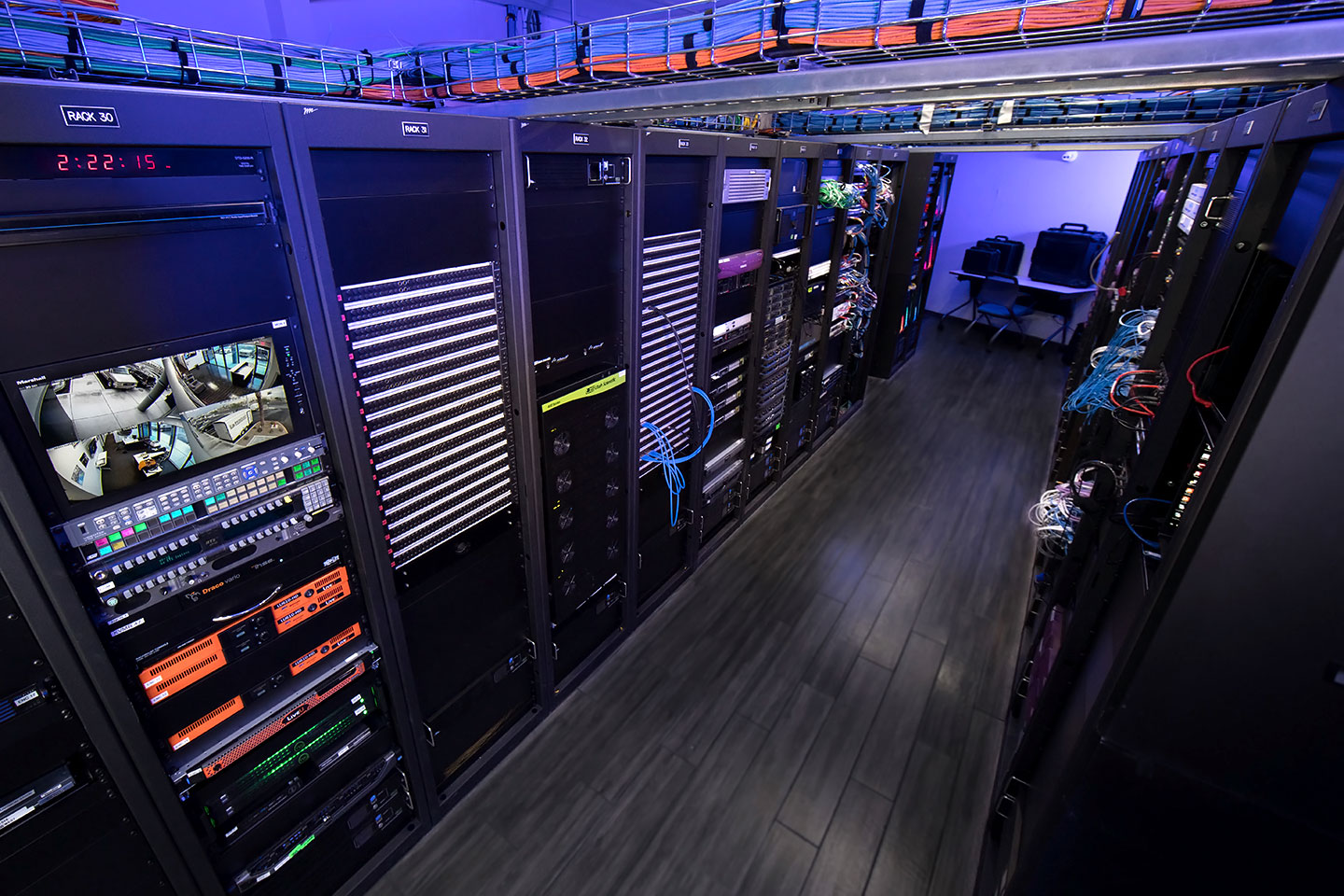
The Business Case Beyond the Signal Path
The migration from SDI to IP isn’t just a facilities engineering conversation. It’s a business strategy conversation.
- Reduced operational cost: Fewer proprietary hardware dependencies, lower maintenance overhead, and simplified remote operations translate directly to OpEx savings
- Faster time-to-distribution: IP infrastructure enables direct feeds to CDNs, OTT platforms, and partner networks without format conversion delays
- Workplace flexibility: IP workflows are software-defined, meaning your team can manage and operate them remotely with the same visibility they would have on the floor
Where Organizations Get This Wrong
The most common mistake is treating IP migration as a one-time hardware swap rather than an ongoing architecture discipline.
Organizations that struggle with IP transitions typically have three things in common:
- Relaxed standards governance
- Limited monitoring strategy
- Minimal training investment for operations staff
Choosing IP infrastructure that is cheap today but proprietary by design creates a different kind of lock-in, one that becomes visible at the worst possible moment: a live event, a rights window, a distribution deadline.
How to Evaluate Whether Your Current Path Is Future-Ready
A future-ready IP distribution environment should answer “yes” to four questions:
- Can I add a new distribution endpoint without a hardware purchase?
- Can I monitor every signal in the chain from a single pane of glass?
- Can I extend distribution to a cloud or remote venue without a forklift?
- Can I swap a component vendor without rebuilding the architecture?
If the answer to any of these is “not easily”, the infrastructure has a future-readiness gap.
BMG provides Cloud-Based TV Playout and Distribution Consultation services to assess where your current system is and create a strategic operational plan for the future.
The Right Time to Make This Move
The right time to evaluate IP Network infrastructure is before your next major production cycle, rights renewal, or facility renovation, not during.
Organizations that plan IP migrations strategically, with a phased approach, proper standards selection, and training infrastructure in place, consistently outperform those that react to a crisis.
BMG works with clients at every stage of this transition: Checking your affiliate and uplink contracts, compiling a list of your current affiliates and contact information, finding a trusted partner to distribute your SRT feeds, and notifying your affiliates about your transition.
Read more about how BMG can assist with your satellite-to-IP migration.

Karen Landry is Director of Master Control, Playout & Transmission at BMG. She brings over 20 years of experience across post-production, broadcast engineering, and client services, having supported major entertainment productions, live sports, and premier events, including the Super Bowl, the Olympics, and Amazon’s Thursday Night Football. In her current role, Karen partners with clients to develop and deliver cloud-based channel playout and transmission solutions that drive operational excellence.
About Karen Landry