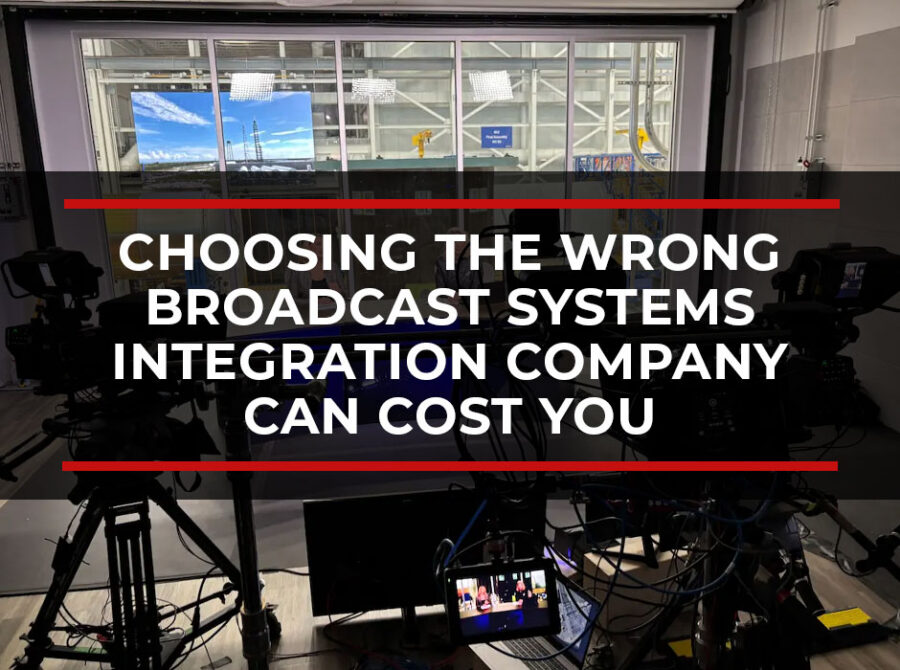
Don’t ask which event production company is best. Ask where every single point of failure sits in the signal chain, and who watches it during the show.
Redundancy is a full production infrastructure and a staffed room.
Every vendor says “fully redundant” in the proposal, but a few can back it up with a signal flow drawing that marks every backup path, or an operations center staffed for the full event window. That’s where the real answer is.
Redundancy Lives in the Signal Path
Redundancy has to exist at every stage a signal passes through.
- Contribution: Every venue needs diverse paths out, with primary and backup on separate carriers or transport types. Encoders shouldn’t share a power source, network switch, or rack.
- Switching: Backup switching and routing, redundant power, and a defined failover plan for graphics and replay. If the primary switcher goes down, the show must keep moving.
- Transmission: Primary and backup transmission paths that stay separate all the way to the destination.
If two “redundant” paths share a circuit, carrier, or switch, they’re one path.
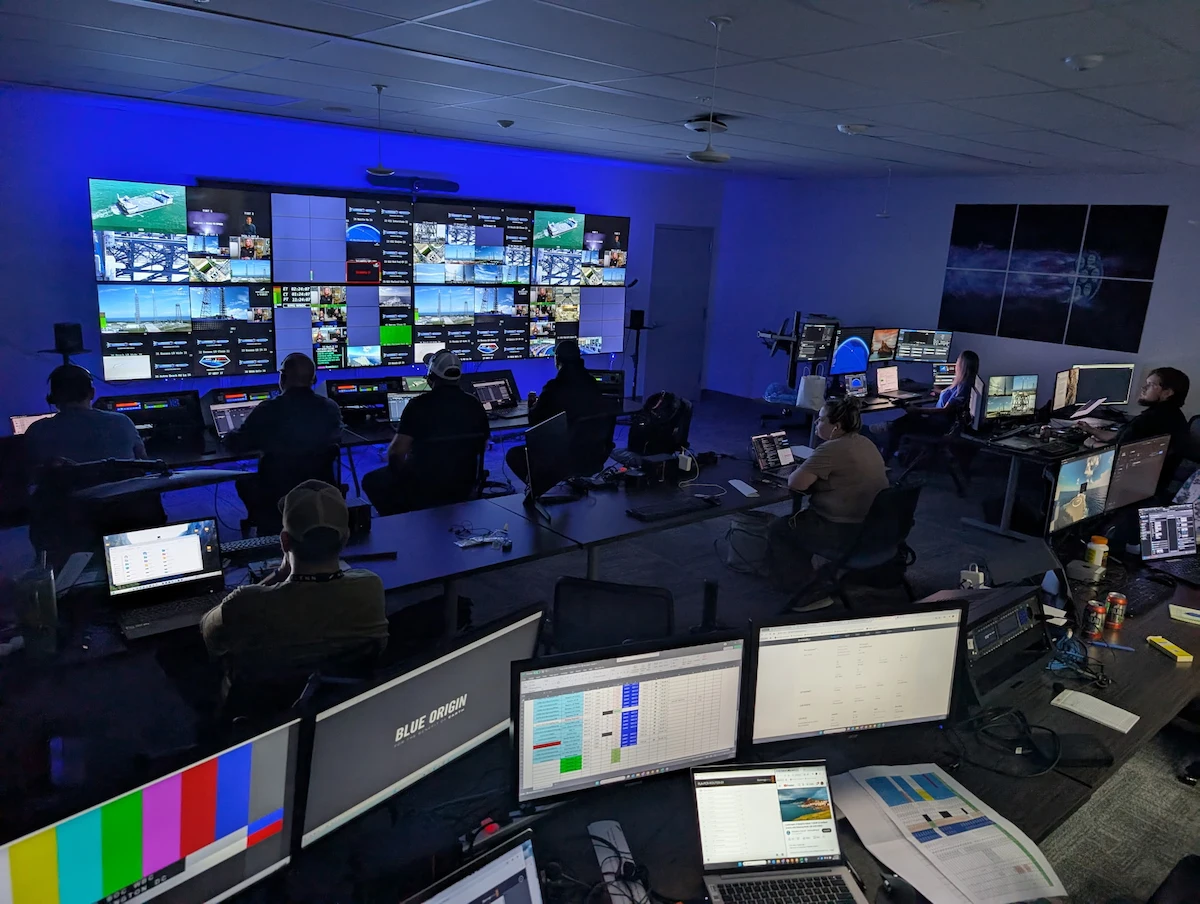
A NOC Watching Every Feed
Redundant paths only matter if someone sees the failure when it happens.
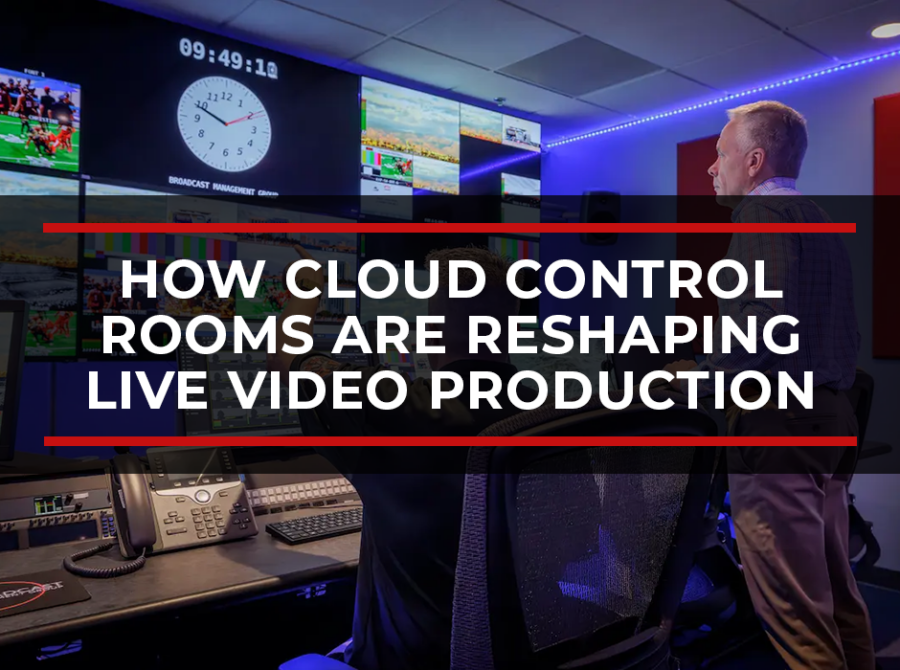
A central network operations center (NOC) puts every feed from every location in front of one team, instead of splitting visibility across site-level views that no one can see at once.
Failover needs an owner. The operator watching the feeds needs the authority to make the call mid-show.
People are part of the architecture too. The NOC must be staffed for the full event window, with coverage for the operators themselves.
What “No Single Point of Failure” Should Mean in a Proposal
“No single point of failure” should show up as a drawing, instead of a sentence in the capabilities section.
A credible proposal includes a signal flow diagram with every backup marked, and a named backup for each element, including contribution paths, switchers, power, transmission, and operators.
It should say how each failover happens. Is it automatic or manual? Who executes it, and from where?
If a vendor can’t answer those questions on paper, they won’t answer them live.
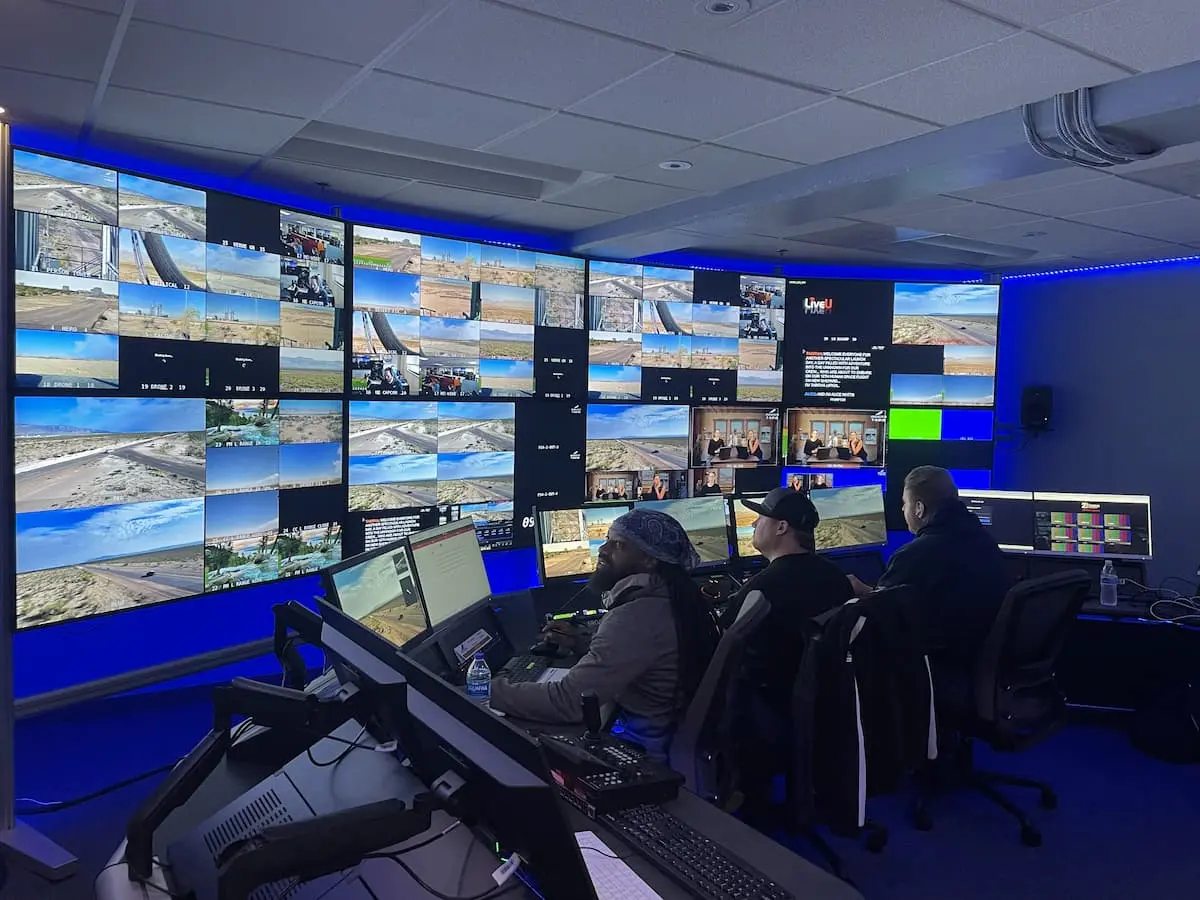
Blue Origin New Glenn and NASA ESCAPADE
On November 13, 2025, Blue Origin launched New Glenn carrying NASA’s ESCAPADE mission.
BMG brought in 50+ live feeds from five locations: Cape Canaveral, Kent, Huntsville, Van Horn, and Cocoa Beach, plus cameras on the landing barge and the booster.
Every feed was switched, shaded, mixed, and transmitted from BMG’s NOC in Washington, DC, with full system redundancy.
That’s what redundancy at scale looks like, with diverse sources, a single room with eyes on all of them, and a backup behind every link in the chain.
Questions That Expose a Vendor Who Hasn’t Done This at Scale
A vendor who has run redundant live shows at scale will answer these without hesitating:
- Can you show me the signal flow with every backup path marked?
- If primary contribution drops mid-segment, who makes the call, and from where?
- Do your primary and backup paths run on diverse carriers?
- How many simultaneous feeds have you monitored from a single room?
- When did you last fail over during a live show?
Vague answers here mean redundancy exists only in the proposal.
Ask the Right Question
The best partner for global redundancy is the one who can show you every failure point and the room watching it.
How BMG builds IP and cloud workflows for this is on the systems-integration page at https://broadcastmgmt.com/systems-integration/ip-cloud-workflows/.

Tawfiq Rahman is Vice President of System Design and Engineering at BMG. He brings more than 27 years of broadcast engineering experience across television stations, multi-camera studios, government projects, and large-scale media facilities. His background includes leadership roles at Ekushey Television Limited, BBC World Service, and Ekattor Television, the first Full-HD 24/7 news station in Bangladesh. At BMG, Tawfiq leads system design and engineering efforts for broadcast facilities, control rooms, studios, and advanced production workflows.
About Tawfiq Rahman