Audiences only ever see the finished set, but that set is the visible layer of a much longer technical infrastructure.
To have a successful studio design and build, the physical environment and technical integration have to work together. Most teams only plan for one.
A studio that isn’t planned this way ends up reworked, delayed, or over budget after construction has already begun.
1. Start With Discovery, Not Equipment Lists
The most common mistake teams make in the beginning phases of a studio build is specifying the cameras and switchers before the space, workflows, and content formats have been assessed. Discovery covers these as inputs to the design, not as an afterthought. Content delivery platforms/methods, contribution and distribution feeds greatly affect the design and integration.
To understand your requirements and build scope, you need to map the technical, creative, and operational requirements to your production goals, so the design has a target before it has a shape.
You can’t design a control room for a show that hasn’t been defined yet.
2. Architectural and Facility Coordination
In this phase, uninterrupted power requirements, HVAC and heat loads, cable pathways, and structural considerations get coordinated with architects, general contractors, and MEP engineers. This is the phase that most AV-only integrators don’t fulfill.
This phase is important because broadcast lighting and equipment loads aren’t the same as standard office HVAC/power loads. Treating them as the same can lead to excess heat, noise, or brownouts after handover.
This is the true test of whether a corporate office, trading floor, or conference room can become a broadcast studio.
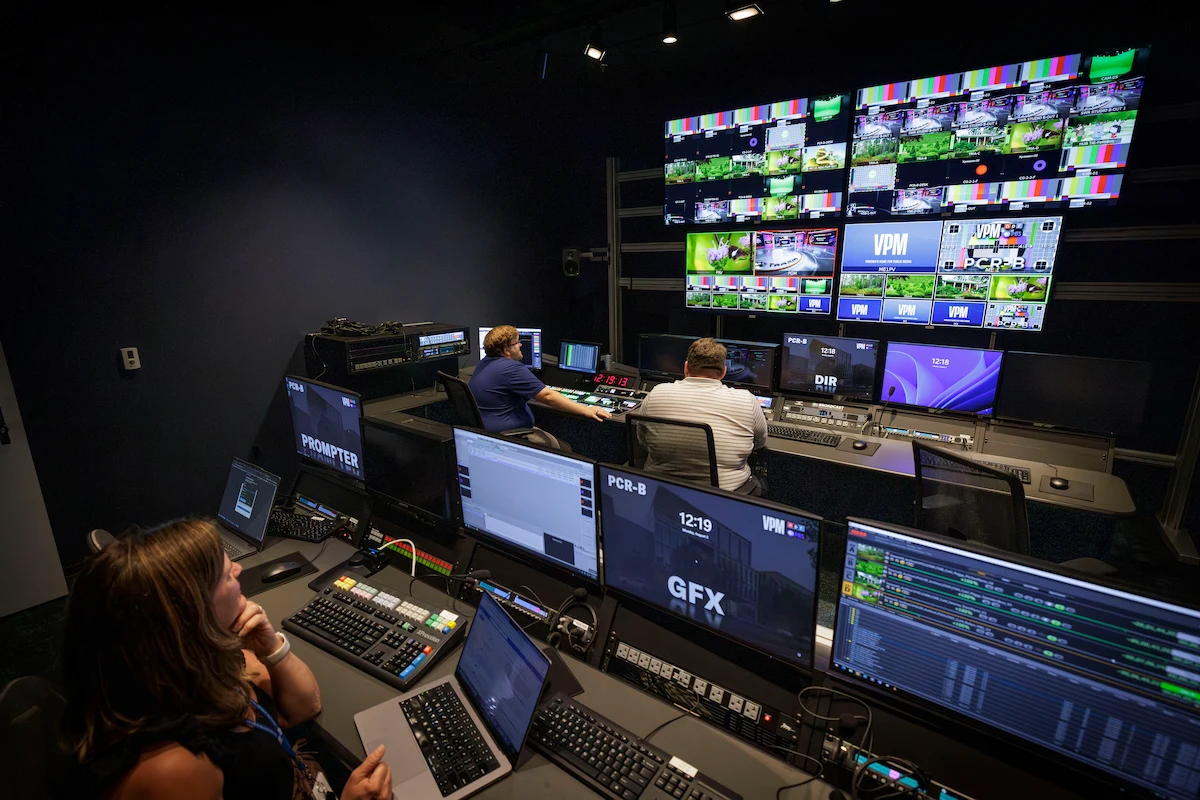
At Virginia Public Media (VPM), this phase happened at full scale: The organization was replacing 66-year-old broadcast infrastructure with a new downtown Richmond headquarters. BMG delivered consulting, system integration, and facility design and build together, coordinating a next-generation broadcast facility to support VPM’s television, radio, and digital operations from the ground up.
3. Signal Flow, Routing, and Infrastructure
In this phase, signal flow diagrams, equipment lists, power/cooling requirements, and phased implementation timelines are built. This is where it’s important to have insight from engineers who are experienced in building and operating these systems.
During this phase, camera positions, lens choices, and blocking plans are factored into the design, and they’re directly tied to control rooms, routing systems, and transmission paths.
Your system should be fully operational from day one, and without this step, it won’t be.
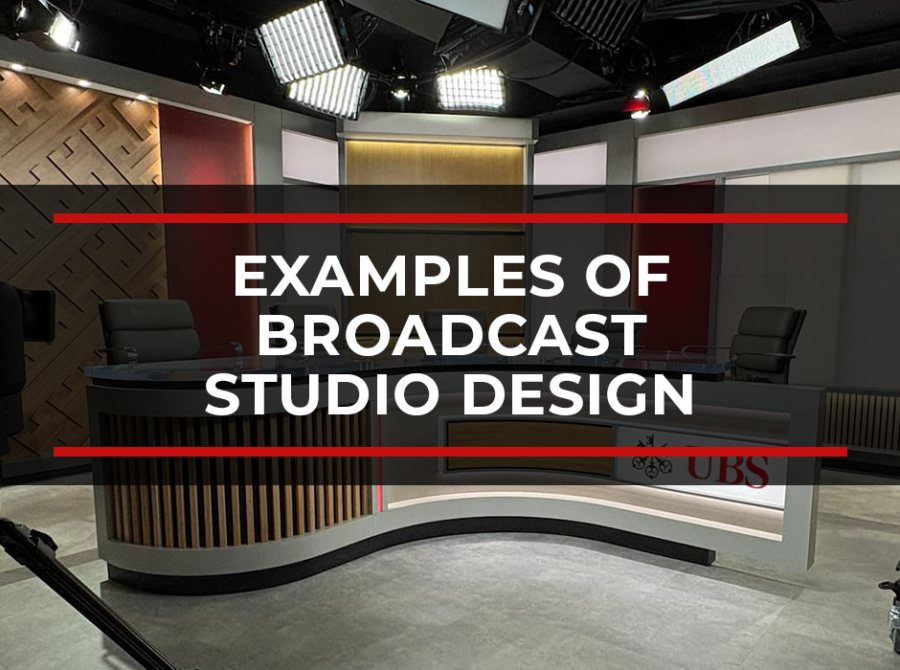
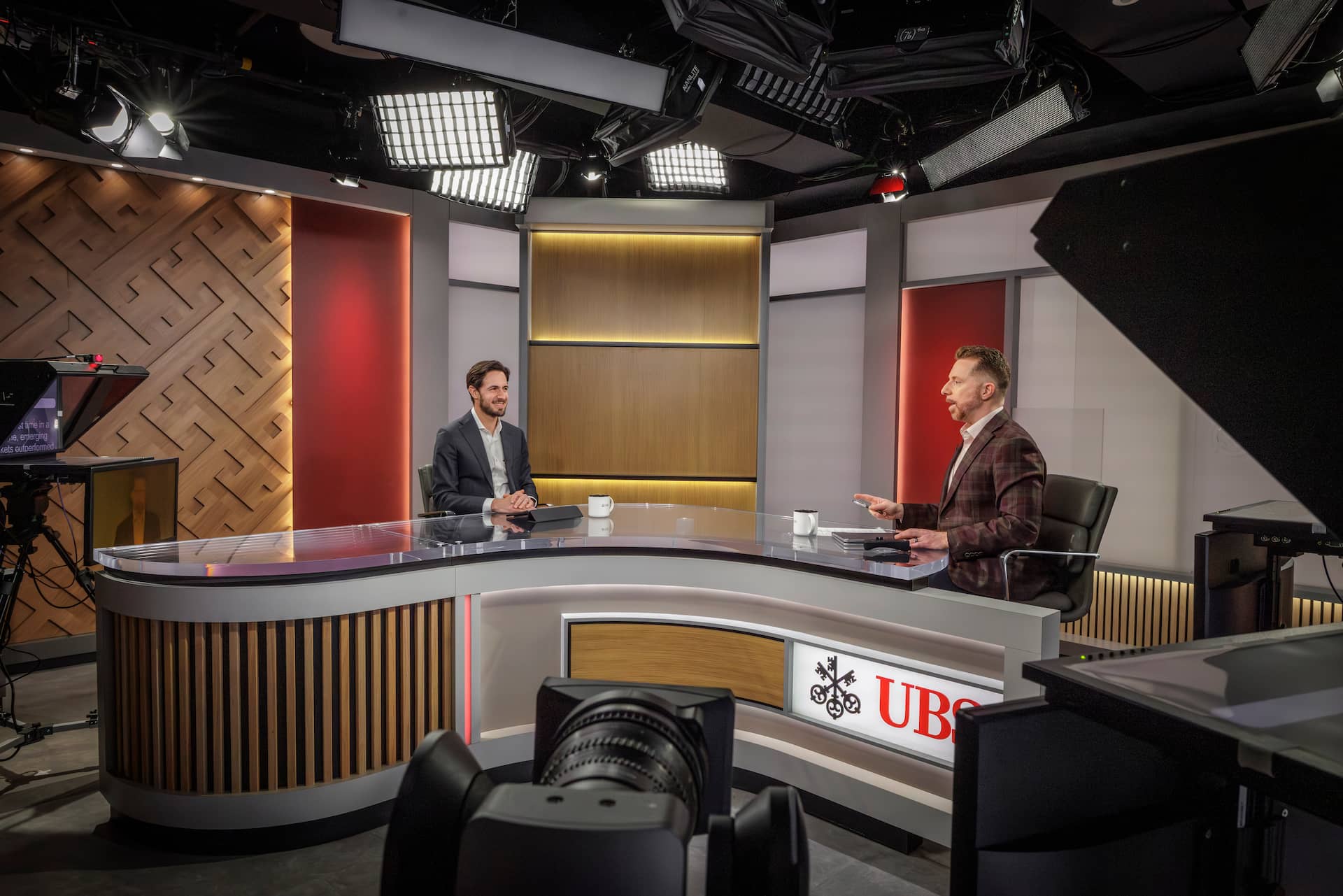
At UBS, this phase looked different across two builds. BMG designed and built a fully on-prem studio and control room in 2019. As UBS’s needs evolved, BMG engineered a hybrid IP workflow with AMPP-powered playout in 2025, routing backend systems into BMG’s Network Operations Center while keeping the New York studio itself looking and operating like a traditional broadcast environment.
4. Lighting, Acoustics, and Scenic
Lighting and acoustics are necessary engineering disciplines, not just decorating choices.
Lighting includes:
- Grid layouts
- Fixture selection
- Key/fill/backlight ratios
- DMX control systems
These are designed to eliminate shadows and hot spots across any format the studio runs.
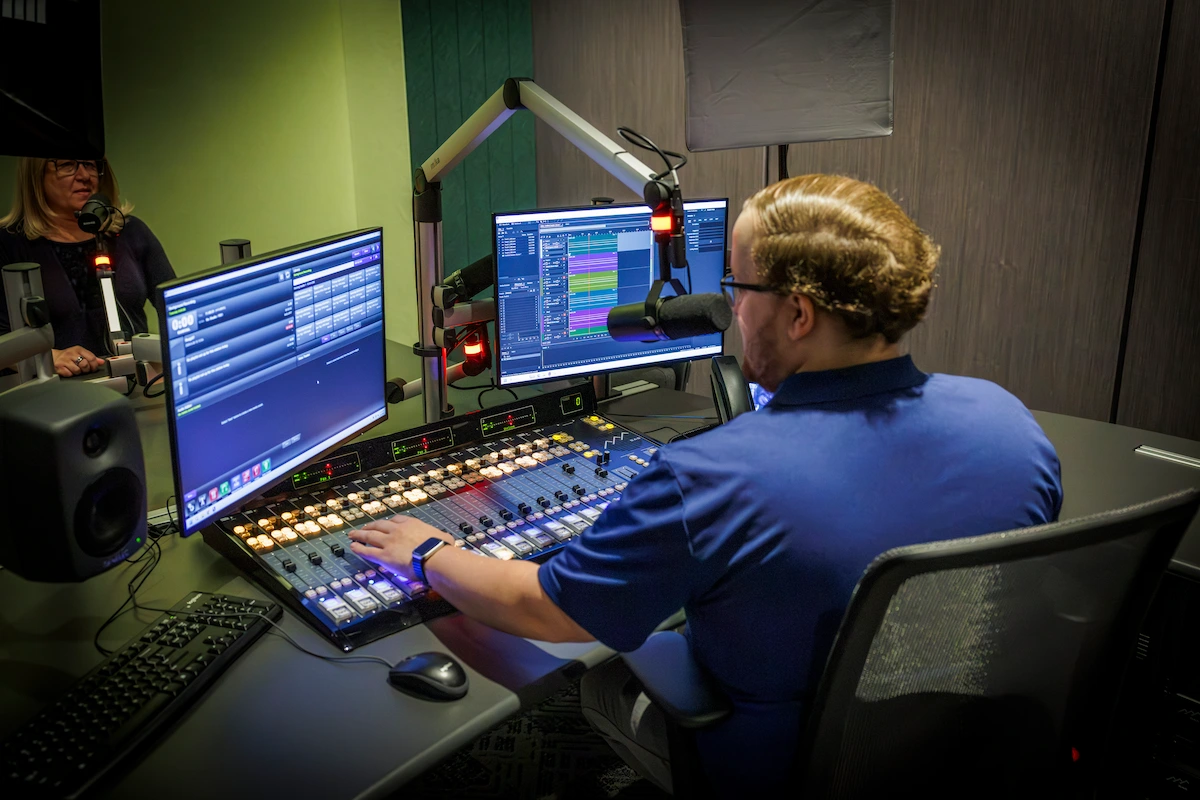
Acoustics is the treatment and isolation strategy for the audio. This strategy should be planned from the start, so it can function right away. Identifying and mitigating airborne and surface/structural-borne acoustic noises during the design phase is vital, as it may be unable to deal with after the fact.
The set design should also be tied specifically to the brand, format, and camera angles, so it can stay visually fresh over time.
5. Graphics and Playout Integration
This is where the studio meets the show. Graphics engines have to be a part of the design conversation, not as a separate project once the build is completed.
Graphics are used for data-driven templates, lower-thirds, tickers, AR/VR elements, and automated updates.
The benefit isn’t just having “nice graphics”; it’s having them stay in sync with the show without manual fixes or timing issues when you’re live.
6. Procurement, Installation, and Commissioning
This is the phase where the plan comes to fruition:
- Procurement and Delivery: Equipment specification, vendor management, and logistics coordination are done as one continuous process. Equipment delivery is another important process that needs to be tightly coordinated with the other teams. Some of the equipment, such as the CRAC Units, UPS, and large-format production equipment, may need to be delivered before the dry walls go up, since they may not fit through the door frames.
- Installation: All of the technical infrastructure is installed and configured in the studio space.
- Commissioning: The system gets tested against real production conditions to see how it would perform when on-air.
For this phase to work at its best, there must be a single point of accountability throughout the entire phase, so there’s no finger-pointing when something doesn’t work.
7. Cloud and REMI Readiness
In modern broadcasting, cloud connectivity and remote production capabilities are a design requirement, not an optional extra. Studios need to be built to connect to local control rooms or cloud-based galleries interchangeably.
Connectivity to a Cloud Control Center/NOC supports remote operation and disaster recovery continuity, so you can continue producing in the studio if something goes wrong.
Building a studio for flexibility, on-site, remote, or hybrid, without needing a redesign, is what separates a modern studio from an outdated one.
8. Handover, Training, and Ongoing Operations
In this phase, on-site testing, hands-on operator training, engineering documentation, and management runbooks are transferred over to you. The handover is a part of the technical roadmap for a studio build.
For organizations that aren’t media companies by nature, you may want to consider partnering with a company that can provide ongoing staffing and oversight after the build is completed.
A studio isn’t fully finished until the people who will be running it know how to run it.
A Studio Build Is an Integration Project, Not a Purchase
To produce like what you see on TV takes the same engineering discipline as the control room behind it.
Broadcast Management Group can be there with you for the entire lifecycle of the build, from initial planning through installation and ongoing support once the build is complete.
These are the same phases BMG walked through with UBS and VPM, among others. See more real-world examples in Examples of Broadcast Studio Design from Consultation to Finished Product.

Tawfiq Rahman is Vice President of System Design and Engineering at BMG. He brings more than 27 years of broadcast engineering experience across television stations, multi-camera studios, government projects, and large-scale media facilities. His background includes leadership roles at Ekushey Television Limited, BBC World Service, and Ekattor Television, the first Full-HD 24/7 news station in Bangladesh. At BMG, Tawfiq leads system design and engineering efforts for broadcast facilities, control rooms, studios, and advanced production workflows.
About Tawfiq Rahman