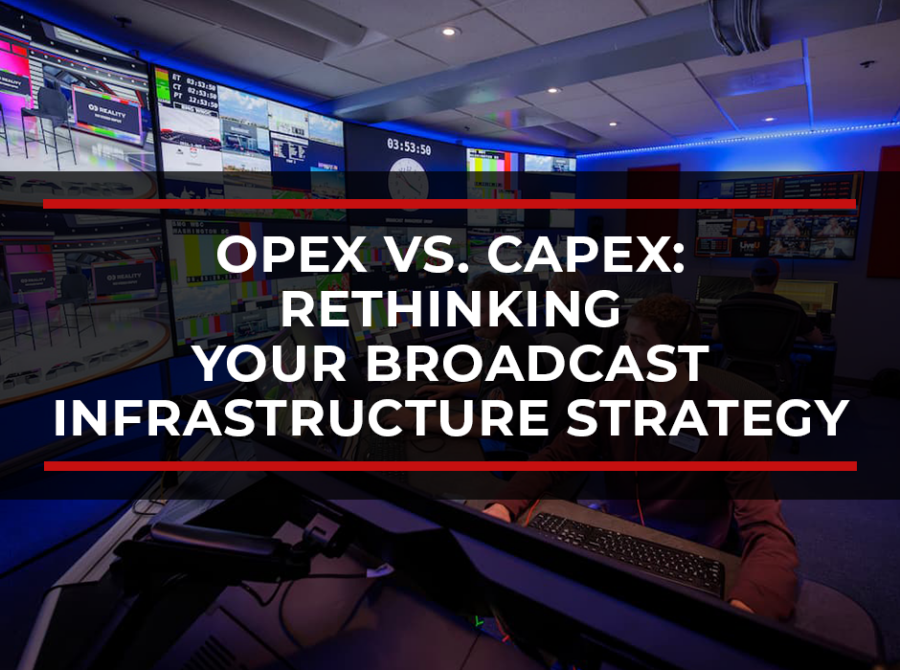
For decades, a production control room (PCR) meant a physical space with a wall of monitors and crew working shoulder to shoulder on the floor.
Nowadays, switching, audio, and graphics can be done remotely, meaning crew doesn’t have to be in the same building, let alone the same room. Cloud-native platforms like vMix, Ross, and Grass Valley’s cloud suites now handle what used to require a rack of dedicated hardware, transporting signal over IP using protocols like NDI and SRT to move camera feeds, audio, and graphics between locations with the sub-second latency live production demands.
A PCR is more of a workflow now than a location. The “room” is wherever the operators log in from. What used to be defined by four walls is now defined by connectivity, latency, and signal-path management.
This shift changes who’s part of a production team, how fast a production can scale, and how far it can reach without moving people or equipment.
What a Virtual Production Control Room (PCR) Is
A virtual PCR replaces the hardware stack of a traditional control room with cloud-native software, such as switching, audio mixing, and graphics, enabling these functions to be handled remotely.
Platforms like vMix, Ross, and Grass Valley’s cloud suites are built for this. They perform these functions in the same way dedicated hardware always has, except now, it’s running in the cloud and accessible from anywhere with a reliable connection.
A stable virtual PCR typically targets under 100-150 ms of glass-to-glass latency and needs a minimum of 25-50 Mbps of dedicated upload bandwidth per HD signal path, more for multi-camera or 4K sources.
This is why production teams are shifting away from the truck and the floor. Productions that once required a truck parked on-site or crew physically present in a control room can now run the same shows with operators logged on remotely.
BMG proved this at scale for Blue Origin’s NG-2 mission, engineering one of the largest REMI productions ever executed, with over 50 live camera feeds from five locations across the U.S. Each feed was remotely monitored, switched, shaded, mixed, and transmitted into BMG’s NOC in Washington, DC, with no physical PCR existing on-site.
This results in a control room that scales with demand, without the cost or lead time of moving people and equipment to match the show’s size.
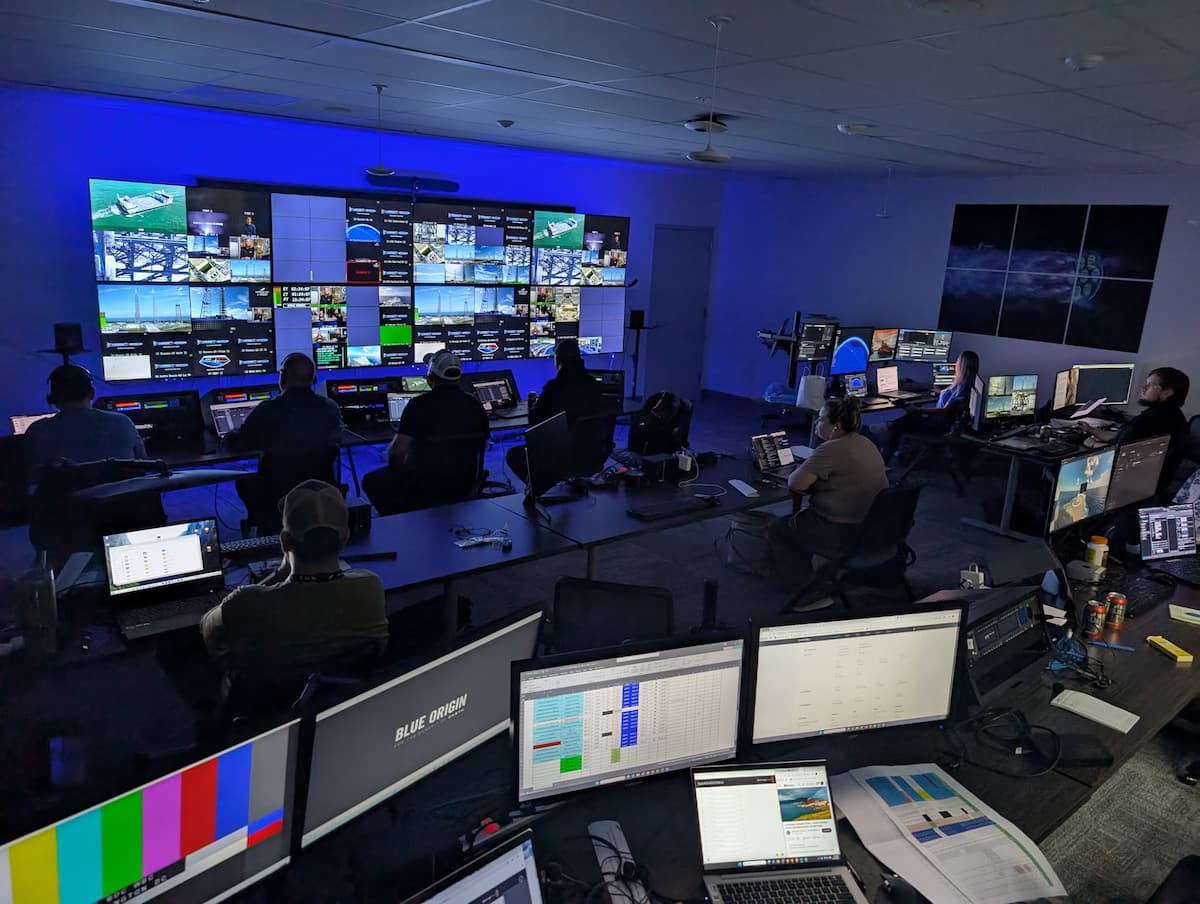
Distributed Crews, One Signal Path: How Remote Teams Collaborate in Real Time
A virtual PCR can only work if the remote crew can operate as if they’re in the same room. This means that every operator must be able to see and act on the same signal simultaneously.
Cloud control platforms solve this by centralizing the signal path. Camera feeds, audio, and graphics are routed through a single cloud-based broadcast system, typically over SRT or NDI, so crew members can each pull from the same live signal in real time. To stay in sync with the rest of the crew, each remote position needs a dedicated, redundant connection with at least 25-50 Mbps upload bandwidth and sub-50 ms jitter.
However, communication must also move with the signal. Comms, tally, and IFB must be part of the same connected workflow so that calls, cues, and coordination happen exactly as they would on a traditional floor.
When it’s done well, a distributed crew doesn’t look distributed at all. It looks like a single, coordinated production team spread across multiple cities.
Can a Virtual PCR Perform Like a Physical One?
Live production has no room for buffering, dropped frames, or a signal that doesn’t show up, so this is an important question to ask.
In truth, a virtual PCR is only as reliable as the infrastructure behind it. Moving your production environment to the cloud doesn’t inherently sacrifice performance, but it does shift where reliability has to be engineered: Instead of building in redundancy to a room full of hardware, it moves to a cloud-based platform built for broadcast-grade uptime.
This requires:
- Dual, diversely-routed transport paths per signal (bonded cellular, fiber, or satellite as backup to primary IP)
- Automatic failover that switches sources in under a second
- Continuous signal monitoring between origin and NOC
This transition requires redundant connectivity, monitored signal paths, and failover built into the production workflow. A virtual PCR without these is a real risk to your broadcast. If the virtual PCR is built on managed, monitored infrastructure, it can perform as reliably as the room it replaced, often more so, since it isn’t dependent on a single physical location staying online.
The answer to this question isn’t about cloud versus physical, but rather about whether the cloud environment was built to meet broadcast standards in the first place.
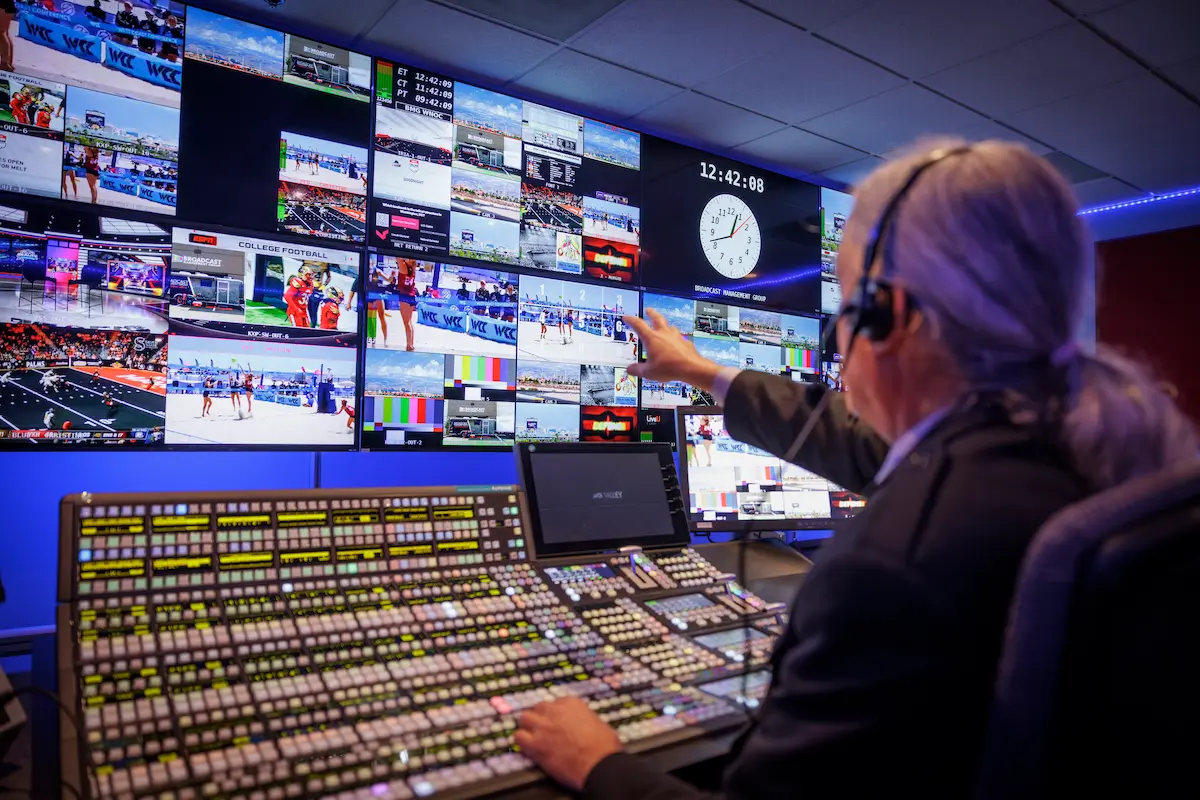
What to Look For Before Making the Switch
Virtual PCRs aren’t a fit for every production, but they’re proving especially valuable for sports, corporate events, news, and multi-site live productions, among others, where crews and content originate from multiple locations.
A multi-city sports series, a corporate town hall with remote speakers, and a news operation covering breaking events in different places all benefit from a control room that isn’t tied to a single building.
Before making the switch, ensure that your production can meet these minimums:
- Upload Bandwidth: At least 25-50 Mbps per HD signal path (more for multi-camera or 4K) with headroom above the show’s peak load
- Redundancy: A minimum of two diversely-routed transport paths per critical signal, with automatic failover under one second
- Comms and Control: Tally, IFB, and intercom running natively inside the cloud workflow
- On-Site Hardware: Encoders and network gear rated for sustained broadcast use
If the production can’t clear these benchmarks, that’s the gap to close before going live.
How BMG Builds and Operates Virtual PCRs
BMG approaches virtual PCRs the same way we approach every production environment: Built intentionally for broadcast. Every virtual PCR runs through the BMG Cloud Control Center, where switching, audio, and graphics are managed with the same redundancy and monitoring as a physical control room.
This environment is backed by our 24/7 NOC, so signals are monitored, protected, and managed around the clock, regardless of where the crew or content is from.
It’s also built to integrate directly with our Remote productions (REMI) workflows, giving teams a single, connected path from beginning to end.
This is what made it possible to produce Blue Origin’s NG-2 launch without a physical control room ever existing.
The control room now goes wherever the team is. A virtual PCR built on broadcast-grade infrastructure removes the limitations the control room used to impose.

Todd Mason is the Chief Executive Officer of Broadcast Management Group (BMG), a broadcast infrastructure and media operations company helping define the next generation of television production, live media operations, and broadcast network infrastructure in North America.
About Todd Mason