A multi-venue tournament is more than a series of individual broadcasts. It is one production operation distributed across multiple locations, each with different connectivity, infrastructure, staffing, and technical requirements.
A golf course, arena, stadium, or temporary event site may have very different technical capabilities. Some venues may have established broadcast infrastructure, while others require production systems to be brought in and built from the ground up.
The challenge is to create a workflow that scales across venues while maintaining consistent production quality, reliable connectivity, and operational control.
The infrastructure needs to be designed around the tournament as a whole.
Start With the Production Model
Before equipment is deployed, production teams need to determine which functions need to happen on-site and which can be centralized.
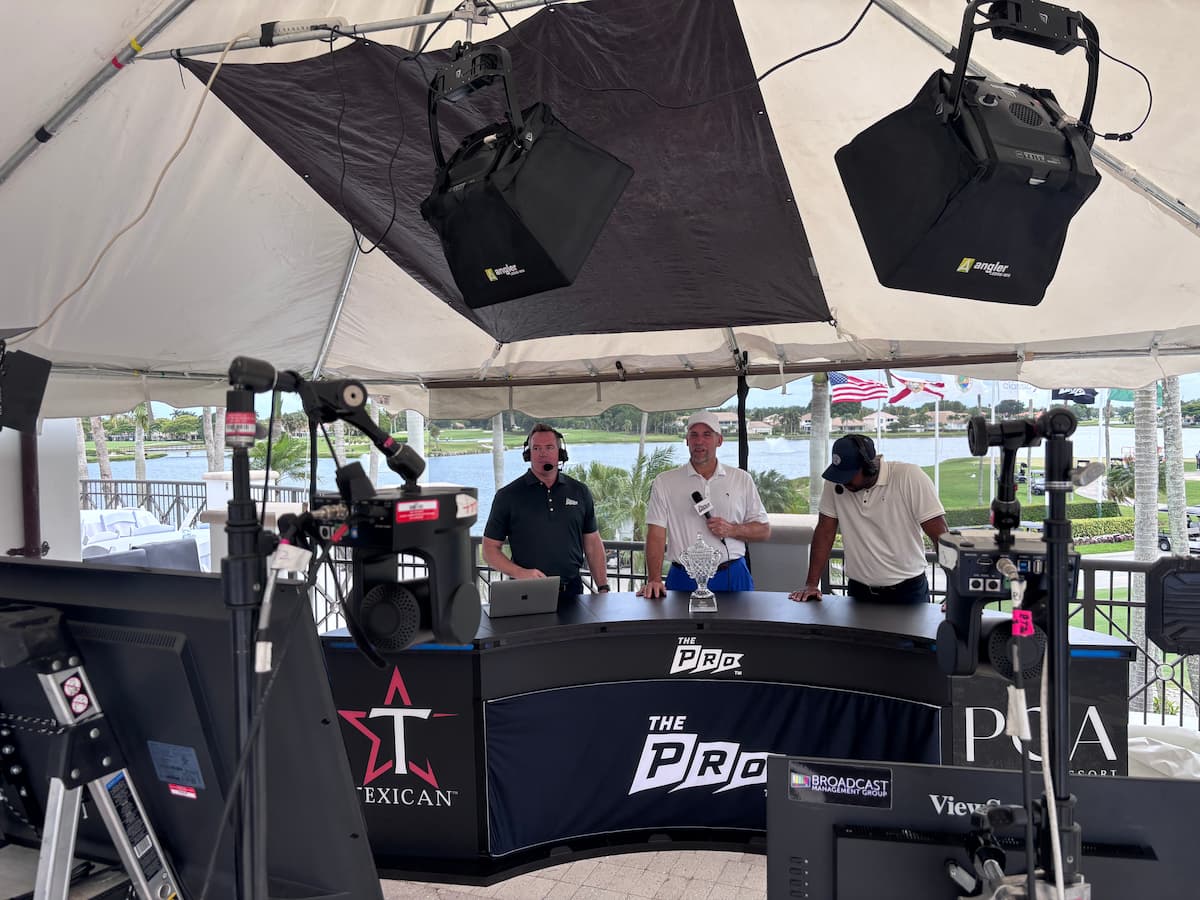
At the venue, teams may be responsible for camera acquisition, venue audio, microphones, local interviews, connectivity, and other elements that require physical access to the event.
Other functions can potentially be moved to a centralized production facility. Switching, replay, graphics, media management, engineering, monitoring, and transmission can often be handled remotely when the network and workflow are designed to support them.
Establish the model before equipment is selected. Understanding the number of venues, simultaneous events, required feeds, production format, and distribution requirements helps determine what needs to be deployed at each location and what can be shared across the tournament.
Build Around Connectivity
Connectivity is the foundation of a multi-venue production.
Every venue has different network capabilities, physical layouts, and access to infrastructure.
The network needs to support more than video feeds. It may also carry audio, intercom and communications, monitoring, control signals, production data, and return feeds.
Redundancy is equally important. A primary connection may provide the bandwidth required for the production, but a secondary path gives the team an alternative if the primary connection experiences an interruption.
Backup connectivity, redundant equipment, alternative transmission paths, and defined failover procedures can help keep the production moving when unexpected issues occur.
Centralize Where It Makes Operational Sense
Multi-venue tournaments can require significant production resources. Replicating a full control room at every location can increase equipment requirements, travel, staffing, and operational complexity.
Centralized production allows some of those resources to be shared.
A centralized facility can provide access to larger control rooms, replay systems, graphics, audio, media asset management, transmission, monitoring, and engineering resources without recreating the entire infrastructure at every venue.
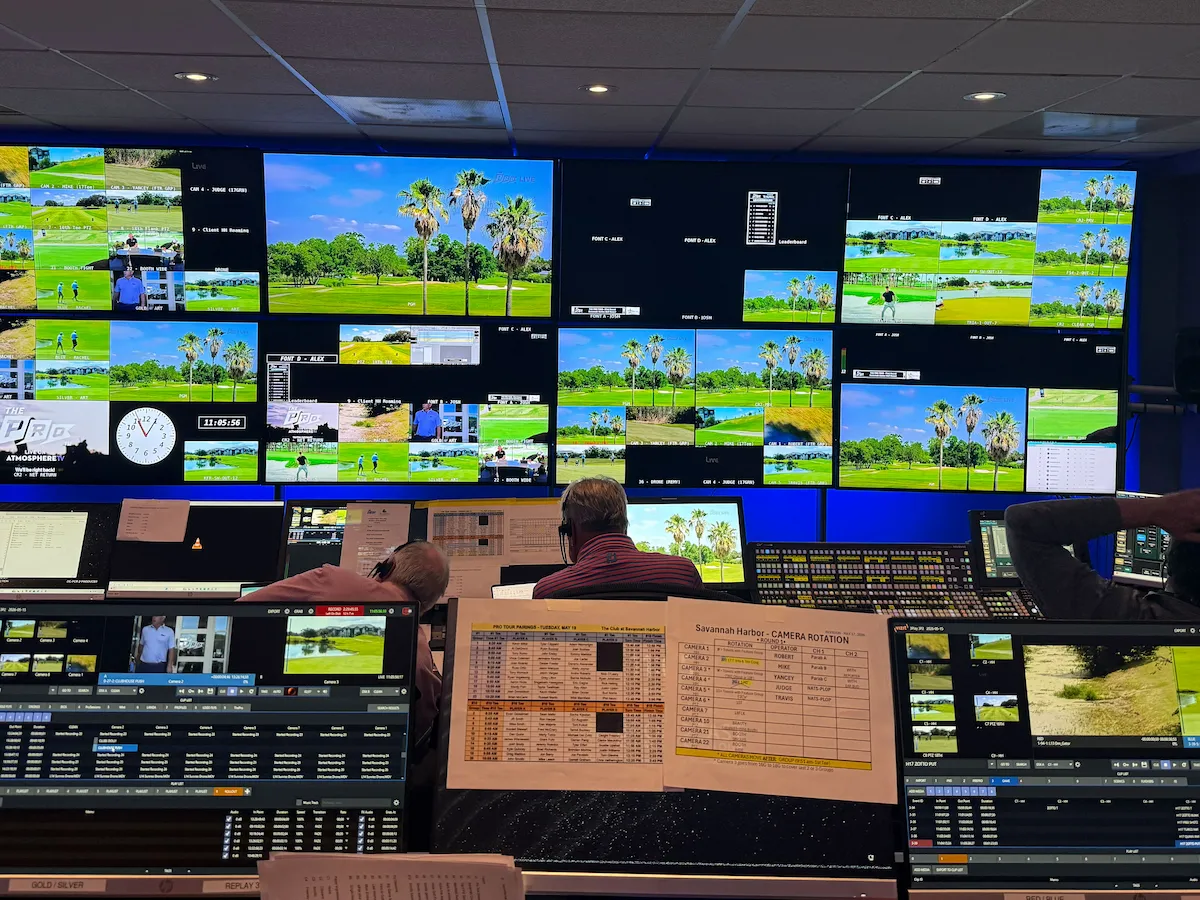
For BMG productions, the Network Operations Center (NOC) in Washington, DC serves as a centralized hub.
The NOC provides the infrastructure and resources needed to receive, monitor, manage, and distribute signals from remote venues. Production teams can access centralized resources including switching, replay, graphics, audio, media management, transmission, monitoring, and engineering without recreating those capabilities at every location.
The goal is to determine where each production function can operate most efficiently while keeping the entire workflow connected.
Create a Scalable Staffing Model
Infrastructure and staffing are closely connected.
A multi-venue tournament may require camera operators, audio teams, production personnel, engineers, technical directors, replay operators, graphics operators, utility staff, and venue support across multiple locations.
Staffing every venue with a complete production team can increase costs and create logistical challenges. A centralized model allows personnel to support multiple productions instead.
This creates a hybrid staffing model: local teams handle what must happen on-site, while centralized teams manage functions that can be performed remotely.
Staffing should also account for the tournament schedule. If multiple venues are active at the same time, production managers need to understand which resources are dedicated to individual events and which can be shared.
Standardize the Workflow
The underlying broadcast workflow should be consistent throughout the tournament.
Standardized signal paths, encoding, communications, monitoring, naming conventions, and technical procedures make it easier to deploy crews and troubleshoot problems across multiple locations.
A technical team should not have to completely redesign its workflow every time it arrives at a new location.
Establishing repeatable production standards allows teams to adapt the infrastructure to the venue while maintaining the same overall operating model.
Standardization also makes troubleshooting more efficient. When engineers understand how signals should propagate through the system at every location, they can more quickly identify where an issue is occurring.
Pro Tour Golf: Connecting Five Tournaments
BMG’s 2026 Pro Tour Golf production demonstrates how a centralized, repeatable infrastructure can support a tournament series across multiple venues.
BMG partnered with Pro Tour Golf across five tournaments at five different courses, culminating in the championship at Lake of Isles at Foxwoods Resort Casino in Connecticut.
Each course presented its own production environment, requiring the workflow to adapt to the location while maintaining a consistent broadcast format.
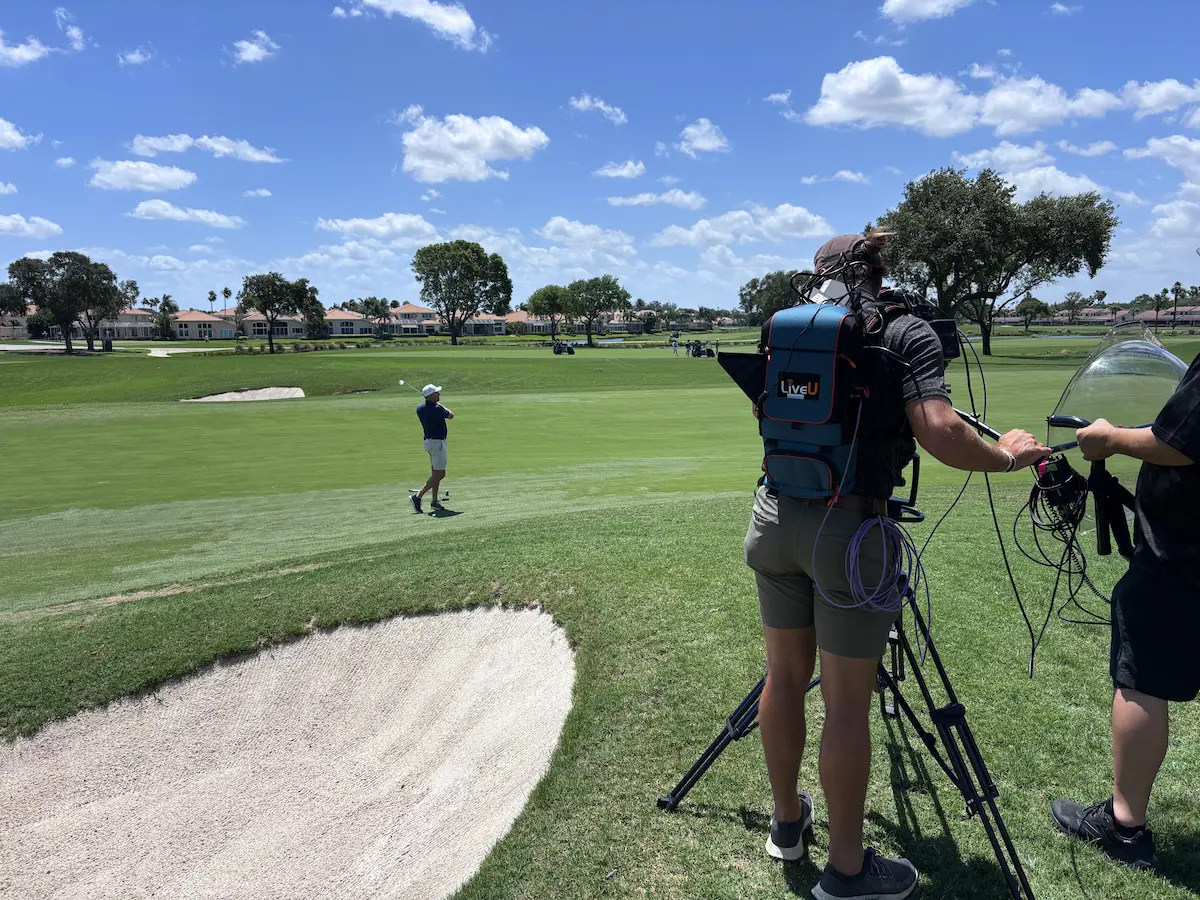
The production included 11 cameras and six drones, with LiveU LU800 bonded cellular and Starlink used to transmit signals back to BMG’s Washington, DC NOC.
This connectivity allowed production resources in the field to remain connected to centralized infrastructure and personnel.
That approach is particularly valuable for tournament series, where production teams need to move from one venue to another while maintaining consistent coverage and technical standards.
Build for the Entire Tournament
A successful multi-venue workflow connects every part of the production from cameras at the venue to centralized control, monitoring, media management, and distribution.
The infrastructure should be designed with the full tournament lifecycle in mind: venue setup, live production, signal transport, centralized operations, content management, transmission, and teardown.
When these components are planned as a single connected system, production teams can move between venues without rebuilding the workflow from scratch.
The result is a scalable production environment that can adapt to different venues while maintaining consistency, reliability, and control throughout the tournament.
For tournament organizers and production teams, the infrastructure is not simply the technology behind the broadcast. It is the foundation that enables every venue, crew, and production resource to operate as part of a single, connected event.
Planning a multi-venue tournament production? Explore how BMG can connect on-site production with centralized resources to build a scalable, reliable live production workflow.

Andrew Ryback is the Executive Vice President of Production. He brings over 17 years of experience in production management across live events, entertainment, and on-location shoots. He has managed production logistics for high-profile events, including The Emmys, The Oscars, TIFF, SXSW, Comic-Con, New York Fashion Week, Sundance, and both national political conventions. At BMG, he oversees complex productions from crew and equipment coordination to budgeting, permitting, and on-site execution.
About Andrew Ryback