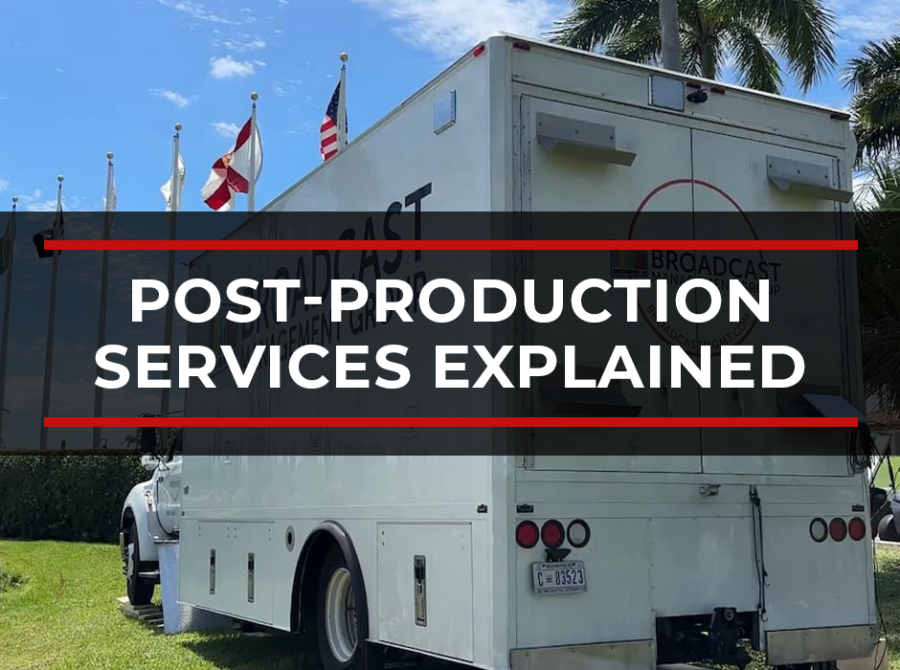
For most CFOs and VPs of Production, the OB truck has been the common method to produce live video because its costs, workflows, and risk profiles are well understood.
However, as production volume scales across more markets, events, and simultaneous productions, the known costs start compounding. Every additional truck deployment adds travel, shipping, and crew overhead that multiplies with scale.
The Remote Integration Model (REMI) was built to challenge the status quo. Here’s how the two models compare on cost, scalability, and production quality, and where each one still makes sense.
The Costs of an OB Truck Deployment
An OB truck day rate is only the visible part of the budget. The full cost structure includes:
- Crew travel: Flights, hotels, and daily rates for every technical crew member traveling to the venue for every event
- Shipping and logistics overhead: Trucking the vehicle itself between markets, along with fuel, tolls, and drive-time labor
- On-site footprint: Parking, power drops, rigging, and load-in/load-out time that has to be re-solved at every new venue
- Single-point risk: If the truck has a mechanical or technical failure on show day, there’s no backup infrastructure to fall back on
These costs are predictable, but the problem is that they don’t scale down. For example, a five-city event series pays these costs five separate times, in full, regardless of how similar the shows are.
This is the gap REMI is designed to close.
What REMI Actually Changes in the Budget
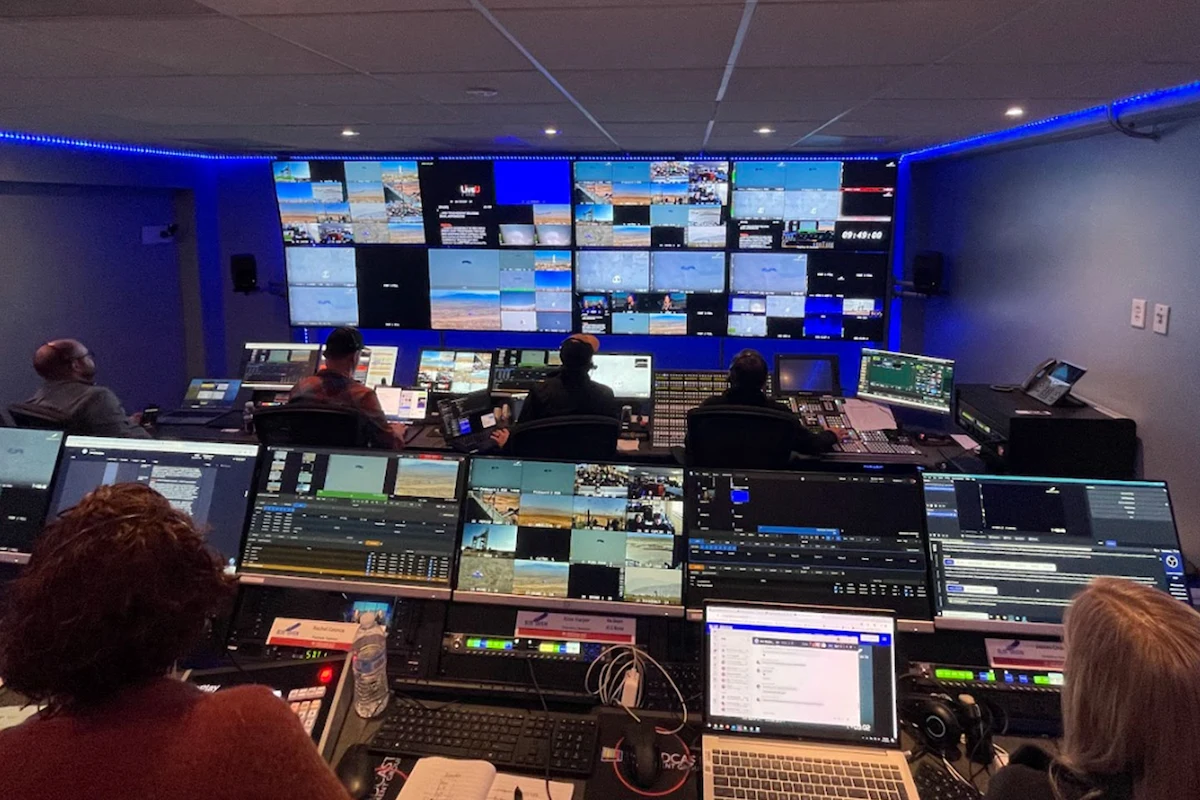
Instead of sending a full crew and control room to every venue, REMI keeps only essential on-site personnel in the field to handle cameras and audio capture. Everything else, including switching, graphics, replay, audio mixing, and engineering, runs remotely through a centralized production hub. For BMG, that hub is the Cloud Control Center.
The business case comes down to three factors:
- Cost reduction: Eliminating per-event crew travel, hotel, and per diem at scale is where the majority of savings come from.
- Crew consolidation: Centralizing experienced operators means the same core team can cover multiple productions from a single hub, rather than assembling and re-briefing a new crew at every location.
- Coverage flexibility: REMI removes the geographic ceiling that trucks impose.
Together, these factors are why REMI workflows can reduce production budgets compared to traditional truck-based deployments. These savings come directly from removing the travel and shipping overhead associated with the OB truck model.
With REMI having lower associated costs, are there trade-offs compared to the traditional model?
Does REMI Sacrifice Production Value?
The short answer is nothing on the output side. REMI relocates where the production happens without reducing what it can do.
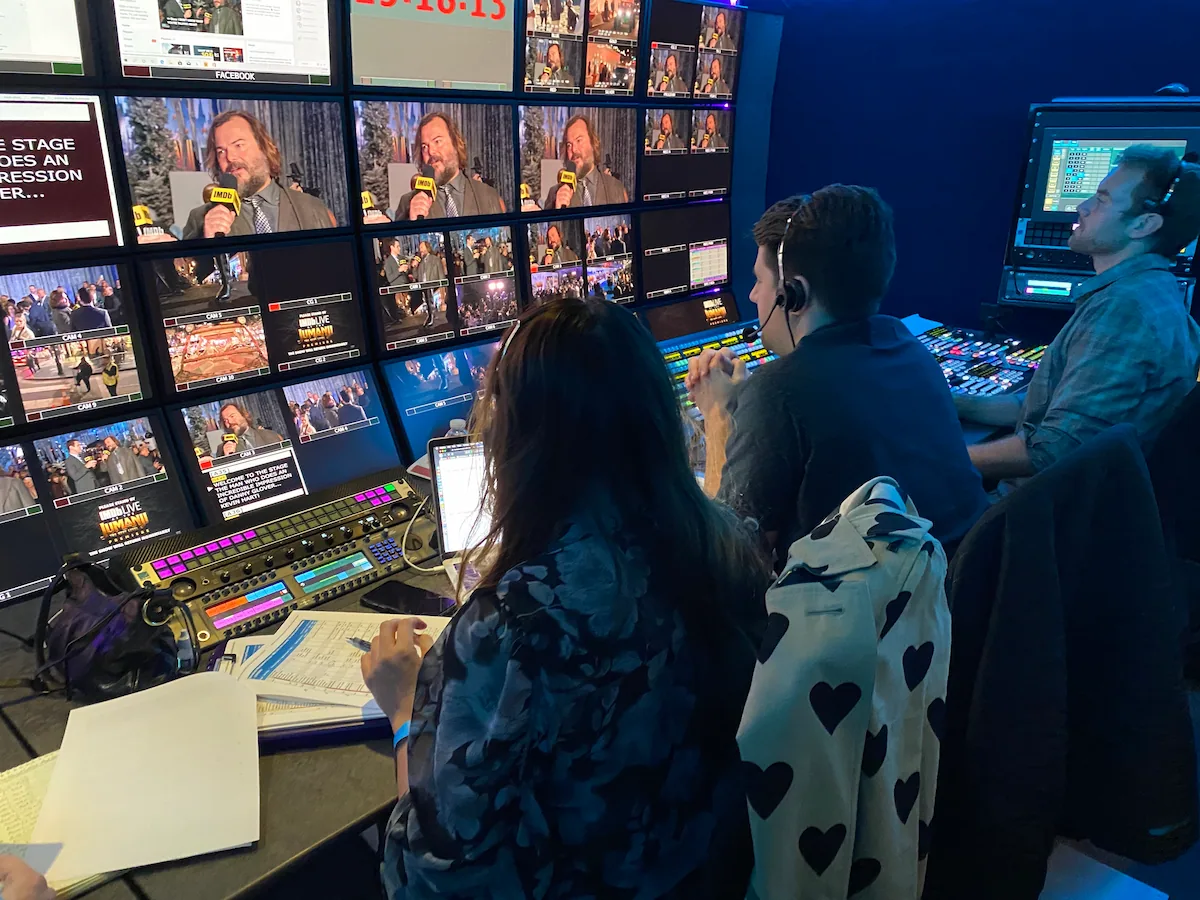
Multi-camera switching stays fully intact. Camera and audio feeds are captured on-site and transmitted to the centralized hub, where switching, technical direction, and program output are handled with the same tools and standards as a truck-based control room.
Graphics, replay, and audio are produced centrally rather than locally, improving consistency across a multi-event series. The same graphics package, replay operator, and audio mix standards apply at every stop, rather than varying by whichever truck and crew happen to be on-site that week.
Transmission and latency are handled through reliable field-to-hub transport, engineered specifically to support real-time, broadcast-grade delivery.
REMI moves where the technical team sits, without reducing the quality standards that they’re held to.
Cost-Benefit Comparison: OB Truck vs. REMI
For a financial decision-maker, the difference between these two models comes down to how each one behaves at scale. A single event might make the cost gap look small, but a multi-event series is where the differences between the two can really be seen.
OB Truck Production:
- Crew travel and hotel are paid in full for every event
- Shipping and trucking overhead are repeated at every venue
- On-site footprint (power, rigging, load-in) is rebuilt from scratch each time
- Limited to venues a truck can physically reach and park at
- Single point of failure if the vehicle has a mechanical or technical issue
REMI Production:
- Core crew stays centralized, eliminating per-event travel and lodging costs
- No vehicle to ship or maintain between markets
- Switching, graphics, replay, and audio infrastructure already in place at the hub
- Reaches venues that are logistically impractical or too time-constrained for a truck deployment
- Centralized infrastructure supports redundancy that a single truck can’t
The financial impact of this gap grows with volume. A one-off event may not justify a workflow change, but a recurring series, a multi-market rollout, or a production calendar with several simultaneous events is where REMI’s savings are larger.
However, there are still scenarios where a truck is the right call for your production.
When OB Trucks Still Make Sense
REMI is the stronger financial model in most scaled or recurring scenarios, but it isn’t a universal replacement. A few situations still favor a truck:
- Unreliable venue connectivity: REMI depends on getting a strong, stable signal from the field to the centralized hub. In locations without dependable transmission infrastructure, an on-site control room removes that dependency.
- Single-market, high-frequency events: If a truck is already based in the market and used repeatedly for the same recurring show, the travel and shipping overhead that drives REMI’s savings largely disappears.
- Compressed lead times with no pre-established remote workflow: Standing up a new REMI relationship on short notice, without pre-existing infrastructure or a partner with an established Cloud Control Center, can be slower than deploying a truck that’s already staffed and ready.
One model isn’t entirely better than the other. To assess which choice is right for your production, assess event frequency, venue connectivity, and how many productions are running simultaneously.
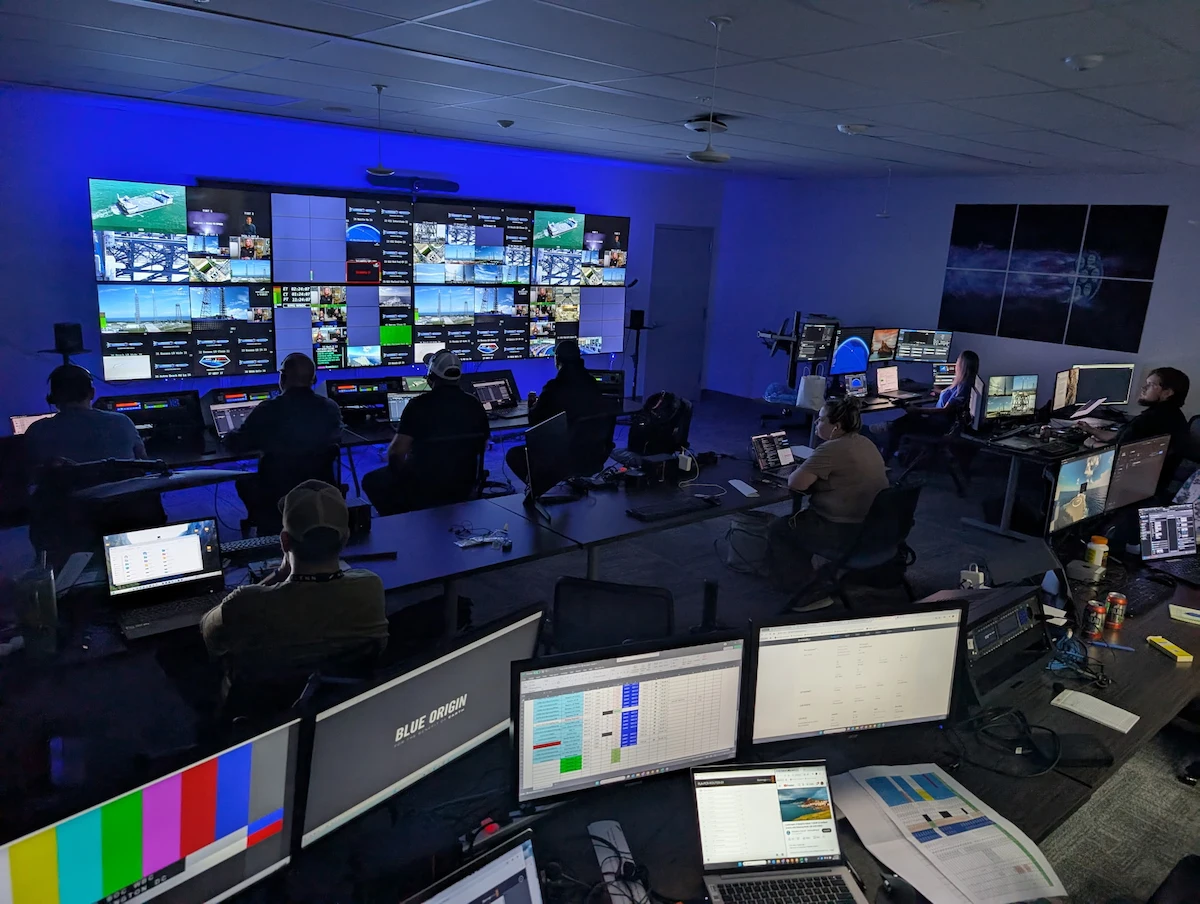
Case Study: Blue Origin NG-2
The launch of Blue Origin’s New Glenn rocket carrying NASA’s ESCAPADE spacecraft is a strong example of what REMI can support when the stakes and technical complexity are both high.
BMG engineered one of the largest and most technically ambitious REMI productions it has executed, with over 50 live camera feeds integrated from five locations across the U.S., produced entirely through the Cloud Control Center. On-site crews handled camera and audio capture, while LiveU transport carried those feeds back to a centralized hub where switching, graphics, replay, audio, and engineering were all managed remotely.
No fleet of OB trucks was required to cover five simultaneous locations for a single live broadcast. The production ran on centralized infrastructure instead, delivering broadcast-grade output for one of the most technically demanding live events BMG has produced, without the travel, shipping, or on-site footprint a truck-based approach at that scale would have required.
Partner with BMG to Right-Size Your Production Budget
The choice between OB trucks and REMI depends on which one matches how your organization currently produces content. A single, high-frequency local show and a multi-market production calendar carry very different cost structures, and the right infrastructure decision should be made based on which your production resembles most.
If your organization is producing across multiple markets, running simultaneous events, or evaluating where travel and shipping overhead are quietly inflating your production budget, assess whether a Remote Integration Model fits your needs.
BMG’s REMI production services are built around the Cloud Control Center™, supporting broadcast-grade, multi-camera productions at a fraction of the footprint and cost of traditional deployments. For organizations evaluating a broader shift in how their production and operations are structured, BMG’s managed services team can help assess the full picture.

Andrew Ryback is the Executive Vice President of Production. He brings over 17 years of experience in production management across live events, entertainment, and on-location shoots. He has managed production logistics for high-profile events, including The Emmys, The Oscars, TIFF, SXSW, Comic-Con, New York Fashion Week, Sundance, and both national political conventions. At BMG, he oversees complex productions from crew and equipment coordination to budgeting, permitting, and on-site execution.
About Andrew Ryback