A live broadcast is only as strong as the room it comes from, but most rooms weren’t built for broadcast.
Live productions take place in ballrooms, convention centers, theaters, corporate atriums, golf courses, and more. Any of them can work, but none of them should be assumed to.
A site survey is how you find out. A walk-through before load-in, crew travel, or transmission booking shows what the space can and can’t support and what has to change.
This checklist covers what to look for, how to read the results, and what to do when a venue falls short.
Why the Venue Makes Most of the Decisions
Nearly every major production decision traces back to the venue. It determines whether you bring a mobile unit or a flypack, whether production happens on-site or through REMI, how large the crew needs to be, and how the signal gets out.
That’s why BMG’s Live Event Consultation starts with venue evaluation: Production requirements, power capacity, network connectivity, load-in access, and permitting. BMG recommends engaging 8–12 weeks before your event, or 4–6 weeks at minimum, because these items take time to resolve.
For multi-city events, BMG’s Event Management & Touring team builds venue routing and site surveys into the plan, so every city is prepared before the truck arrives.
Before You Walk the Venue
A survey is only as useful as its preparation.
- Bring the right people: The technical lead or EIC, the production manager, and a venue contact who knows the building.
- Bring the right documents: The floor plan, a draft run of show, a draft camera plan, and a list of distribution destinations.
- Send questions ahead: Power, internet, load-in, and venue rules. The walk-through should confirm the answers to your questions.
The Broadcast Site Survey Checklist
1. Power
Know what you can draw, from where, and who can reset it.
What you need:
- Confirmed amperage for your gear, with headroom
- A circuit map showing which outlets share a breaker
- A named contact with electrical closet access on show day
- If you’re bringing a generator, a parking spot for it and a refueling plan
2. Connectivity & Transmission
Your signal has to leave the building. Fiber, internet, and satellite are the main paths, and each has conditions.
What you need:
- A primary transmission path: A dedicated circuit with confirmed bandwidth, existing fiber, or bonded cellular
- A backup path that doesn’t rely on the same route
- Upload speed tested at the spot where the encoder will sit
- Lead times for any new circuit, checked against your event date
- For satellite, truck parking with a clear line of sight
When fiber isn’t practical, wireless is a real option. On The Pro Tour, BMG used bonded cellular units with Starlink backup to send live feeds from golf courses back to its Network Operations Center.
3. Load-In & Access
Great gear must be able to reach the room; otherwise, it can’t be used.
What you need:
- Dock or curbside access close to the production space
- Freight elevator dimensions and carry-path measurements
- Agreed load-in and strike windows
- Confirmation of who else is using the loading area that day
4. Control Room Footprint
Decide where the control room lives before the truck arrives.
What you need:
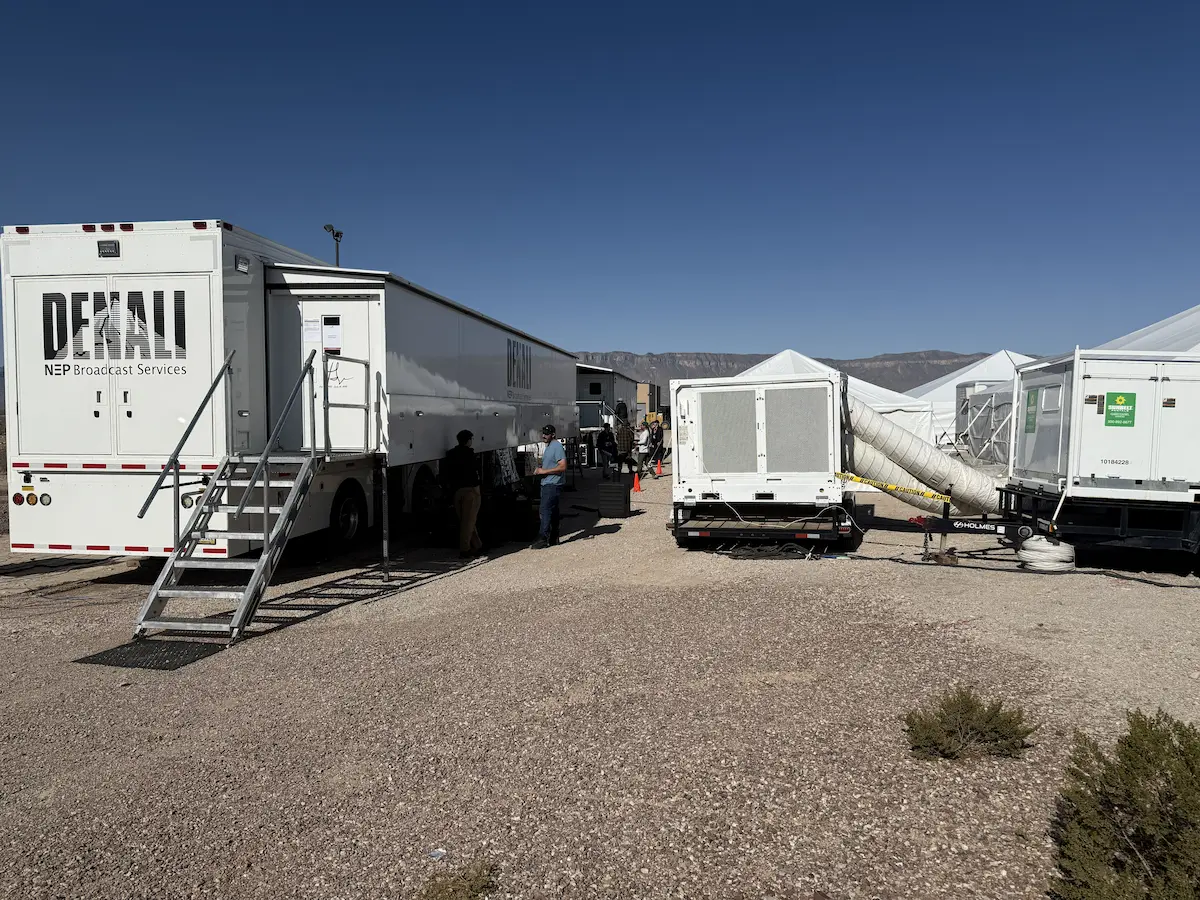
- A defined production space, sized for either a mobile unit or a flypack
- Storage for empty equipment cases
- Space for switching, audio, and streaming gear, with room for operators to work
5. Cameras, Sightlines & Cable Paths
Walk the camera positions, then walk the cable runs.
What you need:
- A draft camera plot with positions marked on the floor plan
- Clear sightlines from each position to the stage or subject
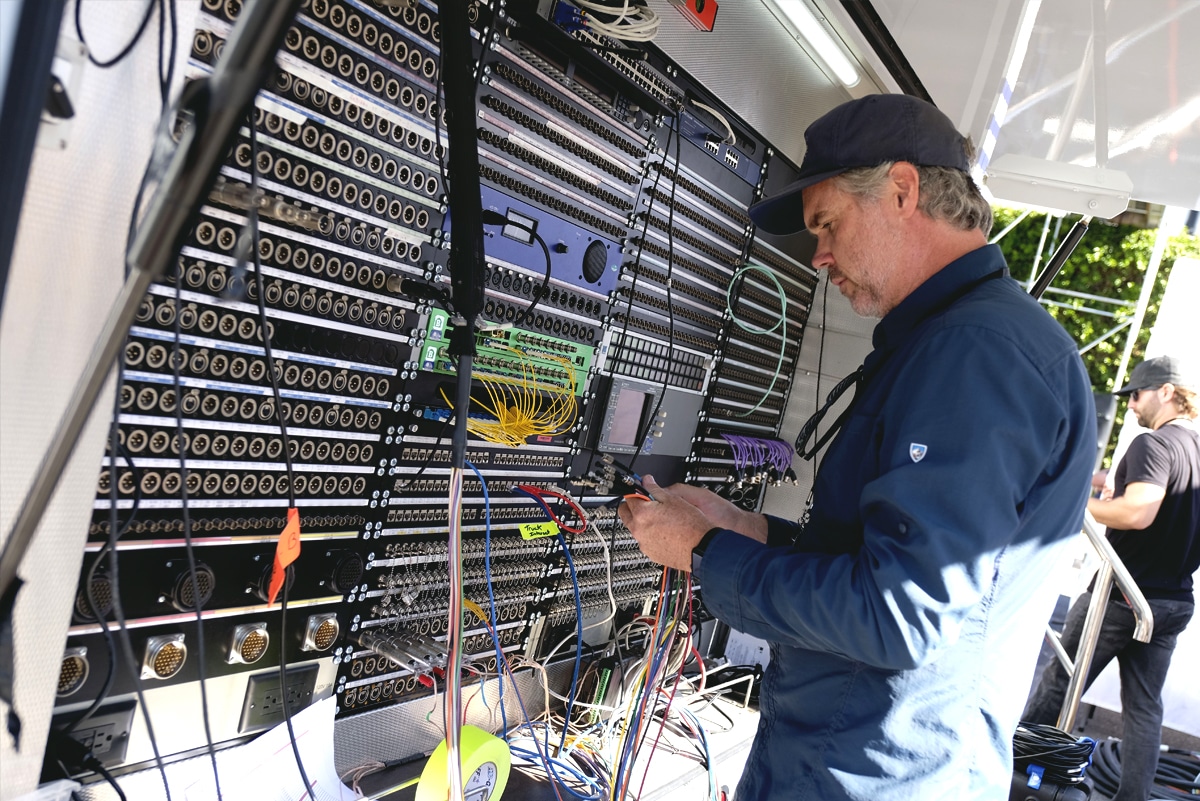
- Approved cable routes from every camera back to the control room
- Space for any jib, Steadicam, or PTZ placements
6. Lighting, Staging & Audio
Find out what the house provides and what you’re bringing.
What you need:
- A list of existing truss, rigging points, and lighting instruments
- Access to the front-of-house audio board and a house audio contact
- A staging plan and footprint
- A comms and IFB plan for the crew
- Notes on room acoustics and background noise, such as echo or HVAC
7. Talent, Audience & Security
The production has to work for the people in the room, too.
What you need:
- A green room and a backstage flow for talent
- Separate entrances or routing for talent and audience, where possible
- Registration and security plans
- Any special audience needs, such as translation booths and headsets
8. Rules & Restrictions
Get the fine print before load-in day.
What you need:
- Union requirements, confirmed in writing
- Permits and insurance requirements
- House policies on rigging, power, food, and quiet hours
- A named venue contact for day-of decisions
BMG manages union and non-union hiring based on venue requirements. It also handles the house union coordination that some venues require.
Reading the Results: Mobile Unit, Flypack, or REMI?
Your survey findings point to a production model.
| What the survey found | Likely fit |
|---|---|
| Room to park, solid power, strong fiber or IP path | Mobile unit, full on-site production |
| Tight load-in, limited footprint, no room for a truck | Flypack, right-sized for the space |
| Limited on-site space or infrastructure, but a strong wireless or IP path | Lean on-site capture with REMI to the NOC |
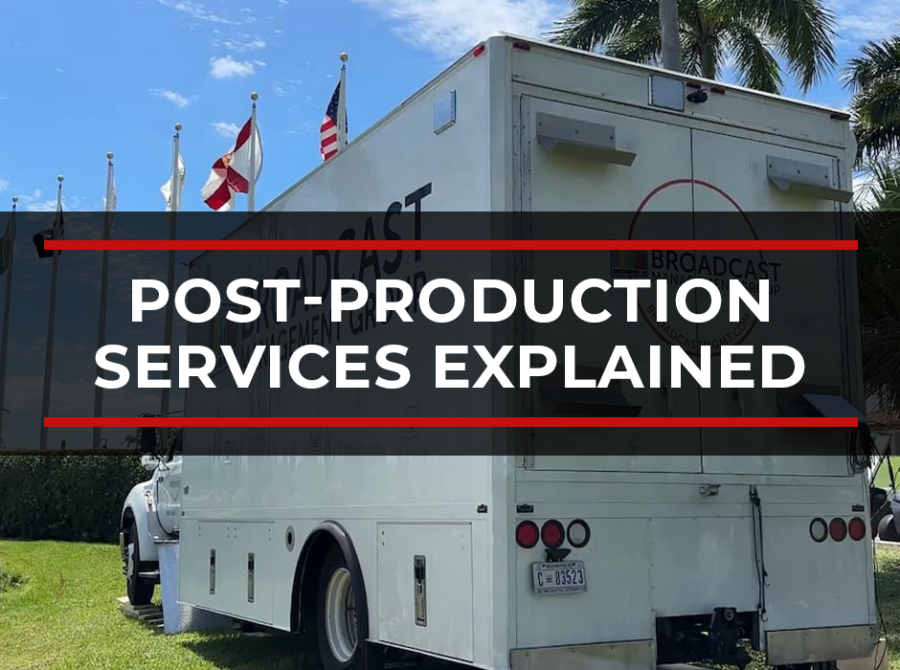
BMG’s mobile units and custom flight packs are built for this flexibility. A mobile unit can run fully on site, act as a capture hub feeding REMI, or operate in a hybrid setup connected to BMG’s Cloud NOC. Smaller footprints also mean faster load-ins and simpler approvals.
Case Study: Screen Junkies Live at San Diego Comic-Con
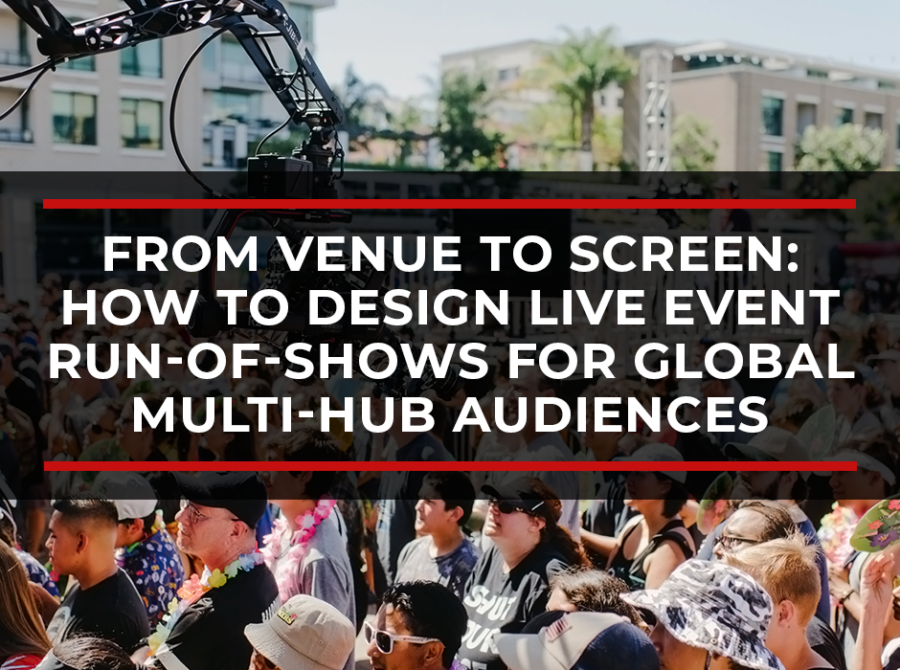
In 2016, DEFY Media hired BMG to produce three days of live programming for Screen Junkies during San Diego Comic-Con. The venue was Moonshine Flats in the Gaslight District. Most nights, it’s a bar with a stage for live music.
Before the event, BMG’s team conducted a site survey to map the control room location, camera placements, and cable runs. The survey found a good fit with some constraints:
- The location was a few blocks from the convention center, which helped draw crowds
- Equipment could be loaded in curbside, directly in front of the venue
- The venue already had lighting truss and instruments, plus a front-of-house audio board
- Storage for empty equipment cases was tight
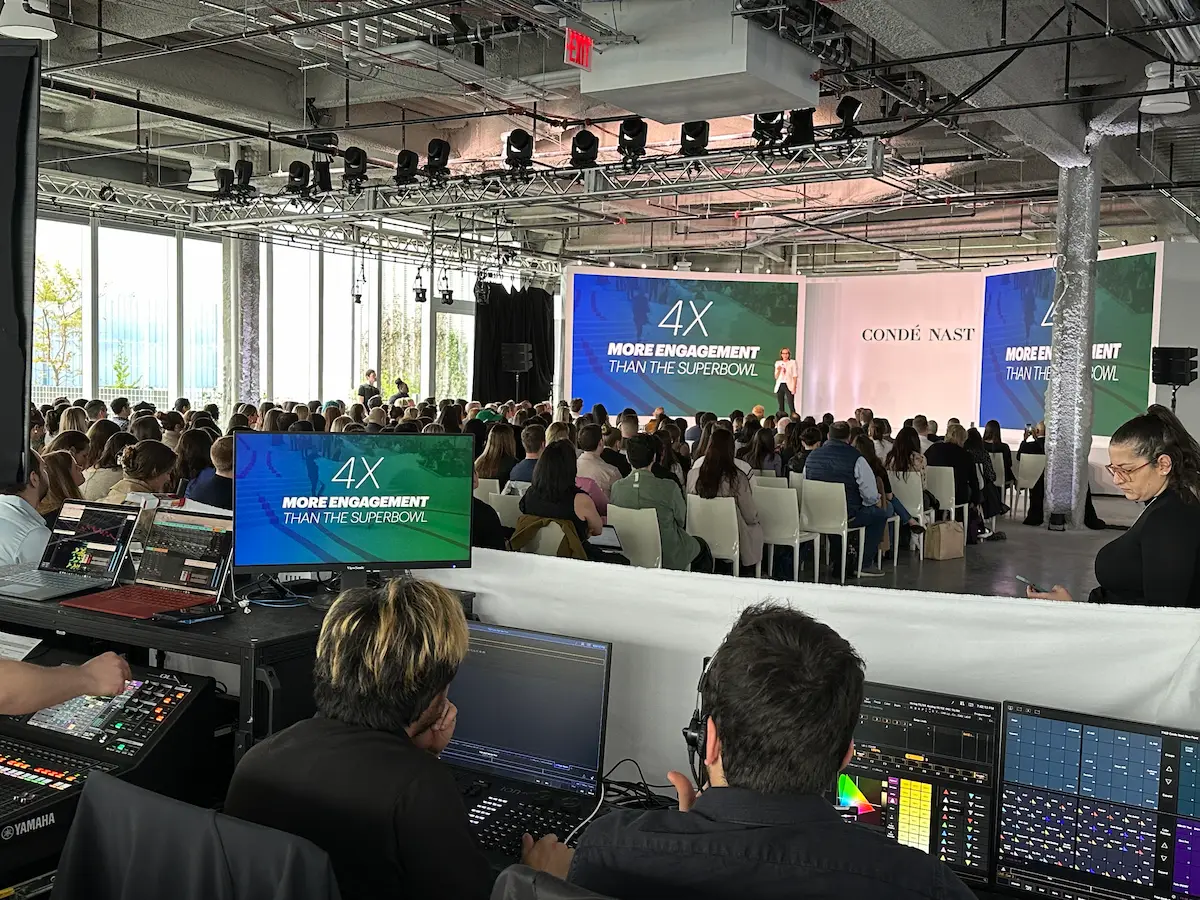
- The control room had a small footprint at the end of the bar, beside the main stage, for the switcher, audio board, and streaming equipment
Because the survey identified these constraints ahead of time, the team could plan around them. BMG shot with seven cameras and streamed to YouTube, Facebook, and the DEFY website, producing 12 live shows in three days.
The same principle holds at larger scale. For Al Jazeera’s election town hall series, each of four venues needed a different approach to staging, audience flow, and production layout, and the full tour was planned in three weeks. On The Pro Tour, each course needed its own deployment plan while the broadcast standard stayed consistent.
What You Should Walk Away With
A good survey ends with documents that help you make venue decisions:
- A marked-up floor plan showing control room, camera positions, and cable paths
- A power plan with circuit assignments and generator needs
- A connectivity plan with primary and backup transmission paths
- A load-in and strike schedule
- A risk list with owners and deadlines
BMG’s planning process produces the same kinds of outputs: technical diagrams, contingency protocols, and a transmissions and logistics checklist that documents network requirements and backup connectivity.
Book the Survey Before the Show Needs It
Every red flag on this list is cheaper to fix early. If you’re planning a live production, or weighing venues, BMG can help you evaluate the space, choose the right production model, and prepare the plan.
- Plan the event with Live Event Consultation & Assessment
- Take your show on the road with Event Management & Touring
- Right-size your setup with Mobile Units & Flight Packs
- Reduce your on-site footprint with Remote Production (REMI)
Contact BMG to start the conversation.

Andrew Ryback is the Executive Vice President of Production. He brings over 17 years of experience in production management across live events, entertainment, and on-location shoots. He has managed production logistics for high-profile events, including The Emmys, The Oscars, TIFF, SXSW, Comic-Con, New York Fashion Week, Sundance, and both national political conventions. At BMG, he oversees complex productions from crew and equipment coordination to budgeting, permitting, and on-site execution.
About Andrew Ryback