A Tier-1 refresh is a decision your facility will live with for a decade or longer. The vendors you choose shape how your operation performs on air, how it scales, and how difficult it is to change later.
Most evaluations start with spec sheets and price, but a better approach is to evaluate vendors against your workflow, migration path, and long-term operating model.
Start With Your Workflows
Before comparing vendors, define what the facility needs to do. A discovery phase audits current systems, workflows, space, and business goals, producing the requirements vendors should be measured against.
Without that foundation, a demo can look good, but the vendor might not be able to map its product to your workflow.
Five Criteria That Matter
- Standards and interoperability: Ask how each product supports SMPTE ST 2110, ST 2059 PTP, and AMWA NMOS, and look for published JT-NM Tested results. JT-NM Tested isn’t a certification, but it shows how equipment aligns with the standards in a multi-vendor environment.
- Migration path: Few Tier-1 facilities can go all-IP overnight. Look for hybrid SDI and IP support that lets you migrate in phases without tearing out what’s already built.
- Total cost of ownership: Purchase price is only the beginning. Factor in power, cooling, rack space, software licensing, and multi-year support contracts.
- Redundancy and failover: Ask how failover is designed and, more importantly, how it’s tested. Every source, destination, and failover path should be tested under load before sign-off.
- Documentation and support: As-builts, signal flow diagrams, runbooks, and operator training should be standard. Ask what support looks like beyond the refresh.
- Compression chain and transmission networks: Every encode and decode stage adds latency and can degrade picture quality, so map the full compression chain. Ask which codecs each vendor supports, such as JPEG XS for low-latency contribution or HEVC for distribution, and how transmission paths are protected, SRT, ST 2022-7 switching, or diverse fiber routes.
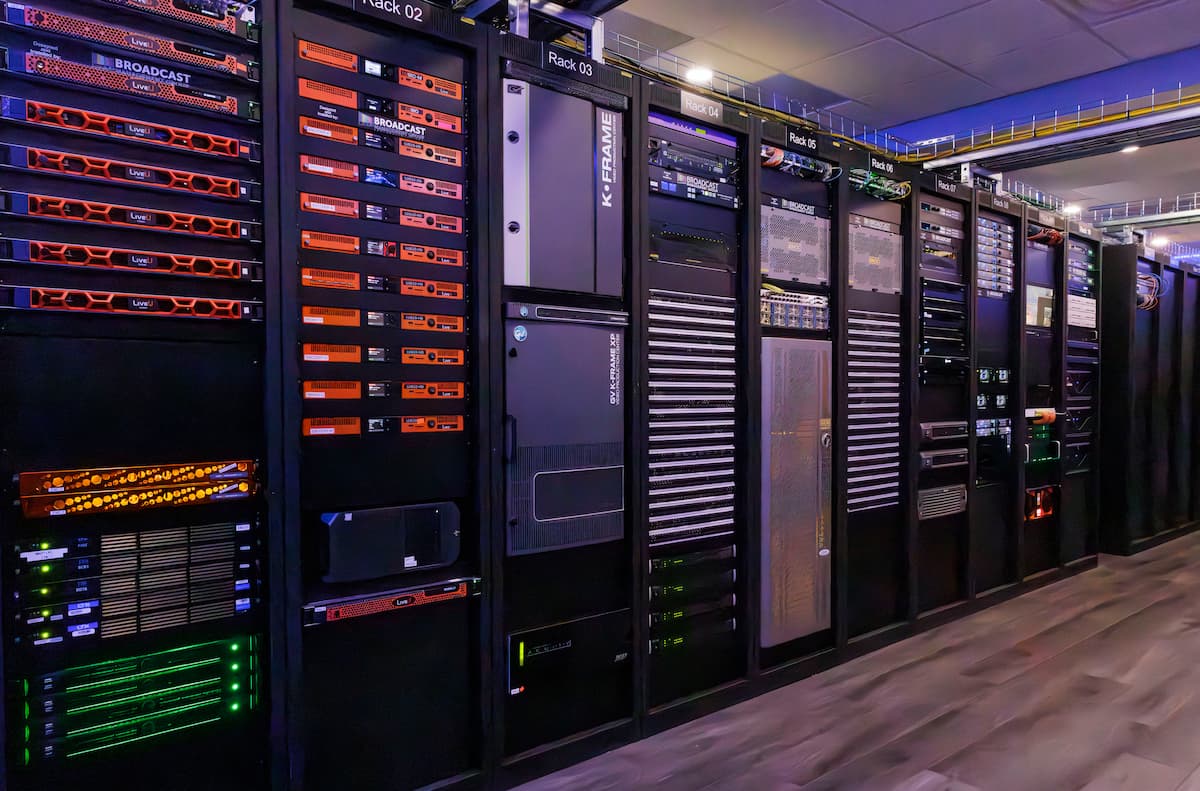
What to Look For and Avoid
Look for:
- Manufacturer-agnostic recommendations built around your workflow
- Standards-based design with published interoperability testing
- A clear path to ongoing operational support
Avoid:
- Recommendations drawn from a single manufacturer’s catalog
- Proprietary control layers that lock out third-party equipment
- Support that ends when installation does
Who Owns the Result?
Equipment vendors sell products, but your integration partner is accountable for whether those products work together on air.
BMG is manufacturer-agnostic. We work with all major broadcast vendors and recommend what fits your workflow. Because BMG produces thousands of hours of live programming every year, we design facilities around what works when the red light goes on.
Case Study: Virginia Public Media
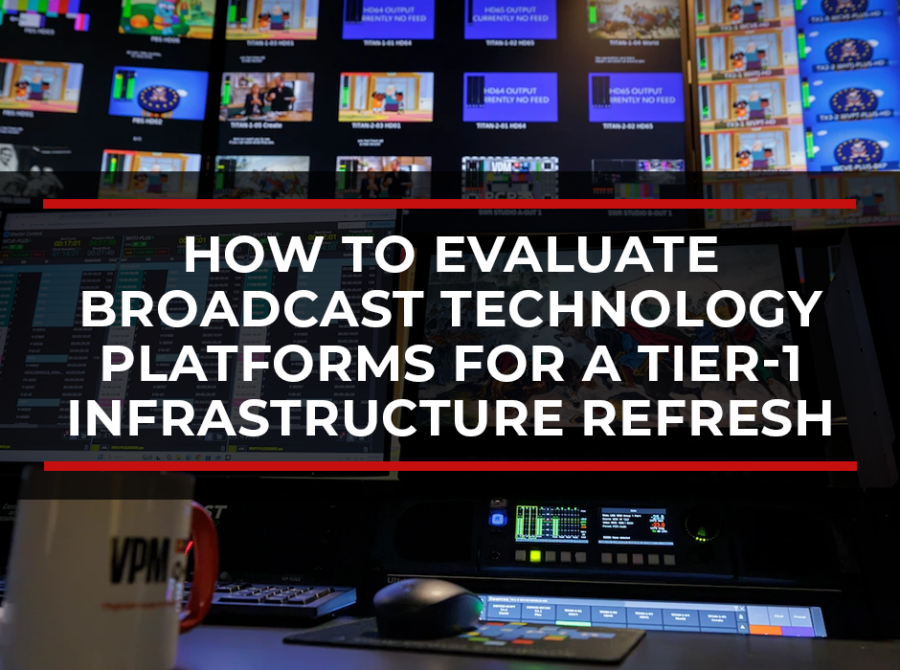
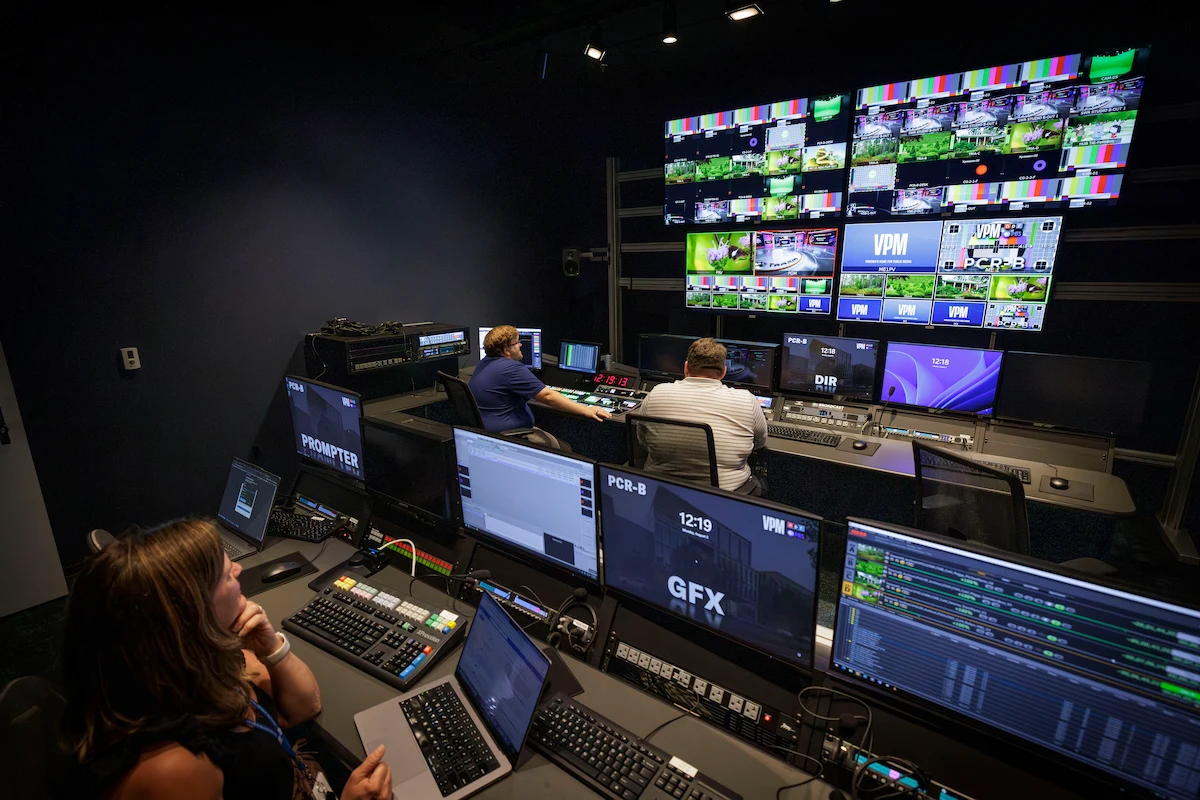
Virginia Public Media (VPM), the PBS and NPR affiliate in Richmond, partnered with BMG to replace its 66-year-old broadcast infrastructure during a move to a new headquarters.
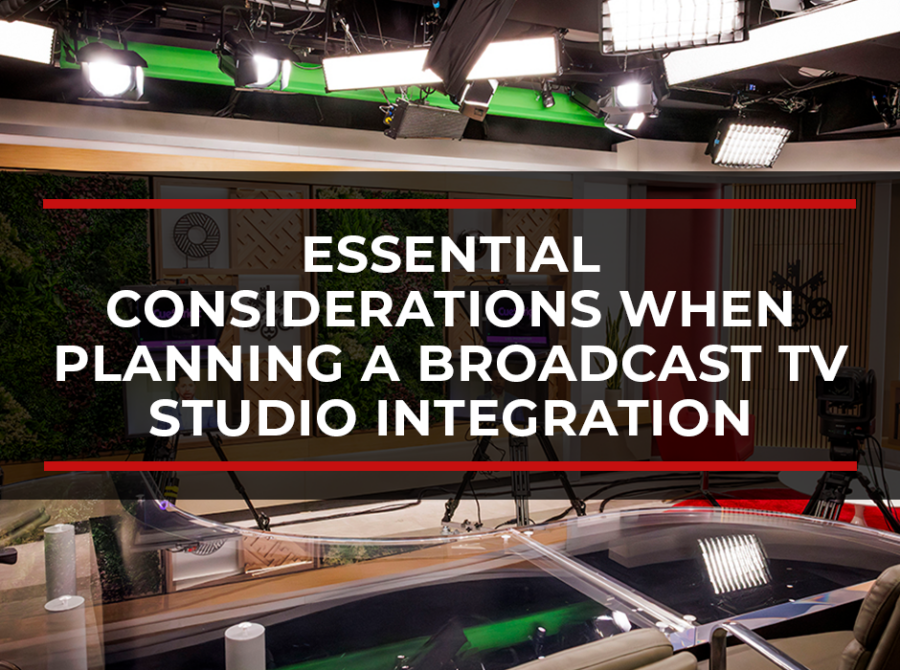
BMG designed and integrated a master control system handling 15 unique television feeds, along with two TV studios, two radio master control rooms, two podcast studios, and edit and ingest spaces. VPM’s VP of Technology credited BMG with guiding a long integration that coordinated many subcontractors and vendors. BMG continues to support the facility through its Network Operations Center.
Plan Your Tier-1 Refresh
The right vendor decisions start before the first purchase order.
Learn more about BMG’s Broadcast Systems Integration and Consulting services, or see how our 24/7 Cloud NOC supports facilities after launch.

Tawfiq Rahman is Vice President of System Design and Engineering at BMG. He brings more than 27 years of broadcast engineering experience across television stations, multi-camera studios, government projects, and large-scale media facilities. His background includes leadership roles at Ekushey Television Limited, BBC World Service, and Ekattor Television, the first Full-HD 24/7 news station in Bangladesh. At BMG, Tawfiq leads system design and engineering efforts for broadcast facilities, control rooms, studios, and advanced production workflows.
About Tawfiq Rahman