Your investor webcast shouldn’t just be another video meeting.
Earnings calls, investor day presentations, shareholder meetings, financial updates, and executive briefings carry a different level of visibility than a standard internal meeting. The audience may include investors, analysts, board members, shareholders, employees, the media, and other stakeholders who are watching for clarity, confidence, and consistency.
When everything works, the technology disappears, and the message stays in focus.
When something fails, the issue becomes much bigger than a technical inconvenience. Poor audio, a frozen stream, a missed slide, a failed login, or a dropped executive feed can quickly turn into a communications problem.
That’s why investor communications need to be treated like live broadcasts, not basic virtual meetings.
A standard meeting platform may be useful for collaboration, but high-visibility investor events require a more robust production workflow. That includes planning, redundancy, technical support, transmission, monitoring, speaker coordination, backup paths, recording, and a team that knows how to respond in real time.
Here are five common mistakes companies make with investor webcasts and what to do instead.
Mistake 1: Treating the Investor Webcast Like a Standard Meeting
The biggest mistake is assuming an investor webcast can be handled the same way as a normal video meeting.
Investor communications require more control.
Executives need to be framed properly. Audio needs to be clean. Slides need to advance at the right time. Speaker transitions need to feel smooth. Remote participants need to be tested. The stream needs to reach the audience reliably. The recording needs to be captured correctly. If something changes, the production team needs to know who’s responsible for solving it.
A standard meeting setup can expose too many details.
A strong investor webcast workflow should account for:
- Executive camera and audio quality
- Slide and graphics control
- Moderator and speaker transitions
- Remote guest testing
- Backup internet and contribution paths
- Secure audience access
- Recording and archive needs
- Live technical support
- Real-time monitoring
- Clear escalation steps
For an investor audience, the webcast is part of the company’s presentation. It should feel polished, stable, and intentional.
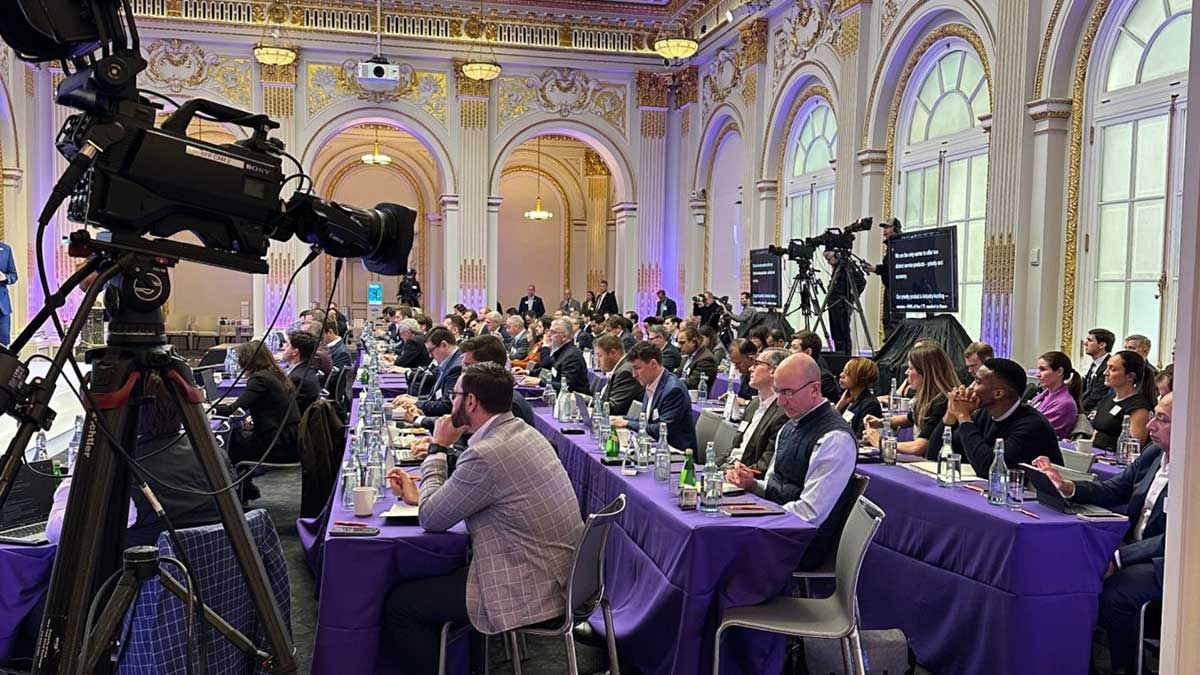
Mistake 2: Not Building Redundancy Into the Workflow
For investor communications, redundancy is not a nice-to-have.
One IT issue should not be able to take down an earnings call, investor day webcast, or shareholder meeting.
A reliable production workflow should identify the major failure points before the event begins. That includes internet connectivity, encoders, audio, video, slides, remote presenters, streaming destinations, power, and final delivery.
A weak plan sounds like: “We have backup internet.”
A stronger plan answers:
- What happens if the primary internet connection fails?
- Is there a backup encoder?
- Is there a backup audio path?
- Can the slides continue if the main machine fails?
- Is there a backup stream destination?
- Who is monitoring the webcast in real time?
- Who makes the call to fail over?
- How quickly can the backup path take over?
For high-visibility investor webcasts, the goal is to design the workflow so the production team knows exactly what happens when something goes wrong.
That may include redundant encoders, dedicated hardline internet, bonded cellular, Starlink or satellite failover, backup power, backup audio and video paths, duplicate slide systems, multi-destination delivery, and real-time monitoring through a Network Operations Center.
The audience may never know those systems are in place.
That’s the point.
Mistake 3: Relying Too Heavily on Internal IT
Internal IT teams are important partners in investor communications, but they should not be expected to manage the entire live production.
IT can help with network access, security requirements, platform permissions, firewalls, device support, and internal systems. But an investor webcast also requires production planning, show flow, speaker management, audio mixing, graphics control, encoding, streaming, recording, monitoring, and live troubleshooting.
Those are different responsibilities.
A production partner is focused on the show itself.
That means understanding when executives speak, when slides change, when remote guests join, how the audience receives the stream, what backup systems are active, how the audio sounds, whether the video is stable, and what happens if the webcast needs to shift in real time.
For investor communications, the most effective workflow typically brings IT and production together.
IT protects the enterprise environment.
The production team protects the live experience.
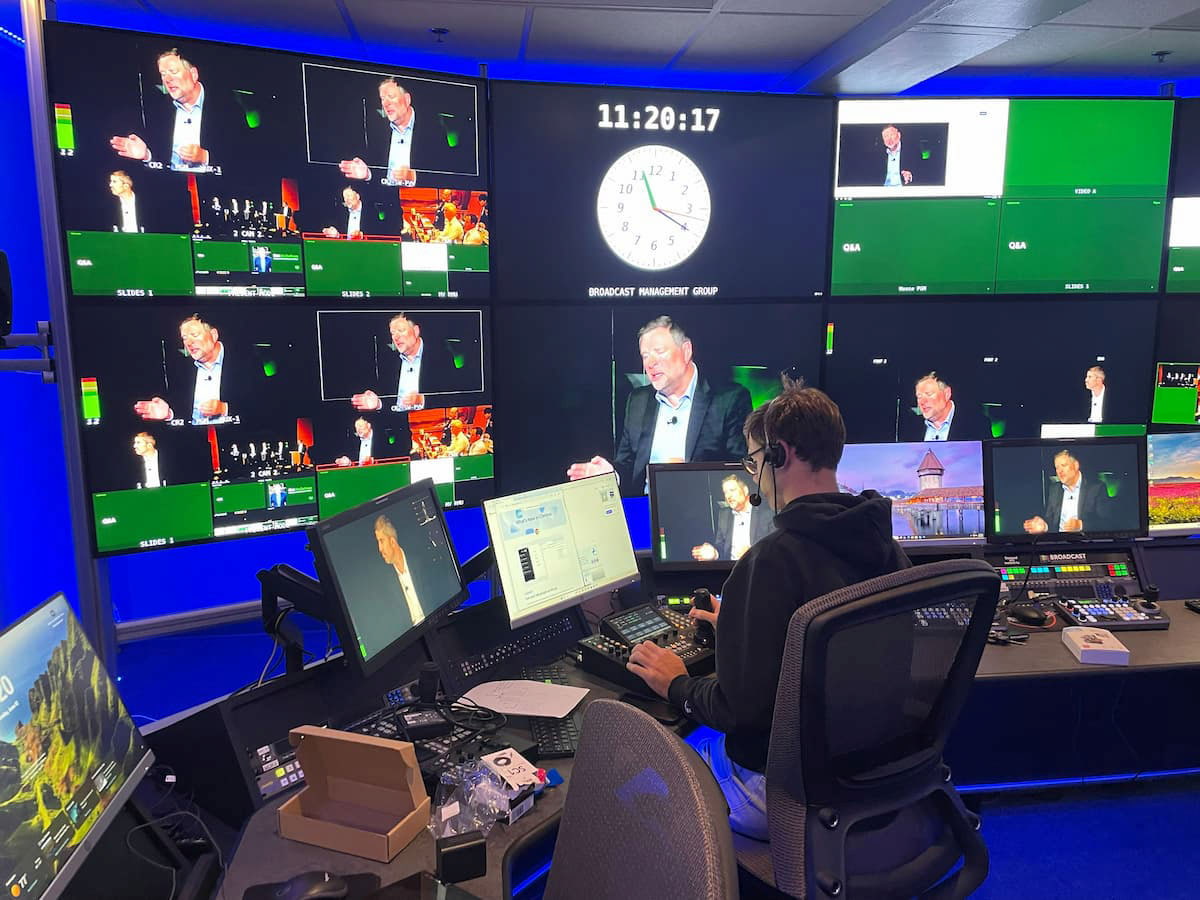
Mistake 4: Underestimating the Production Layer
Investor webcasts can look simple from the viewer’s side.
One executive speaks. A slide changes. Another speaker joins. The presentation moves to Q&A. The stream ends.
Behind the scenes, that kind of smooth experience requires planning and coordination.
Depending on the event, the production team may include a producer, director, technical director, audio engineer, graphics or slides operator, video engineer, streaming engineer, transmission engineer, production manager, captioning support, and remote contributor support.
That production layer helps manage:
- Show flow
- Executive rehearsals
- Speaker transitions
- Slide timing
- Audio quality
- Camera framing
- Remote contributors
- Lower thirds or graphics
- Platform delivery
- Backup workflows
- Live monitoring
- Recording and archive
This matters because investor events are often tightly timed and highly visible.
There may be little room for awkward transitions, unclear communication, technical confusion, or last-minute scrambling. The production team gives the webcast structure, control, and reliability.
A strong partner should be able to build the right production crew around the event’s format, audience, risk level, and technical requirements.
Mistake 5: Forgetting About Monitoring, Recording, and Post-Event Use
The live webcast is only one part of the investor communications workflow.
After the event, companies may need a clean recording, an on-demand version, internal archive files, performance reports, clips, transcripts, or content to share with stakeholders who could not attend live.
That means recording and post-event workflows should be planned before the webcast begins.
Companies should ask:
- Is the webcast being recorded?
- Is there a backup recording?
- Who receives the final file?
- How quickly will the on-demand version be available?
- Are captions or transcripts needed?
- Will the content be archived for future use?
- Can highlights or clips be created?
- Will the team receive a post-event report?
- Were any technical issues documented?
Real-time monitoring matters here as well.
If no one is actively watching the stream, checking signal quality, listening for audio issues, and confirming delivery, problems may not be discovered until the audience reports them.
For investor communications, that is too late.
A stronger approach includes active monitoring throughout the webcast, clear escalation paths, and post-event follow-through.
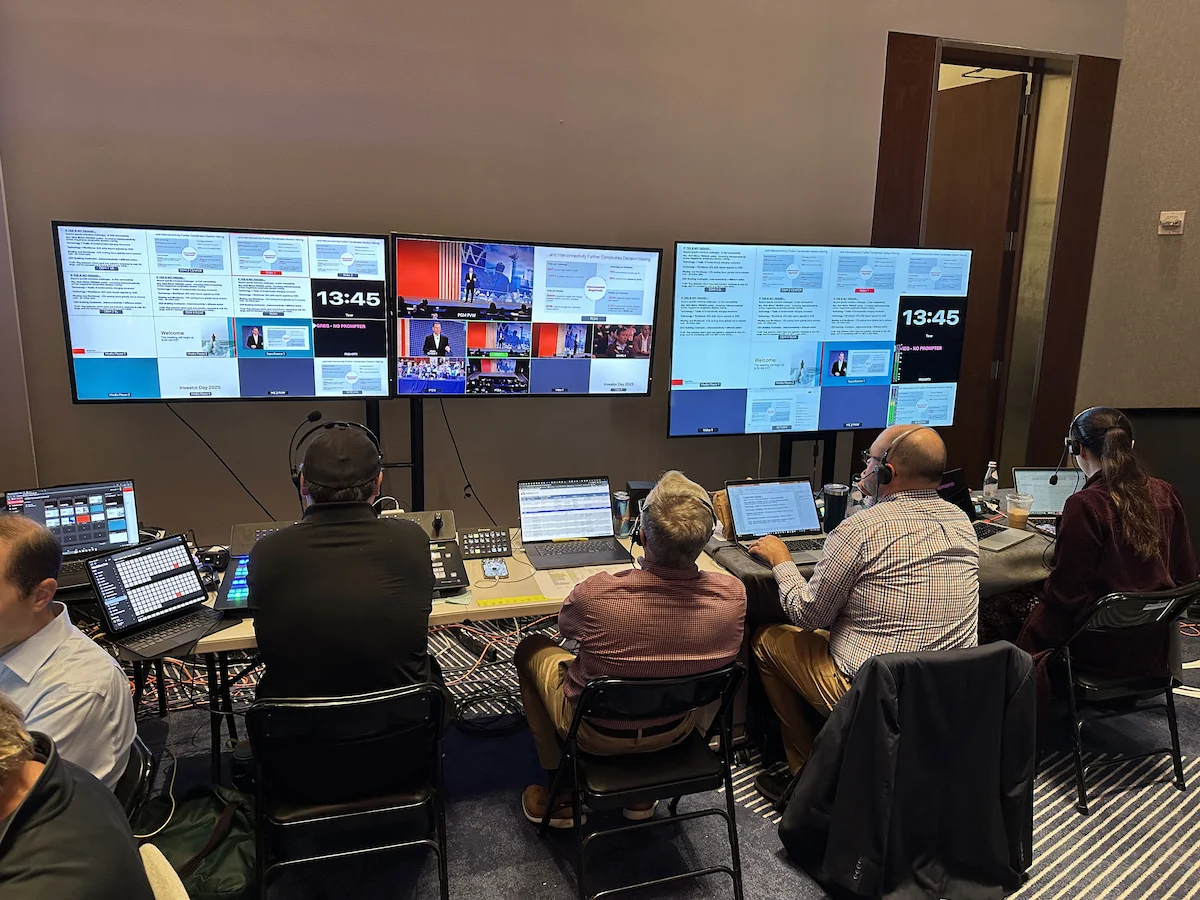
What a Better Investor Webcast Workflow Looks Like
A better investor webcast workflow is built around control.
The production team knows the agenda. Executives are tested. Slides are loaded and backed up. Audio is checked. Remote speakers are prepared. Streaming destinations are confirmed. Encoders are monitored. Backup paths are ready. The team knows who makes technical decisions if something changes.
That workflow may include:
- Pre-production planning
- Technical rehearsals
- Speaker testing
- Secure webcast access
- Professional audio and camera support
- Slide and graphics operation
- Redundant streaming infrastructure
- Backup contribution paths
- Encoding and transmission support
- Real-time monitoring
- NOC-based escalation
- Live captioning
- Recording and archive
- Post-event file delivery
The goal is simple: keep the message in focus.
The investor audience should not be distracted by the technology. They should see and hear a polished, reliable presentation that reflects the importance of the communication.
Where BMG Fits
BMG helps organizations produce investor webcasts, earnings calls, investor day presentations, shareholder meetings, and executive communications with the discipline of a live broadcast.
We support these events through corporate events production, enterprise video and content operations, production staffing and operations, channel playout and transmission services, remote production workflows, and monitoring through BMG’s 24/7 Cloud Network Operations Center.
That means clients can build a webcast workflow around experienced production teams, reliable transmission, redundancy planning, technical oversight, encoding support, real-time monitoring, and post-event content needs.
For investor communications, reliability has to be treated as a core requirement.
BMG helps organizations create a more controlled webcast environment so one technical issue does not define the entire event.
Investor Communications Need Broadcast-Level Reliability
Investor webcasts are too important to treat like ordinary virtual meetings.
The stakes are higher. The audience is more specific. The message is more sensitive. The tolerance for failure is lower.
Companies that want a stronger investor communications workflow need more than a meeting link and a backup laptop. They need production planning, technical support, redundancy, monitoring, transmission expertise, and a team that understands what is at stake when executives go live.
For earnings call production, investor day webcasts, shareholder meetings, and executive financial communications, the right partner gives teams confidence before the event begins.
Because when the audience is watching, reliability is part of the message.
Planning an investor webcast, earnings call, shareholder meeting, or investor day presentation?
BMG helps organizations produce high-visibility investor communications with broadcast-quality production, redundancy, transmission support, NOC monitoring, and experienced production teams.
Talk to BMG about building a more reliable webcast workflow for your next investor event.
Todd Mason is the Chief Executive Officer of Broadcast Management Group (BMG), a broadcast infrastructure and media operations company helping define the next generation of television production, live media operations, and broadcast network infrastructure in North America.
About Todd Mason