When most people think about a live production, they think about the camera angles, graphics, talent, and the action on screen, but sound is just as important to the viewer’s experience. A missed microphone, late cue, or unwanted comment that makes it to air is something every audience member notices.
Delivering clean, engaging sound for a live broadcast is the job of the Audio Engineer.
Most people associate audio engineering with recording music in a studio. In live television and streaming, the role looks very different. Broadcast Audio Engineers mix sound in real time for sports, entertainment, and corporate events, often while following cues from the director, coordinating with on-site crew, and making split-second decisions about what viewers should and should not hear.
Whether they are on-site or mixing remotely, Audio Engineers help bring a broadcast to life.
Ken Wilkinson, Audio Engineer at BMG, shared some of his responsibilities, what a typical day looks like, and what it takes to succeed in the role.
What Does an Audio Engineer Do?
A broadcast Audio Engineer, often called the A1, is responsible for the sound of a live production. That includes the program mix viewers hear at home, the playback elements and music cues built into the show, and the microphones used by talent, athletes, and performers.
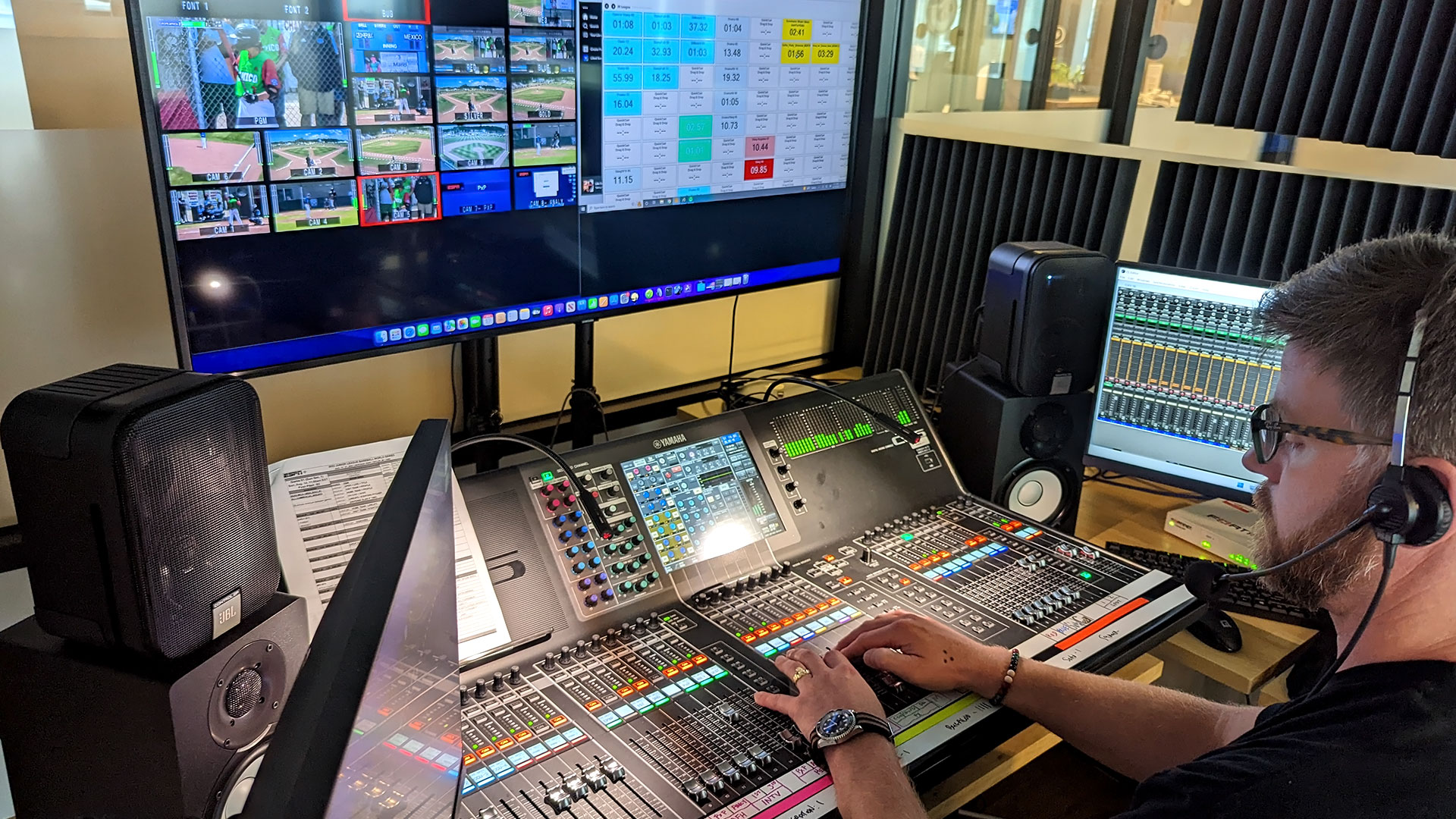
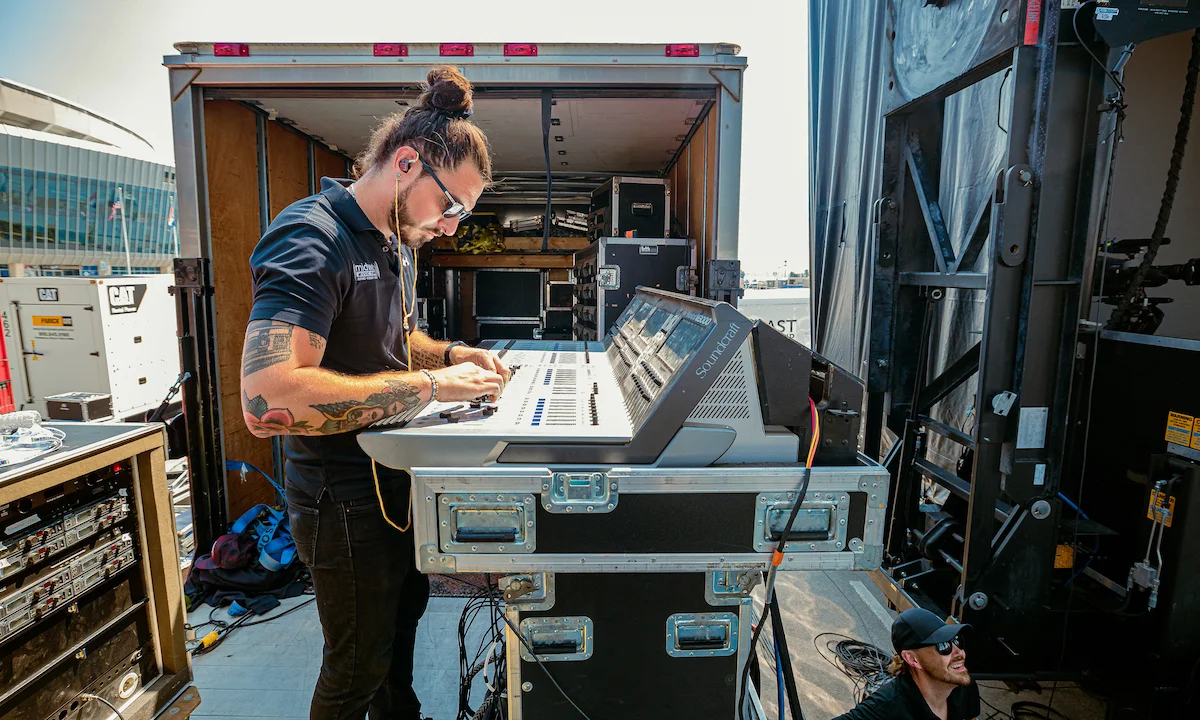
The A1 typically works from an audio control room, either on-site or at a remote facility, and leads a team of A2s who handle microphones, cabling, and audio setup on-site.
Every production brings different challenges. For Ken, that variety is part of what makes the work rewarding. “Every production brings different challenges, and I get to do work I love alongside people I enjoy working with.”
A Day in the Life of an Audio Engineer
Every production day starts with preparation.
When an Audio Engineer arrives, the first step is reviewing the show’s tech book. The tech book outlines the technical requirements for the production, including cameras, audio, video, and replay. It gives the Audio Engineer a clear picture of what the show needs before any equipment is set up.
From there, the Audio Engineer coordinates with the engineering team.
For remote productions, that coordination happens across locations. The Audio Engineer connects with the on-site A2s, the tech manager, and the engineers to establish a timeline for connecting and setting up the audio equipment. Getting that timeline right early in the day helps keep the rest of the production on schedule.
How the Role Changes From One Production to the Next
The fundamentals of mixing a live show stay the same, but the approach can change significantly depending on the type of production.
Sports Productions
In sports, the focus is on capturing the action and helping tell the athletes’ stories.
Live games are unpredictable, and no one knows exactly when the big play will happen or where on the field it will take place. That means the Audio Engineer needs to follow the action closely and adapt with the production team as the game unfolds.
Entertainment and Corporate Productions
Entertainment and corporate productions are typically more scripted and rehearsed, with close coordination between the technical and stage crews.
For these shows, the Audio Engineer studies the script and its revisions to stay ahead of playback elements, music cues, and voiceovers. They also direct the A2s to make sure talent and performers have the right microphones at the right time.
Mixing a Live Broadcast
Once the production is underway, the Audio Engineer mixes the show while following cues from the director, producer, and associate director (AD).
The audio control room is a busy listening environment. At any given moment, an Audio Engineer may be:
- Monitoring the broadcast mix
- Listening to production communications
- Following cues from the director, producer, and AD
- Staying ahead of playback elements and music cues
- Coordinating with A2s to keep everything running smoothly on-site
- Making real-time decisions about what makes it to air
Balancing these demands while delivering a clear, engaging mix takes focus and judgment.
The Biggest Challenge: Dividing Your Attention
One of the biggest challenges in live audio is dividing attention.
An Audio Engineer needs to listen closely to the program mix without becoming so absorbed in it that they miss a production cue or a playback element. If they focus too much on the sound, they risk missing what comes next. If they focus too much on what comes next, the mix can suffer.
It is a constant balance between focusing on the sound and staying aware of the show around it.

Communication Behind the Scenes
In a live production, much of the communication happens through the intercom system.
Throughout the show, the Audio Engineer continuously listens to the producer’s and director’s open mics while monitoring the audio partyline, the shared channel used by the A2s and other operators. Crew members can also reach the Audio Engineer point-to-point for private conversations that do not need to be heard by the whole team.
How crew members access the intercom depends on where they are working. Studio operators use intercom keypanels, while field technicians use wired or wireless beltpacks.
Staying tuned into all of that communication while mixing the show is a core part of the job.
The Technology Behind the Mix
Audio over IP is the backbone of today’s broadcasts.
Rather than relying solely on traditional point-to-point cabling, audio over IP allows audio signals to be routed across a network, giving production teams more flexibility in how they connect equipment and locations.
Some of the technologies Audio Engineers at BMG work with most often include:
- Dante for audio routing
- RTS RVON for production communications
- RTS OMNEO for production communications
Understanding how these systems work, and how signals move through them, is essential for keeping a live production running smoothly.
The Decisions That Shape What Viewers Hear
Some of the most important decisions an Audio Engineer makes involve what should, and should not, be heard on air.
That can entail keeping private microphone conversations off the broadcast or adjusting the mix to avoid profanity from fans or the sidelines. These decisions often need to happen in a split second.
An Audio Engineer is constantly listening, anticipating, and using their judgment to deliver a clean mix that represents everyone on the broadcast professionally.
The Skills You Need as an Audio Engineer
Television audio engineering requires a combination of technical knowledge and composure under pressure.
Some of the most important skills for the role include:
- A strong grasp of signal flow and transmission protocols
- Proficiency with a wide range of audio equipment
- The ability to stay calm under pressure
- Sound judgment and quick problem-solving
Live television leaves no room to stop and start over, so when something goes wrong during a production, an Audio Engineer needs to identify the issue, make a decision, and keep the show moving.
A Favorite Production: Mixing for the Big Screen
One of Ken’s favorite projects with BMG was Megalopolis: The Ultimate IMAX Experience, directed by BMG’s Todd Mason.
BMG livestreamed a Q&A with Francis Ford Coppola, Spike Lee, and Robert De Niro from the film’s red carpet premiere at AMC Lincoln Square 13 in New York to more than 60 IMAX theaters nationwide, followed by an advance screening.
Ken mixed the livestream, while fellow A1 Stephen Micallef handled front-of-house sound in the theater.
Mixing a live event for cinema audiences was a first for Ken, which made the production especially memorable. It is also a good example of how the role can extend beyond traditional television, bringing live audio to audiences in entirely new environments.
Working Behind the Scenes With BMG
For Audio Engineers working with Broadcast Management Group (BMG), every production offers something new.
BMG supports productions across sports, entertainment, corporate, news, and other live broadcast environments, giving audio professionals the opportunity to work across a wide range of workflows, venues, and technologies, both on-site and remotely.
From live sports productions where the action is unpredictable to scripted entertainment and corporate events that demand precise timing, the Audio Engineer plays a central role in what audiences experience.
Viewers may never think about the person behind the mix. But when the sound is clean, the cues land on time, and nothing makes it to air that should not, the Audio Engineer has done the job well.

Paige DeLoretta is a marketing professional with experience in social media and digital marketing, creating engaging content that helps brands grow and connect with audiences. She has supported marketing initiatives across a variety of industries. Paige is a graduate of George Mason University with a degree in marketing. Originally from Reading, Pennsylvania, she enjoys traveling, spending time outdoors, and exploring Washington, D.C. with friends and family.
About Paige DeLoretta